
원문 보기
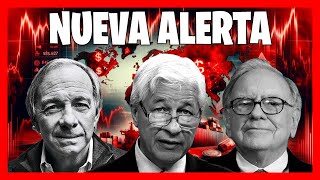
Warren Buffett, Michael Berry, and George Soros often agree on their interpretation of the economy. They aren't entirely aligned with the message that there will be a soft landing or that everything will be as wonderful as it seems. And if I tell you that these three, who are highly different investors with very distinct positions, agree on exactly one point—and the most striking example in recent times of portfolio movements and complete withdrawal from the stock market is Buffett, who already has, as we've mentioned here on numerous occasions, more Treasury bills than the Federal Reserve—he already has more than $24.6 billion in his portfolio.
Warren Buffett doesn't just invest in the stock market; he's in cash, Treasury bills, and debt. There you see Warren Buffett's big bet. And as you can see, all the major investors agree on one point: despite the current adverse climate, despite any potential economic boom, despite any future disasters, they all agree on the same thing.
Warren Buffett, Michael Berry, and George Soros often agree on their interpretation of the economy; just look at their statements... The last few months have shown that they aren't completely aligned with the message that there will be a soft landing for the economy or that everything is going to be so wonderful right now.
That's why they've made moves in their portfolios that perfectly describe what's happening. You know that these types of investors primarily invest in the stock market and derive a large part of their returns through equities. But what if I told you that these three investors, who are very different and have very distinct positions, coincide on one point?
Well, join me throughout this video because I'm going to tell you something wonderful and fantastic that will grab your attention, especially from an investment perspective. These investors also derive a large part of their returns through other investments— alternative investments—and by considering the current context.
Let's start with Michael Berry. Starting with the first one, and the one most famous for these alternative investments, we know that he made a large part of his wealth during the 2008 bubble. And how did he cement this great performance, which is indeed through alternative investments? Well, essentially, Michael Berry, and you can see it in the film.
What made him gain so much capital within his hedge fund in The Big Short was investing through credit default swaps linked to the real estate market. All of this is perfectly described in the film from a few years ago, which won several awards and which we highly recommend. Let's remember that Seon Capital decided to invest in those assets backed by subprime mortgages.
Essentially, for those who do n't understand, what he did was buy insurance on these mortgage packages, anticipating that many of them would default, and before they did, he would collect the premium. Barry later acknowledged that many of the mortgages packaged in financial products were based on very low-quality loans and that these would collapse when borrowers couldn't meet their payments.
By betting against these securities, he obtained truly spectacular profits. And of course, we know all this, but what actually links George Soros, Michael Barry, and Warren Buffett? Well, you did n't know, but as I said, they have in common that they occasionally address these types of strategies that go far beyond the stock market and beyond equities, and we're going to see why.
Throughout the video, we discuss what these bets are, what potential these types of alternatives might have, and where, for me personally, there can be a great alternative by diversifying the portfolio with a long-term perspective, given the current context and the state of the markets. And why is it necessary to go far beyond the stock market, especially in a context where Warren Buffett, George Soros, and Michael Berry are very doubtful about the behavior of the economy at the moment?
We can also see this through George Soros, in this context where he invests in alternative assets. As we know, George Soros was very famous for betting against the pound sterling in the 1990s and achieving truly spectacular returns. He also bet against the dot-com bubble, obtaining large returns. In other words, he is also a master of this type of alternative investment.
Beyond his structural positioning in the portfolio, which is the core, and most importantly within his movements, an example of these strong bets and alternative investments was his positioning in sovereign debt during the Latin American debt crisis in the 1980s. This was a long time ago, but surely many of you remember it.
To others, I'll tell you directly what George Soros did to achieve such high returns. Furthermore, I now see a context in which these opportunities can also be exploited through debt crises that might emerge in the current context. George Soros doesn't see the outlook favorably, and that's why part of his portfolio is heavily invested in debt and loans.
Therefore, it's crucial that we, as individual investors, also adopt this strategic positioning, or at least use it as a reference point. Getting to the heart of the matter, let's look at what George Soros did in the 1980s, specifically during the Latin American debt crisis. During those years, several countries in the region, such as Mexico, Argentina, and Brazil, were unable to meet their external debt obligations, as has happened much later with countries like Argentina, replicating this pattern.
This period was also known as the lost decade of Latin America, and it was an era that generated great volatility and a brutal economic crisis in the region. What did George Soros do? How did he anticipate all of this? This might be of interest to you in seeing if, at the present moment, we can also profit from it.
Taking advantage of the turbulent situation, he bought sovereign debt. Look at these countries at really low prices, because public debt is currently trading at very low multiples in some cases. At that moment, George Soros decided on this type of bet. What happened was that Soros and other investors anticipated that, with time, these countries would renegotiate their debts and recover in value, avoiding default in many cases.
This is the strategy that must always be followed to avoid default on fixed-income debt. So, he focused on the tranches with the lowest probability of default and the highest potential for future returns. He profited from all this speculation, achieving double-digit returns on these assets. Soros is often known for his strategic moves in other asset classes, but he also saw his wealth multiply in debt.
So, it's not all about the stock market, nor is it all about thinking in terms of the scheme that works for most investors. Those who are the big players, those who sit at the table of the most important, have demonstrated over time that it can be done... Another way to do this within a portfolio is to allocate funds to other types of assets.
I'll explain the context and what types of assets might be interesting to include in a small percentage of the portfolio, or something we consider optimal given the long-term potential. The most striking recent example of portfolio movements and complete withdrawal from the stock market is Warren Buffett, who, as we've mentioned here multiple times, already holds more Treasury bills than the Federal Reserve.
He has over $24.6 billion in his portfolio. Warren Buffett doesn't just invest in stocks; he also holds cash, Treasury bills, and debt. He invests in debt because he understands the current situation and believes it's important to generate returns on capital through other means. In fact, when the stock market fell the most in recent weeks, Warren Buffett's Beir Hathaway was one of the best-performing stocks.
That's why following these types of investors is very interesting for positioning oneself. And as you can see on the screen in the chart below, you can see Warren Buffett's big bet. Beyond... The stock market and why it's interesting to develop strategies outside of equities and traditional markets.
Warren Buffett, like others, clearly understands this. One of the most striking examples within this wonderful space of alternative investments, and indeed very interesting to see, is how this series of gurus positions their portfolios not only in these types of assets—not just equities and classic, traditional bonds—but also by shorting through strategic and alternative asset movements.
This is Howard Marx, whom many of you may not know, and you might ask why it 's interesting to include him in this equation. He is one of the world's leading investors in disaster-deep debt, in super-stressed debt—that is, companies on the verge of bankruptcy. He bases his investment alternatives on these types of assets, not on products that can offer potential returns above the average market return.
This is very risky, of course, but essentially, he seeks loans from companies in financial distress to obtain returns of up to 300 or 400 percent, which is no small feat. And if, as individual investors, we decide... Allocating a very small part of our assets to this margin allows us to add some spice to our portfolio.
It's interesting that Marx does this structurally, investing heavily in these types of products, generating enormous returns in many cases, and losses in others. But if we know how to play it, it can be interesting. As you can see, all the major investors agree on one point: despite the current adverse climate, despite any economic boom, despite any future disasters, they all agree on the same thing: a portion of the portfolio, or specific moments, can be allocated to alternative investments or other asset classes.
However, most individual investors don't have access to these types of products or don't know how to access them, for example, to invest in loans or bonds. Many people say, "I do n't know how to access the loan market, the bond market, or make any tactical bets, like the one Howard Marks makes to add spice to the portfolio and invest in alternative assets." Because most investors who focus on these high-yield investment opportunities see their portfolios...
They are institutional investors, and they are the big players, as we've seen before. But now, and I'm going to tell you that you're in luck because there is a platform with which you can invest in alternative assets, in these kinds of investment vehicles, to add some spice to your portfolio. Specifically, as you can see here on the screen, it's Mintos.
Mintos is a platform listed on the CNMV (Spanish National Securities Market Commission) and also regulated by the European regulator, with all the MiFIT legislation followed by the company and with a lot of experience in these types of products. What you can do is invest directly in loans, as you can see here on the screen.
You can invest directly in loans, and you can also invest in bonds and other types of products. What is the purpose of investing in loans? From 2015 to 2023, how has the profitability of investing in loans grown? This is, by the way, what H. Marx does, as we saw earlier. Well, this is the great alternative you have now to invest in these alternative assets, just like the big investors do.
So, I'll leave you the link to the platform in my profile bio, in the video description, and in the pinned comment. You can click below to download the platform, and I also have something much more interesting to announce: if you invest 1,500 or more, you'll get 15 as a gift with the platform. So, go ahead and download the platform, go ahead and register.
I want to emphasize that this isn't an investment recommendation, but something I find very interesting from my personal point of view, and as something educational and informative. But there you have it, so you can download the platform, see how it works, and on top of that, you'll get this bonus if you access it through my link.
So, access it through the link, and you can make these kinds of contributions and use investment strategies like the big investors do. It's definitely worth at least taking a look and going beyond the traditional options. By the way, you can also invest in traditional things through the platform, so keep that in mind.
But you have everything down there, and I think it's well worth it. In fact, focusing on the sector that I find very interesting, as a tactical way to allocate a minimum portion of our portfolio, is this sector. You're going to say about loans, but I don't understand the loan sector and why it's interesting.
We'll see it on screen with two reports directly from Wall Street firms, like this one we saw from Lord Abet, which talks about the loan sector and how it has spectacular growth potential based on the current situation. Throughout the report, they delve into this strong possibility and this alternative that large investors see in many cases: saying, "Hey, I'm going to position myself in these types of loans in a tactical way.
Maybe not structurally, but by making contributions to this sector because they can provide returns and add that little spice we were talking about earlier." And look how loans exploded from 2003 to 2008, and how since then most haven't shown any recovery until May 2021. This analysis firm says, "Watch out, because there could be a significant rebound in this asset class that nobody is taking into account, and that could perhaps take us to much higher levels." Therefore, as an alternative, it's quite interesting.
And within this... The report discusses all these possibilities that few talk about, the truth is, few talk about these types of sectors, the upward possibilities they show for the future. Another firm that also reviewed the report, specifically Newfit Asset Management, and what it reflects and what is observed throughout the report is that since the third quarter of 2022, there has been a truly spectacular growth in institutional loans.
And what it says throughout the report is, be careful because this is going to get even bigger, so Howard Marx is rubbing his fingers right now, saying, be careful, there are low-yield loans that I can fish for from companies that aren't going to go bankrupt if we go into a recessionary or slowdown context.
There could be a lot of money here, there could be a lot of bread, that's what some of these investors are saying, they're licking their chops at the thought of this whole situation. And of course, this whole report, which is very detailed and if you want I can share it with you through my Discord community, you have the link, also on YouTube pinned here in the comment and in the video description, well, it expresses all of this.
This potential that the entire lending sector and the world of alternative assets may have is largely unknown, but it has a favorable outlook, especially in a context where we are heading towards interest rate reductions and where there can be significant investment risk—and this needs to be said. But if we can properly analyze the outlook and separate the wheat from the chaff, the returns can be very promising.
And through the Mintos platform, as I mentioned before, you can see loans that may be safer with lower returns and loans that are riskier with higher returns. Each person decides their allocation and what they should do. What I do see, and this is a personal opinion, is that it is a sector where there can be many possibilities.
With great care and caution, you're not going to put 100% of your portfolio into this type of asset, but you can allocate a large proportion, which can be quite interesting. So, to do this, since most ordinary investors don't have access to these products because platforms don't exist, and now that this possibility exists with Mintos, you download the application and...
You see these possibilities, and as I observed earlier with Warren Buffett, this positioning goes beyond the stock market, with George Soros or Michael Barry, who are all following the same framework, sometimes betting more on alternative assets. Well, we can do it too, and as I observed in these reports, there are possibilities.
So I hope you liked this video. Leave me a comment letting me know what you thought, and give it a like if you enjoy this type of content from great investors. I always like to know your opinion on what and how you value these types of videos designed to show you the strategies of great investors. And by the way, it, or if you did but weren't subscribed, subscribe and hit the bell icon. So, see you in the next video, and leave me a comment there.


Comments 0