
저자: KenFisher · 외국인
요약 보기
S&P500이 4월 이후 약 30% 상승해 사상 최고가 부근. 모건스탠리·도이체방크는 경기지표 약화 시 밸류에이션 타격 우려를 제기하나, Fisher는 조정 예측은 무의미하고 강세장은 아직 끝나지 않았다고 주장. 관세 영향은 실제 부과율이 명목의 약 40%에 그쳐 과도한 공포는 아니라고 봄. 국채 우려에 대해서는 2% 인플레이션이 부채 실질가치를 잠식한다고 반박. 특정 국가 시장 선호는 밝히지 않음.
다듬은 글
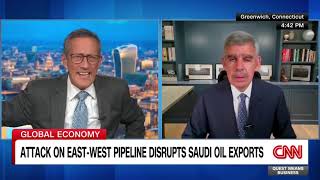
Strategists at Morgan Stanley and Deutsche Bank are warning that US stocks could take a turn for the worse. The S&P 500 has climbed nearly 30% since April. It's trading near record highs. Yet Morgan and Deutsche believe equity valuations could take a hit if more weak economic data arrives. We'll have an inflation report tomorrow.
Investors are watching to see if the tariffs are translating to higher prices for consumer. Ken Fischer is the man we need. Ken is the founder of Fiser Investments joins me now. First of all, I mean a correction is always around the corner somewhere by somehow. Are you looking at a correction potentially?
First, Richard, thanks for having me. Always always great to be with you. No one has ever consistently be able to predict corrections. Corrections come at any time for any reason or no reason at all. and they are often just like somebody yelling fire for no reason in a crowded movie theater. It's all about sentiment and scare and they tend to come and go pretty quick.
Uh that's different than a bare market and my advice is to ignore such warnings. Well, yes. Okay. Assuming I advi I I ignore it. Um but I s sort of have to take advant this issue of when to sell is always difficult particularly if you think that the market is going to go down. Um a you could be facing taxes you know you don't want to create a taxable event unnecessarily but at the same time you do want to protect gains that you've made.
So how does one balance that? So, first let me just say simply that when major indexes around the world have hit bull market highs, all-time highs like they have in the last few weeks, whether the Footsie 100, uh, Australia, Canada, the MSCI Europe as a whole, or the MSI world as a whole, you don't want to sell very quickly because an age-old saying, which is largely true, is that bull markets die with a whimper.
not with a bang. They roll over relatively slowly at first, giving you time to analyze. So, the fact that we've just had market peaks around the world tells you don't rush into anything to sell. A general rule about bare markets that I've written about for almost 40 years now is that twothirds of the drop happens in the last one-third of the time.
Twothirds of the time is only about onethird of the drop. Be slow. Be patient. And then the key is do you see bad things that aren't what everyone else is yakking about? Because what everyone else is yakking about is exactly what's already been priced into stocks. So Ken, there are two big issues that I can see.
The first is what one might describe as the issue to jour. It is tariffs. It is slowdown of growth. It's all the stuff that might take the froth off the market and create um a correction. But the second is long-term debt. And there are more and more people who are saying that the US is on an unsustainable um trajectory.
Now, the problem with the longer term bit is there's never a good moment on a random Monday in August for the market to turn turtle. You know, the the big long-term stuff, it's always going to be dealt with tomorrow. How does one handle it? So, first Richard, and this is a ubiquitous question that people have been talking about as you say pretty much as long as I can remember about US debt, but the fact is people that are saying it now don't do their arithmetic right.
Let me take you through that really quickly. If you look at the so-called bill that was passed by Congress, the so-called big beautiful bill, it's going to increase debt over a decade by about $4 trillion. But if you look at what the Fed wants, which is 2% a year inflation over that decade, well, since we start off with 3.7 trillion, it's going to eat up all of that debt and more over that time period.
The Yes, except it has to be funded. the ongoing debt has to be funded and it's eating a larger percentage of the GDP and indeed of the federal of the federal budget. But but said differently, the repayment of the debt is decreasing in value by that inflation. The fact of the matter is if you take the 2% on $ 37 trillion, that's $750 billion a year of decrease in the value of all of the accumulated debt at this point in time.
Fundamentally, are you still bullish on this market? And I'll give you a range of options here, Ken. Are you still bullish? Are you cautious? Or are you wait and see? I'm bullish. I don't believe this bull market has begun to run out of steam. It runs out of steam when people aren't worried about all of these things and instead are starting to talk about things like, which I don't believe they are yet, why AI will bring us to a whole new beautiful future better than before.
uh why it's different this time. Why the wonderful world ahead is no longer going to be leading us to corrections and imminent bare markets and fear of this that and the other that are all the yak yak things everybody talks about. And on tariffs, do you think that there is an inflation shock? That's a very dramatic word, but you know what I mean.
Waiting to hit us. First, everybody's looking at them. Secondarily, I've been writing, been very vocal, been a critic of Trump on all of this. Tariffs are always bad. They're worse for the country that imposes them than the countries they're imposed upon, which is exactly why uh, as I say commonly, the US is lagging most of the world this year in terms of the stock market, but they're not as bad as people fear because there's so many ways to wiggle around them.
tariffs are consistently coming in at about 40% of the sticker rate of the tariffs because there's so many ways to wiggle around them. That'll continue. Bad but not as bad. I'm going to squeeze the asset one more time. So, I'm getting one more bit of information out of you. Of all the global markets at the moment, which one do you like the best?
I don't think I really want to go there because I believe people ought to think globally first, which you do really well. And secondly, there's lots of opportunities. If you look at worlds this year, I mean, Spain's hit all-time highs just recently, Canada, Australia. You can go on and on. And I think people ought to think about all of that because if you focus on one, you're taking way too big a risk.
Ken, it's a treat and a pleasure and an honor for us to have you on the program. And I'm always grateful you you find time to join us. Thank you.


Comments 0