
저자: MohamedEl-Erian · 외국인
요약 보기
Walsh 연준 의장 지명 진행 속 물가 상승 압력이 커지고 있다. 유가 100달러 전망이 유지되면 연준은 올해 대부분 금리 인하를 멈추고 관망하며, 인상 가능성이 인하보다 크다고 본다. 이후 수요 파괴, 스태그플레이션 우려가 제기된다. 미국은 공급 부족이 적어 상대적으로 완충되지만 다른 지역은 실물 부족 위험이 있다. 영국은 재정 규율 불안으로 10년물 국채금리가 5%를 넘어 위험이 크다고 경고한다.
다듬은 글
And uh you [clears throat] David is referring that to the uh the Fed and Kevin Walsh, the Fed nominee chair, is one step closer to taking the role. The US Senate voted today to make him a Federal Reserve governor. That now clears the way for the vote to confirm him as chairman, and that might happen as soon as tomorrow.
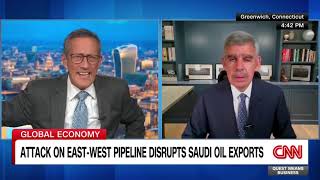
Mohamed El-Erian is a professor at the University of Pennsylvania's Wharton School, also chair of Gramercy Funds Management, and the chief economic advisor at Allianz. Mohamed's with me. Good to see you, sir. Now, 3.8%. Are we at a number where the Fed is going to have to act? They can no longer Bearing in mind, by the way, that the the prediction is that we're at $100 oil for the rest of the year.
Now, no one really knows, but that is the prediction. Can they look through this number, 2.8? So, for now, meaning the next few months, they'll act by not acting. So, they'll sit there. They'll wait and see how much of the high energy prices continues to percolate into the economy. And here, today's number, which is well worse than expected.
The consensus forecast was lower than what happened. And the Fed is going to look at this, and it's going to stop it from cutting weights for most of the year. And if we get a weight action, it is more likely to be a hike than a cut. Um but I think the scenario is they will do nothing for at least 18 months.
So, you think they can sit on their hands for that long? I think they're going to sit on their hands because the next stage that we're going to see is what I call demand destruction. So, if you remember, there were four phases to the shock the economic shock from the Middle East war. Number one is energy prices and interest rates go up.
Number two that we're seeing today is it starts to be an inflation problem, much broader. Number three is the affordability issue becomes severe enough that people stop spending. That's demand destruction. And And number four, hopefully we won't get there, you get financial instability. So, the Fed is going to have to keep an eye on the employment mandate.
And I think that unlike other central banks, unlike the Bank of England, unlike the ECB, unlike New Zealand Bank of Australia that has started hiking, Norway has started hiking, they won't hike, but they also won't cut. Right, but that demand destruction that you talk about, that becomes a self-fulfilling downward spiral as it feeds into the economic loop.
Down demand destruction, therefore less this, less that, growth slows, and before long, I mean, you know, playing it out over the next year, you have got classic stagflation. You do, and in other parts of the world you could well get recession. So, the US is insulated to some extent because you will not see physical supply shortages here.
The US is an exporter, but go to Africa, go to Asia, see what the Prime Minister has asked his citizens in India not to consume less energy. What you're starting to see is real concern about physical shortages. And if that happens, which it in a matter of 6 to 6 weeks for some parts of the world, then you get major destruction.
While I've got you, sir, we'll be talking a little bit later about this, but you are an expert on bonds and and and markets and that. The UK, just going to talk to the UK for a second. The bond vigilantes seem to be out. Highest borrowing costs in years for UK government debt, 10-year gilts. The message now is very clear.
Unless they sort out the political mess, which could lead to the economic mess, there is a premium for lending now to the UK. Yeah, I cannot emphasize enough how worried I am. Just to put some context, like you said, the 10-year is now at over 5%. That is crippling for mortgages and for businesses. It makes government debt more explosive.
The 30-year is at the highest in 28 years. So, this is a major headwind to the economy. What the markets are wondering about is not whether the Prime Minister stays and goes, whether Waitrose leaves, the Chancellor stays or goes, is will their commitment to fiscal discipline remain. And that is what's being questioned right now.
And we don't want to get back, you and I will remember 2022, we had what was called the Liz Truss moment, when suddenly the pension system was under enormous pressure. So, I am really worried and I'm hoping that we will see these rates come down, but they'll only come down if there's some reassurance that fiscal stability will be maintained.
I'm grateful, sir, as always. Thank you very much. Going around the world with you, I'm grateful. Thank you.


Comments 0