
저자: MohamedEl-Erian · 외국인
요약 보기
ECB가 3년 만에 첫 금리인상을 단행했고 물가 2차 파급을 경계해야 한다는 입장. 미국은 이중책무 때문에 금리인상보다 대기가 맞다고 봄. 미국 근원 CPI는 2.8%로 기대보다 낮지만 PPI는 6.5%로 파이프라인 압력이 큼. 2% 목표는 공급측 변화를 고려하면 낮아 3% 허용 가능성 제기. 초대형 IPO와 정부 적자, AI 투자 차입이 겹쳐 자금 조달 부담으로 장기금리 상승 압력이 커질 것으로 우려.
다듬은 글
Now, the story that we are following, of course, is that the European Central Bank announcing its first rate hike in 3 years. The ECB President, Madam Christine Lagarde, says policy makers have to act fast. If you let inflation start running out without control, then it becomes a much more difficult situation to bring it back to the level of price stability that we have defined.
So, the good decision was actually to raise interest rates, to commit, and to deliver on price stability. Now, what the president is talking about is looking out for so-called second-round effects. That's when the initial price shock spills over into the broader economy. For instance, higher oil prices, that is the primary effect, and it but it can eventually raise prices across different sectors.
Workers may eventually ask for higher wages, companies raise prices to make that happen. Consumers might reduce their spending, and economies start to slow. The ECB probably won't be the only central bank to raise this year. Inflation in the US hit a 3-year high in May. Investors believe it's likely the Fed will probably raise rates by the end of the year.
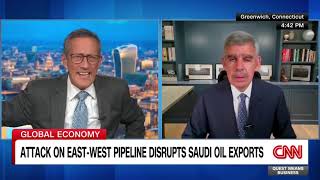
Uh Mohamed El-Erian is the Allianz chief economic adviser. Now, Mohamed, the question here out I've read your views on this to the to the extent that you don't think that, you know, a cut or a hike is is likely, but I think I'm going to phrase it as should should the Fed be raising rates sooner rather than later, bearing in mind the inflation rate is higher here than in the than in the Eurozone?
So, because the Fed has to worry about two things, not one, the so-called dual mandate. Like the ECB, it has to deliver price stability, but it also has an employment objective, as you know. I suspect the right thing for the Fed to do is to wait. The ECB is different, as you know, Richard. They only have one mandate, inflation, and I think they're absolutely right to hike.
Had they had two mandates, they would have waited as well. So, what do you think is the upper level of of interest rates, the primary rate in a sense, as there is a Well, do you think we're going on the rate of inflation before the Fed would really have no choice? So, the key issue is what's called core inflation.
Core inflation strips out the volatile aspect. So, you're absolutely right. The last inflation print, which was yesterday, was 4.2% at the headline, but the core was only 2.8. And in fact, the core came in slightly below what's expected. We would need to see the core above 3% for consecutive months.
Now, I don't want to say everything is fine, because we got another price data today, and that is PPI. That is the producer prices, what's in the pipeline. And believe it or not, that went up to 6.5%. So, so far the spillover you talked about has been limited, but we need to keep an eye on this. What would be the Not in Not so much in numerical terms, but what causes producer prices and CPI to move into core inflation?
Because if you've stripped out the volatile bits, when do you What What What What's the turning point in a sense? So, the turning point is when companies believe that demand is strong enough in order to pass on the higher cost into higher prices. Um right now, there's some hesitancy to pass on the higher cost.
So, what we're seeing is we're seeing them take it on margins. And as you know, profit margins are incredibly healthy. So, most companies can afford to sacrifice a bit of margin because they don't want to alienate their customers. If they're not sure that this inflation shock is going to be long duration, the last thing they want to do is upset their customers who already are very upset about affordability and the cost of living.
One counter feeling and listening to what Christine Lagarde said is that, you know, the difficulty of bringing it back. The Fed seems to be content to keep inflation Well, how many you know better than me how many months they've now been over their own target rate, but they seem to be quite content for to stay over 2% over 3% for some months to come on the headline number.
Yes, so they've been over 2% the target for 62 consecutive months, over 5 years. Wow. So, unheard of. And it will continue for at least another year. Deep inside, I think the Fed understands that 2% is too low a target for an economy that's going through so many changes on the supply side. So, I suspect that they are tolerating a 3% target, not a 2%, a 3% target, as long as this notion of inflation expectations stays stable.
And I think that's what's happening, and that's why despite 62 months of having missed their target, they're not going to hike rates for this year. SpaceX tomorrow. I mean, I it's got a sexiness to it. Uh the market's going to go off to the races. Is there any major significance in a macroeconomic sense for these three or four massive IPOs?
Well, you know, in the old days, we used to do an exercise. We used to look at who needed funds and who would provide funds. We forgot about that exercise, but I think now we are. The significance of these massive IPOs is that they come on top of governments having to fund high deficits, on top of companies having to borrow in order to invest in AI.
And I scratch my head, which is where is all this money going to come from? I really cannot identify where all this money is going to come from. So, the the macro implications is I suspect that that's going to push borrowing costs higher for the economy as a whole. I would back of the sofa, Mohamed.
Back of the sofa. They'll find some They'll find some loose change. And if not, you rob you rob the milkman and then pay him next week. Good to see you, sir. Very grateful. Thank you.


Comments 0