원문 보기
If you invest, pause, and ask yourself three questions. This is Howard Marks and his wake-up checklist for everyday investors. On a podcast, he talked index funds, bond bubbles, and crisis. The core message is one line. Put the odds on your side. He does not predict macro. He insists on knowing where we stand right now.
A lot of people buy the S&P 500 through low-cost index funds. The logic sounds clean. Long-term average return is about 10% a year. Hold for 50 years and compounding seems to carry you into a safe zone. But the most dangerous move is believing there is no risk. Risk does not come from the exchange. It comes from human behavior.
Buffett said it. Be careful when others are careless. When others feel no worry, you should feel fear. When others are fearful, prices can get crushed close to free. Long-term American companies will probably keep creating prosperity. But when he says long-term, he means at least 20 years. His favorite old cartoon shows a factory burning beside a phone booth.
The guy shouts, "Forget diversification. Sell Fernwood Chemical now." The careful allocation from the textbook warps the second fire shows up. J.P. Morgan drew a brutal scatter chart. The higher the purchase PE, the lower the next 10 years return. The key number is 23 times earnings. Historically, buying from there often meant about plus or minus 2% annualized.
And now the market is around 24 to 25 times. Prices have run so fast that earnings struggle to catch up. Across the past century, returns rarely landed between 8 and 12. The lived experience is usually violent, up and down. So, what can a founder do after selling the company? One option is an algorithm that rebalances dynamically by relative price.
He offers another alternative, bonds. The contract is clear, interest every 6 months, principal back at maturity. If they do not pay, creditors can take the assets in bankruptcy. He spent 47 years in high-yield debt, and most borrowers paid as promised. Today, lower-rated credit yields roughly 7 to 8%.
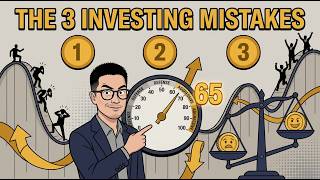
The drawback is blunt. The interest gets taxed every year. Keeping four after-tax can feel safer than chasing 10 with risk. Investing is not buy or sell. It is a dial from aggressive to defensive. Sam leans conservative, maybe a 65 setting. If you are younger, maybe you belong closer to 55. Find your normal setting, then stay there most of the time.
He wrote a memo called On the Couch. We often do not know the future, but we must know where we are. In 2018, he wrote the book Mastering the Market Cycle. The subtitle is The Soul Getting the odds on your side. Your position in the cycle decides what is most likely. He started writing memos in 1990 at first silence.
The first real echo came on January 2nd, 2000. That memo was called bubble. It was right and it was proven fast. This business has an old line. Too early often equals wrong. In 1999, he read Devil Take the Hindmost. The South Sea bubble in that book sounds absurd like yesterday. Tech stocks then were the same.
People quit jobs to day trade. Young people dropped out terrified someone else would steal the idea. Mark Twain said history does not repeat, but it rhymes. The same themes keep returning because human nature returns. The future does not exist yet. We can only look back for patterns. No earnings, no revenue, still massive valuations.
Sometimes no product at all, just an idea. He wrote it in January. By mid-year, tech stocks started collapsing. 10 years later, he became famous almost overnight. Madness is never isolated. It chain reacts. The mood back then was optimism, greed, credulity, and risk-taking. When nobody is afraid, unwise deals get done most easily.
Judge the cycle like a doctor, calm, clinical, unemotional. Pushed by emotion, we do the wrong thing at the wrong time. When you should buy, you will not want to buy at all. The best buying point often sits where consensus is lowest. There you find bad news, fear, and pessimistic expectations piled high.
If you turn left with everyone else, it is hard to beat everyone else. He gets scared, too. But he knows what to do. Business fundamentals do not completely change in a few days. What changes fast is the relationship between price and value. In 1998, the ruble fell and Asia debt crisis hit. Long-Term Capital collapsed, and a young manager said, "This is the end." Marks listened, then told him to go back and keep working.
A hero is not fearless. A hero acts while afraid. He says calm is not training, it is temperament. Calm is an edge in investing. In marriage, maybe not. His parents lived through the Great Depression, and the scars entered the home. Do not put everything in one basket. Save for a rainy day. He says his biggest mistake was being too conservative for life.
Otherwise, he might have done stocks, venture capital, or buyouts. He entered high yield bonds in 1978, distressed assets in 1988. Conservatism actually helped him win clients in new fields. He was almost 49 when he founded Oaktree. The final push came from his wife. [snorts] 2008 was the real stress test.
Raise money after the crisis starts, way too late. Everyone just says, "Let us wait until the dust settles." But the big money is often made while carefully catching falling knives. In '05 and '06, even garbage deals could get done. That told them caution had vanished from the market. On New Year's Day 2007, they told clients opportunity was coming.
They planned to raise 3 billion for a distressed fund. Within 1 month, 8 billion in commitments flooded in. They took only 3.5 billion and closed fund seven. The remaining demand went into a reserve fund, later reaching 11 billion. By September 18th, they had invested just over 1 billion. Then Lehman Brothers went bankrupt.
Only one question remained. Invest or do not invest? If you invest and the world ends, nothing you do matters. If you do not invest and the world does not end, you failed your job. So the conclusion was cold and simple. You must invest. Predicting the end of the world is hard, and you should not bet on it.
Most of the time, the world does not end. Over the next 15 weeks, Fund 7B invested 450 million a week. In total, it deployed 7 billion dollars. Across Oaktree, they averaged 650 million invested every week. In early 2009, the Fed cut rates to zero. Quantitative easing began and pulled the economy back from the edge.
The results were very good, though not earth-shattering. He does not read formula books. He prefers investor behavior. Galbraith's Short History of Financial Euphoria is only about 100 pages. Ellis said the point is winning the losers' game. Do not chase winning shots. First, keep the ball in play. Oaktree seeks fewer losers, not more winners.
Here is the paradox. Above average every year, never extreme. General Mills pension stayed in the second quartile for 14 years. Sounds mediocre. It finished fourth. Do not shoot yourself in the foot, and compounding moves you up. Another firm loaded up on bank stocks and fell straight to the bottom.
Want top five, but risk bottom five. Clients do not want that. He says that restaurant is like Oaktree. Always good, sometimes great, never terrible. Hold that line for 40 or 50 years, and compounding can work wonders. Buffett is a folk hero who makes greatness feel reachable. The principles are simple.
Persistently doing them is hard. Investing is like life. It tests your philosophy. Before you go, take three self-check questions. First, do you really think you know the future? Second, do you assume the world will stay exactly as it is? Third, are you being pushed into trades by emotion? In the most important thing, he gives regular people a field guide.
Is the market rising or falling? Are TV shows hot or cold? At parties are investors crowded or ignored? Are new bond deals mobbed or left unwanted? Watch calmly and systematically, and you better know where you are. It cannot guarantee a win, but it can clearly improve your odds. Which mistake have you made lately? Tell me in the comments. Educational purposes only.




Comments 0