원문 보기
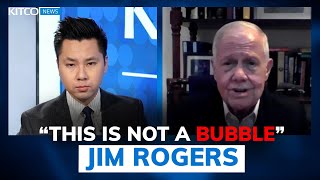
renowned investor and author jim rogers is back to give us his economic outlook and talk about the markets and how you should be investing right now jim it's good to see you again welcome back i'm delighted to be here david thank you jim let's start with your macroeconomic outlook as usual you have uh your finger on the pulse on what's going on in the world tell us how you're reading the markets today you mean do you we talk about the us or we talk about i mean lots and lots of there's a big world out there david what are you talking about come to china go about japan let's start with the u.s and uh we'll talk about uh domestic markets first in the u.s okay well as as you know um the united states central bank has been printing gigantic amounts of money and the central bank central government has been spending huge amounts of money so all this money's got to go somewhere it's going into the markets the economies are getting better because the economy stopped and i live in singapore for instance well the airport was empty now there are a few flights a day so things are getting better but they're still not anywhere near what they were before and that's happening all over the world because we're going from zero to i don't know how far we're going no so for a while the economy in the u.s is going to get better and certainly the markets as long as they print all this money now november the markets were very strong maybe we'll have a pullback but if so you know then washington is going to panic and do everything they can to get the markets up again but that's true in several other countries around the world do you think that uh valuations for the stock markets for uh domestic markets are fair right now you talked about a possible pullback the dow at over 30 000 points could it keep going higher from here could it well anything can happen and probably will while they're printing all this money but david many stocks in the us are down in 2020.
there are a few stocks that are going through the roof every day i mean some parts of the u.s market are developing a market the beginning of a bubble but many parts of the market are not that's why i would suspect this is going to go on for a while because it's not a full-fledged bubble yet isn't so it's beginning to be in some stocks and in other countries as well china japan you know but in the u.s and i don't know anywhere where there's a full-fledged bubble yet in any stock market around it but the bond market is a bubble bond market all over the world is a bubble but i don't know any stock market that's a full-fledged bubble yet are there particular markets around the world that you would prefer if you looked at emerging markets for example versus domestic markets how would you rate those securities around the world well i i buy japanese etfs they had the japanese markets down 30 percent from its all-time high and the bank of japan buys etfs it prints huge amounts of money and buys etfs every day david he has more money than i do if he's going to buy etf so am i and the market's down likewise in china the chinese market is down 30 or 40 from its all-time high you know they've done a less bad job of dealing with all of this so china japan russia russia's hated uh there are markets that are still down and i would prefer to buy those but you know they're also i mean commodities somebody's maybe the cheapest asset class around right now if you looked at uh developments since the last time we spoke in the summer time one of the major developments is a vaccine for covet 19 that is in the works of being rolled out several companies have already developed vaccines the markets have ingested this as good news for the most part but some economists are still skeptical as to how effective this vaccine could be in the initial phases of the first couple quarters for example of 2021 do you think that this news the vaccine news would have any significant impact on on domestic markets in particular it already has i mean i'm not the only one who knows that there's other vaccines being rolled out uh it certainly will take a while to vaccinate people uh you know there are six million people in the world so certainly take a long time to vaccinate everybody so yes it's good news yes it's happening yes it will make things better but yes it will take time now offline you're telling me that you are very positive on the equities markets for the most part in the short term uh eventually should we have another correction it would be the worst in our lifetime can you elaborate on how that process would take place well what i said was we've had better markets periodically for thousands of hundreds of years we will have them again in 2008 we had a bear market because of too much debt well david since 2008 debt everywhere in the world has skyrocketed staggering amounts so what i said was the next time we have a bear market and i don't know when it's going to be watch kitko news they'll tell you when it's coming but when it comes it's going to be the worst in my lifetime has to be because the debt is so so i mean maybe i'm wrong if i'm wrong you tell me why but the debt is so much much much higher all over the world now than in 2008.
what's the relationship between debt and market performance jim can you break that down for us well when markets start going down for when bear markets start for whatever reason people are very skeptical of companies that have a lot of debt because that's fear as exuberance gives way to fear people start worrying about will they survive or can they survive or their earnings must go down because they have so much debt and some companies start going bankrupt really bad ones and that and it spreads i mean this is just a simple bear market now i'm not making any of this up it's happened hundreds of times in fair markets all over the world throughout history and that's the way they work so jim how should investors prepare for such a market correction it's not determine when it could happen or even the magnitude of such a crash but we should still be prepared how should we be allocating our assets in preparation well everybody should all allocate their assets and what they themselves know they shouldn't be listening to me or anybody else should only invest in what they know i may have a hundred percent invested in russia but if they can't even find russia on the map they shouldn't think about investing in russia i may have a lot of money in commodities but if they don't know what commodities are you everybody should invest in what they know should not listen to others and then they will know how to get through any problems that develop you told me last time we spoke that uh it's important for an investor to pick out things that are hated and or cheap are there any such assets around the world today that might fit that criteria well russia is still about chinese wine companies recently you know the virus caused bars to close restaurants are closed people stop going out that's starting to change i can see it on the internet china's open i told you about japanese etfs the japanese markets down over 30 percent from its all-time high us is making all-time highs so there's certainly still places that maybe there are opportunities do you do you like the technology sector in the u.s right now it's been a driving force of the equities markets the last year most of these tech stocks have done very well except for the last month or so do i i like it i mean i'm not gonna buy those things you kidding i mean apple no i'm not just the first one to know about apple you know apparently every uh every uh you invested in in in the us right now is buying apple yeah in china they're buying 10 cent they're buying all of these stocks the new investors is not for me i mean it may double again but not for me i prefer to buy things that are cheap and hated so something that's not being looked at so apple for example is everybody everybody analyzes that stock there's there's as an investor it's difficult to find uh value in in something that's looked at by everybody is what you're saying not only just looked at owned by everybody owned by everybody yeah and many who own it and don't even know what it is but it doesn't matter they're making money so they're happy but that's not for me i mean i'd rather i bought a russian shipping company recently oh my god you talk about hate it it's hated russia's hated bad companies hated their opportunities for what things are hated and nobody knows about yet now i i think uh correct me from ron but i would attribute your style to value investing you're you're you've the legendary for for how you've invested and uh many might consider you one of the better value investors of our day can you walk us through the process of uh identifying a security that you think is undervalued you already mentioned some of the things already you know cheap hated low debt i mentioned i mentioned chinese wine stocks i suspect that very few people watching this show know there are chinese wine stocks much less that they might go up and i tell you the viruses closed restaurants and bars and everything else so conceivably these stocks will go up again when people start going out uh as far as i can tell they have good products decent management etc uh but david i don't just invest in stocks i i bonds i short i'm not short bonds right now but commodities currencies lots of other opportunities as i look around the world bonds are a bubble many stocks are making all-time highs property in many countries is certainly in a bubble the cheapest asset class i know are commodities now i mean sugar's down 80 percent silver's down 50 from its all-time high these are the kind this is not a bubble as i look at asset classes at the moment commodities seem to be the cheapest i'm buying more commodities as we speak now you have uh started or you've launched an etf uh the rogers commodity index fund back in the 90s what were the components of this index and how did you decide uh the percentage of allocation of components when you launched this etf well i was about to go around the world but i and i realized that the commodity build market was about to start i wanted to invest in an index because i was going to be traveling i looked at all the indices none of them were i wouldn't invest in any of them they were all hopeless so i came up with my own they were over over 35 uh components and it was basically because i wanted to be a worldwide index many of the indexes were pretty narrow that existed and they remain in the u.s centric i wanted something that would enter international the cost of doing business the cost of staying alive so the over 35 components and the and the weightings were essentially based on you i mean oil was much heavier than sugar because we all use a lot more oil than we use sugar sure in our lives sure okay now uh how do you feel about oil today with uh the economy on the verge of recovering like you've mentioned uh analysts have said that energy is another breakout commodity for 2021 do you agree with that well oil is in the process of making a complicated bottom um you know bottoms go up and down up and down and go sideways for a while and then eventually they turn around and go up you know known reserves of oil continue to decline except for fracking but that fracking bubble has burst before if you could spell fracking they would give you money but now that's over you have to make money and so we're beginning to see bottoms developing in energy because it takes a while and because of the demand which is down a lot but we're making a bottom i i have no idea of when it ends 2021 22 23 but then it'll turn around and start going up again what about uh let's talk about gold and silver now i know that you uh i know that you've studied gold and silver quite a bit over your career and uh you you told me last time that gold is not a currency and i and that stuck with me a lot of people think that gold is a currency but that's a misconception how would you define gold today given today's macroeconomic landscape what is its role david if gold is a is a currency can you go down to the shop and buy bread with gold i mean i doubt very seriously if anybody's going to take gold as a currency anywhere maybe a few shops but very very few in the world so you can define it as a currency if you want it really doesn't matter to me um gold is a commodity which has been around for centuries and will continue to be around for centuries whether we like it or not i'm an old peasant and us old peasants know when things go wrong we better have some gold we better have some silver in our closet or under our bed because it's what is the thing which will get us through when governments or currencies start having problems you've studied also commodity cycles can you tell us where gold right now is currently in the in the larger super cycle well gold is near its all-time high so gold is near its all-time high i don't know what what else i can tell you um it's not making loads i'm not buying gold uh lots of people are being forced to sell their gold to buy food right now especially in india which is the largest gold country in the world but i will be buying more gold and i'll be buying more silver later i'll buy more silver than gold because silver is much cheaper on a historic basis you're right gold is awe at an all-time high we're near its all-time highs analysts have spoken to have said that even though it's reached all-time highs this is just the beginning of a larger bull run into uh into potentially even newer highs can you can you see that happening yes no i expect to suspect they're right this time because there's going to be great turmoil yeah certainly in the next two or three years in the world mark have we talked before about gigantic amounts of debt we talked about how a bubble is starting to develop in some stock markets the bubble's always in uh when that ends when all this debt comes crashing in on all of us many people are gonna turn to gold and silver again finally jim i'd like to ask you about monetary policy in your career of observing different federal reserve chairs and boards uh how is it possible that we have stimulus on such a large scale today it had would this have been possible back in the 80s or 70s no of course not william chesney martin in the 60s wouldn't it are you kidding me no no he was the guy who came up and said well my job is to take the punch bowl away when people start having fun when they're not having fun i'll give them all the punch they want and when they start having too much fun i take the punch bowl home you know volker was another guy like that but since then in the last 30 years india had a good central banker for a while but i cannot think of any decent central banker in the past 20 or 30 years other than them now central bankers are essentially bureaucrats and politicians who really don't have a clue they their job is to keep their job and the way they keep their job is to keep people happy and that means print money and spend money and borrow money is there any way that they could reverse what they've done in the last couple of years can they stop printing money can they raise interest rates can they put an end to limited quantitative easing can they of course they can will they no of course not no no no you think any of those guys are going to do that they all want to keep their job if if they call up mr bond and say well mr bye next week we're going to start interest rates going back to two percent five percent you kidding oh my goodness so it's politically controversial well i cannot think of any country i mean i told you in the bank of japan he he prints money every day and buys as much uh many bonds and etfs and stocks as he can it's happening england i mean england's using mmt more money today they're not announcing them but they're just printing as fast as they can i don't know well russia's done a less bad job china's done a less bad job but none of them have done a good job right okay well jim uh i want to thank you again so much for your time and uh for sharing your thoughts thank you very much my pleasure david thank you let's do it again absolutely looking forward to it you


Comments 0