
저자: PeterSchiff · 외국인
요약 보기
금리 상승은 채권 가격 하락으로 채권 보유자가 손실을 보고, 이에 따라 자본이 금·은으로 이동하므로 금·은에 호재라고 주장. 금은 4000달러, 은은 60달러 지지선을 유지 중이며 10년물 금리가 11월 중간선거 전 6%까지 갈 수 있다고 전망. 소비자신뢰지수 급락과 높은 기대인플레이션 속에서 스태그플레이션 환경을 경고. 주가 관련 직접 예측은 없음.
다듬은 글
And I already said in the podcast that 4000 is a support level for gold. Can it go a little lower? Of course. I wouldn't expect it to stay there long, if it gets there at all. And silver has serious support at around 60. So, we are holding within support zones, but the markets have again been wrong in assuming that rising bond yields are a bearish factor for gold and silver.
This is not true. In fact, this is a bullish factor. The value of bonds is falling. People lose money on bonds. That is why profitability is increasing. And if you are losing money on bonds, and want to avoid further losses by selling them, what will you buy? You will buy gold. Central banks that sell Treasury bonds will certainly buy gold.
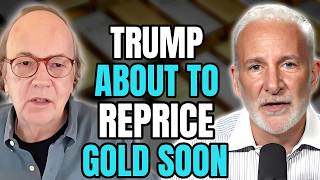
Peter Schiff, a longtime commentator on the precious metals market and monetary policy, argues that investors may be misinterpreting the relationship between rising bond yields and gold and silver prices. Gold has an important support level around $4,000, and silver is near the $60 mark . However, the main argument is what increasing returns actually mean .
When bond prices fall, bondholders suffer losses. And higher yields may indicate a decline in confidence in fixed income assets. This creates an important story of potential capital rotation. If investors become increasingly concerned about losses in government bonds, they may look to alternative stores of value, including precious metals.
In my opinion, the most interesting thing is that higher yields should not automatically be taken as a negative signal for gold and silver. Its impact depends on why yields rise and what investors do with their capital afterwards. If bond market tensions spur diversification beyond debt instruments, precious metals could benefit.
If you found this use not miss any updates , and let us know what you think in the comments. Thank you for joining. Now listen to the interview. But the main reason I think bond yields are rising is not because we have such great economic growth or a lot of investment opportunities for AI capital spending, although that's there, but it's not the main driver.
I think yields are rising because of the supply of debt, the specter of rising inflation, and the fact that we are currently in a long-term bear market in bonds. Bonds will continue to fall, rates will rise, and in that environment, you should own precious metals. You should own gold and silver because that's how you hedge bonds.
Until recently, people viewed bonds as their hedge. But over the past 10 years, bonds have performed the worst in the past 100 years. And you have n't seen anything yet. Bond prices will continue to fall. So, if you need a safe haven from what used to be your safe haven, if investors were looking for stability and security by buying bonds and now can't do that because they're losing too much money on them, especially with inflation , where do you go next?
Gold. This is the last safe haven left. I already said that. And you just need to take advantage of the opportunity that the markets provide. People are stupid enough to think that stagflation and rising debt are bad for gold. They are wrong, but they are giving you the opportunity to take advantage of their ignorance by buying what they are selling.
Another day, another new high for long-term bond yields. Today, the yield on 30- year US Treasury bonds reached 5.62%. So, above 5.6, although in the end the indicator stopped just below 5.6, at 5.59. 10-year bonds hit 5.29. So, temporary resistance is at 5.3. But we closed at 5.26, which is above five and a quarter.
Yesterday marked exactly 2 weeks since the 10-year yield hit 5%. And after 2 weeks, instead of being a ceiling, as many thought, 5% became just a stepping stone to another level, as we grew by 25 basis points in two weeks. At the rate at which bond yields are rising now , 10-year bonds will reach 6 % by the midterm elections in November if the current trajectory continues.
The 5-year-olds reached 5.09, which is almost 5.1, and closed at 5.05, and soon the 2-year-olds will also be at five. But for the average American, more important than Treasury yields will be mortgages, the rates on which, of course, depend on Treasury yields . But right now, a 30-year fixed-rate mortgage is 7.4%.
I said that by election day it would probably reach 8%, but it would be significantly higher than 8%. Now the yield increased again yesterday. So, it's been 2 days since I recorded my podcast over the weekend. Thus , there were 2 more days of increasing profitability. As a result of Friday's rally and what happened on Monday, the gold market took a devastating hit yesterday.
Gold prices fell to about $170 per ounce. Silver fell by about 3 and a half. Now, today the metals have pulled back a bit . Gold has recovered almost $70 of that gain, but is still down $100 in 2 days. And silver also jumped a bit today . Looking at the prices, gold is at 4180, 4180 . And silver is about $61.40.
But what's important about this sell-off is that gold has held steady above 4,000. The bond market is becoming an increasingly important part of the precious metals story . The argument made here is that rising Treasury yields may reflect more than just economic optimism . Significant government borrowing, persistent inflation concerns, and rising debt supply could put prolonged pressure on bond prices and push yields higher.
For investors, an important question is what will happen when traditional fixed-income assets no longer provide the protection they once offered. If bonds lose value and inflation continues to erode purchasing power, gold and silver may gain attention as alternative stores of value. The recent volatility in precious metals also highlights an important point.
Gold doesn't necessarily move in a straight line. A sharp decline can occur even within a long-term bullish trend. What matters is whether the underlying support levels will withstand the correction and whether the overall monetary environment will change . In my opinion, the most useful part of this argument is the difference between nominal returns and real returns.
Treasury bonds with yields above 5 % may look attractive, but the outcome will be very different if inflation remains high and the currency continues to lose purchasing power. Let's move on to the interview . But what was important about Friday's rise in bond yields was that falling oil prices didn't help.
You would expect, based on the last few months, that bond yields would fall along with the price of oil because they had a high correlation. But no, bond yields still went up. Well, today's weak economic data would normally be positive for bonds because it would be presented as, "Oh, the economy is weakening.
Maybe the Fed can't raise rates." Yes? Because we have a weakening economy. This will slow down the rate hike. But the market just shrugged it off . And let me look at the data that was so weak. One of them is consumer trust. So, consumer confidence indicators appeared . These are the numbers for September.
And the reading fell from 88.6 in August, which had already been revised downwards as the initial figure reported for that month was 89.4. So, they revised it down to 88.6. The consensus was that consumers would be more confident. And it was expected to rise to 90. Instead of rising to 90, the index fell all the way to 81.9.
This is the lowest figure in 12 years. So, consumers haven't been this concerned in 12 years. Now think about what has happened in the last 12 years. In particular, the 2020 COVID pandemic, when people were afraid they would die. The economy has almost completely stopped. It was like, you know, the apocalypse.
Like, well, like something out of a science fiction movie . But even at the height of that hysteria, people were more confident than they are now. These are bad numbers, and one reason is that inflation expectations appear to have risen to 5.1% for next year. The latest market signals create an unusual combination.
Economic data is weakening, consumer confidence is falling, but bond yields continue to rise. Typically disappointing economic indicators could reinforce expectations of looser monetary policy and support government bonds. This time the market reaction was completely different. Consumer confidence reportedly fell sharply from the previous reading, reaching its lowest level in over a decade.
At the same time, inflation expectations remained high, creating challenging conditions for both households and policymakers. This distinction is important for understanding today's bond market. Investors are weighing two opposing forces: slowing economic growth and persistent inflationary pressures.
If inflation expectations remain high, the market may continue to demand greater compensation for holding long-term government debt. In my opinion, this is one of the most interesting signals in an interview. Weak growth combined with stubborn inflation creates the likelihood of a difficult stagflationary environment.
This also explains why simply assuming that weak economic data will automatically lower returns can be dangerous. Like, share and subscribe for analysis of gold, silver, inflation, bonds and the global economy.




Comments 0