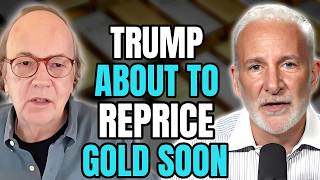
저자: JimRickards&PeterSchiff · 외국인
요약 보기
중앙은행의 금 순매수가 가격 하방 지지를 제공하며, 인플레이션 상승과 채권 약세 속에서 금은 헤지 수단으로 유리하다는 주장. 금·은 급락을 저가 매수 기회로 보며, 재정적자→인플레→금리 상승의 악순환이 결국 금융위기로 이어질 수 있다고 봄. 다만 공적 매수가 가격 바닥을 보장하지는 않는다는 단서도 달림.
다듬은 글
So, supporting gold: central banks are still net buyers. At the same time, central banks are not chasing prices upwards. They won't cause a sharp jump in gold, but they do create a kind of floor for the price. No guarantees, but they are present as net buyers. This prevents gold from falling too much, because if it starts to fall in price, central banks intervene.
China buys a lot. Russia is not as much as it used to be. Russia increased its reserves from 600 to approximately 2,500 tons between 2009 and 2022 . Why are bond yields rising ? Because inflation is higher. Actually, that's why they buy gold. You buy gold as a hedge against inflation. I know how the markets are looking at this: They're saying, "Oh, this high inflation means the Fed, led by hawkish Kevin Warsh...
Precious metals experts Jim Rickards and Peter Schiff look at the factors supporting gold prices as central banks stockpile bullion amid persistent inflation and rising government bond yields. Central banks, particularly China's, remain important participants in the gold market. While their purchases may not cause an immediate spike in prices, steady demand provides support during market corrections.
Russia has also significantly increased its gold reserves over the past decade, highlighting how some countries view bullion as a strategic financial asset. The discussion also focuses on rising bond yields and inflation. While investors sometimes view higher yields as a negative for gold, sustained inflation can enhance the appeal of precious metals as a store of value.
In my opinion, Central bank purchases are a major source of demand for gold, and uncertainty about inflation is driving investors to precious metals. However, official purchases do not guarantee a price floor. Higher real interest rates and a stronger US dollar could still weigh on gold, so it is important to keep an eye on the broader economic outlook.
stay up to date and share your thoughts in the comments. Thanks for joining . Now listen to the interview. But let me get back to the markets' reaction to the inflation data. So the markets fell sharply, first bonds, and then it seems everything else. Or who knows? I mean, maybe the precious metals market reacted even before the bond market.
But the bond market was the only one that really recovered, because at the end of the day, bond yields was actually negative. The 10-year yield was back above 5.3% during the day, but by the end of the day it was back down to 5.19%, and the 30-year was up to 5.52%. One rate that didn't go down was the 30-year fixed-rate mortgage, as it rose above 7.5% for the first time today.
But the sell-off in gold and silver...again , I understand that this is frustrating for metal owners, but take this as an opportunity to buy more if you don't have enough, because the market continues to react to poor inflation and rising bond yields as if they're hurting gold and silver. That's the best thing that could ever happen to gold and silver.
Also, look at the money supply. Did he shrink the money supply? No. The money supply is growing. Did he shrink the balance sheet? No, the balance sheet is growing. So he's not acting like a hawk. He's acting like a "dove." He's a " dove" in sheep's clothing . He fooled the markets. In response to these high inflation numbers, the markets should be buying gold.
They should understand that these high numbers are not a sign that the Fed just needs to fight inflation harder. They are proof that the Fed has already lost the battle against inflation. I do n't care if they raise rates two or three more times. 25 basis points each time. It won't change anything. Inflation is rising faster.
What if inflation is 5%, 6% or more over the next 12 months? Even if the Fed raises the discount rate to 5%, it will still be negative. The rate will still be below the rate of inflation. This is an upside play for gold. If interest rates are not high enough to compensate for the loss of purchasing power, they are worthless.
Gold is a hedge against falling bond prices. That's what it is now and is happening. Remember, when we talk about rising bond yields, the flip side of that is falling bond prices . Bonds are in a bear market. So if you're holding bonds, you're losing money. If you want to avoid those losses, you have to sell your bonds.
Okay, so what do you buy? What do you choose as a safe haven? If you've been using bonds, what do you replace them with if your safe haven isn't so safe anymore? If your safe haven is losing value, you buy gold. After all, bonds can be a safe haven from certain things, but the one thing they don't protect you from is inflation.
In fact, when it comes to inflation, they're the worst asset you can own. Bonds are the ones that lose the most. Bondholders, stocks in general, are going to feel better than bondholders. In fact, stocks are going to feel better in the long run. will take money away from bondholders. If you own, say, IBM stock, versus owning IBM bonds, inflation actually transfers value from IBM bondholders to IBM stockholders.
So if inflation is high, it's better to own stocks. Of course, if it's a very expensive stock that's a " bubble" and its price could go down, well, you might be worse off. But generally speaking, if you buy assets, get a good business, and there's inflation, inflation reduces the value of the debt on that company's balance sheet .
So it's a win for stockholders at the expense of bondholders. So if you're living in an inflationary period, gold is a safe haven to go to. And it's actually the safe haven that central banks are already going to go to when they're abandoning the dollar. So when you see these sell-offs in gold and silver in response to what are actually positive news for gold and silver, you buy.
In this interview, Peter Schiff explores the relationship between inflation, the Federal Reserve's interest rate policy, bond prices and precious metals. The discussion examines why rising interest rates don't necessarily hurt gold's long-term prospects, especially as inflation continues to erode purchasing power.
One key topic is negative real interest rates. When inflation exceeds the return investors receive from fixed-income investments, the appeal of traditional safe havens can diminish. This could prompt investors to look at gold and silver as potential stores of value. We also look at the role of the bond market, the risks faced by long-term bondholders, and why some investors believe stocks and precious metals can offer alternatives during inflationary periods .
Meanwhile, central bank gold purchases and diversification away from the US dollar remain important factors to watch. I think the most important takeaway is that short-term price declines do not automatically invalidate the long-term case for gold and silver. However, precious metals remain volatile, and higher real yields or a stronger dollar could add further downside pressure.
Let's move on to the interview. So gold fell, I think, about $80, maybe to the lows. It closed down about $55, so it played out, closed above 4,100. Silver really got hit hard. It fell about three and a half dollars. As I'm recording this podcast, it's around $55.50. That's a great price. It might be a new low for silver.
I'm not sure. It's definitely not a new low for gold, because I remember gold being below 4,000. But I don't know if I've ever seen silver this cheap. I know it was getting close to that level, but Now is a great time to buy both metals. And if we get a bad PPI tomorrow and you're lucky enough to see an even bigger sell-off, that's an even bigger buy.
Because it's all in the name of growth. Ultimately, wars are not going to provide the kind of inflation control that the markets are expecting. It's just politically impossible. And remember, that's the dynamic here. This is the cycle that's happening right now. We have these huge budget deficits that are going up.
That's fueling inflation. All the extra government spending, the excess demand, leads to money printing and things like that. So you have deficits that lead to inflation, which leads to higher interest rates. Higher interest rates not only increase deficits, but they also weaken the economy. And the weaker the economy, the bigger the deficits.
And now we're back to square one. Now we have bigger deficits, which means higher bond yields, a weaker economy, and back to bigger deficits. It's just a self-perpetuating spiral until eventually there is a financial crisis. You get a collapse in asset prices. How long do you think housing prices will withstand rising mortgage rates?
Look at what is happening to the banks. Look at what is happening to the developers. Look at what is happening to Fannie and Freddie. I have talked about this before. Fannie and Freddie are down about 7-8% today. Already in a week, and it has only been 3 days. Fannie Mae is down 23% and Freddie Mac is down 21% in 3 days.
Even if the long-term outlook for precious metals remains positive, prices could fall even lower before the recovery begins. A sharp sell-off does not automatically mean that the market has bottomed out . And investors should be careful not to treat every dip as a guaranteed buying opportunity. This is a situation worth watching because of the possibility that financial stress will eventually change investors' view of traditional assets and savings.
capital. If confidence weakens and inflation remains stubborn, gold and silver could benefit. But the timing will depend on interest rates, the dollar, investor sentiment and policy responses. Personally, I believe the broader economic picture deserves more attention than one-day price swings. There may be opportunity, but patience and risk management remain important.
In my opinion, the most important signal here is the growing pressure between government debt, rising borrowing costs and a slowing economy. When these forces collide, policymakers have fewer easy choices, and this uncertainty could change investor demand for gold and silver. the video with other gold and silver investors and subscribe to Metal Bar to learn more about precious metals.




Comments 0