
저자: JimRickards&PeterSchiff · 외국인
요약 보기
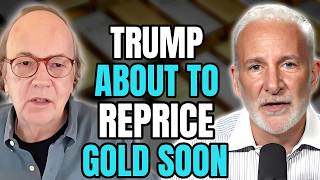
결론: 두 출연자는 은이 125달러 이상, 금이 장기적으로 10,000달러까지 갈 수 있다고 주장하며 최근 조정을 일시적 쉬어가기로 본다. 금·은 가격 전망: 은이 125달러 위로 갈 수 있으며 125달러가 최종 고점은 아니라는 입장이다. 금은 1,000달러 단위 상승이 갈수록 퍼센트 상승률이 낮아지므로 5,000→10,000 구간도 수학적으로 가능하다고 설명한다. 다만 이 역시 통화정책·투자 수요·인플레이션·시장 심리에 좌우되는 투기적 전망이다. 금 조정 평가: 금은 5,500~5,600달러 고점에서 4,000달러 부근까지 조정했으며, 이 조정은 긴 하락이 아니라 시장을 쉬게 하는 구간이고 다시 신고가를 갈 수 있다는 견해다. 1년 내 신고가 가능성을 언급했다. 채권금리·부채위기: 금리 상승은 금에 악재가 아니라 오히려 순풍이라고 본다. 국가부채 위기가 시작되면 미국채를 던지고 안전자산을 찾게 되며, 중앙은행이 채권을 사야 하는 압력이 생겨 인플레이션과 금 강세로 이어진다는 논리다. 금리 상승이 금에 반드시 해롭다는 주장에는 반대한다. 은 기술적 분석: 은은 1981년 50달러 고점과 2011년 고점이 이중천장을 이룬 뒤 작년 말 돌파했고, 50달러가 이제 지지선으로 바뀌었다고 본다. 60달러 부근 매수는 하방 약 10달러 대비 상방 최소 70달러로 위험보상비가 좋다고 주장했다. 달러·디달러화 논쟁: 금 가격의 달러 기준 하락은 달러 약세가 아니라 강한 달러를 의미한다고 본다. 최근 금이 20% 이상 떨어진 것을 근거로 든다. 엔·유로·위안 약세와 강달러 국면을 언급하며 브릭스 통화나 금본위 위안화가 달러를 대체한다는 서사는 허구라고 주장한다. 중앙은행의 미국채 매도는 불신이 아니라 달러 현금 확보 때문이며, 중국의 미국채 매도도 자국 통화와 은행 지원용 달러 확보가 목적이라고 설명한다. 준비자산은 통화가 아니라 증권이라는 관점을 제시한다. 출연자 전망 정리: 금·은 장기 강세, 금 4,000달러 부근 조정은 매수 기회, 은은 50~60달러 지지 기반 상승, 달러는 당분간 강세 국면이라는 입장이다. 이 영상은 대부분 과거 가격 설명과 장기 전망에 가깝고, 단기 방향은 명확하지 않다. 리스크: 금과 은은 변동성이 크며 투자 수익이 보장되지 않는다. 중앙은행의 행동은 예측하기 어렵고 기술적 지지선이 깨질 수 있다. 영상은 이를 투기적 전망으로 명시한다.
다듬은 글
But I believe silver will rise above $125 an ounce. I don't think this is a peak and that the price of silver will never go above this level. I think it will be much higher than that. So I think it's worth buying. If you have 50 ounces of gold and the price increases by $1,000 per ounce, you have made $50,000.
If the price goes up another $1,000 per ounce, you've made another $50,000. Therefore, people become, to some extent, " fixed" on this dynamic. But they lose sight of—and this is fifth- grade math, nothing complicated—that each $1,000 increase, as I described, is easier than the last, because you're working from a higher base , and it's a smaller percentage increase.
So when you go from 4,000 to 5,000, that's a 25% increase, but when you go from 9,000 to 10,000, that's only an 11% increase. It's not that difficult. So it will take time to get to 5 and 6 thousand, but then the price will go through 7, 8, 9, 10 very quickly, simply because it is much easier, and Can silver go above $125 an ounce, while gold will eventually approach $10,000?
Jim Rickards and Peter Schiff discuss the long-term potential of precious metals , highlighting how rising prices and interest rates can change investor expectations. The bullish outlook for silver suggests that $125 may not be the final peak, especially if monetary uncertainty and rising investment demand support higher valuations.
Gold's potential path to $10,000 is also considered through a simple mathematical principle . Each additional $1,000 represents a smaller percentage increase as the initial price increases. For example, a move in gold from $4,000 to $5,000 requires a 25% gain, while a move from $9,000 to $10,000 requires about 11% .
In my opinion, this interest-based argument is mathematically correct, but lower interest returns do not guarantee that gold will quickly reach higher price targets. Silver above $125 and gold at $10,000 remain speculative projections, dependent on monetary conditions, investment demand, inflation, and market sentiment.
If this was helpful to you , please like , share, and subscribe to Metal Bar . Turn on notifications so you don't miss any updates, and comment below to share your thoughts. . You know, we're all...I mean, we've already had a pretty big pullback from 55, 5600 to 4000. We're building a pretty good base here.
I think we will be going up again soon . I think we could easily hit a new high by next year, which, you know, is a pretty significant move from here. Yes. But, yeah, I don't expect this to be a long-term correction. I think this is a pause that refreshes the market. And I believe it lays the groundwork for another big leap, especially when the potential debt crisis really unfolds.
Because now investors see rising bond yields as a problem for gold, as an obstacle. In fact, this is an advantage, it is the wind in the sails. Because if a sovereign debt crisis starts, where will you go? How, where, where will you hide from this ? You are going for gold. If you are getting rid of US Treasuries and want an alternative haven, there is nothing else left.
And I think it's the same if you're European and you're concerned about what's happening in the eurozone. Are you worried about France or other countries? What will you buy? Yes? Why buy a dollar? Because we have our own problems. We have Treasury bonds and we have a debt problem. So, gold is the last remaining haven .
And to the extent that we get high inflation as a solution to the debt problem. Well, that's in gold's favor. I mean, gold thrives on inflation. Therefore, rising interest rates, resulting from falling bond prices, are the most likely catalyst for higher inflation. Because they force the central bank to print more money.
As for stimulating the economy, if they want to do that, because high interest rates are depressing the economy. Yes, and because they are forced to buy bonds that no one else needs. If the Fed had stayed away, yields would have been so high that the government would not be able to pay. Yeah, I mean, look, a gold price of $4,000 might seem high when you look in the rearview mirror.
After all, gold was worth $20 an ounce from 1789 to 1934, and in 1934 it was $20 an ounce. And then from 1934 to 1970 it was worth $35 an ounce. So, now, of course, it's worth 4,000, almost 4,200. But, you know, last year or earlier this year it was 5,600, so at least you're buying on a pullback. You buy, you know, a 20 percent correction.
But no, I think gold prices will continue to rise. They have been growing for 100 years. Why would they stop? They won't stop. I mean, they will continue to grow. Uh, silver, you know, looks really interesting to me because it just came out of a massive double top. Because silver hit $50 in 1981, and then it couldn't even get to $50 in 2011 before it fell back down, you know, below 20.
And it finally broke out at the end of last year, and then it went, you know, when it went above 50, it just went straight up to 125. So we really broke through resistance, and now we've played a lot of it back. But we never went back down to 50 . So for me, this is a perfect technical development because what was resistance has now become support.
In fact, we can't even go back to that support. No one can buy silver for $50 anymore. You might have a chance to buy at 59 or 58, but no one has been able to buy silver at $50 since it went above 50. Uh, so I think 50 is really support. You're probably unlikely to see a price tag of $50. Not that it's impossible, but I think the chances of you not seeing $50 are higher than the chances of you seeing it.
This means that buying it now at around 60 is a very good risk-reward ratio. You have about $10 of downside risk. Uh, and you have at least $70 of upside potential to get to the previous high, you know, at $60. So. Gold and silver are once again gaining attention as investors weigh rising bond yields, government debt and the possibility of a sovereign debt crisis.
In this interview, a precious metals market analyst explains why the recent correction may be a temporary pause, rather than the end of an overall bull market. The discussion challenges the idea that rising interest rates necessarily hurt gold. If government borrowing costs become unsustainable, central banks could face pressure to support bond markets, potentially heightening inflation fears and strengthening gold's appeal as a safe haven.
As trust in traditional currencies and government bonds is questioned, physical precious metals may attract additional investment demand. Silver presents another compelling argument. After the metal broke through the historic $50 resistance level and surged to $125, it corrected but remained above its previous breakout zone.
In my opinion, sovereign debt issues and inflation risks deserve attention, while industrial demand for silver adds another important dimension. However, central bank actions are unpredictable, and technical support levels may not work. Gold and silver remain volatile assets, so investors should not take projected returns as guaranteed.
Let's move on to the interview . Well, when people say, you know, that gold is getting more expensive, they mean, of course, that the price of gold in dollars is going up , and gold is gold. I mean, it has no profitability. You can make a lot of money investing in it, but it doesn't generate income.
This is a chemical element. This is atomic number 79. It just lies there. If you put a gold coin in a drawer, come back a year later, open it—it's still a gold coin. Nothing, absolutely nothing has changed. To me, when the dollar price of gold increases, it means the dollar is weakening. Now, since January, the price of gold in dollars has fallen by more than 20%.
A few months ago it was even a little lower, around 3900. This indicates a very strong dollar. Maybe gold went up a little today, that's normal. I don't follow this closely, but we have a very strong dollar. And I just wrote an article about this whole currency depreciation trade. I'm sure you've heard of it.
You know: BRICS is going to introduce a new currency, the Chinese are going to issue a gold-backed yuan, sovereign wealth funds, banks are dumping US Treasuries, the end of the dollar, etc. This is a completely false narrative. None of these things are true. The euro is falling, the Japanese yen is falling, the Chinese yuan is falling, gold has also fallen over the year.
We are seeing a significant strengthening of the dollar, a kind of period of dollar dominance. And when central banks sell Treasuries, they're not dumping them because they don't like them. In fact, they would like to have more of them. The reason they are selling them is because they need cash. People talk about reserve currencies.
There is no such thing as a reserve currency. Reserve assets are securities. US Treasury bonds, German bonds, Japanese government bonds, Italian bonds, etc. These are securities. They are denominated in a certain currency, but if you need money, you need currency, you have to sell the security and get the currency.
And that's exactly what's happening now, but because of the global dollar shortage. China has been selling US Treasury bonds, it's true, it's visible in the data, but they're doing it because they need dollars to support their own currency and banks. This interview presents an alternative perspective on gold, currency markets, and the debate surrounding BRICS and the future of the international financial system.
Jim Rickards argues that gold itself does not change when its price in dollars fluctuates. Instead, these movements reflect changing market conditions and the purchasing power of currencies, challenging the popular narrative of dedollarization. The analysis casts doubt on the claim that a BRICS currency or the gold-backed Chinese yuan will soon replace the dollar.
He also offers an alternative explanation for foreign governments' sales of U.S. Treasury bonds. Some governments may raise dollars to support their currencies and financial institutions rather than completely abandoning US assets. In my opinion, this outlook is a useful reminder that selling Treasury bonds does not automatically indicate a loss of confidence in the US dollar.
However, the strength of the dollar can change, and the current diversification by central banks is noteworthy. The price of gold also responds to real interest rates, investor demand, and geopolitical uncertainty, so it cannot be viewed as a simple indicator of dollar strength. Will the dollar maintain its dominance, or will global reserve strategies gradually evolve?
Share your thoughts in the comments, like and subscribe for more analysis on gold, silver, currencies and global markets. Mhm.



Comments 0