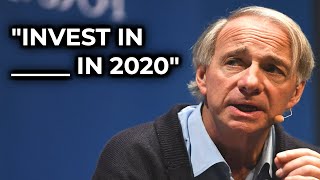
저자: TomHeavey/인터뷰대상RayDalio · 외국인
요약 보기
2020년 코로나 봉쇄 국면에서 Ray Dalio의 시장 진단을 전달하며, 현 위기가 2008년보다 크고 1930년대식 디프레션에 가깝다고 본다는 결론이다. 위기 성격: Dalio는 2008년은 은행·모기지 문제였으나 이번엔 경제 전반이 멈춘 것이라 더 크다고 주장한다. 금리·통화정책: 금리가 이미 제로 부근이라 기존 통화정책 효력이 약해졌고, 정부 채무 매입 등 재정 대응이 필요하다고 봤다. 디프레션 vs 리세션: 1929~1932년 유사 패턴(두 자릿수 실업, GDP 약 10% 하락)을 거론하며 현재를 디프레션 성격으로 봤고, 회복까지 긴 시간이 걸린다고 했다. 진행자 해설: 최근 경험에 기대는 recency bias 때문에 디프레션 가능성을 과소평가한다는 점을 지적했다. 투자 전략(기업): 필수소비재 등 안정 기업과 혁신 기업을 구분하며, 재무구조가 탄탄한 기업이 살아남는다고 봤다. 원격근무·화상회의 수요는 장기 구조 변화로 제시됐다. 분산투자: 특정 종목 선택보다 분산이 핵심이며, 자산군·국가·통화 전반에 분산하고 리밸런싱을 해야 한다고 강조했다. 현금·헤지: 현금은 구매력 손실(연 약 2%) 때문에 가장 나쁜 투자가 될 수 있고, 금 등 대체 헤지 자산을 일부 보유할 것을 권했다. 시장 타이밍은 지양한다. 리스크 관리: 봉쇄 상황에서는 기대수익을 일부 포기하더라도 위험 축소가 중요하다고 결론지었다. 출연자 전망: Dalio는 디프레션 진입을 강하게 시사하나 확신은 없다고 밝혔고, 특정 종목에 대한 직접 매수·매도 지시는 없었다.
다듬은 글
we're now at one of those defining moments that I've seen repeatedly the nineteen thirty thirty to forty five period if you go back in history there's nothing new to this and it's a defining moment in terms of how people are with each other investing is hard I've been learning for several years how to invest and I've made many mistakes along the way I've also learned a thing or two which I've shared with you guys during this somewhat crazy journey the one thing I've consistently found always helps with my knowledge is to study what the smartest people in the world the smartest investors are doing with their money that's why in this video I'll be talking about Ray Dalio thoughts on the market at the moment and how he recommends that investors take their portfolios forwards if you don't know him he is arguably the most successful fund manager of the 21st century so certainly someone we can learn a thing or two off hey welcome back to the channel everyone and if you're new I'm Tom I talk about all things investing blockchain and finance so if you want to learn more about these things consider subscribing and leaving a like as it helps the YouTube algorithm so let's get into it let's talk about what Ray Dalio has been saying in recent times particularly answering a few questions does he believe that this is going to be worse than 2008 does he think we are in a depression or in a recession and how would he recommend the investors invest their money moving forwards let's get straight into it does he think that this is worse than 2008 yeah this is bigger than what happened in 2008 I'll distinguish it in 2008 we had banks it's the same thing meaning you have a certain amount of leverage things go down too much leverage means you're broke in the counting terms though then you look around and you say who are the systemically important entities that you don't want to go broke because do you want to lose those banks at this time and then you can make up money and make up credit and you can keep them alive in some way and you did it with banks and through the bank there were the mortgages and that's what it looked like this is more complex than that because there are the banks and then there are those all of those that are beyond banks although the little business is all of those in all the different places that are beyond it and it's a bigger crisis and we have a less effective monetary policy because interest rates declines have reached their limit and just buying financial assets by the central bank and buying the normal financial assets won't work they have to buy the debt of the government and the government or the many governments have to be effective in getting buying power and production to those who need it around the world Daniel makes the point that in 2008 the problems with the economy were centered around two key things mortgages and banks for those who have studied this or have simply watched the big shorts you'll be familiar with the housing crisis in 2008 essentially people were given mortgages that they couldn't afford to pay back when the house prices didn't continue increasing they couldn't refinance and as a result they defaulted on their loans the banks which held these mortgages as a result lost a lot of money and this had a cascading effect causing ripples throughout the entire economy and leading to the Great Recession in 2020 the situation is different with most countries being in some form of lock down their economies have essentially been paused this doesn't just affect banking this doesn't just affect housing this affects virtually every single sector of the economy with just a few essential services being spared Daniel makes the point that with this being so widespread it is likely to be worse than 2008 I would also add on to this that we have been overdue a recession if you look back at history there is a recession approximately every three to five years we've been nearly ten years without one so the Black Swan event that has occurred has also coincided with a bull run which at some point needed to end now Dario is going to be talking about whether we are in a depression or a recession so what do you mean by a depression okay something like happened in the 1930 so just to repeat 1929 to 1932 there was a fall in the economy and a very double-digit unemployment rates and a magnitude a fall in the economy like about 10% do I think we're in that yes how was that dealt with 1933 what they did is they printed a lot of money then and the government came out with the same type of programs that we're having now yes okay same thing zero interest rates hit zero same thing okay same dynamics and then there is the that money causes an expansion from that point how long does it take for the stock market to exceed its highs or how long does it take for the economy to exceed its former highs a long time okay do I think that's what we're in yes that's what we're in we've seen that happen repeatedly in history you saw many many times it's just the most recent one and there's a structure to that so yes this is not a recession this is a breakdown and an operation that I'm just describing in terms of how its dealt with the production of money and credit and all of that that's what we're in these are somewhat sobering words and in contrast to what other people in the economy are saying some people believe this could just be a blip and then the economy will continue as normal what do I think about this honestly this is well above my level of knowledge this is above my paygrade as they say I don't know if we're gonna be in a recession a depression or whether the economy will spring back but what I will say is there is a reason why many people may not believe that we could be going into a depression and that relates to recency bias recency bias is this psychological principle that what we have seen in the recent past we assume is going to continue into the future to be clear this isn't just stock markets or investing and every single person myself included is susceptible to this we all look at the recent we extrapolate it forwards and we assume that that is how the future is going to play out whereas in fact if you look at a data that is often not the case so in this particular example many people myself included again have never lived through a depression so we assume that we cannot have a depression we haven't seen it in the recent past so we don't think it's going to happen in the upcoming future instead something like 2008 which of course was a horrible time for many people but the outcome was a relatively quick spring back to business as usual many people have seen that and they have assumed that this is going to happen for this situation again Ray Dalio is one of my idols because he has an amazing ability to do something I wish I was better at and that is to put my emotions to one side and to purely look at stats and data I try my hardest but like you I'm an emotional person and emotions come into my investing decisions as well Ray Dalio is arguably the best person I've ever seen for just looking at the stats and the maths behind things that's why he was able to predict the 2008 crisis and even made a 10 percent profit in that time so when he says the depression is coming I don't know if that's true or not no one really does but I know that he is one of the smartest people for predicting these types of things because our emotions often cloud our judgment and he's incredible at putting his emotions to one side and being purely analytical you're probably now wondering what to do where to invest how to protect your money let's hand it back over to Dalio who's going to discuss the two types of companies that could potentially prosper even in these tough economic times there are two types basically there are those that are state stable meat-and-potatoes not leveraged kind of companies you know the Campbell Soup equivalent you know like everybody's going to use a multi and kind of thing and then there are the innovators the innovators we're talking about Orko you had Marco on the floor and that new innovation those who can adapt well and innovate well and don't have balance sheet problems in other words they have strong balance sheets so they're going to be able to play the game without having that they will be great winners and so there's always new inventions new creativity that is the new adaptation that that becomes a company and an entrepreneur and they're going to do great plus the stuff that we're always going to need those are the things that are going to do great he discusses two types of businesses the first are the stable businesses that sell staple products these are products which we will be buying in economic booms and busts it doesn't really matter the economic situation we all need these products so the people who sell them the companies that sell them going to have consistent revenue the second are the innovators these are the businesses which look at how the world is now they study how the world is going to be different in the future and they facilitate this transformation from how the economy is at the moment to where it will be in the future and profit as a result the first type of company that comes to mind is video calling software of course these companies have done very well over the past few months as this is how we now all communicate with each other but I believe there's a long term implication here as well with the lockdowns occurring businesses have been forced to encourage remote working and many of those may have found that it's actually worked surprisingly well much better than they expected and this could be something that they may encourage even after lock downs are lifted after all the business may have to pay less in terms of office fees if they can have some people working remotes or some people who only come in a few days per week also for the employees the ability to work once or twice a week from home is a selling point and it's better for the environment as well so it's really a win-win-win and this has been of course the case for many years but lots of businesses have never really considered this all being forced to try it now that they have been forced into this position they may change how they view offices in the future so if you're looking for individual winners within a stock market it could be interesting to look at the companies building the future digital economy all I would say here though is be aware that this has been overhyped somewhat in recent times so companies such as zoom have very high stock prices now and obviously if you're investing be aware of what their current market cap their share price and their revenue and really nail down these things don't just buy into an idea of something always of course consider what you are buying into and the valuation at the time this is advice the Dalio offers for people who were looking at specific stocks but he understands that many people aren't going to have the time or the inclination to try to pick out the individual winners and for those people he also has recommendations an investor must understand that they probably will not be able to play the game well they probably will not be able to decide how to move in and out of things in order to be successful in the markets is more difficult than getting a gold medal in the Olympics you wouldn't think about competing in the Olympics but everybody thinks they can compete in the markets but there's more money competing it's like a zero-sum game and there's more money doing it and the worst thing you could do is be I think you can time all of these movements if you could I guarantee the games a tough game too tight we put hundreds of millions of dollars into the game every year and it's tough so what the individual investor needs to do is know how to diversify well so the word that I would know how to diversify well and in a balanced way the greatest mistake of all investors is to think that what has done well lately is a better investment rather than more expensive and the greatest and what is done worse lately is the worst investment get me out of it and rather than it's cheap and unless you know how to deal with the differences of those which most people don't they're going to be in trouble I want to pause here for a second because this is the point that I have actually covered numerous times on this video and I'm really happy to see one of my idols Ray Dalio talking about this to essentially rebalancing your portfolio is really important to do but people's psychology works in the reverse way to how it should you see when an investment is doing really well it's going up in price our psychology is that that thing is bringing us pleasure so we should buy more of it when something is going down in price it is bringing us psychological pain so we want it out of our lives you want to get rid of it and that means selling it the problem is that means buying something on the way up and selling something on the way down rebalancing a portfolio is actually the opposite of that as something increases in value we should actually be taking profits and bringing the level of our portfolio that it represents back down as something is dropping in value we should actually be buying into the dip as they say and increasing the portion it represents in our portfolio this is really difficult to do and if you're watching this I'm not some robot who is perfect at this either I really struggle with this but it's something that we should all strive to be better at so understand that wealth total amount of wealth in the world essentially doesn't change very much okay and that one thing goes up another thing goes down and to know how to diversify to diversify it in asset classes to diversify it in countries to diversify it in currencies to know how to diversify that well so that you have wealth diversification is important I want to pause it here because this is such a key point many investors that I speak to are well diversified within their own country but that's pretty much it I'll speak to American investors and they'll tell me that they've invested into the S&P 500 index which is great because they've invested into the top 500 companies in the US so yes they are well diversify in one country and of course if you're gonna pick one country I probably picked the US is the best one to diversify across it's the largest economy in the world but still to achieve true diversification you need to be diversified across many different countries many different asset classes and many different currencies do not think that cash is a safe investment when you most people think look I just want safety and those bonds aren't given give me an interest rate and so on so where do I get safe cash is a seductive investment because it doesn't have as much volatility but it taxes you in your buying power about 2% a year and so and that so cash is almost always the worst investment so you have to think about that you should think a little bit unconventionally do you have a little bit of gold do you have a little bit of acid in case this monetary system breaks down and money's redefined do you have a little bit of that I can't get into all the different ways that one can diversify well I try to convey those things in my books or my or you know on poster post on LinkedIn particularly but I but I would say diversify well be humble don't market time and be conscious of the dangers of cash cash is not a good investment not such a surprise they're bearing in mind that central banks are printing vast quantities of money and increasing the supply of any assets is not likely to be good for its long-term price one point I really wanna touch on here is that daddio mentions market hedges that's something I'm quite passionate about as well and I'll explain essentially why I think is so important for people to include them in their portfolios let's say you invest a hundred percent into the stock market if the stock market does this your portfolio does this if it does this your portfolio does this as well well a market hedge is essentially an asset which is either non correlated or inversely correlated to the stock market so when the stock market is going down hedge is going to go up when the stock market is gonna go up any market hedge will generally speaking go down to your potential profits if the stock market does very well over the next few years maybe brought down slightly but your potential losses may be brought up slightly so essentially by including market hedges I know this is very scientific with the hands and everything you essentially are bringing in the range of possibilities so instead of having this is your potential outcomes by including market hedges you're reducing both numbers so they are somewhat closer to the middle and in other economic times you may consider having less market hedges because you may feel like there is potentially more return in equities but I would say at this point in time bearing in mind we have had a Black Swan event occur to the world my country as I'm recording this is in lockdown and many people have lost their jobs I would say for most people this may not be you but certainly for most people reducing their risk is the most important thing right now even if that means giving up some potential return I would rather go for a lower risk reward ratio if you've made it this far in the video you somehow listen to my ramblings and don't know how you've managed it but thank you if you enjoyed this video consider subscribing as I've put out videos like this frequently and a single like helps with the YouTube algorithm so it would be greatly appreciated thank you oh yeah check out these videos too




Comments 0