
원문 보기
All things considered, it's probably cheaper than gold. I think mining stocks are more volatile, and, let's say, I think gold, silver, and platinum are bottoming out around here. I would have preferred that they went down further and hit bottom, say, 20% lower. But it might not happen. So, if you believe in a bull market, I think silver and platinum will outperform gold; that's my opinion.
But I'm not going to change my position from gold to silver and platinum. I'm happy with what I have. I'm happy as long as the price of gold doesn't go down. This is my opinion. Global macroeconomic forces are changing rapidly as central bank policies continually erode the purchasing power of fiat currency around the world.
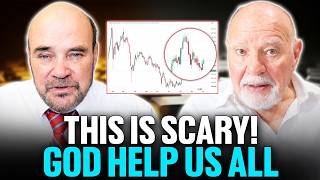
Savvy investors are forced to look beyond traditional paper assets to protect their generational wealth from impending market volatility. Marc Faber, renowned Swiss , projects that precious metals are currently forming a significant cyclical bottom. He predicts that, although gold serves as a vital reserve anchor, silver and platinum will drastically outperform gold during the next commodity rally, because central banks can print paper money, but they cannot create physical items.
Moving approximately 25% of a liquid portfolio into precious metals acts as a necessary shield against currency debasement. Although sudden shocks to market liquidity could temporarily suppress commodity prices, their non-printable nature guarantees lasting real value in the long term. Maintaining a disciplined stockpile of physical assets remains the primary defense against systemic economic instabilit talking about .
All things considered, it's probably cheaper than gold. I think platinum will perform better, and probably silver too, but I mostly own gold. But, as an investor, I don't just buy things that I think will perform the best. I also like, you know, when I look at the portfolio, I have different companies.
I like companies that pay a regular dividend, say 7%, and companies that can grow a little over time, say 3-4% annual growth, plus the dividend yield. So, that's enough for me. I have modest ambitions in life. I think mining stocks are more volatile, and, let's say, I think gold, silver, and platinum are bottoming out around here.
I would have preferred them to go down further and hit bottom, say, 20% lower, but that might not happen. But if you believe in a bull market, I think silver and platinum will outperform gold ; that's my opinion. But I'm not going to change my position from gold to silver and platinum . I'm happy with what I have.
I'm happy as long as the price of gold doesn't go down. This is my...this is my opinion. Nobody knows for sure what the price will be in a year's time. But I would answer your question this way. Let's assume you are an individual. It has one hundred, let's say one hundred million or one hundred thousand, and these are its liquidity and its assets.
And he asks me, "Mark, what should I own?" "What should I own with these one hundred, or one hundred thousand, or one million, or one hundred billion?" Then I would tell him that he would have some stocks, because in the long run stocks tend to outperform any kind of investment, better than bonds, better than cash, and better than real estate if invested in reasonably good companies.
Of course, then we need to define what a reasonably good company is. Do you understand? It's a never-ending process. I'm just saying I'd have some shares. And I would have some cash because it allows me the opportunity, or gives me the chance, to buy something when I see something attractive. And then I would have some real estate because I feel that people consider it safe to own a home and one can enjoy buying the house they want.
You don't have to buy a house because we don't live under socialism or communism, where the government says you must live here or there. No, we can choose. And then, the third option is to own some shares through, say, an index fund, or to choose 10 or 20 good companies and buy a basket. Or some people will buy only one share, and so on.
So everyone has to decide, and my opinion would be that you should own some precious metals rather than just cash dollars. I prefer to own precious metals because they cannot be printed. But, as I mentioned last time, precious metals can come under pressure if people need liquidity, so they may sell off precious metals.
But, in general, I think that all of you and all your viewers should buy some precious metals, not just once, but every month of your lives. Yes, and don't put all your money in precious metals, but if you have 100, I would put maybe 25 in precious metals. Achieving long-term financial stability requires a balanced asset allocation strategy involving equities, cash, real estate, and commodities.
Historically, equities outperform fixed income and cash over long horizons, provided that investments are focused on high-quality companies with reliable dividends of around 7% and moderate annual growth . Cash reserves offer crucial tactical flexibility to take advantage of undervalued opportunities during market panics, while real estate ensures personal security.
Looking ahead, active fund managers are expected to easily outperform passive index funds as market distortions worsen. Unprecedented money printing and the expanding government budget deficit will inevitably drive accelerating inflation rates. In this environment, stock prices may hold steady in nominal terms, but are expected to fall significantly in real terms, adjusted for inflation, against gold.
Diversifying capital intelligently keeps wealth intact during turbulent monetary transitions. Now, let's get back to the interview. My opinion is that the US stock market has peaked, but I analyzed the peak between 1965 and 1973, and it was a very interesting peak in the sense that some stocks and indices, such as the utilities sector , peaked in 1965-66, and then other stocks, growth stocks, speculative stocks, and conglomerates, peaked in 1968, and finally in 1973, there were about 50 stocks.
Back then we called them the " Nifty 50s". Companies like Kodak, Polaroid, Xerox, Sears, J.C. Penney, among others. They kept rising because investors argued that their quality was superior to that of other companies and that they would continue to grow regardless of whether the weather was good, dark, or rainy.
In other words, throughout economic cycles, they would be somewhat affected, but would essentially continue to grow forever. That's why people were paying huge premiums for these shares, but eventually they also fell by an average of 70% between the peak in January 1973 and the low in December 1974 .
So I think in our case we had a peak in "meme stocks" and speculative stocks in 2021 and some in January 2022, then we went down and had another bull market, but most stocks didn't reach new highs, although some did, such as semiconductors and the so-called " magnificent seven", which boosted indices like the S&P and the Nasdaq, which also reached new highs.
But overall, I don't think much money will be made in stocks in the next few years, although perhaps if the US government under Trump continues to print money and increase the fiscal deficit, the government's budget deficit, it's conceivable that we could enter into ever-higher inflation rates. So, in nominal terms, stocks may not fall much, but they will probably fall in real terms, adjusted for inflation or, say, against precious metals like gold.
That's one possibility. Well, I think the average person is largely ruined. In other words, it will face many difficulties because governments today, especially in the US, favor the super-rich. That is, to asset owners. You understand? When you print money, the only thing that has happened throughout history in all societies is that the poor and the middle class lose, and wealth becomes concentrated in the hands of a few people, not many.
Let's say 20, 50 people. Then they control huge companies and have great influence. It's very centralized. And that's what we see in the stock market as well . We don't have a broad-based rebound. We have a rally in, let's say, 50 stocks in the United States. And then two shares in South Korea, three shares in Taiwan, and so on.
But it is not broad-based. And I believe that for an investor there is an opportunity to buy what is being neglected. In other words, speculators are focusing on Nvidia, Tesla, Micron Technology, and whatever else. But the broader market offers, especially in emerging markets, many inexpensive stocks.
Although saying they are not expensive is relative to what is very expensive in itself. They're not that cheap. In some cases they are cheap compared to the performance of bonds, because some bonds yield, say, 2% and stocks offer, say, a 7% dividend. So stocks are relatively cheap compared to bonds, and some bonds are relatively cheap compared to stocks because they yield, say in the market, the 10-year Treasury bond , say more than 5%.
Perhaps it's not such a bad idea compared to Nvidia and Micron Technology, you know ? So I'm not saying it's more complex than before. But I believe an active fund manager will outperform index funds. That's my opinion. The main stock market indices show clear signs of a secular peak, mirroring the market's all-time high observed between 1965 and 1973.
During that era, the speculative segments of the market collapsed early, while a concentrated group of high-flying popular stocks masked structural weakness before plummeting 70% . An almost identical dynamic is unfolding today, where narrow gains in mega-cap tech and semiconductor stocks are artificially boosting major indexes while most stocks stagnate.
Stock market returns are expected to be extremely disappointing in the coming years, with inflation-adjusted real valuations contracting sharply against gold. Uncontrolled and deficit-ridden public spending will continue to unleash high rates of inflation, systematically eroding everyday purchasing power .
As a direct result, the average citizen is expected to suffer severe economic hardship as wealth becomes concentrated in the hands of large asset holders. However, smart capital can still find great value by moving away from overvalued tech stocks toward neglected emerging markets and resilient high-yield bonds.
Successfully navigating this changing financial landscape requires prioritizing tangible performance and neglected value over momentum-based specula for watching.




Comments 0