원문 보기
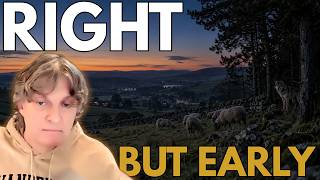
You know this one. A shepherd boy, bored on a hillside, shouts wolf to watch the villagers come running. They come, no wolf. He does it again. They come again, no wolf. Then one evening a real wolf turns up. The boy screams, nobody comes, and the sheep, in most versions, do not have a happy ending. In May this year, , opened one of his posts by telling that story about himself.
He wrote that he had become a meme for the number of times he had called a crash, the boy who cried wolf. Then in the same post, he did something extraordinary. He said, "This time I'm calling it." Since then, the American stock market has kept setting new records through the summer and into October.
So, which is it? Is Burry a man who has been crying wolf for 15 straight years, or is he the only person on the hillside who can actually see the wolf? I went through every call I could find, the right ones, the wrong ones, and the ones he never actually made. The answer is more interesting than either side thinks.
advice. And I should say I admire him, which is exactly why I want to check his record correctly. First, the calls he got right, then the calls he never made, then the ones he got wrong, then the big call he made this year, and finally a verdict with what you can sensibly do yourself with a warning from someone like him.
Part one, the fable and the meme. The fable is usually told as a lesson about lying, but read it again, because the bit everybody forgets is the ending. The wolf was real. The villagers were not wrong to be skeptical, but they were wrong about the one night that actually mattered. Michael Burry has always known he plays this part.
His newsletter is called Cassandra Unchained. In Greek myth, Cassandra was a princess of Troy. The god Apollo gave her the gift of seeing the future hoping to win her over. When she turned him down, he could not take the gift back, so he added a curse. Nobody would ever believe her. It is the most spiteful piece of small print in literature.
She warned the Trojans about the wooden horse. They wheeled it in anyway, and on social media, Michael Burry has long been a meme. Every time a headline says Burry bets on a crash, the replies fill up with the same joke. Burry has predicted 43 of the last two crashes. All words to that effect. In his May post, he pushed back.
History, he wrote, is not written by the winners. It's written by whoever controls the pen, and right now, he said, social media holds the pen. So, let us take the pen back and check the record, which brings us to the second part, the calls Michael Burry got right. Burry lists five calls that he says that he got right one at a time.
First, 2000. He was a junior doctor at Stanford, nearly $200,000 in debt from medical school with no accounting training at all. He became so convinced the dot-com bubble was bursting and the boring shares were absurdly cheap that he walked out of medicine in order to start his own fund. He was right on both counts.
The tech crash came, and his boring shares soared. According to Michael Lewis's book The Big Short, over his first five years, while the American stock market went backwards, his fund more than tripled its investors' money. He even tells a lovely story about the name. He originally wanted to call it The Burry Partnership in tribute to Warren Buffett's early Buffett Partnership.
Then, he said it out loud. More people, he writes, should know their names are not amenable to being a business name, so it became Scion Capital. Second, 2007. This is the one Hollywood made a film about. He bet against American mortgages from 2005. His own investors nearly revolted, and when the crash came, his fund made its investors hundreds of millions of dollars.
Nobody disputes this one. Third, 2019, he warned that index funds had created a bubble and that crashes would become faster and more correlated with everything falling together. Then came the COVID crash of 2020, the fastest fall into a bear market ever recorded. He admits the virus helped. Fourth, he says he called the meme stock crash of 2021 after the speculative frenzy in shares like GameStop and AMC.
That summer, the frenzy did collapse. And fifth, he says he called the American bank run of 2023 when Silicon Valley Bank failed in a matter of days. I couldn't have find his original warning on that one, so treat it as his claim rather than a proven fact. But that is a remarkable list. Most professional forecasters would be delighted to get one of those right in an entire career.
Which brings us to part three, the calls that Michael Burry never made. Now, the part that surprised me the most, a large share of the crashes Burry is supposed to have predicted are crashes that he never said a word about. Large American investment funds have to publish a list of their holdings every 3 months in a filing known as a 13F.
Journalists read those filings closely and again and again, they have reported that Michael Burry had placed a billion-dollar bet on a crash. The trouble is the way options are reported. The filing shows the value of the shares an option covers, not what the option cost. So a modest bet can look enormous.
Think of it like home insurance. If you pay 500 pounds to insure a 500,000 pound house, nobody would describe you as having made a half-million-pound bet that your house will burn down. But that is roughly how these headlines work. In 2023, headlines said Burry had bet 1.6 billion dollars against the American stock market.
That was the value of the shares his options covered. What he had actually paid was a small fraction of that. Last year it happened again. Reports said that he bet over a billion dollars against Nvidia and Palantir. Burry corrected them himself. His Palantir position, he said, cost about 9.2 million dollars.
His own summary of this is pointed. Every other time he supposedly called a crash, he says, he had said nothing at all. Reporters misread the filings, then dig out the same photograph of him looking stern, and write Burry calling for a crash. And here is the detail that changes the whole picture. For almost his entire career, the majority of Michael Burry's money has been invested in shares, not against them.
The one great exception was the big bet against mortgages from 2005 to 2008. So, for a man supposedly forever predicting doom, he spent most of his life optimistic about something. Which brings us to part four, the calls he got wrong. To be fair, the meme didn't come from nowhere. Michael Burry has got calls wrong, and he has said so.
The clearest was in January 2023. He posted a single word on social media, "Sell." The market didn't fall, it rose. Two months later, he posted again, "I was wrong to say sell." Which is more than most forecasters ever admit. He's also had a habit of posting dark warnings and then deleting them, sometimes his whole account, rather like a man who sends an angry email and then throws his laptop into a lake.
In 2021, he warned of what he called the mother of all crashes. The American market did fall by about a quarter in 2022, so some would call that right, but anyone who sold everything when he said it would have missed out on a lot of gains first. And even his greatest call was early. He started betting against mortgages in 2005, the crash didn't arrive until 2007.
In between, his fund lost money, and some of his own investors tried to pull their cash out. He had to stop them. If you had been one of those investors in 2006, you would have been entitled to think that he was crying wolf. There was also Tesla. In 2021, his filings showed a large bet against it. Tesla carried on climbing for months, then fell by about two thirds over 2022.
Right, eventually. Painful in between. That's the real pattern. Burry is rarely wrong about what's happening. He's quite often wrong about when. And he's in good company. In December 1996, the chairman of the Federal Reserve, Alan Greenspan, asked in a speech whether the stock market was showing irrational exuberance.
Shares then rose for another three years before the dot-com crash finally happened. The investor, Jeremy Grantham, warned about the same bubble so early that his firm lost a large number of clients in the late 1990s. Both were proved correct. Neither was proved right on time. Being early in markets is the same as being wrong until suddenly it is not.
And that is the curse of every Cassandra, which brings us to part five. This time I am calling it, Burry's most recent comment. It brings us to May. After listing his record, he wrote, "Today, however, I am telling. I am calling something. The market has jumped the shark." If you have never heard the phrase, it comes from an American sitcom called Happy Days.
In one episode in 1977, the coolest character in the show water skied over a shark in a leather jacket. It was so absurd that jumping the shark became the phrase for the moment something good becomes ridiculous. Michael Burry knows how this sounds. He even wrote that the end of this is nigh, but spelled nigh n y e, which I'm choosing to believe was deliberate.
He went further, admitting that some people would say he was the one jumping the shark himself. His reason for calling it was very specific. He said he was living through the spring of the year 2000 again. In 2000, the last companies swept up into the bubble were the boring component makers, the memory chip firms and equipment suppliers, which rocketed at the very end.
He saw the same companies doing the same thing in 2026. Samsung, which had been one of his biggest holdings a year earlier, had nearly quadrupled in value. He described it as the scene of a bloody car crash minutes before it happens, and he gave some unusually practical advice. If you happen to own shares that are going vertical, now is the time to consider taking profits.
Reject greed, raise cash, do not short, because it's not something that most people should ever do. He also promised numbers to back it up. By his own forensic accounting, the real price-to-earnings ratio of the Nasdaq 100 was closer to 43 than to 30 Wall Street quotes. And he pointed out that in 2001 and 2002, the networking giant Cisco had to write off years of its best profits when the orders behind them evaporated.
He thinks today's chip giants have signed similar commitments. And here is the uncomfortable bit for him. Since May, the S&P 500 has kept making new records, more than two dozen of them this year so far, led by exactly the AI shares he warns about. By the strict standard of the fable, he has shouted wolf again, and the villagers have come out to find sheep grazing happily.
But he also wrote this in the same post. Even if the party goes on for another week, month, three months, or a year, the resolution will be at much lower prices. He didn't say tomorrow, he said it would end badly whenever it does finally end, which brings us to part six, the verdict. What do we think?
Is Michael Burry the boy who cried wolf? I don't think that he is, and the fable itself tells you why. In the story, the boy is lying for fun. Burry is not lying. When he warns, he shows his working in thousands of words of accounts and charts. You can disagree with him, but you can't say that he made it up.
It's also worth asking what this time would need to happen for him to be right. In his own words, there was no obvious trigger back in the year 2000, and none in 1929 either. Prices simply ran out of buyers. In 2007, trouble didn't reach shares until the autumn when, as he puts it, it should have been clear to everybody.
He named some possible sparks this time around. A conflict involving Iran, the price of oil, or trouble in private lending spreading to the data center boom. But, he was honest that there is no telling which or when. I should declare an interest because I have been a villager myself. In 2008, I was a student and I lost about 40 or maybe 50% of my savings, as I've mentioned.
That sounds dramatic until I tell you that it was only a few thousand dollars, so I barely really noticed. I'd never really even heard of Michael Burry. I first came across him in about 2019 watching The Big Short on TV, by which time the wolf had eaten the sheep, been turned into a film, and won an Oscar.
And I have stopped listening to about persistent story more recently, as well. I missed Bitcoin entirely, so I know exactly how easy it is to tune out somebody who keeps saying the same thing, right up until it turns out that they were correct. A better description is a smoke alarm that goes off a little early.
Annoying when you're making toast, rather less annoying the night the kitchen catches fire. And to be scrupulously fair, here is what happened when people took Burry's loudest posts literally. If you sold after his one-word sell post in January 2023, you missed a year in which American shares rose about a quarter.
Selling on his mother of all crashes warning in mid-2021 meant watching the market climb for another 6 months before it dropped by roughly a quarter in 2022. In one case he was wrong, in the other case he was right, but early enough to hurt. His record shows three things. He's very good at spotting when something has become dangerously expensive.
He is much less good at saying when it will break. [clears throat] And he is badly served by headlines that report bets he never made as warnings he never gave. And there is one more thing. Most people who make loud predictions keep quiet about their misses. Burry publishes his. He admitted the sell tweet was wrong.
He admits he was early in 2005. He even admits he could have held Apple for longer. That's not how a boy who cries wolf behaves. That's how someone who is trying to get it right behaves, which brings us to part seven. What to do with his warning. What do you actually do when somebody like Michael Burry says the end is near.
The worst thing you can do is panic, sell everything, and sit in cash for 3 years watching the market climb. The second worst thing is to ignore him completely because the meme says that he's always wrong. Well, the middle path is the one that he describes himself. If something that you own has gone almost vertical, take some profit.
If a large part of your wealth is riding on a handful of fashionable shares, spread it out. Build up some cash, not because you know when the crash is coming, but so that you have money to spend when it does. If you want a rough rule, here is one. When something that you own has doubled or has become a much bigger slice of your savings than you ever intended, trim it back towards where you meant it to be.
You're not predicting a crash, you're just refusing to let one share decide your future. And if you love a share too much to sell any of it, Burry has a suggestion for that, too. Replace some of it with a long-dated call option, which keeps you in the party if it continues for a much smaller stake. That's a more advanced tool and not for everybody, but it shows the spirit.
Protect yourself without needing to know the exact date. Think of it as treating his warnings as a weather forecast rather than a train timetable. When the forecast says a storm is coming, you don't cancel your life, you bring the washing in and you put an umbrella by the door. And remember what happened in the fable's final scene.
The wolf did come. The only question was whether anybody was ready. So, Michael Burry has been early, sometimes by years. He has been wrong about timing and admitted it. He has been blamed for warnings he never made, and he has been right about some of the biggest turning points of the last 30 years.
That's not the boy who cried wolf, that's the shepherd who keeps telling the village the fences are rotten. Most nights nothing happens, but when something does, he is the one who saw it coming. its and .






Comments 0