원문 보기
Good afternoon, dear investors. I recently made a video about Bill Aman's Netflix fiasco, and the comments section was pretty mixed. Some people said Bill was perfect, while others said Bill did something that retail investors need to learn. If you find yourself on the wrong side of the deal, you simply sell and close the stock.
So in this video, I really want to discuss whether Bill made a mistake or what Bill Eman's investing style is: risk versus reward, and I think it's really going to add a tool to your investment arsenal to help you understand investing even better. Let's dig deeper. Because whatever Bill has done the last few months with Netflix, if you look at Bill Aman's profitability over the last 17 years, he has destroyed the market.
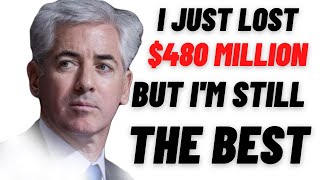
So the compound annual return for the S&P 500 since 2004 is 9.6%, for Bill it is 17%. And if you read his letter, where he says he sold his stake in Netflix, he lost 480 million. So, this reduced the profitability of Persing Square funds by 4 percentage points since the beginning of the year. Reflecting this loss as of today's close, Persing Square funds are down about 2% year-to-date.
If you compare this to the S&P 500 since the beginning of the year, Bill Ackman is still crushing the market. And that's exactly what I want to discuss. Billman is certainly not an idiot. He knows what he's doing. And this is something we should apply every time we invest, understanding the business, understanding the risks and rewards of the investments we make, and how the risk, if it materializes, affects our portfolio, on returns.
So, it's not a big deal for Bill, but how does the risk and reward fit into our portfolio. So, Bill Aman, as he said in a letter to shareholders dated January 26, bought 3.1 million shares of Netflix. So he started on Friday, January 21st, and bought this position. So, for about, say, $375. 3.1 million shares multiplied by $375 is $1.16 billion spent on Netflix shares.
And when he bought it, what was his idea? What was the potential? He thought, “Okay, if I invest 1.1 billion in Netflix and Netflix goes back to its previous highs when it was considered a booming stock, I’ll double my money,” because it’s good business, because he thought it was good business. By investing in a good business, he could easily double his money over the next few years.
So for Bill, the growth was a doubling in a few years. But what was the drawback? Well, he bought here, sold nothing here, and then, after taking a profit, sold the entire stake on the first day of the drop here. So he sold everything for 682 million. These are all rough numbers, but they will be a great indicator of the thesis here.
He lost approximately 480 million. So compare that to the potential reward . Reward 1.8 billion, Netflix doubles losses by 0.5 billion. So he would make money even if half of his plays flopped . He would still make money. Usually, Bill, Aman, four out of five plays are good, one out of five is bad. And in one out of five...four out of five, with that risk and reward, you can see how Billman is getting 17% per year.
And so investing is about risk and reward, and especially how you manage it, how you manage it, the impact of what you do on your portfolio. And then, of course, we all love Buffett and his "investing for the long term," but don't get it mixed up . Even Buffett is more like Billman. If we compare stock ownership in 2012 to 2021, we see that American Express is still included in Bank of America, Coca-Cola, Moody's, US Bank Corp, as well as Wells Fargo, Walmart, Tesco, Sani, PNG, POSCO, Phillips, Munich, IBM , Big Mistake.
They are all excluded. So even Buffett is not someone who buys once and holds forever. This is, of course, everyone's dream, but you have to learn to accept uncertainty. You have to invest, and then out of those 20 companies, a few in the long run will give you this beautiful portfolio that Warren Buffett has, and that he holds forever, where American Express is worth 1.2 billion .
Current market value of 25 billion, 1.22 for Coca-Cola, receiving 70% dividends on cost, and making big money. Besides, Ekman is a small player, only 1 million for Netflix, 1 billion for Warren Buffett doesn't make a difference . And we also discussed this video, which is a must- watch. We already have 61,000 views.
So, Seth Klman says: “ Limit portfolio duration by holding investments with catalysts.” So the catalyst Pilakman expected did not happen. It is moving north, and so he closed his position to avoid holding something in the long term that could become all the worse. So not so idiotic, because he was definitely an idiot in the past.
And, let's say, when he had a fight with Icon, he lost 1 billion against Herbal Life. But that's not even that much compared to how much he lost with Valiant Pharmaceuticals, where, by being stubborn for years, he lost 4 billion. And despite the losses, Netflix–half a billion, Herbal Life–1 billion, Valiant –4 billion, it is still the best.
So investing is about, yes, losing, accepting those risks, and calculating the possible risks and rewards, as well as the impact on your portfolio. This is Bill Aman. We have something to learn from him. So never forget to ask yourself, when will I get my reward? What is the risk? If the risk materializes, how it affects my portfolio, the chances of the risk materializing, don't really matter.
If there is a 1% chance and it materializes, it is important that you understand how it affects your portfolio. That's all. Investing is about risk, reward, your wealth, your portfolio, your financial goals, your money. And you have to be able to calculate it. I hope I gave you some guidance on how to do this.
If you want more, we'll discuss it. We always discuss risks and rewards on this channel. So please hit the "Like" button , subscribe if you haven't already, and check out the other videos. Thank you, and see you next time.



Comments 0