
저자: TomLee · 외국인
요약 보기
한 줄 결론: 시장은 침체 우려로 과도하게 비관적이며, 인플레이션 정점 통과 후 6~9개월은 대형 기술주(FANG)와 에너지·비트코인 중심 전략이 유리하다는 입장. 금리·밸류에이션: 10년물 금리가 약 2.75~3%로 올랐지만, S&P500 PER 16배는 여전히 매력적인 상대가치라고 봄. 장기금리 상승과 수익률곡선 스티프닝은 성장 공포 전환 신호로 해석. 침체 및 인플레이션 전망: 기본 시나리오는 침체 회피. 일부 선행지표상 인플레이션 최악은 지나갔고, 시장 하락이 이미 연준 긴축 역할을 대신하고 있음. 미국 상위 4개 보유 종목 하락으로 약 15조 달러 가계 주식자산 손실, 휘발유 가격 상승이 카드 지출에 영향. 연준 전망: 연준이 매파적이어도 시장이 긴축 효과를 일부 선반영하므로 올해 9회 인상까지는 필요하지 않을 수 있다는 관점. 섹터 전략: 추천 전략은 BEEF(비트코인·비트코인 관련주, 에너지, 자원)와 FANG(대형 기술주). 대형 기술주는 성장률이 GDP를 상회하고 공급망·임금 압력에 덜 취약해 6~9개월 내 상대 초과수익 가능성. 경기민감주는 많이 조정되어 매력적이나 상반기는 여전히 험난하며, 중국 봉쇄 해제 후 성장 회복 기대. 리스크 및 주의: 컨센서스는 침체·급락을 예상(트위터 설문 응답 53%가 6개월 내 10% 하락 또는 폭락 예상). 수익률곡선 역전은 무시할 수 없는 경고 신호이나, 현재는 다시 스티프닝 중이라 성장 공포는 단기적일 수 있다는 입장.
다듬은 글
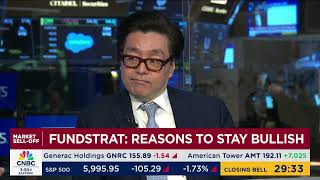
advisors and tom just remind us of your position you're not wildly bullish but you are more bullish than the average cnbc guest that we have on lately on stocks right uh yeah that's correct i i think the street and our institutional investor clients have become outright bearish for understandable reasons because there's headwinds and i think the one key difference we have is that we think a lot of bad news is priced in and while the risks of recession are really elevated i think there's some leading indicators that are telling us that in some ways some of the worst of the inflation is behind us and then if that's true the fed doesn't have to be potentially as aggressive as as futures markets are pricing and yet yields continue to go up i mentioned 275 on the 10-year so if what you were saying is true wouldn't we need wouldn't we need that to stop for the nasdaq and technology to work well actually i'd say that if ra if the long end was actually falling i think that would point to elevated risk of recession so the fact that long end rates are actually rising and the yield curve steepening in in some ways is actually showing us that the narrative is probably shifting towards a growth scare but that we're going to emerge out of the emerge out of this period uh i don't know when we get clarity and if that's the case i mean you know even a three percent tenure even though it is much higher than where it was two years ago it's still a you know you're paying a 33 pe to own a 10-year bond so i think a 16 p e s p 500 still a pretty attractive relative value i guess my point was that as you continue to see these rising rates and rising treasury yields then you're gonna you're gonna have people worrying about valuations especially on tech stocks which are discounted into the future and and mega cap tech which i think tom is one of your favorite areas of the market is under a lot of pressure today uh that's right um you know we for the really for the past year and a half we've been more on the energy overweight and we think it's been structurally under owned camp um but if we can avoid a recession scare uh and not have a recession which is again our base case we think from today going forward over the next six to nine months large cap tech you know fang are are going to really look attractive because number one if you're worried about growth these companies can grow faster than gdp their multiples have come in and i think that from a margin perspective they're less vulnerable to some of the so supply chain and inflationary pressures on labor that are actually hurting other companies so i i think they haven't been great but we think in the next six to nine months they could actually be relative outperformers so it sounds like the whole view is predicated on the idea that inflation has peaked or is peaking and will come down materially do you think the street is just too worried about more long-lasting higher levels of inflation and what that's going to have to mean for the fed uh yes i mean we are in a really uncertain transition because we we're in the economy is in the middle of a pretty big inflation surge and and now there's supply disruptions associated with the war and now we have a tight labor market and now we have a fed that's become quite hawkish so i understand why investors are nervous and why everyone's dialed down their constructive views and i think one of the things that we have to keep in mind is that the market is doing a lot of the work for the fed uh you know as you point out rates have already risen when we look at wealth effect if you just look at the four largest holdings for u.s households they're down somewhere between eight and fifteen percent that's about fifteen trillion of lost household equity that's already going to slow the economy we're already seeing gasoline higher prices affect credit card spending data so i think in some ways the fed who's talking tough is the market's already doing a lot of the work for the feds and if that's true then we can be a little half full meaning the fed may not have to do nine hikes this year so would you buy the cyclical groups as well tom that have really corrected on on this notion that the economy is going to slow down everything from autos to airlines to transports or would you would you stick with the just big tech well our recommended strategy is beef which is uh you know bitcoin and bitcoin equities energy and resources uh which has been a standout and then fang which is large cap tech i think the cyclicals have gotten pretty reasonably priced because they've been under pressure a lot of them since for more than a year now and if the supply chain issues are easing and once china gets through its zero cover lockdown which we're not there yet it is a case for a growth resilience coming so i think in the first half it's still a treacherous period i just would caution any of the viewers not to get too structurally bearish because at the moment uh consensus thinks you know we're gonna have a recession in fact we did a twitter survey and i think 53 thought the market was going to be down 10 or crash uh over the next six months so so well we did just see the yield curve invert i know it's uninverted but that that is a classic tail yes uh yeah you don't want it you don't want to ignore the the sign from an inverted yield curve i mean it just shows you their stress whether it's building in the credit markets or future credit tightening or economic weakness it's it's something we have to respect uh but fortunately the curve is steepening again so uh it's a short-lived growth scare hopefully tom lee we thank you for coming on and sharing your your perspective it's a little different totally from fun strat after the break musk declines to take




Comments 0