
원문 보기
Suddenly, one day, David Ter's parents would realize they had a very special son. Incredibly, at only four years old, David Ter's sister would take him to her second grade class to help her with math questions, including complex multiplication of equations. From a math whiz kid, also known as the class clown, to one of the most successful hedge fund managers ever with a net worth of over $21 billion, this is the incredibly inspiring story of David Ter.
We'll first look at his very challenging background story and in the second part we'll explore his fascinating strategies and his portfolio which he has used to make billions. In the final part we'll look at some of his other investments outside of stocks and his philanthropy. Born in 1957 in Pittsburgh, Pennsylvania, David Ter attended Peabody Senior High School where he was known as the shy math whiz kid.
However, he later changed into becoming the class clown and often skipped class to get free pancakes from across the road. Ter had a tough childhood. As he says, despite the good things about his dad, he had a dark side, too. He says he was physically abused by his father and became terrified of him.
To let out his anger from his father, one day he started a fight at school and would have to either receive 10 smacks with a wooden plank or be suspended. Ter entered the principal's office shaking anxiously, ready to be punished. Just as he was about to receive the 10 wax, he heard a loud ring. The fire alarm went off.
Luckily, he escaped punishment as his principal had to focus on putting out the fire and later forgot about it. He grew up in a working-class area in Pittsburgh where he would practice playing football on the streets. But David Ter had a unique gift. Early in his childhood, he would grow an interest in baseball and write baseball stats on the backs of cards gifted to him by his grandfather.
One day he shocked his family when they found out he could instantly capture large amounts of statistics and then remember them for a long time. They claimed it was a photographic memory. Soon after school, David Ter became interested in stocks from his father and decided to study economics at the University of Pittsburgh.
But he had a significant problem. How was he going to pay for university? Being eager to attend university, Ter took a job in his university's library and began to make a profit investing in stocks. However, he was still juggling to pay his way through university. So, he took jobs at a bakery and at a company called Republic Steel.
While at Republic Steel, Ter would learn vital lessons about making finance deals that would help him through his career. Following his graduation, he decided to do an MBA from Carnegie Melon, which is now named after him as the Ter School of Business at Carnegie Melon. After his MBA, Ter had a few jobs in finance as an analyst and soon had his first breakthrough by joining Goldman Sachs.
He worked as a credit analyst in 1986 and was so good that he very quickly became the head of high yield risk for several years. While at Goldman Sachs, Ter specialized in distressed debt, particularly bankruptcies and other special debt cases. The knowledge and experience he gained at Goldman Sachs would prove to be very valuable to him moving forward.
It's October 19th, 1987, a day that would shock the stock market as it crashed by 22.6%. Wall Street is panicking and many businesses go bankrupt in a single day. But while everyone else was worried, David Ter saw it as a great opportunity to profit. He worked long hours analyzing the credit of financial companies so he could predict which banks would fail and who would survive.
There was no time to waste. Quickly, he bought bonds from the banks he thought would survive while paying hugely discounted prices. Soon after, the markets recovered and the bonds rapidly rose in value. In addition to rising bonds, Ter profited from the high quarterly interest fees. The trades made Goldman Sachs a staggering fortune.
David Ter was now the name everyone was talking about in Goldman Sachs. However, despite his great work, Ter was repeatedly rejected in his application to become a partner at Goldman. He was furious. It's fair to see why Ter was angry, as it's common to see partners being paid 5 to$10 million annually after bonuses.
This was not enough. Ter wanted more and he knew he could start his own fund after working as a specialist in distressed debt. He was especially aware of how to profit from bankruptcies and other special debt setups. Then one day in 1993, his life suddenly changed massively. He flipped through a book about horses.
Now, that may sound like a joke, but the book was actually what helped him with the name for Appaloosa when he started with his former colleague Jack Walton in 1993. Funnily enough, he actually picked the first name in the book about horses, which was Pegasus, but it was taken, so he chose the second name, Appaloosa.
Appaloosa started as a limited partnership with a few wealthy investors. To begin, they had $57 million of assets under management, and they would not believe what would happen next. Astonishingly, they made 57% back within the first 6 months. Appaloosa primarily invests in fixed income and public equity markets by using derivatives.
David and Jack focused on concentrated positions with little diversification compared to other hedge funds. The hedge fund has used what most would say are higher risk strategies for investing, such as using borrowed money to make greater gains. Appaloosa would have many successful investments by betting on bonds purchased from companies nearing bankruptcy.
Famous examples include Enron and Worldcom, which helped boost portfolio gains by over 150%. Ter strategy is opportunistic while often taking a contrarian view. His aggressive and confident mindset helped Appaloosa grow from 57 to $300 million in 1994 to $800 million in 1996. Incredibly, as of now, Appalooia manages over $17 billion.
The fund has delivered outstanding long-term returns despite having quite high short-term volatility. Here's a fascinating fact. According to Forbes, a $1 million investment in Appaloosa from the start would be worth $180 million in 2014, which was only 20 years later. The fund uses a range of methods based mostly on fundamental analysis to buy various securities, including bonds, stocks, fixed income markets, and the distressed debt of companies.
But what exactly is distressed debt investing? You may wonder. Simply put, distressed debt investors look for business they can't pay their debts or have filed for bankruptcy. This means a hedge fund can buy the company bonds at a discounted rate and if the failing company recovers, the value of the bonds will rise.
Due to the large risk with this type of investment, hedge funds will often limit their risk with small positions. However, despite the high risk, some may be surprised to know that debt takes priority over equity in its claim on assets if a company fails. This process is known as liquidation preference, but it does not offer a reimbursement guarantee.
Suddenly, one day, Ter was on to something very special as Appaloosa would make 67% in 2001. However, the fund would see wild swings in returns during the early 2000s. It's David's 44th birthday, but he doesn't know he will be in for a massive shock. His birthday is September 11, the day of the terrorist attack in New York, and the markets would soon plummet over 7%.
However, Ter was thinking differently from most on Wall Street and surprisingly made a massive 61% return on his investments that year. But this wasn't the most impressive return in the early 2000s. In fact, soon after, he had his most impressive year in 2003, which saw a 148% return. But just as things were going well, Ter faced his first huge problem.
It's 2008 and the fund is down 26%. However, Ter has a plan no one else sees. Just as investors started to panic sell shares in companies like Bank of America, Ter was doing the opposite. Despite going against the herd, Ter was so confident in what he saw that he bought almost $2 billion in mortgagebacked securities from AIG.
He faced massive criticism from very important clients for making such a large bet during a massive crisis. However, those same clients would soon be shocked. The US government bailed out the companies Ter had invested in and Appaloosa profited over $7 billion from the trades. David Ter's investments after 2008 will go down as some of the best trades ever made.
Despite the initial draw down he suffered earlier in the year, his fund would make a 120% gain. David's cut $4 billion. He was easily the highest paid hedge fund manager that year while most other funds would suffer large draw downs. In fact, over the next decade, Ter would be one of the world's highest paid hedge fund managers.
Soon after his fund recovered and the doubled the assets under management from 2009 to 2010, Appaloosa went from 5 billion to 12 billion. Around $4 billion of that profit went to Ter, making him the top earning hedge fund manager that year. It's not a bad recovery to say the least. He achieved this return mostly by buying distressed financial stocks, including Bank of America, for only $3 per share and profiting significantly as it recovered.
In fact, in 2010, it was reported that since starting in 1993, the fund returned over 12 billion to clients. In 2010, during a speech, he highlighted AIG debt, Bank of America, and European banks as standout investments. This extraordinary achievement means his fund ranks comfortably within the top 10 ranking of returns to clients by managers since being founded.
However, Ter wanted something different. He wanted more privacy and control with his investments, which led him to open a family office in 2019. During that year, the fund managed over $14 billion with a little more than half belonging to Ter. He decided to return the funds of those outside of his closest connections.
David Ter is regarded as one of the best hedge fund managers of his generation. With Appaloosa having a compound return of over 25%, it's difficult to argue against that. As a specialist in distressed debt investing, he's unique in his approach. Ter keeps brass testicles on his desk, which was a gift from a former employee.
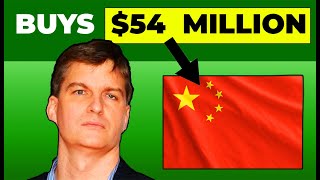
He says he touches it for good luck and to make his colleagues laugh, which certainly seems to be working. As of 2024, David Ter is bullish on Chinese stocks as he looks to capitalize on the stimulus package from the government. Additionally, in late 2024, he held the view that major Chinese companies are better value than major US companies.
His view comes partly from the Chinese companies having singledigit PE ratios and doubledigit growth rates. Terra's latest Q3 202413F filings show that Appaloosa holds a little over 15% in Alibaba as its largest position and Pin Duo Duo Incorporated or PDD at just over 10% as the second biggest position.
Both companies are Chinese and Alibaba has performed very well in 2025. The fund also holds significant positions in JD.com over 4.3% and BU 2.2%. In total, Appaloosa's 13F filings as of Q3 2024 show $6.73 billion of assets under management. In September 2024, David Ter had an interview with CNBC where he mentioned he's bullish on China and doubled his stake in Alibaba.
Since that interview, Alibaba went up over 20% within 5 months. During the interview, he mentioned that Chinese companies have low price toearnings multiples and excellent growth prospects. It's fair to say investors should be paying more attention to what David Ter has to say during interviews. He's also not shy about diversifying his investments across industries.
As a massive baseball and American football fan, he bought the Carolina Panthers for a little over $2 billion in 2018. Ter's also a big fan of Major League Soccer, which led him to buy Charlotte FC. Ter is also keen to invest a very small amount in crypto, which he views as a store of value similar to gold.
However, at the same time, he raises caution about how volatile the crypto markets can be. David Ter is famous for being one of the best hedge fund managers, and with such a long track record, it's hard to argue against that. His standout investments in AIG, Enron, and Maronei have been some of the greatest trades ever, and have significantly helped Appaloosa become what it is today.
His expertise in distressed debt investing has helped deliver consistent and stable returns for investors since starting Appaloosa in 1993. Since being founded, the fund has grown at least over 25% per year. And that's not bad to say the least. For those living in Pittsburgh or North Carolina, David Ter is a popular figure who has come from humbled beginnings to work his way up to the top.
He has contributed significantly to charities and local institutions which now show his name. Learn it, earn it, return it. This is David Ter's philosophy that drives him to success. He believes in building a winning mentality by being highly competitive every year. However, he also likes to give back to those who need it in his local communities.
His aggressive and contrarian investing style is not for everyone. However, it is fundamental to his success. Ter also has a colder side to him as he got revenge on his former boss, John Cororsine, at Goldman Sachs, who repeatedly denied him becoming a partner. The story is fascinating. His former boss had the life many would dream of with hundreds of millions of dollars and a beachfront mansion in the Hamptons.
John Cororsine loved the mansion so much as he spent a lot of time there. However, Corzine would go through a divorce, leaving him giving his wife around half his fortune, including the mansion he had put so much work into. Corine's ex-wife would soon go on to sell the mansion. And guess who bought it?
David Ter. In fact, he only bought it so he could tear the entire mansion down to take away from all of his former boss's work. Later, Ter replaced the mansion with a new one that was over double the size. You can only imagine his former boss's reaction when he found out. While growing up, David Ter was taught to give back to the less fortunate, which made him start the David A.
Ter Charitable Foundation Incorporated. He believes everyone should have access to at least a basic education, healthcare services, and food. Ter primarily focuses his efforts in the Carolinas, New Jersey, and the Pittsburgh areas where he contributed around $25 million in aid during the COVID pandemic.
When Ter invested in the Carolina Panthers, his main goal was to win both on the field and help the local community. For example, he expanded his team's philanthropic work in the Carolinas and donated around half a million dollars in his first season. Additionally, Ter has played a major role in providing natural disaster support in Puerto Rico and other areas within the US.
He also serves on the board of Blue Meridian, which aims to help the lives of America's children living in poverty. He donated $55 million to Carnegie Melon University, which was the university he got his MBA from. Following his huge donation, the university established the David Ter School of Business department.
He also sponsored the David Ter quadrangle, which is a building aiming to build a more collaborative learning environment. More recently, in 2018, Ter took a role on the board of trustees of Carnegie Melon University and the business board of adviserss for the Ter School of Business. for his great work.
Ter was awarded a doctor of business practice from Carnegie Melon University where he made a speech highlighting his core values. During the speech, he emphasized the importance of doing what is right in his philosophy of learning, earning, and returning. Sadly, during this speech, he also mentioned how his father was physically abusive toward him while growing up.
Regarding his philosophy, he states, "I am the animal at the head of the pack. I generally am. I either get eaten or I get the good grass. This shows his attitude toward leading and being bold in his decision-making. Despite his great wealth, David Ter prefers to live well below his means in a modest house.
He prefers to live a private life away from the media unless he feels he has something valuable to contribute. Hey, if you enjoyed this video, feel free to click the like button because it really does help. I make videos explaining interesting financial stories, so make sure you subscribe so you don't miss out. and check out more fascinating stories here. Thanks,




Comments 0