저자: TomLee · 외국인
요약 보기
6월 고용 부진(+57k vs 예상 113k)과 CPI 둔화 기대로 물가 압력 약화를 주장. ISM 50 상회로 2027 이익 전망이 350→400으로 상향, 2027 PER 19.4→18.4로 하락. 반면 마진론 55% 급증과 펀드매니저 언더퍼폼(76%)을 과열 신호가 아닌 조정 가능성 지표로 제시. 연준은 결국 비둘기파로 전환할 것으로 봄. 유가는 전쟁 이전 수준(68달러)으로 복귀, 휘발유 가격은 로켓과 깃털 효과로 아직 높음.
다듬은 글
Hi, this is Tom Lee. I am the Chief Investment Officer of Fun update for the week of July 6th. First, let me start with some details. As of July 2, Granny Shots, a large- cap stock , ticker GRNY, had a price of $2,757 and total assets of $4.38 billion. Granny J, a small-to- mid cap stock, had a price of $30.34 and total assets of $487 million .
And GRNI, a profitable capitalization stock, had a price of $219 and total assets of $53 million. Over the past week, large- cap stock GRNY rose 2.6% compared to the S&P's 1.8% gain, or about 73 basis points of relative outperformance. Granny J was flat over the past week compared to the Russell 2500's 2% decline , or about one basis point of excess.
and the Granny Income Index rose 2.33% compared to 1.8% for the S&P 500, or 47 basis points of relative performance. Now, moving to year-to-date performance, the large cap granny index is up 11.49% compared to 9.98% for the S&P 500, or 151 basis points of outperforming. Granny J rose 18.73%, compared to a 22% gain for the Russell 2500, or 293 basis points below the benchmark.
And the income granny index rose 9.5% compared to a 9.9% gain for the S&P, or 41 basis points below the benchmark. Now I would like to talk about macroeconomic indicators, and a lot of them relate to the second half of the year, but really for me the topic I want to focus on for a minute is the easing of inflation .
So, over the last seven, sorry, eight CPI reports, the inflation rate has been better than expected seven out of eight times. April was the only shock, and that was the actual impact of the war with Iran on petroleum products and the supply chain. But May's figures were negative, and yet inflation is 2.85% year-on-year.
Now, as we get to June, which is next week, July and August, the numbers will be easier because, as you can see here, those numbers are higher for the month. This is due to last year's tariff wars. And if that's the case, we may see a decline in this indicator year-on-year . So that's one thing that could dampen inflation, just lighter readings.
The second is the June employment report, which came out on Friday, last Thursday, which showed 57,000 jobs. That's a miss compared to 113,000 for the street, and it was a decline of 74,000 jobs over the past two months. Keep in mind that wage inflation is actually the core of what worries the Fed about inflation.
And if the labor force is low, it reduces wage-driven inflation. And if we look at the details, we see that there has been a decline in hiring in the retail and food service mix . And these are the areas where, if there were wage inflation , we would see it in the CPI due to the high component of services.
Oil also fell. That's $68. This is about the same as before the war. So I think in a sense the inflation story is weakening. This is good news because it means the Fed may be questionable. But you might ask yourself, if this is true, why have n't gasoline prices dropped much yet? Well, it's because of this idea called "rockets and feathers." That gasoline prices rise like a rocket, but then fall like feathers.
AFP and many other institutes explain this by saying that when costs rise, gasoline retailers adjust the price very quickly. When the price of oil starts to fall, oddly enough, the need to lower prices decreases, because consumers are simply happy with the fall in prices and are not necessarily looking for something profitable.
This means that prices tend to fall more slowly. And we see this because gasoline, that is, oil, has actually returned to the level it was at before the war began. But, as you can see, gasoline prices have risen sharply and are not going down anytime soon. They are still 34% higher than they were. So they're not quite catching up with oil.
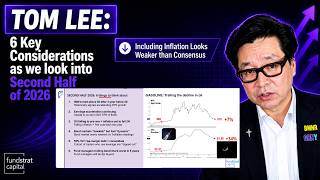
Now, looking at the second half of the year, I want to point out six things. The first is the index of market economies (ISM), which exceeded 50 after 3 years of being below 50. Historically, this signals an acceleration in earnings growth, and that is exactly what we have seen this year. Profits accelerated.
Profit for 2027 increased to $400. Earlier this year, earnings for 2027 were expected to be $350. Now, at 400, that's an increase of $48. The stock market P/E ratio based on 2027 earnings was 19.4 at the beginning of this year, and it is now 18.4. So, the market actually went down by one move, and all because earnings grew more.
Think about it. The stock market is cheaper today than it was on January 9th, and yet the S&P is up almost 10%. Oil prices are at pre-war levels, and I've already talked about this. The bond market is hawkish, but I think the Fed will become dovish. And there are two things that compensate for that, or two other considerations.
First, margin debt increased by 55% year-on- year. This is huge growth. This is a cohort of investors who borrow money to trade. And you can see that there 's been a big jump in the last 12 months, but even in the last 2 months, and in fact, margin debt is up 54% year over year . The last time I exceeded 50% was in October of last year.
And you can see that after this jump, the markets consolidated. So maybe we'll see a bit of consolidation in the near future. And since 1960, every time there has been a jump in margin debt of over 50%, the market has consolidated, okay, five times, except for 2021. And finally, fund managers are lagging their benchmark at their worst level in 5 years.
If we look at all large-cap growth fund managers since the beginning of the year, 76% underperformed their benchmark by at least 10 basis points. This is a huge backlog. By the way, small-cap managers are doing much better, but if you look at small- cap companies that are outperforming their, um , funds by 10 basis points, that's 80%.
This is the best figure since 2020. Okay, so let's look at the, um, Granny Shots portfolio specifically. Good. Um, for the "big cap granny," the top five last week were Strategy, Palanteer, Robin Hood, Air Products, and North of Grumman. Strategy announced major changes to its balance sheet. Palunteer announced a partnership with Nvidia on open source models.
The five worst performers are mainly related to data and infrastructure. As for the " younger grandmother", here are the top five . There is a huge earnings momentum for space-related companies , especially with Rocket Lab's acquisition of Aridium . We have some superiority in the defensive area with Katos.
Reddit, you know, again , continues to be a good core holding, especially with this AI licensing and elven beauty. Uh, there were announcements of new products for the five worst players. They are all related to data centers, and there are also some beta testing of cryptocurrencies. In terms of topics, the top indicator was seasonality, followed by millennials, and global work and AI. Thank you for your attention, and I will talk to you soon.


Comments 0