
저자: MarcFaber · 외국인
요약 보기
금의 장기 강세장은 유지되며 단기 조정(3,000~4,000달러) 후 2만~3만 달러까지 상승 가능하다는 주장. 중앙은행 통화팽창과 국가부채 부담이 금 강세 근거이며, 위안화 표시 금 상승과 금 담보 국채 발행 가능성을 언급. 광산주는 단기 하락 가능성이 있다고 봄.
다듬은 글
I don't think mining companies are terribly expensive. I would say I think they will go down in price. I don't think the gold bull market is over. I think it will continue. Now, could it, you know, go above $5,000 an ounce? Could it fall to $4,000 or $3,000? Yes. But it can also go up to 20,000 or 30,000.
I would think that if we're going to move in a direction where gold is allowed to rise, followed by some issuance of gold-backed bonds , which, you know, would look for gold at $20,000, I would buy 30-year US Treasury bonds at 3% all day. Navigating global monetary instability requires balancing paper assets against physical commodities .
As central banks accelerate money creation to manage growing sovereign debt. Understanding long-term hard asset cycles becomes essential for wealth protection. Marc Faber, a veteran Swiss investor and publisher, along with Luke Groman, an esteemed macroeconomic analyst and founder of FFTT, argue that gold's secular bull market remains intact.
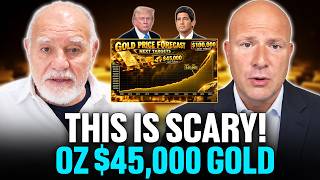
Faber projects that, even if gold experiences a temporary pullback to $3,000 or $4,000 per ounce, it maintains extraordinary structural potential to surge towards $20,000 or $30,000. Groman points out that gold denominated in Chinese yuan could rise to 50,000 yuan in the next 5 years, which could push gold in dollars towards $10,000 or $25,000 per ounce.
They emphasize that mounting fiscal pressures will eventually force Western governments to limit the rise in bond yields, either by printing money or issuing gold-backed Treasury bonds, with fund managers currently holding negligible exposures to physical gold and mining stocks, and an institutional rotation into precious metals could trigger a historic market rall look at myself, of course.
I am someone who has advocated owning precious metals for the past 40 years, and I buy a little every month. And I also tell people that they should own some precious metals, because if they don't, they are relying on central banks, and look at the characters who sit in those central banks. Would you trust them?
Definitely not. But, but, um, I also own dollars because I have a financial business and I buy and sell securities, and occasionally I have liquidity due to my views, and occasionally I have liquidity because I sold a position we held, etc. Either way, most of it is still in US dollars today . I have some portfolios that I value in euros and others in Swiss francs, and the valuations fluctuate a lot depending on the assets, and well, they fluctuate frequently in unexpected ways.
As I said, I have a very large exposure to precious metals, but the time may come when I say that I put everything into precious metals. I haven't done it yet, but I have friends who are real gold fanatics. They have 80% of their assets in gold and precious metals. Oh. Yes. 80% either own no real estate .
They do not own shares. They own gold shares, but they're not interested in a company in Asia or anything like that. They are interested in assets related to gold, silver, and platinum. Mhm. People like that. But what I meant was, if you're going to...where do you live? Canada. Canada. OK. Let's say you go to a party with wealthy people and you ask them, "Oh, have you seen that the price of gold and silver has gone up?" " Do you have anything?" And they will say, "Yes, we have it." And the wife will say, "Yes, I have an earring from my grandmother and things like that." But people, and Canada is one of the best countries in gold ownership because the mining sector is very large within the stock market, but the typical Canadian owns no more than, let's say, 3 or 4% in gold.
In addition, we can measure how fund managers allocate money in technology stocks, coal, and minerals. And in gold, silver and platinum, and in, uh, medical care and so on; Exposure to gold and gold ETFs as a percentage of all ETFs is minuscule. Exposure to energy was minuscule before the energy market recently took off .
I wrote a report. I have the chart. I published a chart in February about the record short position in oil futures. Those are hedge funds. People gave money to the hedge fund community and I managed it, and there was a record short position in physical oil, but I moved some money into mining companies.
OK. But I also sold some mining companies again. Mhm. But, but I didn't sell enough. I mean , I should have sold more. It's always the same story, you know. You buy too much of what isn't going up and don't sell enough of what's going down. It's always the same. Yes. You're not buying enough. But, but let's just say I don't think mining companies are terribly expensive.
I mean, I think they're going down in price. I don't think the gold bull market is over. I think it will continue. Now, you know, we've surpassed $5,000 per ounce. Can it fall to 4,000 or 3,000? Yes. But it can also go up to 20,000 or 30,000. I don't think Kevin Warsh is someone who prints money. I think he is , basically, a reasonable man.
And I have listened to some of his speeches. She has a deep understanding of economics, unlike Bernanke and Yellen. She had no idea, she has no idea about anything. But hey , Powell is better...I mean, I've been critical of the central bank for the last 40 years, although I always said that Greenspan is a very intelligent man intellectually.
He has his flaws, but intellectually he is brilliant. He was a terrible forecaster and a relatively poor economist within his profession. He had no clients left when he closed his firm and became chairman of the Fed. But he was a good fit as Fed chairman because he was a good match ... you have to understand that Wall Street is very powerful.
Money is very powerful in the United States. Do you think Wall Street likes it when asset prices fall? No. Their commissions come from the size of the assets, not the quality of the assets. The size wants the Fed to print money . They will. You'll never find a Wall Street economist who will actually tell the public that the Fed is making a huge mistake, that they should tighten monetary policy and watch asset prices fall by 30% because then they would be affordable.
Why? Why is n't the real estate market doing so well in terms of sales volume? Because houses are too expensive. Nobody can afford them except for 1%. Gold has gone from being a traditional commodity to a vital geopolitical weapon and a strategic reserve currency . World powers are actively accumulating physical gold bars to avoid fiduciary dependencies and strengthen foreign trade settlement channels.
Financial models indicate that gold denominated in yuan will rise towards 50,000 yuan within a 5- year horizon, triggering a fundamental currency revaluation in international markets. Such a structural change could push dollar-denominated gold to $10,000 or even $25,000 per ounce, potentially prompting sovereign nations to issue gold-backed debt instruments to stabilize long-term borrowing costs .
Overleveraged sovereign balance sheets face a stark ultimatum between total debt insolvency and aggressive yield curve control driven by rampant liquidity creation. to restore confidence in the global market. An official public audit of physical reserve holdings will serve as a crucial monetary milestone .
Now, let's get back to the interview. I believe it has been used as a weapon for 15 years. I think that ultimately, China and Russia say, you know, and and and forget that it has been used as a weapon for 50 years. You know, you can back out, and this isn't even speculative. You can go back to the declassified documents from the US embassies in London, which talk about the need to launch gold futures to make them so volatile that Americans stop owning physical gold; That was in 1973-74.
You can see declassified US cables from Beijing that talk about how the Chinese were stockpiling gold as a way of killing two birds with one stone. That Americans and Europeans had always manipulated gold to make the dollar and the euro look better than they actually were. Words from China, not mine.
And these aren't even words from China; they're words from the US embassy in China, not mine. And the Chinese did what I consider intelligent, which is: okay, they're going to artificially pressure the gold to make their currency look better. Fine, we'll keep the gold. So, you know, gold has been used as a weapon.
Gold is a political metal. People want to treat it like a commodity. It isn't. It's a political metal. It is an alternative currency. It is an alternative reserve currency, which we can say because it is now the largest reserve in the reserves of many countries. It has outperformed Treasury bonds and global foreign exchange reserves.
So, has it been used as a weapon? Yes. I think it's still being used as a weapon, and, you know, I think it's both a weapon and a defensive metric. China is lost unless it gains the ability to buy oil and raw materials in its own currency. And China has known this for at least 15 years . And how do you do that if you want to keep a closed capital account?
Well, simple. You open your capital account in a limited way through gold. You establish overseas yuan clearing banks: gold centers in London, Switzerland, Singapore, Dubai , Shanghai and Hong Kong. And you make your currency convertible into gold in those places, to the extent that someone has a surplus with you.
If you have a deficit, they usually have deficits from time to time compared to basic products produced. And that's how you do it. Now, nobody wants yuan, but all those countries and raw material suppliers accept gold. And China has let gold float in its currency. In terms of yuan, the yuan has plummeted against gold.
It has risen from 7,000 to 31,000 since China opened the Shanghai International Gold Exchange Board in September 2014. And then, the final thing to do is find some oil exporters who want to sell oil in yuan and actually sell it for gold. Gold absolutely plays a role in all of these things. Um, it's a defense mechanism for the Chinese.
It is a form of weaponry for China. It is a form of weaponry for the United States. And historically, it was a form of weaponry for the US because they wanted it weaker. But now the US It wants to relocate and needs a weaker dollar. He absolutely needs it. But because we are so heavily financed, we cannot have a weak dollar against the yen.
And surely, you know, we sit down with the Chinese and say, "Hey, we want you to strengthen the yuan." The Chinese saw what happened with what we did to the Japanese. There is no possibility that the Chinese will sit down to another Plaza deal and say, "Oh yes, we will strengthen our yuan against the dollar and condemn ourselves to 30 years of stagnation," there is no possibility.
What the Chinese are almost certainly saying is: it 's okay. They want a weaker dollar, let gold rise in dollar terms. You have been depending on gold all this time. We've been buying it. We know we've been buying it. Let him go up. We are using gold. We let the yuan...look, if gold in yuan is at 30,000, let's say it reaches 50,000 to simplify the calculations in the next 5 years and you want a stronger or weaker dollar against the yuan, great.
We will take gold to 50,000 yuan from 30,000 in the next 5 years. You will let gold reach $10,000 and, through the gold link, 50,000 yuan to $10,000; That's five in the yuan-dollar cross exchange rate. That is a significant strengthening of the yuan, but it is a offsetting revaluation that the Chinese would be willing to accept.
All that stuff about "you're going to take it to five and, you know, deal with it like we did with the Japanese," that's not going to happen. So I think that's where this is ultimately headed. I think it's very good for gold. And look, you can play with those numbers. Hey, take it to 12,500. That's four.
If gold in yuan is at 50,000, you want to take it down to 25,000. That's two. Brilliant. You know, that's a significant weakening of the dollar against the yuan through the gold link. And that 's a compensated devaluation. I think that's what happened. Ultimately, I think it has to be this way in the short term.
Look, everything we've talked about regarding forced sales of treasury bonds, there has been a disorderly forced sale of gold from places like Türkiye. You know, the Indians clearly have a problem with their balance of payments, so, you know, their Modi came out two or three weeks ago and said, "Please stop buying gold," which, by the way, I think Indira Gandhi did back in '67.
And when she said, "Please stop buying gold," it was like saying you should buy all the gold you can, because they're in trouble; You know, they have a supply problem . So, you know, gold for me is a two-sided story. It's, you know , in the very short term, you still have a lot of traders thinking, "Oh, rates are going up, real rates are going up, I don't want to hold gold," and I think wise people who see beyond the short term...
I'm not saying that the operators aren't wise. They simply don't get paid to be wise . They get paid to operate. If you are a wise person with a longer-term focus, you look at this and say: there is no Western country on the planet, and really not China either, that can afford higher rates. Nothing is more bullish for gold in the long run than rising real interest rates in an insolvent sovereign, because they will either declare insolvency, which is bullish for gold, or more likely they will print money to limit yields, which is truly bullish.
You know, we saw Trump talking about it again over the weekend, uh, these days. I take anything he says with a grain of salt, you know, because they're handling, you know, a lot of things at once, and, look, the war in Iran isn't going well. So, who knows? Is it a distraction? Or not? I am hopeful, we are cautiously optimistic even, that they will do that to establish some sort of what Dr.
Judy Shelton has talked about, which is some sort of gold-backed treasury bonds. That is one way, perhaps the only way, to contain long-term returns while doing all this. You know, that's essentially going back to gold. That's going back to a pre-1971 system. And for me, that can't happen with gold at $5,000.
It's unlikely to happen with gold at $10,000, because the same thing would happen as in '67 , '68, and '69: "Hey, you Americans have deficits that are too big, we'll buy the bonds and then demand the gold," and we'd be right back where we started. So, I think if we were heading towards something that would allow gold to rise, followed by an issue of gold-backed bonds, which, for example, would see gold at $20,000, I would buy 30-year US Treasury bonds at 3% all day.
And many other people would too. And that solves the problem. Then rates can be lowered, and so on. Therefore, I believe that the first step in that process, if we were to begin to follow that path, would be an audit to establish credibility. So, let's see. But then again, Trump says a lot of things these days and some of them are even true, like, you know...
so we'll see how it all plays out. A deep structural gap continues to widen between paper-based financial wealth and physical economic reality. Large Wall Street institutions constantly demand liquidity injections to artificially inflate asset valuations, prioritizing overall market size over underlying credit quality .
However, high real interest rates applied to insolvent sovereign debt create an unsustainable macroeconomic trajectory. Long-term market projections suggest that gold could undergo a brief cyclical correction towards $3,000 or $4,000 per ounce before embarking on a multi-year explosive trajectory to reach $20,000 to $30,000 per ounce.
Furthermore, the dynamics of international exchange rates imply that a revaluation of gold could easily drive prices towards $25,000 per ounce, laying the groundwork for 30-year gold-backed Treasury bonds with yields of 3%. To manage these systemic shocks and curb debt service costs, monetary authorities will inevitably resort to aggressive yield curve suppression and reserve verification audits.
Although short-term volatility could put downward pressure on mining stocks , physical precious metals represent the ultimate hedge against sovereign default risk; A smart position requires recognizing that tangible assets offer unparalleled security in periods of extreme distortion of central bank polic.



Comments 0