
저자: Fox Business · 외국인
요약 보기
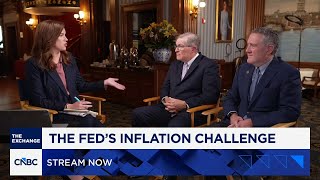
이 영상은 미 연준의 반응함수를 주제로 전 연준 이사 스티븐 미런과 진행자가 나눈 대담을 다룬다. 반응함수는 경제 데이터가 들어왔을 때 중앙은행이 정책을 어떻게 조정하는지를 설명하는 틀이며, 사전 안내가 향후 정책 방향을 알리는 것이라면 반응함수는 데이터를 정책 결정으로 연결하는 방식이라고 구분된다. 미런은 9월 FOMC에서 물가 지표가 개선되던 상황에서 금리를 올린 것이 새로운 반응함수를 보여준 사례라고 평가했지만, 그 실체는 아직 불분명하다고 말했다. 그는 최근 물가 상승분의 상당 부분이 기술 산업 관련 수요, 측정 방식의 왜곡, 플래시 메모리 가격의 과도한 가중 등 노이즈에서 비롯됐다고 주장했다. 또한 이란 분쟁에 따른 에너지 가격 상승은 일시적이며 정점을 지났다고 보고, 통화정책의 시차가 1~2년이므로 에너지 충격은 걸러서 봐야 한다는 정통적 입장을 강조했다.
다듬은 글
All right, tongue still wagging after that FOMC meeting for a lot of reasons and one thing is that's coming up is what is reaction function and why does it matter so much particularly with the WS Fed. I want to bring in now Steven Mron, former Fed governor, also now a senior strategist at Hudson Bay Capital Management.
Stephen, just for the audience, right, this is a Brookings definition. uh a reaction function describes how a central bank adjusts monetary policy in response to changes in the economy. And we're going to put on the screen the comparisons between forward guidance, which is the old crisis era, and now this reaction function guidance, which is uh under the worst era, and why it's so distinctive and why it's so important.
Sure. So, first, thanks for having me back. Uh yeah, the reaction function is how the Fed maps the economic data that come in into policy outcomes. So if inflation comes in here, what do you do? If unemployment comes in there, what do you do? It's how you take the data and you turn it into policy. So what would be different the way maybe perhaps you know the way it's happening now or the way wars would like it to happen now visav uh under you know pal where you know there was a lot of forward guidance and those kind of things.
What's the what's the difference? because it feels like Worst has said on more than one occasion he doesn't want Wall Street hanging on on the Fed's every word to maybe make some decisions for themselves. Yeah. So I think forward guidance is a related issue that it forward guidance deals with how you tell the world what you're going to do.
So forward guidance is if you say look we think policy is in a good place. We don't intend to adjust policy for one two three four meetings. Right? Or you say we think policy is way out of whack and we're going to adjust it over the next few meetings in this direction. That's that's forward guidance.
The reaction function is more about how you take the data and you turn that into outcomes. How you decide what policy should be. Now, one thing that's super important in my mind is that I think that there is a new reaction function at the Fed. I think the September FOMC meeting where they hiked rates marked a completely new reaction function because going into that meeting, inflation data had been coming in better.
Inflation data had been coming down for the last 3 months going into that meeting. And right around the corner from that were also substantial revisions, downward revisions in the measured PC inflation data which marked down measured PC inflation by about 35 basis points. Right? So things were getting much much better in that per in the run-up to that September meeting.
And normally when the inflation data get better, a central bank gets more doubbish. In this case the inflation data got better and the central bank got more hawkish. And now going into the meeting from earlier you know that we just had right there was a bad there was a there was a worse inflation print that was not as good as the as the as the previous ones.
going to happen every once in a while, right? That's going to happen. But and then in response to the to the to the worst inflation print, the central bank did the opposite where it was doubish and skipped a meeting, right? So in my mind, there's there's a new reaction function. There's a new means of mapping data into policy outcomes at the Fed.
This is so it's therefore a new Fed. We don't yet know what the new reaction function is, though. But I I mean I would say riddle me this Batman. It's it seems counterintuitive though. Things are getting better, less hike. things are getting a little bit, you know, hotter. Let's let's cool our heels.
I just, you know, I don't I don't understand, you know, is is Wars is he is the tail wagging a dog, I guess, is the question. Look, it confuses me as well. I don't think it was appropriate to hike in September. I don't think it was appropriate to hike this week. I don't think it's appropriate to hike in the future.
A lot of the reason why that is is because the elevated inflation measured data that we've been seeing has been noise, right? A lot of that noise is related to things like uh things developing out of the tech world and super intelligence like elevated software prices being being distorted by the way these things are measured and elevated you know sort of flash memory prices being way overweighted out of all proportion and things like this and and the Bureau of Economic Analysis took some steps to try and fix this.
Sorry, not to fix it but to make it better a few weeks ago and they they did make it better but it's still a bad problem. It's just it's just a slightly not as bad as it was, but it's it's still quite bad. Um some of the other reasons why why why the measured inflation data are higher because of energy, you know, energy prices related to the Iran conflict, but that's all temporary and that's that's that's already I think peaked and going to start coming out of the data in coming months.
Yeah, we saw that right when they had the memo of understanding crude was had which had hit 1919 went to 68 in a blink of an eye. A blink of an eye. So, you know, and and then of course I think the other thing is that the jobs provisions I they're just so dramatic over time. It's just amazing to me that so much of our lives that the Federal Reserve the influence in the monetary policy is decided on such flimsy data that we know is going to be revised and the last few years has been revised lower.
Uh and yet, you know, they that this meeting was sort of like, hey, the jobs market's okay. You know, wage growth is slow, but it's okay. I I look I agree with you. Orthodox central bank policy is you look through an oil shock. And the reason you look through an oil shock is because of monetary policy lags.
If you change interest rates, it doesn't hit the economy for 1 to two years. When the energy price moves higher because of an oil shock, it hits the price level immediately. So it hits inflation immediately. But monetary policy can't affect the economy for a year from two until a year or two from now.
And so therefore, the period of time in which monetary policy can affect the economy, energy is not moving higher. It already happened. So therefore, you look through it. So the fact that they're hiking into that type of thing is a new is a new reaction function and it goes against orthodox monetary policy.
Now Stephen, you wrote this uh piece, a user's guide to uh restructuring a global trading system. I thought it was absolutely phenomenal. A lot of people did. I still do. Uh you know, it's not talked about a lot. And then I see Republicans who are running against a lot of, you know, the things that President Trump tried to do.
For instance, tariffs. A lot of them are running against this. I'm surprised a few of them aren't running for open borders. I hate to say it, but it's it's it really hurts me because they've spent $58 million on this and and I haven't heard one Republican say, you know what, if it wasn't for these policies, we wouldn't have almost 300,000 extra manufacturing jobs.
If it wasn't for this, that GDP number, which blew away estimates, would have come in much lower. Like, no one's defending this. And it's just got out of the gate. It just breaks my heart. Look, I mean, I I I agree with you and and thank you for the Thank you for those words. I mean, look, when we were um when we were restructuring the global trading system last year with the the president was was launching the tariffs and sort of starting starting to reconfigure everything, there were all sorts of of doom and gloom and and apocalypse calls.
There were people claiming there were going to be deep recessions or or or hyperinflation or whatever. And you know what? None of it materialized. And you fast forward, the industrial economy is booming. Manufacturing is doing pretty well in this economy. underlying GDP demand. So if you look at private final demand to domestic purchasers, which is you could think of that as core GDP, it strips away volatile things like inventories and exports and government purchases.
That was growing at almost 5% for the last couple quarters, right? Like this is great performance. Now that said, you know, so and so and a lot of it has to do with the president's trade policies, right? It has to do with the tariffs that we put on last year. Has to do with the investment deals. You know, the the negotiated trade deals that came out of the tariffs opened foreign markets to American products by getting our trade partners to drop their non-tariff barriers to drop their their own tariff rates on American goods.
And they also committed to invest hundreds of billions of dollars in the US. Right? So all of this combined with the tax incentives for investment from the one big beautiful bill act combined with the most aggressive deregulatory agenda I think you know since the second world war. I mean this has led to an environment in which America is a fantastic place to invest and you see this happening in the economic data.
Now that said, you know, I think that the Fed policy is sort of still holding back the labor market a little bit, right? And that's led to a little bit of a divergence between the industrial economy and the over and the heavily services-based labor market because of those two things. And that's part of the reason why I think the Fed was wrong to high rates,
right? And you know, let's face it, uh, gasoline was like, uh, it had to collapse by Jul January. And if we didn't have the Iran conflict, I don't think they any of these politicians would be pushing back on any of the stuff because they couldn't. Uh, but it's just unfortunate that the Republican party hasn't defended it because it was working big time and most of it is still working.
Thank you for having me. Appreciate it. Make sure to like and subscribe to the latest news on Fox Business on YouTube.





Comments 0