
저자: JamieDimon · 외국인
요약 보기
결론: 미국 은행 위기는 2008년과 달리 일부 은행에 국한된 신뢰 위기이며 시스템 전반은 안전하다는 진단. [은행 위기 진단] - 미국 은행 시스템은 유동성과 자본이 충분하며 현 위기는 2008년 같은 전면 위기가 아니라고 주장. - 문제는 SVB처럼 리스크 관리에 실패한 소수 은행에 한정되어 있음. - SVB는 소수 벤처캐피털이 통제하는 집중된 고객 기반과 만기보유 장기국채 미헤지 포지션 탓에 약 1,400억 달러 규모 예금이 이틀 만에 빠져나가며 붕괴. - 금리 상승으로 채권 평가손실이 드러나자 예금 인출이 몰린 신뢰 위기였음. [2008년과의 차이] - 2008년은 1조 달러 규모 주택담보대출 부실이 전 세계 금융기관에 퍼진 구조적 레버리지 위기였음. - 현재는 관련 금융기관이 훨씬 적고 문제 규모도 작다고 평가. [향후 전망 및 실적] - 1~2주 내 은행들의 실적 발표에서 결과가 양호할 것으로 전망. - 연준의 대담한 조치가 문제 완화에 도움이 될 것으로 기대. - 위기가 영구적이지 않으며 대부분 곧 해소될 것이라고 봄. - 금융기관 추가 실패 가능성은 있으나 이번이 마지막일 수 있다고 언급. [규제 방향] - 규제 영향은 수년간 이어질 수 있으나 성급하고 정치적인 규제 대응은 경계해야 함. - 자본·레버리지 비율, 유동성 기준, 예금보험, 스트레스 테스트, 집중 고객 및 무보험 예금 점검, 만기보유 채권 포트폴리오 제한 등을 검토 대상으로 제시. - 규제는 많고 적음보다 적절한 조합이 중요하며, 소규모 은행의 신용 공급을 방해하지 않아야 함. - 은행 실패 자체는 허용되어야 하나 도미노 효과는 방지해야 한다는 입장. [기타] - 규모가 큰 규제는 대형 은행 과점을 초래할 수 있다고 지적. - 영상 대부분은 스폰서(Seeking Alpha) 홍보로 구성되어 있음. [출연자 전망 요약] - 미국 은행 시스템은 안전하며 위기는 제한적이고 일시적이라는 낙관적 전망.
다듬은 글
This video is sponsored by Seeking Alpha . You can get 12 months of Seeking Alpha premium for just $99 through the link in the description. Is the American banking system really safe and secure? Yes. I mean, the banks have tremendous liquidity, tremendous capital. When they report next quarter's earnings, they will be quite good, in my opinion.
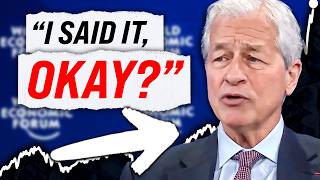
I don't think this is the kind of crisis that will last forever. CEO J.P. Morgan, Jamie Dimon, is certainly not one to be afraid to voice his opinion. In fact, last year he made a huge splash on the world stage when he described an economic storm on the horizon for the United States. I, I see the storm clouds changing out there, because I...Look, I'm an optimist, you know, I said there are storm clouds, big storm clouds , it's a big storm.
But recently, he has caught media attention for an entirely different reason. And this time the message is that everything is fine, the economy is not that bad, and the banks will be fine. And this is particularly interesting to hear from Dimon in particular because, well, he's right at the heart of the US banking system .
He is the CEO of the largest bank in America. And what's especially useful for us investors is that in the past week, Dimon has done an exclusive interview with CNN about the banking crisis, and he also published a detailed annual shareholder letter to explain his views on the economy. And the most important point of Dimon's remarks over the last few weeks is that he truly believes the US banking crisis is not a real crisis, and it's certainly not a 2008 scenario.
I just read your annual letter that just came out this week. And let's talk about the banking crisis because you wrote a lot about it. Is the current banking crisis over? This, this isn't 2008. Okay, this is much more limited. There are only a handful of banks that have this particular problem. They will eventually be resolved one way or another and I think people should take a deep breath.
In a week or two, many of these banks will report earnings. I think the results will probably be quite good. The Federal Reserve is making some bold and dramatic moves to help alleviate some of the problems they have and I hope these will be resolved soon. So, Jamie's point here is that when you look at these banks, there are some that really messed up their risk management and yes, they got punished.
But when you look at the big players and the banking system as a whole, it's not really in crisis mode. Silicon Valley Bank, for example, was caught out by having a concentrated client base and holding a lot of long-term, unhedged government bonds , and then struggled when a handful of those clients wanted to withdraw funds at the same time.
Diamond actually noted this in his annual letter, citing, "Regarding the current disruption in the U.S. banking system, most of the risks are clearly visible in plain sight." The interest rate exposure, fair value of the portfolio held to maturity, and the amount of uninsured SVB deposits are always known to both the regulator and the market.
The unknown risk is that SVB's more than 35,000 corporate clients and their activities are controlled by a handful of venture capital firms and are moving their deposits simultaneously. Is this a situation like Warren Buffett said, "Only at low tide do you know who is swimming naked?" "Are these banks swimming naked?" Yes, so I said it was plain to see.
Everyone knows about uninsured deposits . Everyone knows about interest rate exposure. Everyone knows about the portfolio held until maturity. The only difference, the only real difference is what we call concentrated clients. So, Silicon Valley Bank has, you know, a handful of people controlling 35,000 corporate accounts.
And they just pulled in, you know, $140 billion or so in a span of 2 days. That's not the case with other regional banks. And when all those clients tried to withdraw their deposits, the bank simply didn't have enough cash to meet the withdrawals, and it eventually collapsed. However, Diamond notes that the situation is clearly very different at major US banks.
They have a diverse number of customers. They have hedged their bond portfolio better than SVB. They are well-capitalized, and so far, they have the full support of the Federal Reserve. And during this banking episode, one place that has been really helpful in keeping me updated on the latest news and figures is Seeking Alpha, today's video sponsor.
Personally, I've been using Seeking Alpha Premium, which gives you unlimited access to community-generated news and articles , which has been incredibly helpful in keeping me informed during the crisis. Additionally, I was also able to look at 10 years of financial data for companies like SVB and Signature Bank to really understand more about how they got into this situation.
Plus, with Seeking Alpha Premium, you get a ton of other features, including the Alpha rating system, which helps you avoid major mistakes and understand the upside and downside of your company's valuation. You get transcripts of financial statements, investor presentations, SEC filings, press releases, and everything in one place.
But the best part, if you want to sign up for Seeking Alpha Premium, use my referral link. If you do, you'll get 12 months of Seeking Alpha Premium for just $99. So, Seeking Alpha really does us a favor in this regard as their annual plan is normally $239. So, use my link in the description, get a huge discount, and thank you always to Seeking Alpha for supporting this channel.
But, back to Jamie Dimon's thoughts on banking . In short, SVB management failed to control risk quite badly , but fortunately, according to Dimon, there is no such level of mismanagement across the financial system. But what happened next? Do you expect more banks to fail this year? I don't know, if there are, to be honest they will be resolved and it might be the last one.
I think we are almost at the end of this particular crisis and fewer financial institutions are affected . Remember in '08 there were hundreds of institutions around the world. Too much leverage, we don't experience it. The big problem in the mortgage market, we don't have it. It's not like that at all and the American public shouldn't think that way.
This will be resolved and then we have to see what went wrong and fix it transparently. And it was one big talking point of Jamie's annual letter that the public should not worry that this is just another 2008-style banking crisis . He said recent events were nothing like what happened during the 2008 global financial crisis, which barely affected regional banks.
In 2008, the trigger was the growing realization that a trillion dollars worth of consumer mortgages were going bad and were owned by various types of entities around the world. At that time, there was enormous leverage in almost the entire financial system . The major investment banks, Fannie Mae and Freddie Mac, nearly all the savings and loan institutions, off-balance sheet vehicles , AIG, and banks worldwide, all failed.
The current banking crisis involves far fewer financial actors and fewer problems to solve. And he is absolutely right on this point. In fact, the banking crisis we have witnessed over the past month is simply a crisis of confidence in a handful of poorly managed institutions . In essence, this mini-panic was simply the result of a few banks being forced to admit losses on long-term government bonds because interest rates were rising, and then a lot of people panicked, withdrew money, and the banks were unable to meet those withdrawals.
However, this is not the first time interest rates have risen, and it is very rare for a bank to act like SVB and leave itself so exposed to rising interest rates. That's why Jamie advises everyone to take a deep breath, and only then, once the situation has calmed down, make the appropriate regulatory changes .
But is the crisis over? You wrote in your letter that there would be impacts for years to come. Well, that's different. I mean, the impact is regulatory in nature. Like, think, and you know, I admit, think, obviously we have a problem, things need to change, but you know, I implore you and the regulators, let's take a deep breath.
There are hundreds of rules, you know, you have to be very careful. What do you want in the banking system? What do you want to get rid of? How do you make things easier for community banks and regional banks? How do you reduce their costs, not increase them, but also keep them safe. Of course, skeptics will say, "Wait a minute, this guy is the CEO of a big bank.
Of course, he doesn't want more regulation." And that's a fair comment, but Dimon isn't necessarily saying he doesn't want additional rules or regulations. He simply said he wanted to avoid a situation where lawmakers simply impose new rules on the banking system before they have thought it through.
In his shareholder letter, he said, quote, "Let us be very thoughtful in our response to recent events . Although this crisis will pass, lessons will be learned that will result in some changes to the regulatory system. However, it is crucial that we avoid rash, undirected, or politically motivated responses that often achieve the opposite of what is intended.
The debate should not always be about more or less regulation, but about what combination of regulations will keep the American banking system the best in the world, such as capital and leverage ratios, liquidity and what counts as liquidity, resolution rules, deposit insurance, securitization, stress testing, appropriate use of discount facilities, adjustments, and other requirements, including potential requirements for shadow banks.
Given recent issues, we could also add reviews of concentrated customers, uninsured deposits , and potential restrictions on the use of held-to-maturity bond portfolios to this mix. Ideally, new rules and regulations would also make it easier for banks to extend credit in difficult times. So, no, Jamie is not advocating for doing nothing.
Rather, he simply wants regulators to avoid rushing into ideas that Immature systems that actually create more problems than they solve. In fact, in this case, he actually believes some additional regulations could actually help the system. You know, look, it's not, again, when you talk about regulation, they see one thing and I see a lot of other things.
So, they have high liquidity requirements , high capital requirements , they meet those requirements, they have too much interest rate exposure, and things have to change, but they don't break the rules. And that's not regulatory change, it's other things. And in life, those things are bound to happen.
The idea that you can make everything perfect is flawed . I know, but you don't want big, well-known banks to collapse. No, you don't want them, but what you really want is that every once in a while something will happen and the system can handle it in time. Let them collapse. Yes. Failure is okay.
You just don't want this domino effect to happen. So, when there's a massive run on bank funds, you end up with a domino effect. So, I think, essentially, we need to get to a point where a bank can fail and not have that kind of effect. Right. And I think just by monitoring, changing Several things could get us closer to that.
This is actually a pretty smart idea that Jamie put forward. You don't want a system where no bank can fail because then banks will start taking on more and more risks. But on the other hand, you don't want the failure of one bank to cause a massive domino effect throughout the banking system and the economy.
So, as Jamie said, it's the right mix of regulations that matters, not just adding or subtracting them. And that's another thing to keep in mind. In general, the more regulation there is, the harder it is to maintain healthy competition in a given market . Large players tend to form oligopolies because, from a regulatory standpoint, it's too difficult for smaller players to emerge and compete.
So, they either die or are absorbed by one of the larger players. That's actually something Hamish explained to me on the latest episode of the Young Investors podcast . So, overall, a very interesting take from Jamie Dimon. And please, let me know what you think in the comments. But overall, guys, with that, I hope you enjoyed the video.
Be sure to give it a like if you did. Of course, subscribe if you want to see more. And with that, as always, see you in the next video. next.



Comments 0