
저자: TomLee · 외국인
요약 보기
Fed의 6월 금리인하 기대가 후퇴하고 인플레 재가속 우려가 커진 상황. Tom Lee는 자동차보험 제외 시 코어 인플레가 약 2.7%로 안정적이라 Fed가 크게 긴축할 필요는 낮다고 봄. 중국 회복으로 원자재 반등 가능성, 중소형주(Russell 2000)가 저평가 상태로 S&P500을 크게 상회할 것이라 전망. Ragu Rajan은 소형은행의 장기채 평가손 리스크와 인플레 재가속 시 긴축 위험을 경고.
다듬은 글
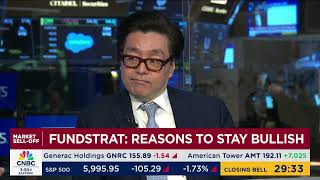
research at fund strand also joining us is Professor Ragu rajin former IMF Chief Economist and governor of The Reserve Bank of India a professor of Finance with the University of Chicago Booth a School of Business gentlemen it's great to have you both on power lunch and Professor rajin I want to start with you uh incredible just to see how quickly the market narrative has changed from expecting a rate cut in June now to some Economist saying perhaps not at all this year uh you've been in the seat that Powell is in different country India but still I'm C is how you think he navigates this complicated scenario that we're in which is hotter economy with inflation remaining much higher than expected and at the same time rates also Staying High the impact that could have on consumers yes uh I mean clearly what's happened is we've had three strong readings of inflation one you can dismiss certainly the January one but uh the uh the next two basically suggest inflation is not coming down in fact it's going up and if you look at the measure that the Fed has looked at most closely which is the super core measure of inflation taking out housing it's gone up at a 88.2% rate over the last 3 months so this is this is something to worry about uh is inflation coming down steadily as it seemed at the end of last year or is it uh having a new set of legs and moving up so so my sense is you know they're going to do what they did which is watch and wait but uh you know you heard uh uh uh you know New York fed uh president talking for the first time about potentially uh rate hikes I I think that's still some ways away uh uh serious talk about that but uh clearly the kind of rate cuts that were expected are off the table uh certainly in the next meeting uh they have no more news uh on inflation or the labor markets and it's likely they will continue pausing but how long they will pause is now uh very much in question Tom Professor rajen mentioned John Williams New York fed president who did just mentioned rate hikes but he did said that's not his base case but even the fact that he mentioned it you saw the two-year move to around 4.99% which is a high for this year uh you still have this uh notion that stocks can continue to outperform if rates stay high how long do you think that theory will last well I think it's going to be valid as long as one of several things happens one is that uh as long as the economy remains resilient and robust and so far earnings have actually been coming in quite good I mean we're only sort of at the start of earning season but already q1 looks good and I think the second is that inflation uh I I think inflation really has a bifurcation taking place because even as the professor said it's supercor the reason supercor is annualizing it 8% is auto insurance if you took super core out of sorry if you took auto insurance out of superc uh the long-term average is around 2.7 and it's actually annualizing at around 2.7% right now so the biggest driver of inflation are the two stubborn components of auto insurance and shelter so I don't know if Williams really wants to be raising interest rates are hiking just because auto insurance rates are High um and I think the third thing to keep in mind is that uh we don't really need the FED to make you know three Cuts I think the one risk to markets would be that the inflation is accelerating to the point where the FED has to hike and therefore really weaken the economy I I think that's still very much a tail scenario but that's the one of course that would unsettle markets the most Professor Rajan how critical is China's recovery to global economic performance well uh it certainly is very important right China has been the engine of global growth for a long time uh pre pandemic but I think it's also important for uh you know the reflationary forces we're seeing I mean if you look at commodity prices they were largely dead in the water for the last year because uh China wasn't uh performing up uh you know up to expectations as Chinese growth news is getting better you're seeing some Commodities perk up certainly you're seeing copper pick up some in in recent weeks so so my sense is that the deflationary effects uh of China which have been substant IAL especially on the good side uh May uh Abate a little bit if Chinese growth picks up and of course it will also add to Global demand which is important it was back in 2005 I believe Professor Rajan where you had called in Jackson Hull we had said that the US Financial system is facing great stress and then a couple years later we saw this great crash in 2008 when you analyze the US economy where we're at where treasury yelds are trading do you have similar concerns no I look I I think we haven't seen the last of the mini crisis we saw in the banks uh in in March of 2023 in the sense that uh a lot of uh small and midsize banks are still sitting on uh long long dated assets and and this is where you know higher for long uh higher long bond yields uh could result in some of them having to Mark assets to Market uh you know even some below the value of their Equity so some of them may be underwater we are still out of those woods uh we have sort of alleviated the immediate panic but some of that is is a source of concern of course sharp movements in markets uh uh almost always create problems somewhere it's it's hard to know where uh uh which what big bets are uh the shadow Financial system taking now which hedge funds are uh extremely ill positioned for a Sharp movement in interest rates uh but that will uh that will that could also happen but so far uh you know we haven't seen the kind of turmoil play out uh for example that we saw before the global financial crisis and I think it's as as our other parman said at this point a tail risk rather than the central scenario Tom Tom back to you with a question on small caps which you say will probably outperform the S&P 500 by 50% this year a lot of people have been protecting the that the day of small caps is going to arrive why are you so conf right now when it has taken so long for that sort of Prophecy to come true uh well that's quite a prophecy right um I think it's we're we're e exiting more than a decade of underperformance of small caps versus the large caps and now we're at a point where the risk reward is so attractive investors really should be thinking about them uh we hadn't really recommended small caps for several years until this year first on to book basis which is really the most important measure they're trading at 44% of the S&P right where they were in 1999 but projected growth this year is much higher with median earnings growth in the Russell 2000 of around 19% for EPS versus 11% for the S&P and on forward PE you're paying 10 times the median PE for the Russell 2000 against S&P around 16 times so kind of multi-decade low and value valuations better growth but of course sort of the timing accelerant is when the FED uh can really conclusively begin to cut rates I think that's one reason why small caps have really been hurting the last couple of weeks is that delay Tom thank you very much we appreciate it Professor Rajan thank you as well meantime coming up a power player and change maker in the Sports World we'll speak to the commissioner of the WNBA next what a week she has had plus Netflix reporting after the Bell it's seen some strong growth in recent quarters so what is on investors watch list power lunch will be right back




Comments 0