원문 보기
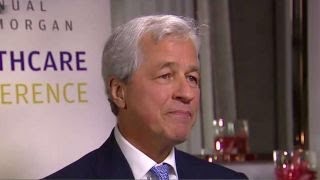
the largest bank I sat down with JP Morgan Chase chairman and CEO Jamie Diamond here in San Francisco yesterday getting his perspective on everything from Market volatility to China trade and the economic impact of tax cuts I started by asking him about his concerns of a possible slowdown in economic growth in the next two years yeah so I think you had kind of the narrative in October that things are doing very well Global synchronized growth IMF said it maybe one of the best years ever all of a sudden you got some data from Germany Japan maybe a little bit of slowdown United States but I I it looks to me like a Slowdown sentiment changed dramatically it changed for a whole bunch of different reasons uh but the still Globe is still growing United States is still growing to two and a half% we just had some good wage data so it's very possible you have a Slowdown a big shift in sentiment maybe people take a deep breath and things will open up a little bit but I mean when you look at all asset classes having declined you know whether it's stocks you know bonds um you've got energy and even as the Federal Reserve is Raising interest rates you've got the 10year going lower and then you had the inversion of the two and the 5year do these things not worry you not a lot because you I think that sometimes you to asset price I'm stocks but I say the same thing for other asset prices too you know the world if stocks in America at 18 and a half times PE and now they're at 16 sometimes there's a good reason for that slower growth is a good reason people do have concerns about Rising rates they do have concerns about trade I think trade has caused a lot of vola in the marketplace so sometimes that adjustment is reasonable and prices now were more reasonable and you know like with high yield we had no bond issuance in December I my guess you'll see something happen soon and the markets kind of open up if they take a deep breath and it looks like there will be growth it's not like we're going to a global recession we're going to have slower growth than maybe people expected a couple months ago I'm glad you mentioned that because there was no high yield debt issuance in the month of December and it's the first time that's happened in a decade is that an ominous sign I remember during the financial crisis which you lived through and you LED with such great leadership it was the debt markets that got us into trouble yeah but is the deleveraging the liquidation of debt markets not the not the lack of issu and so my view is that in December things slow down people got scared issuers didn't want to issue Gap spreads gapped out that'll probably change how long can the credit Market stay this tight before you actually do see it as a worry sign uh for a while I'm really not worried about it I think I think you're just having if you look at the other way around credit spreads were have normally low for a long time this is more maybe a little bit of a normalization and you know you and I both know that the tip of the ice the tip of the spear is IPOs and high yield so when people when Camen changes dramatically those are usually the first two areas where people cut back and then they kind of open up over time yeah it's interesting you mentioned that because it's a big IPO calendar uh that we're looking at for 19 what kind of a year are you expecting I think it'll probably okay I think you going see some IPOs done and I think uh once those markets open up you'll see people issue tell us about the credit card business and what you're seeing there because the fundamentals seem to be okay putting the market volatility aside but you've got a great vantage point and seeing how consumers are doing from your credit card business what are you seeing so credit card I mean it's very good I mean again if you look at actual data people getting jobs more people working wages going up wages are going up household balance sheet in very good shape credit card credit extraordinary good I think it's better than we deserve at this point in the cycle and and if you look at actual spend you if you look at retail spend Home Improvement spend a whole bunch of it's pretty good and so you know me my view is that the consumer is in good shape and has continued to grow and they have back when with jobs and wages going up there was some worry about the auto business you still seeing that in terms of auto loans not really again we went from I think it was a 10 million of Auto Sales in the bottom of 09 up to 17 we've been a 17 for a couple years to slowed down a little bit it's still around 17 or just under 17 that's a lot of car sales on the autol loan side I think you've seen subprime isn't very big it wasn't a problem 09 it isn't a lot bigger today you you may have some have an issue in subprime credit but no I we see it being okay you were pretty positive on the tax cut plan right when when when this was first enacted has that been one of the big positives in terms of creating some stimulus for this economy what's your take in terms of how we got here yeah so I think the tax plan this is really important for the American public to understand you need a competitive business system you need it permanently to compete in the globe and so we at America 40 years ago 20 years ago we had 40% federal and state the world's at 40% they came down to 20 to 25% we stated 40 the result of that was cumulative okay that over time companies in capital ended up moving overseas and people and research and it was a huge mistake so my view is it should be competitive it also provides stimulus in the short run you know some companies I know people complain about stock BuyBacks but you know some people rais wages open Plants did Acquisitions you know all good things the other thing about stock BuyBacks which I just find so confusing is if a company can't use the capital they have and they buy back stock or increase dividends that's simply recirculating Capital it goes to a higher and better use and the people shouldn't complain about that we don't always know what that use is going to be but that's a good thing they're not retain Capital they don't think they need it's more activity it's more activity and you want to see that so what are your thoughts on what we're hearing now from for example alexandraa Ocasio Cortez she says she thinks that the top end of earners should pay as high as 70 80 % tax rates look I you know I always separate the corporate side the business side which I think we need to be competitive with the individual side and so you know people have all different theories about the individual side what maximizes returns and stuff like that so I'm not I I don't get involved in that debate because I'll I'll leave that to the politicians that would that is actually less important for economic growth than the business side well the top 10% already pay 80% of all the tax they do but in America you have to look at taxes broad I mean uh a lot of payroll tax are aggressive sales tax are aggressive real estate tax agressive so you look at the big picture anyone could say we should we look at this and make it better and more efficient and fair are you saying you wouldn't mind to see the top end pay 80% in taxes no you wouldn't mind that no I'm not saying that okay just to be clear okay uh because that would be double where we are right now almost double certainly




Comments 0