
저자: TomLee · 외국인
요약 보기
AI 설비투자는 실질 수익(ROI)을 보여주면 정당화되며, 마이크로소프트는 코파일럿 확산으로 긍정적으로 봄. 시장은 AI 버블 우려와 높은 금리로 압축된 스프링 상태이며, 금리가 하락하면 주식에 호재. 고금리 상황에서는 7~8년 만기 투자등급 회사채·지방채가 매력적이라 자금이 장기채로 이동할 것으로 봄. 중간선거 이후 AI 주식의 정치적 압력이 줄어들 것으로 기대.
다듬은 글
Dell is a great recipient of all these dollars, all these dollars. So, if the capital expenditure eventually becomes a return on capital, then yes, it was a good investment. We know that a lot of it was wasted, but I think when I look at Microsoft, which I, you know, was very negative about. I didn't sell it.
I left her with me . People are using Co-pilot because suddenly they're model-neutral, where you can just use Claude, OpenAI—whoever. And now it suddenly became much more promising. So as long as these large companies can show a return on investment, the capital expenditure was justified. If not, but we wo n't know for a couple of years, then yes, these companies have wasted money and stock prices will fall, but I don't think that will happen anytime soon .
Hi Tom, it seems like yesterday we learned again how dependent we are on AI trading. You know, a headline comes out , the market reacts, draws its own conclusions, and then we have to figure out ex post facto what's what, whether it was informational noise around OpenAI's earnings, or something more; but the market is so tuned into this story that all it takes is a simple question, even for a second, and you see what the consequences are.
Yes, Scott, I think yesterday and today are examples of why this market is like a compressed spring. On the negative side, you know, the biggest pain is oil. Today we received good news regarding this. And, of course, interest rates, and there is widespread pessimism. I have been meeting with investors since September 28th, and they are very skeptical about this AI boom, which many consider a bubble.
But you're right, on the other hand, if we see failures, high funding costs, or cancellations of AI IPOs, it will trigger even more risk aversion. I think the third quarter earnings will restore confidence in AI, and I also think the midterm elections will be a bit of a clarifying event, because once that's behind us, I think AI stocks will be free of this political pressure, even if the Democrats take control of the Senate.
But, fundamentally speaking, I think this concentration makes sense. I would prefer to see several companies incentivize spending. I mean, first of all, it's logical because it shows the moats that are being created around, and by the way, all of these companies—they're mostly American businesses . It's really not that different from financial giants.
I haven't heard people say that the financial industry is too concentrated just because JP Morgan and Goldman are so big. And this is exactly what is happening now with artificial intelligence. So when you told our producers that stocks are a "compressed spring," could that be true at current interest rates?
How, how does it work? Well, I think there are two ways to look at it here , Scott. First, are rates reaching a level where they will be even harder to raise, because we know about record short positions, we know that this rate movement is excessive, and ultimately, these high rates actually weaken the demand for capital, right?
And not everyone can issue debt obligations under such conditions. So I think we are reaching a certain peak on this issue. But if rates do fall, and this could be closely linked to energy prices, it would take a lot of pressure off stocks, and I think P/E ratios could rise. So I think we're at a point now where rates are no longer a negative factor for stocks.
But if they remain at current levels, wo n't they continue to be competitors for stocks? This is part of the problem. That's why I asked you this question. Yes, it may be a " compressed spring" if yields fall significantly, but if they stay here or continue to rise further, this only adds fuel to the fire of the desire to look for alternatives.
Yes. Great point, Scott, you're right. Bonds and TIPS compete with stocks, but viewers should keep one thing in mind. Higher rates also mean higher investment income for American households. You know, at least $10 trillion in investment income is generated annually right now due to high interest rates.
It needs to be invested somewhere. Not all of this will go exclusively to buying bonds. A significant part of these flows is also directed into stocks. Brent, if the rates stay at this level, right? I'm sure you discuss this with your clients, right? Regarding opportunities that exist today but didn't exist a year ago.
One hundred percent. I've said on the air that long-term bonds in particular were a great way to get poor safely. Because you weren't getting any returns, but now, you know, we're looking at 7-year investment-grade corporate bonds , you can get over 6% for 7 years. And for municipal bonds, if you're in the highest tax bracket, the same 7- year investment-grade bonds will give you over 7%.
And that's why it's very attractive. So I think, why would I buy a dividend stock when I can get... If I were a client, an investor, why would I buy a stock with a dividend yield of 4 or 5% when I can buy an investment-grade corporate bond with a yield of 6% or a municipal bond with a yield of 7%? So, I think we have an interesting juxtaposition.
There is about 8 trillion in money markets that continue to grow while sitting on the sidelines . I'm curious, this is where I think we can see some movement towards fixed income instruments with longer durations. I do n't think people are going to sell their Meta shares to go into bonds, but I'm totally...I mean, we're having these conversations.
We allocate and aim to allocate more funds to 7-8- year corporate and municipal bonds, because these are great returns where you have virtually no risk, right? You just don't need to worry about it. So, as part of asset allocation, I think investors will absolutely start to allocate funds to bonds with longer durations at such high yields.
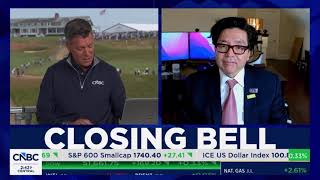
Colleagues, let's stop there. Thank you . Have a nice weekend to you both. See you soon. Brenda Akingbade and Tom Lee. By the way, be sure to watch Tom's speech at the CNBC Digital Finance Forum when he returns to New York on November 17th . You can scan the QR code to request an invitation or visit cnbcevents.com/digitalfinance. And now more about these reports.


Comments 0