저자: 미상 · 외국인
요약 보기
워런 버핏의 인덱스 투자 발언을 근거로 정기 적립식(달러 코스트 애버리징) 투자를 중단하지 말고 고점에서도 계속 매수하라는 결론을 제시한다. 핵심 주장: 역사적으로 지금은 인덱스 투자하기 매우 비싼 시기이지만, 장기 투자라면 고점에서도 정기 매수를 지속해야 한다. 근거 수치: 쉴러 PER 37(2000년 이후 가장 비쌈), S&P500 약 4,352포인트, 1981년 초 약 1,333포인트에서 현재까지 연평균 약 9% 수익 가정, 1942년 1만 달러 인덱스 투자 시 약 5,100만 달러로 가정. 버핏 발언 인용: 인덱스 펀드 장기 보유 권고, '내가 어떤 종목과 시점을 고를 만큼 충분히 알지 못한다', 한 번에 큰 금액을 넣는 것은 암묵적 베팅이므로 피해야 함, 2017년 주주서한에서도 저비용 S&P500 인덱스 펀드 추천. 벤저민 그레이엄 인용: 정기 매수를 유지하거나 시장이 위험하다고 느낄 때까지 중단할 수 있다는 입장을 소개하며 논쟁적 지점으로 언급. 조건/리스크: 투자 기간이 충분히 길어야 하며, 시장이 더 오를 수도 떨어질 수도 있다는 점은 인정. 한 번에 몰빵 투자는 피하고 시간을 분산해야 함. 출연자 전망: 명시적 단기 방향 예측은 없고, 장기적으로 인덱스 적립 지속을 권고. 영상 말미에 유료 강의(Profitful) 홍보 포함.
다듬은 글
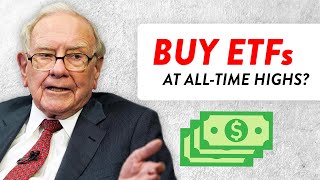
So over the past several years, passive investors have been caught in a bit of a tough spot. Dollar cost averaging obviously means you buy the entire market and you buy it consistently across the decades regardless of what the market actually looks like. However, we're currently seeing one of the most expensive times to buy index funds that we've ever seen in history.
As we can see, the Schiller PE, which is like a big PE ratio for the S&P 500, currently sits at 37, thus meaning the only time indexing was more expensive was in 2000. And we know what happened in 2000. So then compounded, you've also got conflicting messages coming from some of the investing greats.
I mean, for example, Jack Bogle, the founder of the Vanguard Group and the granddaddy of passive investing, always said, "You shouldn't worry about the ups and downs in the market. you should simply keep adding to your passive portfolio periodically no matter what happens. You know, seeking just the average market return.
One of his best quotes was, "Gunning for average is your best shot at finishing above average." But then you turn to the intelligent investor by Benjamin Graham who's obviously the father of value investing and he actually suggests that investors following a dollar cost averaging plan can elect in logic to continue their periodic purchases unchanged or to suspend them until they feel the market is no longer dangerous.
It's tricky, right? Do we soldier on or do we wait a while? Well, in this video, I've gone and found the best Buffett snippets to try and see what his answer to the question would be. So, let's get started. So, this time I went back uh actually to 1942 when I bought my first stock as an illustration of all the things that have happened since 1942.
We've had we've had uh 14 presidents, seven Republicans, seven Democrats. We've had we've had world wars. We had 9/11. We had the Cuban missile crisis. We have a all kinds of things. The best single thing you could have done on March 11th, 1942 when I bought my first stock was just buy an index fund and and and never look at a headline, never think about stocks anymore, just like you would do if you bought a farm.
you just buy the farm, let the let the tenant farmer run it for you. And I pointed out that if you'd put $10,000 in an index fund, that reinvested dividends. And I paused for a moment to let the audience try and guess how much it amount to, and it would come to $51 million. Now, so there's no doubt there, right?
Warren Buffett is definitely a fan of passive investing. It's kind of funny. The world's greatest active investor recommends passive investing before he recommends stockpicking. I mean, he's been asked many, many times in the past how he suggests people should approach investing. And he always says, "Well, you should consider buying an index fund and holding it for a long period of time." Yeah.
What should I invest in next? Can I have some tips? I think a actually if through the rest of his career and and beyond in terms of earning power then uh just making monthly investments in in a lowcost index fund makes a lot of sense. And honestly he says this no matter the weather in the market. He said it during the highest of highs and he said it during the lowest of low markets and it makes sense.
If you simply own the whole market in a growing economy, you can't help but do well. Even if you invest at an all-time high, as long as your investing time horizon is long enough, that's the important bit. You have to hang in there long enough. Put it this way. You know, 40 years ago, we're in the year 1981.
Was the stock market high or low in 1981? I have no idea. But is the stock market higher today than it was in 1981? Of course, today the S&P 500 sits at 4,352 points. In 1981, the S&P started the year at around 1333 points. Now, to get that 9% average return, all you had to do was buy the S&P 500 and continue to buy it at regular intervals no matter what.
And in all honesty, that pretty much answers our original question already. You can probably decipher Buffett's line of thinking and come to the conclusion that yes, he probably would recommend you do not ever stop buying the market even in really high markets. But I wanted to try and find some more supporting evidence to this theory and I just happened to stumble across this.
So take a listen. So I would pick a broad index but I wouldn't toss a chunk in at any one time. I would do it over a period of time because the the very nature of index funds is that you are saying I think America's business is going to do well over a reasonably well over a long period of time but I don't know enough to pick the winners and I don't know enough to pick the winning times.
There's nothing wrong with that. I don't know enough to pick the winning times. Occasionally I think I know enough to pick a winner but not very often. And I certainly can't pick winners by going down through the whole list and saying this is a winner and this isn't and so on. So the important thing to do if you have an overall feeling that business is a reasonable place to have your money over a long period of time is to invest over a long period of time and not make any bet implicitly by putting a big chunk in at a given time.
There you go. That's pretty concrete, right? Two quotes in there that really cement Buffett's line of thinking. One, passive investing is saying, you know, I don't know enough to pick the winners and I don't know enough to pick the winning times. And then two, don't make any bet implicitly by putting a big chunk in at a given time.
These two quotes pretty much all but guarantee that Buffett would say yes, you should still buy index funds and ETFs even at all-time highs. As he says, the very nature of being a passive investor means you acknowledge that you don't know enough to know when the market is high or when it is low. I mean, if you could judge those things, you probably wouldn't be passive investing right now.
Of course, nobody knows when the market is at its peak or low, but you can understand Buffett's logic there. The market may seem high, but you don't know if it's going to crash. For all we know, it could surge another 50% from here. Then, you'd look like an absolute fool for stopping your regular ETF investments.
But then the other piece of advice Buffett gives there which is particularly relevant for new passive investors in this market is don't make a big bet implicitly by putting a big chunk in at a given time. Really, that's the only thing you should avoid doing in a market like this. If you wanted to start passive investing and say you had $100,000, Buffett definitely advises against putting that whole, you know, 100k in at the one time.
And this makes sense. The idea of passive investing is to get the average. And the way to do that is to filter your money into the market over a long period of time. So you capture a variety of entry points and then you'll average out to the long-term market return. I mean, if you put it in, you know, just at once, then you are stuck on that one S&P 500 value.
I mean, if the market goes up, you look like a genius. But if the market goes down, then you've got two problems. one, you're down a lot on paper, but more importantly, two, you now don't have any money left to take advantage of the low market price. So, as a passive investor, you definitely want to avoid dumping the war chest into the market at one time.
Just filter more and more money in over the years. Never stop. And that's how you get the average. And I think that's important to remember. I feel a lot of passive investors forget that the goal of their investing isn't to time the market or beat the market or make $5,000 in 12 months. None of that.
Their aim is to get the average return of the market over the long run. And to do that, you dollar cost average and you just never stop. You don't stop and wait and see what happens when the market is at an all-time high. If you do that, you've probably forgotten your investing objective. I mean, have a look at this.
On February 25th, 2017, Buffett wrote this letter to Berkshire Hathaway investors. This letter goes on and on and on about index funds and how great they are. Buffett says, "Over the years, I've often been asked for investment advice, and in the process of answering, I've learned a good deal about human behavior.
My regular recommendation has always been a lowcost S&P 500 index fund. To their credit, my friends who possess only modest means have usually followed my suggestion. Now, have a look at the S&P 500 at that time. At that time, it was at an all-time high, 2347 points. Just like today, passive investors back then were nervous that the stock market was too expensive and were considering pulling their money out or waiting on the sidelines just to see what happened.
And fair enough, right? I mean, just look at that chart. The market looks very high. The Shilipe still then was about, you know, 26 27. But here's Warren Buffett saying in his annual letter, "Keep going with your passive investing. I still recommend index funds for most investors." You know, fast forward almost 5 years later, and the S&P 500 is now 2005 points higher.
So, does Buffett believe you should still continue to, you know, buy your market tracking ETFs and index funds even at all-time highs? Yeah. His opinion is just keep going and never stop. Get the average and if you're in the market for long enough, you'll be just fine. Don't turn the no stress investing strategy into an extremely stressful market timing experiment because it just won't work.
So anyway guys, that will just about do us for this video. I hope that was helpful. I hope maybe it helped, you know, put your mind at ease a little bit if you are a passive investor. And hopefully it provided a little bit of clarity on the strategy and how really no matter what the market's doing, if it's super high or if it's super low or anywhere in between, you definitely still want to keep going.
You still want to keep buying because that's just the nature. You remember, you're trying to average out. It's the nature of the strategy. So stick to it. And Buffett would definitely recommend the same as we've as evidenced by the clips and the and the quotes that we looked at there. So overall guys, thanks very much for watching the video.
Leave a like on it if you did enjoy. Subscribe to the channel if you're new around here. Check out new money clips if you'd like more new money content, shorter form new money content. And uh and check out Profitful if you'd like to learn about Warren Buffett's active investing strategy. Or if you wanted to get a step-by-step walkthrough of the passive investing strategy, links are down in the description.
Head over to Profitable and check out those courses. But apart from that guys, thank you very much for watching and I'll see you guys in the next



Comments 0