저자: RayDalio · 외국인
요약 보기
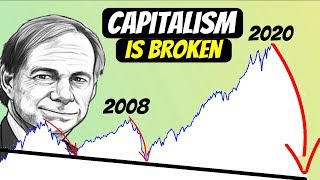
레이 달리오는 세계가 미쳐가고 시스템(자본주의)이 망가졌다고 진단한다. 2018년 인터뷰 기준으로 달리오는 현 금융사이클이 후반부(7회 중 7회 이닝)에 들어섰고 다음 하강까지 약 2년 정도 남았다고 봤다. 기업부채와 국가부채는 역대 최고치이며, 2018년 기준 국가부채는 약 23조 달러 수준이라고 언급했다. 부채 버블 구조에 대한 설명: 버블 단계에서는 자산가격 상승을 과거 추세로 외삽하며 대규모 차입이 일어나고, 중앙은행은 인플레이션과 성장에 영향이 없다는 이유로 이를 크게 신경 쓰지 않는다. 달리오는 이 시점에 부채를 상환할 수 있는지 점검해야 한다고 강조했다. 현재 위기의 성격: 1935~1940년 시기와 유사하며, 금리가 0에 이르고 중앙은행이 돈을 찍어 금융자산을 사들이는 방식으로 자산가격을 밀어올렸다. 그 결과 부의 격차가 확대되었고, 상위 0.1%의 자산이 하위 90%의 합과 같은 수준이라고 지적했다. 이는 포퓰리즘 확산의 배경이 된다. 정책 한계: 금리 인하 여력과 양적완화의 효과가 소진되어 다음 하강기에는 정책 효과가 약할 것이라고 봤다. 연금·의료 등 미적립 부채 문제도 사회·정치적 부담이 될 것이라고 전망했다. 2019년 인터뷰 기준으로 달리오는 시스템이 효율적으로 작동하지 않고 있으며, 초당적·범부처적 협력으로 교육 등 고수익 투자를 늘리고 기회 균등을 높여야 한다고 주장했다. 다만 이런 협력이 실제로 이뤄질 가능성은 낮다고 봤고, 정부 부채를 메우기 위한 통화 증발 증가, 낮은 수익률, 주가가 실적이 아니라 꿈을 팔아 지탱되는 상황을 예상했다. 금리는 이미 기업·기관의 부채 확대로 인해 더 올리기 어렵고, 세금 인상이나 감세 되돌리기는 주가에 큰 충격(이익 약 15% 변화 가능성)을 줄 수 있다고 언급했다. 시장 상황에 대한 언급: 주식시장은 경기둔화와 무관하게 중앙은행 유동성 기대에 따라 움직이며, 채권시장에는 마이너스 금리까지 나타나는 자금 과잉이 있다고 진단했다. 달리오는 이런 흐름이 금융 패러다임 전환으로 이어질 것이며, 비트코인과 금을 보유한 사람들이 초기 수혜자가 될 것이라는 취지로 언급했다. 영상 제작자는 달리오의 발언을 인용해 현 경제에 대한 시청자 의견을 요청했다.
다듬은 글
you say that the world has gone mad and the system meaning capitalism is broken hey what is up guys Ray Dalio the founder of Bridgewater associates the largest hedge fund in the world his net worth is estimated at eighteen point seven billion dollars only few days ago he stated that the world just got mad and the system is broken in today's video I'll explain what he means by that and what we should expect now let's see what can we learn from historically recessions and financial bubbles according to Ray every bubble is a large accumulation of debt we are currently at new all-time high of corporate debt and national debt is also at new all-time high almost at 23 trillion dollars in 2018 according to Ray Dalio that was not that big of an issue and he indicates that we are probably in the late stage of the financial cycle these few minutes clip interview that you're about to see was made back in 2018 and Ray stated that we are probably two more years until this eleven year financial market expansion will come to the end let's take a look what Ray Dalio had to say two years ago and to be will compare it to what he has to say now when you look back and think about the crisis what is the biggest single lesson I know there's so many lessons in the book and we want to get to them but the biggest single lesson for you of all of them there's the debt growth that finances the bubbles that happen before it they create the busts you know there's basically six stages to it there's the normal debt growth that finances growth that pays for itself and then you get into the bubble stage when everybody's extrapolating what happened in the past so asset prices are going up and everybody's borrowing a lot of money to extrapolate what's happened and that bubble stage central banks don't pay much attention to because it doesn't affect inflation and growth and so I think at that stage is when the central bank should be looking at are those debts going to be able to be paid back from the financial that would be the biggest right and what stage therefore are we in today we had a segment on at around 6:30 with Brian Sullivan who talked about actually how debt in this country has actually increased since 2008 yeah that is that is increased but debt relative to the debt service debt service payments relative to incomes have not risen like they've had in 2007 and NH his point was looking at corporate debt and corporate debt of course is livid but if you look at the corporate cash and you look at the maturity of the debt when we run the proform of financial calculations it's nothing like 2007 what looked like to 2008 there's a squeeze that that'll be emerging but generally speaking we're in I would say the seventh inning of this cycle I think that we're at the stage in the cycle where what interest rates are being raised right we're in the later stage probably maybe we have two more years I would say into the cycle something like that what and then the issues think the issues of this debt crisis a very different thing out than the last desperate crisis each one's a little bit unique this one looks very much more like the nineteen thirty five to thirty six thirty nineteen thirty five to forty period I mean that situation you called it a crisis we're not out of crisis yet are we are we there now no but oh you mean the debt situation could I describe the parallels yes I think the parallels are really I wouldn't understand okay nineteen twenty nine to thirty two at nine and 2008 to 2009 we have a debt crisis and interest rates hit zero both of those cases interest rates at zero only two times the century there's only one thing to do next and that is to print money and buy financial assets so in both of those cases that's what the central bank did and they pushed asset prices up as a result we had an expansion we had the markets rising and we particularly had an increase in the wealth gap because if you known financial assets you got richer and if you didn't you didn't and so what today we have is the yep that's the largest since that period the top one-tenth of one percent of the populations that worth is equal to the bottom 90% combined you have to go back to 1935 to 40 as a result we have populism okay populism is the disenchanted capitalism not working for the majority of people then we so we have that particular gap so we have a political gap that a social gap in terms of the economics and we're coming into the phase where we're beginning the the tightening cycle 1937 we begin a tightening cycle we begin a tightening cycle at this point no tightening cycle ever works out perfectly that's why we have recession so you can't get it perfectly so as we're going into this particular cycle we have we have to start to think well what will the next downturn are you like we're nine years into this as you have a downturn I believe that there's a political and social implications to that related to populism and less effective monetary policy there's less effective monetary policy because there so far there are two types of monetary policy used lowering interest rates we can't lower interest rates and the second is quantitative easing and it's maximized its effect so I think that the next downturn is going to be a different type of downturn I think pension problems so healthcare problems in terms of obligations that are not funded that's not not death or severe next time I think it'll be more severe in terms of the social political problems and I think it'll be more difficult to handle like the it won't be like the same in terms of the big bang debt crisis it'll be a slower growing more constricting sort of debt crisis that I think he'll have bigger social implications and I big err international implications but there's a sense in this book that there's an avid ability to these crises and so one of the questions is from a policy perspective if we're in the seventh inning is there anything that policymakers can do today not afterwards but today to avoid this crisis you're talking about I I think first of all to be able to think about how to handle it because you're right they're inevitable they're inevitable because there's never the perfect balance between lending and borrowing right and so they're inevitable I would say the things that they should do that maybe you're missing or first of all to have the freedom of action we have a lot of regulations and they're usually written for what the last death crisis was like and ours are but there are less freedoms of action today we have a safer banking system and we've done a lot of things to make it safer but each one is a little bit different it classically there's the development of the shadow banking system and there and and we will have a new type of shadow banking system so less freedom I think we have to think about what is the monetary policy 3 as I call it that is not going that when we have quantitative easing not because that's what I mean I mean is the and then the with the prescription for that though maybe to raise rates now and try and unwind arrays if you raise rates now all the rate structures affected and carries through all markets right because we're all discount it's a discount rate for the present value of all asset classes no no I think you have to start to think of what monetary policy 3 is which is particularly in Japan you're going to need it not the type of thing where there's it's not just the purchase of financial assets it gets individuals to make their purchases back in 2018 dalia was clear that we are not in recession just yet but it most likely will happen in two years or so another important statement that he made which resonates with me is that each market cycle and financial crisis is different than the previous one people most of the time learn from their mistakes and they are likely not to repeat them in the near future but it's a human nature to make mistakes and every new generation keeps falling in the same rabbit hole that's why history not necessarily repeats itself but it often arrives now let's go to the current time just few days ago read a you're headed in through with CNBC and he stated that the world just got mad and the system is broken what does it say about economic system when some of the wealthiest most prominent beneficiaries are coming out and declaring that it is a failure let's see what he had to say in that interview you say that the world has gone mad and the system meaning capitalism is broken you point to things like the wealth gap and the printing of money and and monetary policy unfunded liabilities what are we going to do about it well let's first touch on what it is ok we we've the necessity of trying to be stimulative when there are not other monetary policies you can't lower interest rates anymore there's been a lot of printing of money and as a result of that printing of money investors are very flush with money and as a result they're taking very low returns and they also are tech buying dreams rather than earnings in stocks so we've pushed that to an extreme in terms of those returns and then at the same time it is clogged with investors so investors having a bunch of bundles of money and then we also don't have much in the way of the trickling down so we do know that we have populism of the left and populism of the right and we're going to come into a period of time where that's going to be more challenging I don't have big effects on the markets because it'll have the big effect on tax policy but it'll also have a big effect on how we are together so if I take those things the large populism of the extremes and the battle between those two and I take the absence of effective monetary policy and the conflicts that we're having it in the world that's the nature of that market so I believe that we would need to have smart togetherness to engineer a process by which the system works better to produce more equal opportunity and also can raise the size of the pie because there are a lot of good investments investments in education if we're underfunding education if we're doing those some a number of things that could produce high return on investment we'll be better off and so that's my basic perspective and then also I'm pointing out that the pushing to negative rates we're running out and that's going to lead to fiscal and monetary coordination necessity that is very dangerous we're going to have large but budget deficits large that we're going to need to fund those liabilities that we have we have pension liabilities in healthcare that means those is going to be a lot of printing of money and what that looks like is important so that's what I'm saying the system is not working efficiently monetary and fiscal policy and the means by which there is a equal opportunities not working efficiently at a time when we have the circumstances we have so whose responsibility is it then to fix it you pointed out a very scary situation here is that corporate America's responsibility to fix it is that the government is it you know individuals in this country through philanthropy know it's gonna solve this I think it can't be done in a fragmented way I would say the leadership whether it's President or in state leadership sand governors and so on it has to take approach where it's a come together approach of different types of people I'm not saying this is likely I'm saying it's necessary because we're going to a warlike environment and so the smart people who are in contact with various on the ground needs to realize that they have to engineer it together to make sure that our economy works well education for example if you look at the education statistics we have to improve education tell of an investment so I think that's the nature of the be that it has to be top-down directed it's got to be coordinated it's got to be nonpartisan or bipartisan and I don't think that's likely I think what's most likely is that we as we move ahead there'll be more printing of money that's necessary to fund those deficits there will be bad returns because they'll be driven down and that this the dreams of selling companies but no longer they're selling dreams they're not selling earnings and they're not even selling a path 30 that those things will have to be normalized will have to be rectified time will produce in a paradigm shift there'll be a paradigm shift where those things that supported the economy and the markets in the past will increasingly be in jeopardy now in the last you know a few years we've seen you know obviously on the fiscal side tax cuts we've seen on the monetary policy side we're now in a lower interest rate regime would you recommend reversing some of those things to accomplish your goals do rates need to go higher from here no I think that no I think the system is pretty much stuck you can't raise rates because as a result of the stimulation companies and various entities have a lot more debt so its stimulated that the borrowing and the purchases of companies back with borrowed money and all of those things have produced a stimulus you know you can't if you do reverse it it will have the effect of causing prices to go down let's say if we reverse the tax cuts okay and and we're looking at different proposals the proposal to reverse the tax cut and change elizabeth warren's for example would results probably in about a 15 percent change in earnings that would be a 15 percent change in tax the value of stocks and earnings so each one of those things if you reverse you're going to reverse some of the things that happen and that has enough consequences so I think you have to engineer things carefully I think that there's lots of good investments that can be made in some things that I'm not we're gonna need to raise taxes and that the question is how its well engineered and whether we're doing that in a bipartisan and a nonpartisan basis there are no simple answers because when we run out of monetary policy we've run out of the stimulant that we usually can go to to deal with that situation at the same time as there's this polarity the system of making capitalism for the most people is broken Dahlia it began with financial crisis a decade ago when central banks around the world began printing money by trillions in order to steam off financial collapse the banks used that money to buy bonds putting a huge amount of cash into the hands of large investors like banks involved individuals those investors were supposed to spend that money which would help to put into the consumer economy and result in job creation but it has not worked the reason that this money have been pushed on investors is not pushing growth and inflation much higher because investors who are getting it wants to invest in rather than spend it Dalio and so they have invested driving up the stock market to DZ highs and even as wages stagnate in the real economy the S&P 500 stock index heats and all a new time high last week with investors pretty much ignoring the economic slowdown in Europe and China and seemingly convinced that the us-china trade war is about to end like many other observers Dahlia has noted that the stock price no longer has much to do with the health of the company and earnings market moves depend on whether or not investor expect central banks like US Federal Reserve to flood the market with even more money in the bond market there is so much money floating around that investors are willing to accept less and less returned at that money they land for many government bonds especially European countries the returns are below zero a negative interest rates which means if I give you money I will also give you interest on that money this is insane when money are more than free people will do dumb things with it which will not end well investors are willing to accept negative interest rates getting back less and less than they lent because they have an enormous amount of money to invest that they had ever before so the money rotates around financial system from central banks to investors and back again without passing through the hands of regular people the wage earners who depend on that capital for their income and while those who have wealth are able to borrow virtually for free today those without wealth cannot access to capital to improve their situation therefore we have a huge gap between rich and poor great Dahlia says that whole situation is likely to get worse because government around the world have been borrowing large amounts of money and those amounts will get even larger in the next economic downturn the most importantly in this financial recession we will see a paradigm shift I believe those who hold Bitcoin and gold will be initial beneficiaries let me know what you guys think about Ray Dalio and his statement about this current economy lívia thoughts in the comment section below he did like button subscribe


Comments 0