
저자: RayDalio · 외국인
요약 보기
결론: 레이 달리오는 장기 부채 사이클 말기와 통화 가치 하락 우려를 근거로 장기적 시장 하락 가능성을 경고했고, 영상 진행자는 이를 근거로 현금 외 분산투자를 권했다. 거시 상황: 미국 GDP가 2분기에 크게 감소할 수 있으며, 이 경우 시장이 추가 하락할 수 있다는 주장. 강세장 배경: 연준의 대규모 통화 공급과 제로금리로 지난 10년 강세장과 경기 확장이 이어졌으나, 현재 강세장은 역사적으로 평균보다 길다는 설명. 역사적 사이클: 1950년대 이후 강세장은 평균 약 6년, 약세장은 평균 약 1년. 현재는 경기 확장 막바지라는 진단. 달리오의 부채 사이클 논리: 제로금리 이후 중앙은행이 돈을 찍어 자산을 매입하는 단계로 가며, 1929~1932년과 유사한 패턴이 반복된다고 주장. 통화 가치: 연금·의료 등 비부채성 의무가 늘고 정치적으로 디폴트가 어려워 통화 발행이 늘어날 것이며, 이로 인해 현금과 무이자 채권의 실질 수익률이 마이너스가 된다고 주장. 부채 비율: 1946년 최고치 121%, 현재 107%(2019년 기준)이나 2020년 이후 부채가 급증해 상승 가능성 언급. 투자 전략: 주식·채권 60:40 이상의 폭넓은 분산, 금과 물가연동채 편입, 달리오식 장기 낙관·단기 전술적 베팅 구분 등을 제시. 진행자는 비트코인 추가도 제안. 리스크: 지정학 갈등, 세금 정책 불확실성, 통화 가치 하락, 현금 보유의 실질 손실. 출연자 전망: 장기적 약세 및 '잃어버린 10년' 가능성 언급, 단기 방향은 명확히 제시되지 않음.
다듬은 글
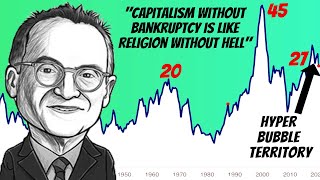
hey what's up guys according to Ray Dalio we came to the latest stages of this market expansion in this video we will take a look at the most recent Ray Dalio interview where he continues to predict the down cycle then he will explain what can you do as an investor to protect yourself from what is about to come as we already know that economy isn't doing so well growth domestic product is down significantly specifically if we will see a massive drop in the second quarter if we will see something like minus 50 percent drop in GDP I think market will react negatively and we might see more downside just based on the second quarter results if we have seen very strong bull market and economic expansion for the past decade mainly because fed printed massive amount of money and kept interest rates at zero for the entire time of this expansion if we look at this chart we will notice that this current bull market is the second longest with the most generated gains besides the bull market from 1990s this chart goes all the way back to late 1950s we see more than 60 years of data here history is important to study and so on from those of you who do not learn from history are doomed to repeat it for the past 60 years an average bull market lasted for about six years sometimes longer sometimes shorter and this current bull market is definitely well over to you the expansion is coming at the end this is what trade dolly will explain later in this video the average bear market lasted for about one year in some cases shorter in some cases longer so far we have seen market dropped for only four weeks while the economy is down for two consecutive quarters as Ray Dalio said recently the stock market could be in a verge of the Lost Decade for investors as globalization has already peaked Bridgewater is the largest hedge fund in the world said it through the years long trend as some corporate earnings could see multi-year reversal and the pin that started the reversal cycle is this illness let's take a look at this recent video where a toddler explains where we stand in this economy and what we should expect next I experienced through my lifetime surprises about things that never happened in my lifetime before but happened many times in history before and the three forces that we're talking about which is there is a long term debt cycle which will get into the large wealth and political gaps that go with that and the rise of a great power to challenge existing great power happened in the nineteen thirty to forty five period and happened many times before and are the big drivers not just of the economic environment but of the whole environment so let me start with the the debt cycle there are you know in 1945 we began a new world order 1944 we created a new monetary system the Bretton Woods monetary system and then we created that new world order and that created a bull markets and stocks and an American world order for the most part there's a cycle that we're used to in which whenever you have add economic downturn the central bank hits the gas and can create debt expansion and that produces an increase in demand and that happens in three phases at the cycle normally it's interest rates you lower interest rates and the economy turns up but when you hit zero interest rates which happened in 1932 debt crisis 1932 we get zero interest rates then you go to the second type of monetary policy in which central bank's print money and buy financial assets to add liquidity and those purchases those sellers and bonds who get the cash go out and they buy other financial assets and we have the process going through and that's the second type of monitor policy so the only two times that that happened was not 2008 to 9 1929 to 1932 zero interest rates print money monetization that'll carry you so far and then when there's what I call monetary policy 3 which means that that money does not trickle down to the population and go all the places that it's needed to go and that monetary policy means that there has to be the what we're seeing now in monetary policy in other words the coordination between fiscal and monetary policy so that the central bank is buying assets of a different sort a wide range for a wide range of assets producing liquidity and also having the effect of buying government debt and monetizing it and that's the late cycle of an of an expansion in like in 1932 45 and this is a pattern by the way that's gone down before history you quite often you have a period of great prosperity like the 1920s and it gets overextended with debt because everybody bets on the people the past being continued and it becomes it creates a bubble 1929 then you have a downturn a depression interest rates can't be lowered anymore print money the expansion internal conflict internal conflict and also economic conflict tends to coincide with external conflict particularly when there is a comparable power rising in that particular case it was Germany in Europe and Japan in Asia so that dynamic is it is going on and will be important clearly through history and I studied the last 500 years of cycles going back to the Dutch cycle in terms of the Bank of Amsterdam in that whole cycle at all cases central banks will print money and devalue money when they get in that course the basic problem of a depression is basically debt liquidity problem and so always through history the the choice will be reflation even when you hit interest rates in the way that we're seeing now and so to understand that the nature of the diversifying asset has shifted to be of the sort that I'm describing in terms of other assets that at that particular point of time benefit from reflation because they it will be reflected I and so we will always see reflation and that's why in history you see that all currencies have devalued or died over a period of time particularly in such periods and so when debt is built up and a lot of debt has been built up but beyond that view there's a lot of non debt obligations pension obligations healthcare obligations a lot of spending obligations those are like debt and they all have to be met and there won't be defaulting on that you're not it's politically unacceptable to default on pensioners and so on so all of those obligations insurance obligations all of those liabilities are coming at us and that then can be met increasingly by the printing of money and so think about it when you're holding a bond and it has no return and a negative real return do you want to hold that asset who is going to hold that asset particularly when there's so much printing of money and that is the value that is currency that is cash and so that issue that risk that there's a movement out of that is significant so now we have to look at historical periods of when that were analogous to what's going on now and that would I think be particularly the war years you know the years when there are large deficits that are built up there's the monetization and so when we talk about yield curve control and interest rate controls and guidance we're in a new world I mean think about it it's so interesting where does the money come from if you take Europe for example and you lend to banks at a - the central bank lends to banks at a minus 1% and then and then so they'll take that credit then they can decide when to roll it or as they roll it forward that means that there can literally be no debt service payments so it is the means by which there's monetization and cash is being produced to solve to deal with those liabilities and that has an important implication in the value of cash which is currency it is very important to learn from history and from others mistakes but human will create in such a way that we do not learn from history and last we encountered with such a mistake that's why we see all these cycles from generation to generation new people keep on stepping on the same rake from someone who did not live through nineteen thirties Great Depression it is very hard to comprehend that something like this could happen again but for grandpa who lost his job in a Great Depression it will scar his brain tissue for the rest of his life so he definitely learned the lesson from history and he won't be surprised if he see something like this again I just want you to be aware of our biases and know that they exist according to Ray Dalio we have reached the ceiling of the long term debt cycle in 1946 debt to GDP was the highest in the history it peaked at 121 percent while current debt to GDP is at 107 percent but keep in mind this current data ends in 2019 in 2020 a lot has happened we almost doubled our balance sheet increased that ceiling while GDP level dropped so when GDP drops and that increases you know what happens that to GDP ratio will skyrocket I won't be surprised to see 1946 numbers very soon besides being at the end of the long term debt cycle we already at 0% interest rates and fat got involved not just buying Treasuries but also corporate debt as well according to Ray Dalio those are the symptoms of the late stages of the cycle expansion so what can we do how can an individual investor protect himself from the reverse down cycle let's take a look what rate dollar has to say what should you do in this situation question that's on the minds of so many people ways how should people invest and what is the correct that's allocation for this sort of environment well the most important the investment environment going forward will be very different from the environment of the past I mean think about it as a zero and low very low returning acid environment because the liquidity that's in the market is driving the excess returns of all markets down to be low in relationship to the very low cash rate so negative real returns not good for cash and so the most important thing is to know how to diversify well and what I mean by that is to go beyond the just the traditional 6040 stock bond necks or even the same countries and to broaden that diversification to include in that portfolio assets that might seem unusual to include some gold to include inflation index bonds to include to think about the currency exposure to think about safety as different most people think that cash is safe cash is the least safe investment it just doesn't have the same volatility to it but it has because they're producing so much cash it has a negative real return it's a tax that maybe 2% a year you lose money in terms of cash so you have to think about risk differently and you have to diversify best that's the most important thing to have a well diversified portfolio it's so the uncertainties that we have today are so great in terms of all the things I mentioned that tax policies the geopolitical certainly we must experience it with you know will the next wave come back and how will it be their diversification can be achieved without reducing your expected returns because of the way that nature asset classes are priced and then when if you're going to take tactical bets from those than those tactical bets alpha on top of that strategic well diversified portfolio should have highly diversified bets deviated liquidity is going to be more important than before because things change in unexpected ways look at how in many of the cases the businesses that you've won would have thought was a good business and let's say you're in private equity and that you're with that company and so the restructuring the ability to rebalance and diversify and to make and to be cautious about making a highly diversified set of bets is I think the future but thinking even of asset classes thinking about the value of money you know we look at asset classes and we say oh do I want my money to be in stocks and which stocks but we don't think about stocks bonds we think about those traditional asset classes well we don't think about the value of money and what's going to happen in terms of the printing of that value of the money and how to diversify is it well so I think those are the things that have to be a paid attention to in much as they were important things in years prior to 1945 today Dalia said the investment environment going forward will be much different than the past this is true when earnings are down and the price of an underlying instrument is pumped up by the Fed the yield or the rate of return is highly diminished according to the Dalia the key to protect yourself in such environment is diversification most specifically is to have some unusual assets in your portfolio that investors would shy away from such as gold and inflationary index bonds I would also add some Bitcoin it definitely further a really allows you to diversify your portfolio interestingly what really had to say that cash is no bueno we already know that cash is trash over a long period of time but in deflation air environment he who has cash is king such as foreign Buffett what above it holds like 30 percent of cash on his balance sheet cash would further love you to capitalize on opportunities once they come by I would definitely recommend having some cash in your portfolio as well let me know what the you guys think about this recent rate value interview do you think there is more downturn in this market Libya if you haven't


Comments 0