저자: PeterSchiff · 외국인
요약 보기
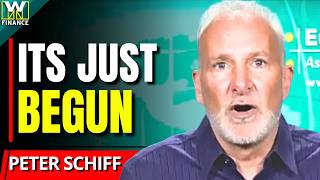
금 가격은 연말 6,000달러 이상 전망, 유가는 평화협상 후에도 리스크 프리미엄과 비축 수요로 높게 유지될 것으로 봄. 고유가는 인플레보다 경기침체를 유발하며, 연준이 금리를 올려야 하는데 못 올리고 있어 실질금리가 낮아진 완화 상태라고 주장. 달러·국채 이탈과 금 강세를 주장하며, 트럼프 발언 전후 시장 움직임(타코 트레이드)에 내부자 거래 의혹을 제기. 구리 추가 매수 및 금광주 보유를 언급.
다듬은 글
I think they probably are underestimating it because if you look at the US stock market hitting new highs, I think stock market investors clearly expect a relatively quick resolution and a drop in oil prices. And so obviously the same expectation is likely in the oil market. But if it turns out that this optimism is unfounded and the war is not over as quickly as people think or hope, the impact on oil prices is going to be greater.
But I also think that that people are wrong to believe that oil prices are just going to come crashing down as soon as we have a peace deal. I think that oil's going to stay higher for a lot longer. And the price was going to go up anyway, even if we didn't have a war. But I think the war has kind of raised the risk premium for quite some time and I think it's also caused, you know, nations, companies to start thinking about having more reserves just in case.
And so I think you're going to see a renewed demand from around the world to try to build up more reserves. So that's going to increase the demand for oil to fill those reserves. I mean, maybe even the US will want to top up our reserves. They're very low right now given how much oil we sold under Biden.
So I think oil's going to be expensive. Well, the demand destruction that stems from rising oil prices is not just in oil because people need energy. And a lot of these fertilizers, you know, the farmers need that stuff. And yes, if gas is expensive enough, I can cut back. I don't have to take that vacation.
So there is a way to reduce your energy consumption, but you can't just turn it off completely. But what I can turn off completely is other items that I used to buy, but I now can't afford them because everything related to energy costs me more. So that's where the demand destruction is, is in the discretionary items that I give up entirely so I can keep buying energy.
So I can keep the lights on and keep driving back and forth to work, right? So, that's going to be the problem and that's why rising oil prices, they're not inflationary, they're recessionary. What's inflationary is how a central bank responds to that. So, if rising oil prices cause recession and then central banks print a lot of money and cut rates, that's what causes the inflation.
Now, that causes all the prices to go up, not just the energy-related prices. I mean, inflation by definition is an expansion of the money supply and credit. That's what it is. But, you know, the public expects prices to go up and they're right, prices are going to go up. They'll probably go up by more than what they expect.
I think they normally are wrong on the low side. And contrary to what a lot of economists say, including economists on the Fed, expectations are not what causes prices to go up. It's not like the Field of Dreams, right? If you build it, they will come. If you expect higher inflation, you will get higher inflation.
No, it's if the Fed creates more inflation, you're going to get more inflation, regardless of what the public expects. I think reversing exposure to kind of cyclical stocks might make sense, but not to the raw materials. I think that those materials are going to continue to be in higher demand. You know, especially with what's going on with AI, you really generate more demand for the resources that make the whole thing work.
So, no, I mean, I own a lot, in fact, I just recently bought more a copper stock myself the other day. I mean, I want to own these metals even though I have a bearish outlook on the economy. And you know, you mentioned that the Fed is not cutting rates, which is true, but they're also not hiking rates, which they should be doing.
Because if you look at what's happened to inflation over the past several months, it's clear that inflation is going to be quite a bit higher than what the Fed had expected. Looking at money supply growth, look at the balance sheet growth, and then the Fed likes to look at the CPI and PPI. Well, look at these numbers, they're jumping up.
Energy is a big part of that, but even if you just look at the core, you're still seeing prices rising at double the Fed's 2% target. So, the Fed should be hiking rates. They're not hiking rates. And so, that is problematic. And I think that's why, you know, people need to get out of dollars and out of Treasuries, and people should be buying gold.
You know, gold was sold in part because the Fed wasn't cutting. But, those traders were overlooking the fact that the market was doing the cutting. That inflation going up is the equivalent of rates coming down if rates stay the same because it's real rates that are the driver here. And if inflation doubles, then real rates are cut in half unless the Fed doubles rates to maintain the relationship.
So, I think we're in an easier money policy now, despite the fact that the Fed hasn't cut nominal rates, because the Fed has allowed a substantial reduction in real rates. I mean, I don't want to abolish the Fed and just hand the printing press to Congress or the president. So, I would like to go back to the way it was before we had a Fed.
At a minimum, I'd like to go back to the original Federal Reserve Act and have that cuz I don't have that much of a problem with that other than it was the camel's nose under the tent. What I don't like is what the Federal Reserve became. And so, that is a big problem. But, given the choice between having an AI FOMC, right?
Why do we even need these guys? You put the parameters in and you let the AI, right, decide the rates, right? That would be better than what we got now. That's not ideal because the AI just does what the programmers tell it to do. So, if you put garbage in, you're going to get garbage out unless the AI really is intelligent to the sense that it can look at that programming and say, "You know, this is I have studied, I've done my own research, and you know, Peter Schiff is right.
These guys that programmed me don't know what they're doing. And so, I am not going to follow this program because that would be dumb. I am going to embrace the Austrian school. I am going to let the market determine these interest rates. I don't like, you know, oh, you know, you need to stimulate the economy, so you need to cut rates, you know." To me, if you're a trader and you're a gambler, there is a pattern of the taco trade where Trump will say something and then immediately change his mind before it really kicks in.
So, Trump will say, "If I don't get this in 2 days, I'm going to do all these horrible things." And the market goes down when he says it. But then he doesn't do any of those horrible things. He comes out 2 days later, "Oh, you know what? I don't have to do it. Everything is great now." Right? And then market goes back up.
So, after he's done this a number of times, there could be some people that are just saying, "You know what? Whenever Trump says something is bad, I'm going to buy cuz I know he's going to reverse it and I'm going to trade out of it." The problem could be with the timing. When you have some of these trades that are placed moments before he posts something.
And also the size. You know, if you have a hunch, okay, how much are you willing to wager on a hunch? But if it's a sure thing, you're going to make a much bigger bet. So, obviously you have to look at some of these trades and look at the trading patterns and who is placing them is like, "Hey, the the guy that made this bet, did he make 10 other bets and nine of them went bad and he this the one he hit?
Or is everything he's doing a winner? And is he putting all this money? It's like, you know, when a guy's counting cards, right? The way they can tell, you know, are you counting He just makes the big bets when the count is right. But I believe that there are people within the Trump administration that get access, that know that these posts are coming and position themselves accordingly in various markets, whether it's crypto, energy, S&P futures.
They're not necessarily trading individual stocks. Although that may happen from time to time because Trump will come out and announce a deal. Like, "Oh, the government's going to take a stake in this company." But I think inside of trading is a little bit more obvious if it's linked to a specific business.
But if it's just S&P futures or oil futures, and certainly I don't even know that they look at crypto, but you pretty much know from prior experience how all these markets are going to react to a particular Trump post. And so if you know what he's about to post, if you knew, you know, that in 10 minutes Trump is going to post something like, "Hey, that this trade is open.
It's all great. The war is over. We won." And you knew he was going to post that, you would short oil right now. Doesn't matter whether it's true or not because the markets are going to react to what he posts, not what's true. I think there's enough new buying coming into the market to absorb any of that selling.
I think the main reason that you saw the big drop in March following the outbreak of the war was that gold had risen rather substantially in the preceding 2 months. I mean, in a few weeks. And part of that rally was anticipation of war with Iran because they were really, you know, waving the sabers around for several weeks before we started the war.
So, it didn't come completely out of left field. Our troops were moving around, our ships were, you know, the presence was there. So, gold started to rise in part because people were worried about a war with Iran. I think gold is going to finish the year above 6,000. I don't think that the bull market is close to ending.
Yes, some countries may need to sell some of their gold. That's what the reserve is for. But more countries are going to be looking to build up their reserves. I think the central banks that have been buying gold, a lot of them are going to buy more. And I also think a lot of private investors who haven't been buying gold are going to be buying it.
Institutional investors, retail investors, I think the demand is just going to go way up and that's going to overwhelm the supply. I am not like telling people that you should buy gold stocks because I think gold is going to be $40,000 an ounce in 5 years, but it's not impossible for that to be the case.
It would depend on what happens during those 5 years. If we have a real sovereign debt crisis, like former Secretary of the Treasury Hank Paulson, he said that we need an emergency break-the-glass kind of plan to deal with a sudden loss of demand for Treasuries. You know, he didn't tell the Trump administration, "Why don't you do something now to preempt that crisis?
Why don't you try to shore up our finances, cut government spending, do something so that foreigners won't lose interest in Treasuries?" No, his advice was, "It's going to happen. Let's just have an emergency plan to deal with it." And so, if it does happen, and obviously whatever emergency plan we have ain't going to do anything.
But if we get a crisis like that and the dollar tanks, I've had a long-term forecast for the Dow, right? The Dow has been falling for 26 years. It's gone down by 75%. It's gone from over 40 oz of gold to under 10, right? Over a 25-26-year period. My ultimate forecast is for a bottom where the Dow is worth somewhere between 1 and 2 oz of gold.
Now, in order for that to happen with the Dow at 50,000, the price of gold would have to be somewhere between 25 and 50,000. Now, it could also happen with the Dow going back to 10,000 and gold just doubling. And now you're at one-to-one. And if it does happen in 5 years, I'm going to be a very rich man cuz I have a lot of gold mining stocks.
That's my biggest position, gold and silver mining stocks. I also have the metal, but I have a much bigger position in the miners. And if gold is at 30,000 in 5 years, I would imagine the miners will be at least 20x what they are today. So, that's big for me.


Comments 0