
원문 보기
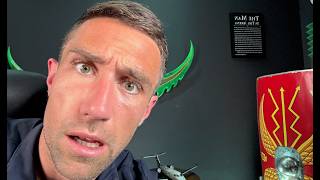
Hello neighbor, this is Kevin. If you subscribe to my daily newsletter, which can be found at kevin.com/digest, you may have heard me say that I currently rate the market at nine out of 10 on the Bear-Bull scale, which essentially means that I am very bullish on this economy. Yes, there was volatility due to the Fed, elections, earnings reports—it always happens.
But because I'm so optimistic about the economy, I'm begging for access to certain investments like Mercury. You may have heard of them before. This is a bank that I have been promoting for a long time because they have a great product. My startup Reinvest still uses them. They are really good. And then there 's Ramp.
You've probably seen their reports on the job market, artificial intelligence, and their financial platform. They are used by many companies, as well as many startups. These are really cool and exciting, fast-growing tech startups . Some of them are at a late stage, some are at an early stage. And what really excited me was the idea of investing in some of them from a venture capital perspective.
But it's hard, because, as I said, I was begging to get at least some Mercury stock. I directly asked the CEO, "Please let me in." I want to take Negan's bat, you know? Something like the classic: "Piglet, piglet, let me in." Well, that's difficult. It's not that simple. So, anyway, the guy who founded Teachable—the platform where I started selling my "Zero to Millionaire in Real Estate" program or the " Stocks and the Psychology of Money" program...
By the way, he sold Teachable for $250 million . This guy is a real genius. He founded Carry and then sold it. I mean, it's just awesome. He collaborates with Nawal, well, you know that guy who tweets all the time. Yes, that's the guy. Anyway, take a look at this. I want you to see this. USVC is a Title 40 fund in which non-accredited investors can invest from as little as $500.
We will talk in more detail about conditions, commissions, and more, because these details matter. So we'll discuss all of that in a moment. But they actually have stakes in Mercury, Ramp, SpaceX, or other undisclosed companies. I mean, there's a whole bunch of those who are exposed and those who aren't, or, like , they have a little bit of Anduril.
But the point is that these people work in venture capital and do things that other venture capitalists usually can't do because they are limited to a pool of accredited investors —one to two hundred. You see, you get to a higher level if you attract qualified buyers with $5 million in equity and, in fact, people who can write very large checks.
So this is taking away a lot of people's opportunity to get involved in venture capital, and I think that's a bad thing. But the world of venture capital has many rules and requires strict compliance. And these guys at USVC spent two years and a ton of capital to make venture capital investments accessible to non-accredited investors.
This opens up some really cool opportunities, as you can now invest in their venture capital through this NAV fund, with an investment of just $500. Now let's get into the details: what are the fees and how does it work, because it's worth knowing that some venture funds enter the stock market. I won't name names, but you'll see venture capital funds that are listed on the stock exchange , and they'll be like, "Oh, buy our fund because we'll give you access to this hot IPO before the company even goes public." This is a different situation.
This is a NAV fund, which means you invest at net asset value . Of course, you can delve into the differences in more detail , but this is one of the key differences. So, essentially, the stated asset value is what you enter at, and if you want to exit, that's the exit price. Now that I mention the exit, I want to be clear about what it means.
This is a potential opportunity to leave the company at will. The fund may offer to repurchase up to 5% of its shares in a given quarter. So far, this limit has never been exceeded. During the first two tenders, less than 1% of the fund expressed a desire to liquidate their holdings, and all of these investments were redeemed, as were all of the underlying shares.
So it's worth noting that there is a potential exit option if you have already invested in a similar project. But honestly, I'm not one of those people who says, "Invest in anything private equity related" and expects a guaranteed return. Because it often happens that during a market panic, many people want to get out of the game at the same time.
They lack the courage to stay. But in my opinion—and this is certainly not personal financial advice—one of the advantages of private equity is that this “frozen” state prevents you from getting emotional and getting out at exactly the right time to buy more. Do you understand what I mean? Anyway, that's how I look at it, and while I always say they have an exit option, I also advise you to take it as " yeah, it's just an option." This is not a guarantee.
That's why it's worth delving into the fine print. And what's also cool is that they made this one ... I don't know where I put my board. Ah, here she is. They created a product where you can invest with a minimum of $500, so you don't have to write big checks. They can attract many different investors, and this is valuable because the more you scale this fund, the easier it will be to offset the fees they do have .
We will talk about them. And you don't have to be an accredited investor. This is great. And remember, it's all at usvc.com/port, or rather, / portfolio, if you want to see the portfolio. They also have a resources tab. It's always important to make sure you read the fund documents, the fund prospectus, you know, read them.
I can't highlight them for you. There are a lot of compliance rules here. I can't... You can run it through your AI, but you have to read it and understand it yourself. But here's something to note: This is a fund with zero sales commission if you invest directly through usvc.com. It can reach 3% if you invest elsewhere.
But it's something to keep in mind—and this will come up when you ask AI—so I always try to be upfront about it. When you look at how venture capital works, even though it's a NAV fund and there's no sales charge on direct investments, and there's no carry charge on the fund itself... You often hear about things like "two and twenty," right?
So, there's a percentage, and then they'll take a reward for success, like 20% of the profit or something like that. This is a fund based on net asset value (NAV), so there is no reward for success at the fund level. Zero reward for success at the fund level. Okay, that's important to know. Because if the fund were to buy shares directly in ABC, let's say the fund buys shares in Reinvest.
They didn't do it and didn't say they were going to. I'm just saying. Let's say they did it, okay? Then there would be no reward for success, because there is no intermediary. We don't set a reward for this, and they can't set one. So, we don't want to get too deep into the nitty-gritty, but just to give a little contrast—this is a situation where you have to trust management in how they allocate funds, but I always think when you're looking at investments , you have to know, "Hey, you also trust the people who run the business, right?" If they find a good opportunity, whether on the secondary market or through another fund, they can buy the shares through another fund or another special purpose vehicle that ultimately owns shares in the parent company.
And this particular company may end up having a 20%, 30%, or 10% success fee. We don't know, do we ? So the bottom line is that here at the fund level, there is zero reward for success, it is a NAV fund, and it gives you access to venture capital investments that are typically unavailable to unqualified investors.
I think that's really cool. Now I also want to be very frank before we get into other details. This company, although I know them and have worked with these people in the past at other companies they founded, is a new relationship . We have not invested in USV C. I am personally interested in investing.
I'm going to open the door for that. However, they also sponsored Reinvest and paid Reinvest to present this to you. That's why I want to be as transparent as possible when breaking this down. I wouldn't agree to this if I weren't sincerely convinced that it was interesting. I'm not saying this is right for you.
I say that this is very interesting. I like Mercury. I like Ramp, I like what they do, and the people who work there. Now let's talk about commissions. The first commission you should know about: we were paid 10 thousand for this video, and maybe we will be paid more in the future. So, this is complete and open transparency.
Let's move on to other details. So , they have certain commissions. They have several different fees. There is a 2% early exit fee if you need to exit in less than 1 year. Uh, it can be canceled. The board of directors has this opportunity. And at least that's the case now. This is important to know .
In addition, there are other fees simply for staying in the fund itself. This is completely normal and you should be aware of them . So, firstly, there is a direct management fee of 1%, with no deductions from profits. Total costs are capped at 2.5%, subject to a contractual waiver for the consultant until November 2027.
So 2.5% is all you pay, including 1% for management and other fund expenses at this point. Without this waiver, fees could have been around 4.55% of gross costs. Creating such a regulated fund for unqualified investors is not easy and not cheap. So I'm not saying it's like, you know, just buy the S&P 500 index and don't worry.
And frankly, if you're worried about some of the fees and you're like, "Oh, you know, 4 or 5%—that's too much for me." Maybe this isn't the right type of investment for you at all. Some of the things I look for when I look at a company like this are what I understand: we have a commission waiver. I usually look at it and think, "This is good." "I have a fee waiver up to a limit of 2.5% from now until November 2027." But I look at it and think, "Listen, if my money doesn't cover the commission from investing in venture capital, then it's probably meant to be." You know, I don't blame anyone, but I guess it was just not meant to be.
So, I have a table of commissions. So, 1 % management fee, total commission limit is 2.5% only until November 2027. Er, that means there is some fee waiver that AngelList covers. There are other costs that are partially covered by AngelList. There are other costs, such as fees for purchased funds of 0.95%, shareholder services—0.25% (i.e.
25 basis points), other expenses: audit, administration, legal services, custody—2.35%. I expect that many of these commissions will decrease over time. This is just the beginning, so some of these may seem high. I expect these commissions to look much better as they scale. Of course, no guarantees.
But I find the fact that it exists at all very interesting. They are one of the leaders in this business, because there is no success fee here, except for the underlying funds, and this is a NAV fund. They are not trying to sell you something at some crazy markup. They just say, "Hey, here's a tool for unqualified investors." I like it.
I'm a big fan. Now , some other notes that I wrote down here . The founders also have a personal stake in this investment vehicle. One of the largest positions in the fund is another fund. Keep this in mind. This is approximately 19.2% of the position. This is worth knowing because maybe part of it is their early bet on Mercury, but there may be hidden fees inside .
One more thing: Valuation estimates are often approximate until an IPO or sale occurs. Typically in venture capital you have to take the long view. When an IPO happens in the future, you hope for a big hit. But you can't have any guarantees about that. Past results do not guarantee future success. That's why I don't even like making predictions about funds.
I look at it and say, "Do I trust this company? Do I trust this business? Do I think what they're building is cool for unqualified investors? Do I trust that they'll work hard to get me where I want to go? And does that align with my optimistic view of the economy ?" True? If I thought a recession would start tomorrow, I wouldn't even be making this video.
And I certainly wouldn't consider investing if I thought we were going to enter a recession tomorrow. I don't think anyone would buy anything if they expected a recession tomorrow. So, obviously, venture capital investments will be speculative. And this is one of the reasons why the SEC has made access to such instruments difficult and expensive for non-qualified investors.
Nevertheless, it already exists. USVC.com Invest only the money you can afford to freeze and potentially lose. Be sure to read the prospectus. They were indeed a sponsor of my startup. Looking at their website, I find it very useful. Study this. Run these documents through your AI. Read everything in detail.
Here you can find information on how to invest. I'll likely mention them again in the future, so you can go through their little sales funnel here. I find it to be a very smooth process. So try it. Try to understand what you think about it. Once again , this is USVC.com. Let's go. Here is Sinker. Good old teacher.
This is simply incredible. So I'm really excited about it. But, nevertheless, yes. Let me know what you think in the comments. And we'll see what they invest in next. I like some of these names. I'm jealous. This...honestly, this is exactly what I would like to create. But I won't. Because I know what hell they went through to build it.
From what I can tell, it took them over 4 years to file a petition for this. So, this is just the beginning, but it's very exciting. If you liked this video, watch this. I think you'll like it. Why not promote what you've talked about here? I don't think anyone else knows about this. We'll try some advertising and see how it goes.
Congratulations, dude. You have done so much. People love you. People look up to you. Kevin Paffrath, financial analyst and YouTuber, Meet Kevin. It's always nice to hear your opinion. If you liked this video, watch this. I think you'll like it. Why not promote what you've talked about here? I don't think anyone else knows about this.
We'll try some advertising and see how it goes. Congratulations, dude. You have done so much. People love you. People look up to you. Kevin Paffrath, financial analyst and YouTuber, Meet Kevin. It's always nice to hear your opinion.



Comments 0