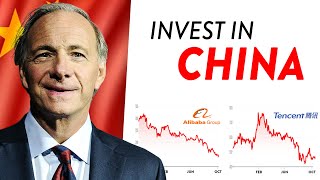
저자: RayDalio/채널진행자미상 · 외국인
요약 보기
Ray Dalio는 중국을 미국과 대비되는 공산주의 국가로 단순화하는 것은 잘못이며, 중국의 목표는 자본주의 도구를 활용해 국가 부를 키우는 것이라고 주장한다. 중국은 자본주의 요소를 수용해왔고, 세율은 미국보다 낮으며, 자본주의 지표로 보면 미국과 함께 가장 자본주의적인 나라 중 하나라고 본다. 다만 공동번영(common prosperity)을 위해 부를 재분배하고 통제를 강화하는 방향이다. 중국 정부는 하향식(top-down) 통제를 하는 엄격한 부모처럼 규칙을 정하며, 이것이 미국의 자유와 대비되는 핵심 차이다. 그러나 Dalio는 중국이 유럽만큼 좌파적으로 가지는 않을 것으로 본다. 투자 관점에서 Dalio는 중국을 단기 매매가 아닌 장기 전략적 투자처로 보며, 수십 년 단위로 생각하라고 조언한다. 규제 리스크(교육, 기술, 독점 규제)는 장기 번영을 위한 정책으로 해석한다. 미국과 중국 모두 리스크가 있으므로 한쪽에 몰빵하지 말고 두 시장에 분산 투자하라고 권한다. 노출 비중은 감당 가능한 수준으로 정하고, 하락 시 매도하거나 상승 시 매수하는 식의 단기 매매는 피하라는 입장이다. 영상 제작자는 미국 언론이 중국을 불확실하고 위험한 곳으로 과장한다고 보며, 중국은 다른 정부처럼 국부를 키우려는 것이라고 정리한다. 다만 이는 2021년 영상으로 당시 시점의 견해다.
다듬은 글
So, as you guys will have noticed, a lot of the discussions in the investing world and a lot of the content on this channel lately has been around China. We did that whole series on Alibaba and the Chinese regulatory crackdown, and now recently we've been diving into the real estate debt crisis we see with Evergrande.
And no doubt one of the most respected voices out there when it comes to investing in China is Ray Dalio. And I've been consuming quite a lot of Ray's content lately trying to learn his perspective on that exact issue. So, today I really wanted to show you some clips that summarize his main thoughts around investing in China and whether it really is the scary, controlling, brutal kind of communist country that it's made out to be in the US media.
So, with that said, let's get started. This video is brought to you by Sixpark. Let them help to guide you on your passive investing journey, and use the referral link in the description to access lower account minimums to help you get started on their platform with less. So, for context, Ray Dalio has been traveling to China since the 1980s and has had some incredible exposure to Chinese business and also Chinese leadership over that time.
So much so he's really been able to understand their ideology and economic policies in depth. So, I wanted to firstly start with this clip of him uh discussing a common misperception of Westerners looking into China. Or is you you envision a Beijing that's moving to a new territory? Well, you have um daughter and son-in-law in Shanghai, and you and and so we get some in real time.
We're living in real time, and the more you have contact, I think the more you understand it. I don't think it's well understood. For a long time, the the question is how can communism is how can coexist? That's the riddle you have to answer and he had to answer it a while ago. And what do these people want at the top?
And what they The answer to that riddle was told also by Deng Xiaoping when he was asked. He said it's glorious to be rich. And then they asked about capitalism and he says it doesn't matter if it's a black cat or a white cat just as long as it catches mice. And so the idea is producing wealth. So in Ray's eyes, that's the first thing people get wrong when looking at China.
They think the United States is capitalist and China is communist and we don't like communism. But when you look at the principles behind each approach, they're trying to do the same thing. They're trying to increase the wealth of their nation. Historically, they've had quite different approaches in achieving that, but recently China has been able to embrace many pillars of capitalism in order to accelerate the growth of their country's wealth.
So, forget the America capitalist China communist thinking. China's goal is simply to embrace the economic and political structures that increase the wealth of their nation and lead to, as this clip will talk about, common prosperity. So we have four things that are really going on in China if if you understand their intent.
Uh common prosperity is the word now. Okay. And it has been the objective to raise money and then to to broaden the base of that. Okay? That's common prosperity. So if you look at their tax rates, they're lower than the United States. If you look at the measures of almost capitalism, they have as much capitalism or more capitalism much more so than Europe for example.
And then and now they're in a prospect to broaden that. So I think there's a tendency and an understandable tendency to think because they are Maoist and capital and and communist that they're going to go back to that kind of a thing. The and they're not. And Deng Xiaoping excuse me Xi Jinping just for example introduced the newest stock market in Beijing.
He made a point of being the one who introduced the market in Beijing to the small and medium-sized enterprises. They know that it catches mice. And so the issue is that the capitalist is not in control. The issue is that there's a system for the whole system and then what they want to do is make sure that it's not a capitalist driven system.
So there you go. It doesn't matter if it's the black cat or if it's the white cat as long as it catches mice. They don't care if it's called capitalism or communism as long as it works well to increase the wealth of the nation. So that's the primary motivator there. The main difference is the structure of power and Dalio goes on to discuss this.
I'll play the clip in in just a second. China has a very much a top-down political approach which Ray likens to you know a parent that sets the rules. The Chinese government maintains total control over their people which vastly conflicts with the American freedom. They then use this control to make decisions to change their economic structure to improve the wealth of the country and then to distribute the wealth amongst the people.
Common prosperity. So I'll play the clip but an upfront warning this is quite a long clip. However, this is Ray really taking the time to explain these ideas in more depth. So apologies for the length of the clip but try and focus on what he says here. Given though the regulatory crackdown in China right now there are a lot of people say you know what you shouldn't be investing in China.
You have a different view. Yeah. I First of all I think people have not a lot of people have not spent a lot of time there. I've I've been going there since 1984 and I've been very lucky to know many people from the most common people to the most uh senior leadership and so on and so forth. And I think um you have to understand what's going on and I'll just try to say it in a nutshell.
O- O- okay? Um everybody follows the approach that they believe is best for their own country. I can't tell you whether their approach, our approach, my my job isn't to do that. But they have a top-down approach rather than a bottom-up approach, very much like a strict parent. So it um the question, the riddle that you have to even ask yourself answered before is how does a Communist Party that talks about Marxism-Leninism and at the same time um has such the second largest capital markets and the development of capital markets coexist?
And the answer to that is that they believe that capitalism is a way of increasing the wealth and power of the country. That's been key key at the same time as the it's an important to redistribute it. If you look at the policies of um that are being dealt with now and I I can rattle off the four elements of those policies.
They're not going to disrupt They're not going back to what you would call the old communism that you're you're It's they're very practical people. And so the issue is really um the issue is um more control like they will tell your kids what how many video games they can watch where you wouldn't. It's like a strict parent and they're and they will redistribute the wealth.
But if you take the measurements of capitalism right now, I have a continuum of a lot of measures I won't get into, but um of capitalism, the United States and China are the most capitalist countries. Right. And And if you were to say, "Will they go as far to the left as Europe has gone. It's unlikely that they will go as far to the left as Europe has gone on those measures, whether those are tax, redistribution, the effect of capital markets and the like.
And you can't get in and out of a place on a basis of that. In addition, you need diversification. Okay, so if you have two great powers, two developments of technologies and so on and and so forth, and you're looking what percentage of your portfolio do you have here and how what percentage of your portfolio there, diversification is a key element.
So when I look at it, I think that there are risks in the United States, there are risks there, we can talk about those. Diversification's important, and I think the fundamentals are basically sound. So isn't that interesting? To Dalio, China and the United States are the two most capitalistic countries in the whole world.
So I think that communist versus capital language is largely unhelpful when we talk about China. I like how Ray Dalio phrases it, the main difference is the structure of power and decision-making. China simply has a strict top-down or controlling approach, where they set the rules that they think are best for their goals of increasing common prosperity.
And there we also started to hear Ray Dalio's perspective on how to think about investing in China. The first thing he said straight off the bat is that a long-term approach is definitely needed, and I agree because China's vision is also long-term. As we've seen recently, they stopped for-profit education businesses, they're regulating tech, and they're currently cracking down on monopolistic practices.
This is affecting a lot of Chinese businesses, and of course their stock prices. And they're not doing this to screw investors, they're doing it for long-term prosperity. So with the Chinese government thinking in this fashion, it makes sense that you as an investor, should think long-term as well. China's going to keep growing, it's going to get richer, and it will be the largest economy in the world by a fair margin.
So, think in decades, don't think in months or years. And then, secondly, Ray Dalio also advises diversification, not just within China, but across countries. He notes how actually a lot of people currently are very US biased in their investments and advises that you know, when there is a period where there's a risk of conflict between the established power and the rising power, you know, it's wise to be diversified in both directions.
You don't want all of your eggs in one basket. Makes sense. And in the case of diversifying in China, that will also protect you from the short-term moves that the CCP may make in their quest for long-term common prosperity. All right. Now, one more clip, and this is again Ray Dalio going deeper on what we were just talking about, how to invest in China.
How should the Western banks adapt and adjust in Hong Kong to new China realities? Well, I think it's very simply, you have to decide whether the rules in the place is a place that you're comfortable with. They will set the rules and you go in there and you decide if you're going to be part of that as a as a good citizen or you're not.
And then, but you don't jump in and out. You're In other words, China is a a strategic play. You're not going to jump in and out. So, and and the amount that you're in should be that which you're comfortable with. It's the same as an investor. It's not smart to sell on the break or buy. It's It's It's a strategic play.
Most investors are very overweight in the United States or other places. Diversification. There's a competition, a big competition, a war of sorts, going on between in technology and so on. That diversification put the amount that and the exposure that you want to have there cuz you have to have places on some money on two chips because there are it risks in the United States, too.
So, I jumped the gun a little bit before. In that clip, you hear Ray talking to those points that I mentioned previously. First thing, you have to be at peace with the idea that the government can change the rules on you. You know, as we discussed before, once you understand that, it makes you treat China as a strategic long-term player, and it makes you seek some level of diversification.
But, as Ray notes, it's not just China you want to be diversified across, right? You know, China is the rising power, but America is the established power with its own set of problems. You know, like all investing, there is risk no matter where you look. So, Ray's perspective is to go long and just don't have all of your eggs in one basket, China or the United States.
So, overall, that is the crux of Ray Dalio's sentiment when it comes to China. So, overall, I hope you enjoyed the video. Maybe it gave you a little bit of insight as as you probably know, it can get a little bit hard when you try and listen to Ray's kind of 1-hour-long interviews because he often just dives straight into the deep end cuz he's been doing this for decades and decades, but hopefully this video gives you a bit of an overview or a breakdown of his general sentiment when it comes to investing in China.
The main point that I get from Ray is that the US media really makes China look like this unpredictable, scary place to put your money, but hopefully taking the time to understand the Chinese government's motivations helps you realize that this is really mostly just media spin, and like any other government, they just want to build the wealth of their nation.
That's the I mean the only thing that's different is that the Chinese government implements their strategies in a different way that happens to be the polar opposite approach to what is seen in the United States. And that tends to bias the US media to say that China's approach is wrong, but it's not right, it's not wrong, it's just different.
So, anyway guys, I hope you enjoyed the video. Leave a like on the video if you found it if you enjoyed it. I really appreciate it. And the more likes it gets, the more it gets pushed to other people, so it helps support the channel, but also helps spread this message to other investors out there. So, I really appreciate it.
Subscribe to the channel if you haven't have not done so already. You can check out New Money Clips as well if you'd like more New Money Content short-form content, then definitely check that out. And check out Profit Full as well if you'd like to learn how I go about my investing. But guys, that will just about do it for today.
Thank you very much for watching, and I'll see you guys in the next video. Big thanks to Six Park for sponsoring this video. Six Park is an Australian business that aims to help people get started investing passively. So, they have five core investment portfolios, of which one will be recommended for you based on an understanding of your own personal factors, such as your investment time horizon.
Now, why I've teamed up with Six Park is that this is no active fund. The five core portfolios are based on the principles of passive investing. It's just that the ETFs within the portfolios change based on your own personal factors. So, the platform also has a really solid interface, which is easy to use, and it really helps you understand how your money is being invested, and also the progress you're making with your investment goals, which is something that I really like.
But the best thing about the partnership we've got going is they've decided to lower the account minimum to help more of you guys get started on their platform for less. So, traditionally Six Park had a $5,000 account minimum. Now, they've just lowered it to $2,000. So, I really appreciate this gesture and if you'd be interested in taking them up on this offer, feel free to follow the link in the description below.
You can have a look I've got my own landing page and everything. They've done a really good job with this. I absolutely love it. But, yeah, if you're interested, feel free to check them out and thanks to Six Park for sponsoring this video.



Comments 0