
저자: MHFIN채널진행자 · 외국인
요약 보기
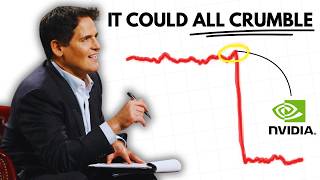
S&P500이 7000 근접한 역사적 호황이지만 버핏지표(209%)와 실러 CAPE 등 밸류에이션 지표가 닷컴버블 수준 경고를 보임. 버핏이 현금 3470억 달러를 쌓아두는 것도 과열 신호로 해석. 버블은 언젠가 꺼지며 주식·암호화폐·주택·고용에 큰 타격이 올 것이라 주장. 다만 과거 사례처럼 하락 시점은 명시하지 않음.
다듬은 글
July 2025. The S&P 500, the biggest measurement of economic prosperity for American companies, is nearing 7,000. Unemployment in the country, is at 4.1%, inflation at 2.7%. By every observable measure, we are in one of the largest economic booms in history. The last time we had a major recession was 2007, nearly 18 years ago.
There are now entire sections of the working population that have never experienced an economic downturn. In fact, the entire concept of a crash is basically an unknown to most, including experts. Every dip is bought relentlessly with the belief that stocks only go up alongside with every asset, including of course housing and extending as far as fake internet coins.
And to be fair, this concept has been true. People have gotten rich with these exact beliefs. But what if this is actually the largest bubble in economic history? A setup for one of the largest disasters this country has ever seen. In the moment, it feels like any kind of downturn is impossible. But if you just zoom out for a second and look at the data objectively, you start to see the massive cracks holding up this record setting house of cards.
Pick almost any metric. They're all flashing the same warning signs. For example, let's start with a simple one, the Buffett indicator. Warren Buffett, arguably the greatest investor of all time, once called this probably the best single measure of where valuations stand at any given moment. When he was asked about it in 2001, he said plainly, "If the ratio approaches 200% as it did in 1999 and a part of 2000, you are playing with fire." On the surface, the Buffett indicator simply compares the total value of all US stocks to the size of the US economy.
In most cases, the Wilshshire 5000 index is used because it covers nearly every publicly traded company. If the market becomes way bigger than the economy itself as measured by GDP, that's a flashing red light, a sign that stock prices are totally detached from reality. And right now, that ratio is at a record high 209% well beyond Warren's warning.
But if that's not enough to prove just how absurd this all is, look no further than the Schiller ratio, also known as the cape ratio. It stands for cyclically adjusted price to earnings. It's a fancy way of measuring the current price of the S&P 500 and dividing it by the average of the last 10 years of inflationadjusted earnings.
Sounds boring, but this thing filters out temporary spikes in earnings and gives you a clear view of how absurd stock prices are today. Historically, this ratio has been relatively spot-on in picking apart massive bubbles, most famously in 1999 when it spiked to 44 right before the dot bubble crashed.
Most people on YouTube have no idea just how bad the 2000's crash was for the markets. For example, the S&P 500 dropped 49% taking 7 and 1/2 years to recover, while the Nasdaq fell an insane 79% taking all the way until April 2015 to recover, a wild 15 years. Now, of course, at the end of the day, after 18 years of nearly uninterrupted gains, the arguments for a market crash are losing steam.
Most people still brush off the bears with a smug, have fun, staying poor mindset. But that attitude has changed market psychology in a dangerous way. There's this perception today that any sort of argument against this massive rally in all equities, including, of course, the stock market, is simply stupid.
A suggestion that this could potentially be one of the largest bubbles in economic history, is often met with dismissal and anger. Look through history, and it's not the first time something like this has happened. Warren Buffett has spoken extensively on this subject, having lived through nearly a century of wild economic conditions.
You can hear him talk about just how crazy people get and how long bubbles can last in this short clip that applies to what is happening today. Take a listen. Investors behave in very human ways, which is they get very excited during bull markets and they look in the rearview mirror and they say, "I made money last year.
I'm going to make more money this year, so this time I'll borrow." you know, or or the neighbor says, you know, I wasn't in last year when that neighbor was dumber than I made a lot of money, so I'm going to go in this year. So, they're always looking in the rearview mirror. And when they look in the rearview mirror and they see a lot of money having been made in the last few years, they plow in and they just push and push and push on prices.
And when they look in the rearview mirror and they see no money having been made, they just say, "This is a lousy place to be." So, they don't care what's going on in the underlying business. And it's it's astounding. But that's that makes for huge opportunity. Just huge opportunity. I mean, I've lived through roughly half in an investing sense about half that period.
And I've had that long period of stagnation from 48 uh I mean from 65 uh to 82 17 years. People behave very peculiarly in in in terms of the reactions because they they're human beings and they they get excited when others get excited. They get greedy when others get greedy. They get fearful when others get fearful.
And they'll continue to do so. And you will, you know, you will see things you won't believe in your lifetime. and securities markets and the country will do very well over time. But you will see these huge waves and and and uh if you can stay objective throughout that if you can detach yourself temperamentally from the crowd you'll get very rich and you won't have to be be very bright.
I mean it I'm sure you are but but uh you want you know it just it doesn't take brains it takes temperament. those things the same thing happened I mean in 1964 the Dow closed at 8 864 end of 1981 17 years later later it closed at 865 it moved one point in 17 years now it's not a big move and that you you can't believe the how how discouraged people were by that during that period but you know people were living better uh so things can go on a long time that don't make sense and but they do come to an end.
I mean the internet thing I mean you had these companies selling for many billions of dollars that had no really practically no prospects of making any money. That that's a that's a bubble but Herb Stein one time said anything that can't go on forever will end. Now, that seemed pretty. But think about that and uh particularly think about it next time you're trying to do something just cuz the stock's gone up a whole lot, you know, and your neighbors made money or something.
It uh you've got what Warren just explained likely helps explain why Birkshshire Warren's company is sitting on a record 347 billion in cash, failing to make any serious buys in this frothy market. Now, you could argue that Buffett isn't outright predicting a crash with this behavior, and we may never know for sure, but one thing is clear.
He's going against the grain. The greatest investor alive isn't investing. That alone should tell you everything you need to know. In the video, you heard him mention just how long these bubbles or depressions can last and how long he's willing to wait. Going back to his example, if you had bought the Dow Jones index in March of 1964 and held for 18 years, selling in July of 1982, the index was actually four points less, meaning it was essentially flat for nearly two decades.
Most people don't understand or can't even begin to put themselves into investors shoes with facts like that. 18 years of flat returns will ruin nearly everyone in terms of stock allocation. And on the flip side, bubbles will do the opposite. As he said, these market booms make everyone look like a genius.
There were plenty of people who lived through the '9s and see the similarities. A slow buildup that eventually cultivated into a massive top, fading away into a crash and a flat market for over a decade. For the sake of consistency, I'll use the Dow Jones again as the benchmark. From September of 1990 to December of 1999, the Dow went up 368%.
That's an average return of 16% every year for 10 years straight. It was truly a one-of-a-kind boom where every single drop was relentlessly bought over and over again. Stocks seemed like guaranteed money and it was happening with interest rates averaging 5%. So it really wasn't a rate inspired boom, just a relentless push for higher and higher returns.
And of course it resulted in one of the largest crashes in market history. Going back to the Dow Jones, it fell 34% and then essentially remained flat until September of 2011, an 11-year stretch filled with ups and downs. Now, of course, this latest run is truly historic. It's 18 years of exponential growth, persevering through multiple wars, inflation, an entire societal shutdown, bank problems, and more.
All of which have been ignored and forgotten about by investors pushing valuations to something we have never seen before. You can argue this time is different, but markets always revert. The only real difference now is the length of this cycle. It's unusually long, but like every bubble, it will eventually pop.
And when it does, valuations will snap back to their 100-year averages, both in the cape ratio and the Buffett indicator. There's no escaping the absurdity of today's market. Once it breaks, the fallout across the economy will be brutal. Not just in stocks, but in crypto, housing, and jobs. Thank you guys for watching.
As always, please make sure you hit that like and subscribe button if you enjoyed it, and let me know what you think of these valuations in the comments below.


Comments 0