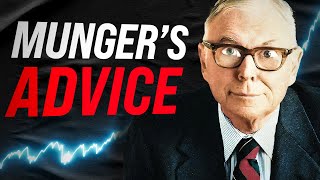
저자: CharlieMunger—영상제작자·진행자소개,출연자소속미상 · 외국인
요약 보기
찰리 멍거의 투자 철학을 2023년 하락장·고금리·인플레이션 상황에 적용해 정리한 영상이다. 결론: 2023년처럼 어려운 시장에서도 장기 투자 원칙(좋은 사업을 보유, 하락을 기회로 활용)을 지키라는 메시지다. 시장 상황: 2022년 S&P500 약 20% 하락, 금리 4.5% 수준, 2023년에도 금리 추가 상승 가능성이 언급됨. 구체적 가격 목표나 방향 예측 수치는 제시되지 않음. 멍거의 과거 발언: 버크셔 주가가 세 차례 고점 대비 50% 하락을 겪었으며, 이를 감내하지 못하면 보통주 투자자로서 적합하지 않다고 강조. 멍거의 시장 태도: 미국 주식 투자를 지속하며, 성공과 실패를 같은 가면으로 보고 흔들리지 말라는 키플링 인용을 소개. 가치투자 역사관: 벤저민 그레이엄식 가치투자는 사라지지 않으며, 역사적 버블(남해회사 버블, 1920년대 버블)에서도 원칙이 유효하다고 주장. 인플레이션 대응: 인플레이션 방어를 위해 우량 주식 외에 최선의 차선책을 고르는 것이 현실적이며, 멍거 가문은 버크셔, 코스트코, 중국 주식 등에 집중 투자. 분산 투자: 멍거 관점에서 완벽한 분산보다 좋은 자산 4개 정도가 현실적이며, 20개 투자는 '맥주에 계란 넣기' 격이라는 비판. 기업 선택 기준: 어떤 경영자가 맡아도 잘 돌아가는 본질적으로 좋은 사업을 우선하며, 훌륭한 경영자가 더해지면 금상첨화. 내구성 있는 경쟁우위, 낮은 부채, 안정적 수익, 단순한 사업 모델이 핵심 조건. 전략 요약: 감정적 무관심 유지, 장기 관점, 기회를 기다리기, 단순하게 유지하기가 2023년 투자 프레임워크로 제시됨. 영상은 구독·좋아요 유도로 마무리. 대상 종목 언급: 버크셔 해서웨이, 코스트코 외 명시적 종목 방향 예측 없음.
다듬은 글
Charlie Munger is without a doubt one of the most respected names in the value investing world. He's been Buffett's right-hand man for many decades and still serves as the vice chairman of Berkshire Hathaway at 99 years old. But as many of you may know, he's also a very successful investor in his own right with a net worth of $2.3 billion and a huge part of his investing success has been down to his rational thinking and his ability to tell it like it is.
And to our benefit, that's something that he's done quite a bit over the past few years. So with the market falling 20% in 2022, inflation still really high, and interest rates set to continue rising in 2023, let's take a look at Charlie Munger's advice that specifically applies to the investing scenario we all face in the year ahead.
So probably the most obvious investing challenge we face going into 2023 is the fact that this year it looks like we're going to be investing in a down market. As I said, the S&P 500 fell 20% in 2022 due to interest rates being hiked up to 4.5% but in 2023 it does seem as though interest rates will continue to rise due to the Fed reaffirming their target to get inflation back down to 2%.
So with our portfolios all down 20% after the rough time that was 2022, the first question is should we even be investing right now? Is it worth it considering there might still be tougher times ahead? Have a listen to Charlie's approach. The economy sometimes booms and sometimes it doesn't and you have to live your life through both episodes.
So we just keep swimming and sometimes the tide is with us and sometimes against but we keep swimming either way. I really like that way of looking at the economy. Sometimes it's working for you and sometimes it's just against you. But hey, we're long-term investors so we don't really care if prices go down a lot in the short term.
Sure, it makes us feel bad at the time, but it's important for us to use those times and see them as long-term opportunities as opposed to trying to, say, perfectly time the market. Sure, if you invested right now, you know, your one-year return might be questionable, but what's your 10-year return going to be?
Charlie has been saying this stuff consistently for a very long period of time. This next clip is him back in 2008, so have a listen. How worried are you by the declines in the share price of Berkshire Hathaway, the difficulties the company is in? This is the third time that Warren and I have seen our holdings in Berkshire go down, top tick to bottom tick by 50%.
I think it's in the nature of long-term shareholding with the normal vicissitudes and worldly outcomes and in markets that the long-term holder has his quoted value of his stock go down by, say, 50%. In fact, you can argue that if you're not willing to react with equanimity to a market price decline of 50% two or three times a century, you're not fit to be a common shareholder and you deserve the mediocre result you're going to get.
There's the straight-shooting language that Charlie has become so respected for, right? Think about that. If you're not willing to react with equanimity or composure when your stock inevitably declines by, say, 50%, you're not fit to be a common shareholder and you deserve to cop bad returns. And that's because proper value investing is all about finding good businesses and holding them for a very long period.
That's the truth behind how most stock market fortunes are made. There's no waiting for the best times, there's no speculation, there's just buying high-quality companies, staying invested through them through the good times and the bad times, and then using those bad times specifically as long-term opportunities to buy.
But, of course, being able to do that takes an unbelievable amount of emotional intelligence, and you really have to train yourself to get to the point where you genuinely feel indifferent whether the stock market is booming or crashing. And I'm certainly no expert, that's for sure, but I think the best tips to help with that are firstly to really understand your strategy.
So, know what it is that you're trying to achieve and what you need to do to get there. And then on top of that, you really have to understand the businesses that you've bought. And if you can actually commit to a long-term strategy and you understand what you own, I know for me personally, that has actually helped me find joy in stock market downturns.
And it's this odd kind of indifference to market conditions that Charlie really shows in this next clip. I am continuously invested in American equities. But I've had my Berkshire stock declined by 50% three times and I don't it does it doesn't bother me that much. If you have my attitude, it doesn't really matter.
I I always like Kipling's stressing expression in that poem called if and he said success and failure, he says, treat those two imposters just the same. You just roll with it. Sometimes it's going for you and some against, it's all part of the same game. Just roll with it, make smart long-term decisions and take advantage of market drops and you'll be all right.
And next time someone comes up to you and tries to convince you to run away from the stock market or maybe to invest in some fancy new cryptocurrency or to focus on the next 12 months because that's where you're going to make bank, just remember this clip. Are old school Ben Graham valuation methods dead?
The idea of getting more value than you pay for, that's what investment is. If you want to be successful, you have to get more value than you pay for. And so, it's never going to be obsolete. Now, you can get a whole body of people who don't even know what they're buying, they're just they're just quote quotations on the ticker.
Think of the past crazy booms and how they worked out. The South Seas bubble, the bubble in the late '20s, so on and so on. We've had this since the dawn of capitalism. We've had crazy bubbles. You've just got to trust the process. Value investing can never die. We think long-term, we find high-quality businesses, and we buy them in moments like what we're seeing right now.
The rare occasions where the stock market is down a fair chunk. But okay, let's get a little bit more specific because if we look at our current situation, we've got rising interest rates, which are going to make stocks suffer, probably again in 2023. And on top of that, we've also got persistent inflation to deal with.
So, what's Charlie's specific advice to applying value investing principles in a situation like this? How will this all play out, and what's the best advice you have for individual investors to optimally deal with the negative impact of inflation other than owning quality equities? It may be that you have to choose the least bad of your a bunch of options.
That frequently happens in human decision-making. And the Mungers have Berkshire stock, Costco stock, Chinese stocks through Li Lu, a little bit of Daily Journal stock, and a bunch of apartment houses. Do I think that's perfect? No. Do I think it's okay? Yes. The great lesson from the Mungers is you don't need all this damn diversification.
You're lucky if you've got four great assets. I think the finance professors that sell the idea that perfect diversification is professional investment. If you're trying to do better than average, you're lucky if you have four things to buy. To ask for 20 is really asking for egg in your beer. Very few people have enough brains to get 20 good investments.
I've played this clip before in a previous video, but I really like his response here. You know, sometimes market conditions are just against you. Like Charlie said earlier, sometimes the market is for, and sometimes it is against. And it may be that you need to do the least bad option. While inflation is roaring and rates are rising, well, that's a tough position for any investor.
Chances are you won't be making 2021 style returns this year with rates at 4 and 1/2% and going up. But, as Charlie says, the lesson from the Mungers is just to buy good assets and just stick with them. Is Charlie's portfolio perfect? No. Is it good enough? Yes. You don't always need to be chasing, you know, 20% annual returns every single year.
That will drive you absolutely insane. And remember, most of value investing is literally just sitting back and waiting. Identifying things you'd like to buy, waiting for them to come on sale, and then buying them when they do. Not stressing about what the macro is doing or what to buy next week. As both Charlie and Warren say, if you have one or two opportunities a year, that's plenty.
And usually it's the people that overly complicate things, they get FOMO, and they try to get in on every single deal. They're the people that eventually run themselves into a mess. So, at times like this, we need a solid strategy, we need emotional control, and we need to accept that sometimes we can't have it all our way.
So, with that said, what type of businesses should we actually be keeping our eye on through tough times like this? Well, this is how Charlie sees it. We want to buy something that's intrinsically a very good business, meaning that an idiot could run it and it would do all right. And then we want that business which an idiot could run successfully to have a wonderful person in it running it.
And if we have a wonderful business with a wonderful person running it, that really turns us on, and it works very well. And now, we we do make exceptions, but not many. And Warren sometimes says, "You have to choose good person or good business." You know what he says? This is not politically correct.
He says good business. I had a friend when I we practiced law, and he said, "If it won't stand a little mismanagement, it's not much of a business." We like businesses that stand a lot of mismanagement, but don't get it. So, that's our formula. If a business is tough enough, it has a way of staying tough.
Warren says says that when a business with a reputation for being tough and a manager with an opportunity for being brilliant get together, he says it's the reputation of the business that remains. If they if they start tough, they stay tough. That's probably the number one thing to take away from investing in this kind of environment, or really, I guess any kind of environment.
You want tough businesses. You know, ones that are very robust. They can handle the tough times and still be okay. It can handle bad management and still be okay. Now, what does that actually mean? Well, it means firstly that, you know, the business has an intrinsic durable competitive advantage. It means that it isn't overly reliant on debt.
Hasn't swamped itself with loans that could topple the business. It means that the business model works and the company generates healthy profits in any conditions. And finally, it means also that it's simple. As Charlie said, you want a business that an idiot could run and it would still be okay. Because chances are, if you're a really long-term shareholder, at some stage an idiot will run that company.
But, if it's a robust business, then it should be able to handle a little bit of mismanagement, and that's really important. So, overall guys, they are Charlie Munger's tips for investing in 2023. No doubt it will be quite a challenging period, but if you can remain emotionally indifferent to the market conditions, if you can invest with a long-term mindset, if you can be patient for opportunities, if you can keep it simple, then you've got a pretty good framework to come out ahead in 10 years time.
So, with that said, please definitely leave a comment below and let me know which bit of Charlie's advice definitely resonates with you the most. Of course, leave a like if you enjoyed the video, or if you want to see more, make sure you subscribe to the channel. It's our big goal of hitting 1 million subscribers this year, so please help us along on that goal.
But, apart from that guys, thank you very much for watching, and I'll see you all in the next video.




Comments 0