
저자: Mr.FIREDUpWealth · 외국인
요약 보기
신규 투자자의 최대 실수는 계획(블루프린트) 부재라고 강조하며, 나이·위험성향에 따라 성장주 60%·ETF 20%·스펙 10%·배당주 10% 구조의 샘플 포트폴리오를 제시. 반도체를 '새로운 석유'로 보고 AI·클라우드 등 메가트렌드에 투자할 것을 권함. 커뮤니티 포트폴리오 상위 종목으로 엔비디아, 데이독, 테슬라, 마벨, 알파벳, 소파이, 오픈도어를 소개하며 대부분 수익 실현 상태라고 설명.
다듬은 글
What's the number one mistake that new investors make? I'll answer that in a second. This video is going to show you how to build a growth stock portfolio. I'm also going to share the top seven holdings in the Fired Up Wealth Community portfolio. So we started this portfolio in 2022, and the intent was really to show investors how to build a growth stock portfolio.
And I took the approach as if I were a younger version of myself trying to invest in growth to outperform the market. Now, the biggest mistake that new investors make, what most people do is they decide that they want to invest in the market. They download an app like say Robinhood, and they just start buying stocks.
They buy a couple of stocks. They haven't really done a ton of due diligence. They don't really have a plan of what they're trying to accomplish. And so the number one mistake that new investors make is they don't have a plan. I call it a blueprint. If you build a new house, you need a blueprint to know exactly where all those materials go.
And a blueprint for a home is very precise. You need to have the exact amount of lumber, nails, and so on. And so we build a portfolio, we design a portfolio based on each individual's needs, risk tolerance, goals, and suitability. So if you have say 20 years, and you have a high risk tolerance, you're going to build a much different portfolio than someone that maybe is older, they only have 5 years to invest, or maybe they're going to be retiring soon.
And you have that spectrum I talked about, the accumulation phase and the preservation phase. So if I were a young investor, or an investor that has lots of time in the market, I would be more aggressive, and I would buy more growth and speculative type stocks. So I'm going to share a sample portfolio design.
I call this a nine out of 10 risk. Now, keep in mind, that's in the eye of the beholder, and this is really based on the Fired Up Wealth Community, the methodology, the community, and the overall risk tolerance. Some of you watching might have a much higher risk tolerance, and you could be a 15 out of 10 on our scale.
But I'm using the approach, if I were managing your money, which I'm not, and I'm not your financial advisor, you generally aren't going to tell people to go buy a basket of meme stocks, right? So, we use pillars. And in this design, this nine out of 10 sample portfolio, you can tweak this however you'd like.
So, we have 60% in growth stocks. Now, with growth stocks, you have to keep in mind that every business has really a life cycle. And it might start as a spec stock into a hyper growth stock, growth, mature growth, DJIF, all the way to an income stock. And so, the point here is keep in mind that a hyper growth stock like say a Snowflake is going to be much different than say a Google, but they're both considered growth stocks.
So, you're going to invest in a variety of growth stocks, and that's 60% of that portfolio. Next, the most unpopular pillar is going to be ETF at 20%. Now, you can still be aggressive with ETFs because you can buy things like QQQ, and if you're really aggressive, you can buy things like ARK. I generally would call that spec, but you can do whatever you'd like with your money and your portfolio.
Some example ETFs that work great for long-term investors, in my opinion, the VOO, that's the S&P 500, the SOXX or the SMH, these are semiconductor ETFs, QQQ, the Nasdaq 100, and another you could consider is VGT. This is the Vanguard Information Technology ETF. Next is going to be what we call the spec basket.
These are speculative stocks. So, these are higher risk, much more of a story stock. They don't really have a whole lot of fundamentals. So, back in 2021, we said anything that's a SPAC is a spec. Something that's crazy expensive, that's burning cash, not profitable, it could be a spec. And there's a fine line there, cuz some people might call us a stock spec, and others might call it growth or hyper growth.
So, an example would be something like maybe a SoFi. Some of you might call SoFi a spec stock, others might just call it a a growth stock, a higher risk growth stock. So, it's in the eye of the beholder, but overall, if you look at SPACs, if you look at companies that are small caps, that are burning cash, things like that, that are risky, and they're more of a story, they could be a 10x or zero.
That's what we call a spec stock, and that's 10% of this portfolio composition. In that last basket, 10% in dividend stocks. Now, we like to focus on what we call DGIF. That just means total growth. So, focusing on the growth of not only the share price, but also the dividend. So, examples would be like a Nike, a Tractor Supply Company, a Wingstop, and so on.
These have smaller dividend yields, and they're stocks that you plan on holding for many years where that dividend can grow, and you have a very attractive yield on cost in these names if you hold them for, say, 10 years. An example here is Microsoft. I bought that stock in 2012. My yield on cost now is over 7%.
And many of us in the community, our goal is to invest in growth, outperform, sell the profits, and buy dividend stocks. So, blue-chip dividend stocks, income stocks, ETFs like SCHD for end game. So, when I say end game, I'm basically saying early retirement. To bridge the gap. So, this is generally an individual taxable brokerage.
You can do whatever you want. You can put it in your Roth if you want. I generally invest in ETFs in my retirement account, but again, do what's best for your money. But if you are going to retire before, say, 65, say you want to retire at 55, you're going to need an individual taxable brokerage to bridge that gap.
And that's where this FIRE methodology comes in. Basically, investing in growth, outperforming, taking those profits, investing in blue-chip stocks, and living off that passive income. And I know that strategy might not be for everybody watching, and that's okay. This sample portfolio still works just fine regardless if you're striving for early retirement or financial freedom or not.
And again, guys, you can tweak that however you'd like. It's really just a sample to get you started. So, if you want to invest in more dividend stocks, less dividend stocks, and so on, every portfolio should be unique to the individual. I always say that every portfolio should have the DNA of the investor, whoever owns that portfolio.
So, you might be more passionate or have more experience or understanding about certain industries than others. You might have more comfortability with growth stocks, and maybe not. Maybe you're more into dividend stocks. So, tweak that however you want. This is just to get you started, but I think it works great for a young investor or somebody who has many years in the stock market looking to capture growth from secular growth trends, mega trends.
So, we talk about things like artificial intelligence. Of course, that's been huge in 2023, data centers, cloud computing, cybersecurity, aerospace and defense, space exploration, video gaming, online gambling, augmented reality, virtual reality, mixed reality, autonomous driving, EVs, genomics, robotic surgery, esports, 5G, 6G, 7G, anything with a G behind it, e-commerce, digital twins, cryptocurrency, metaverse, clean energy, and more.
So, you want to invest in these mega trends to capture this growth. We're really in a new industrial revolution. If you look at the first industrial revolution, it played out over a course of about 100 years. Now, look at towards the bottom. While some believe that we're still in a third revolution, it is arguable that the third revolution only lasted 30 years and ended with the commercialization of the internet, which led to the dot-com boom and bust about 10 years after the internet was first publicly available in 1991.
There's absolutely no question in my mind that we're in a fourth revolution. And this is going to include those mega trends we just talked about. Having the internet more accessible, broadband, high-speed internet is more accessible now than ever, and that's growing exponentially. You think of like Starlink and you think of like Kuiper with Amazon.
Satellite broadband internet, 5G, 6G, it's going to change the game. And artificial intelligence is a fueling a lot of these growth trends as well. It all comes back to semiconductors, the new oil. So, of course, I've been a big investor in semiconductors. Nvidia is my top holding in my main portfolio.
And then I own several other stocks. You can check out some videos on the channel that show you all the different semiconductor companies that I'm bullish on and that I own. And if you like this kind of content, . So one day I was thinking, and this is my brain on a piece of paper. I tried to visualize all the megatrends in a flowchart, and I drew this up.
Now I first shared this in the Fired Up Wealth Conference series. There's a series of 14 videos, you can go watch those right now. Go to patreon.com/firedupwealth. And there's a much deeper dive video that talks about blueprint and portfolio design, as well as deep dives in megatrends, like electric vehicles, semiconductors, space exploration, metaverse, crypto, and more.
So semiconductors power everything. They're the new oil, and cloud powers the future, and needs semiconductors. So really cloud computing fuels all these growth trends, and cloud computing needs GPUs and semiconductors to work. So here's a quick example of flowchart to help you map it out and think.
And you yours might look a little bit different. Make your own flowchart. But at the very top right, you can see semiconductors, and that's going to include different segments. On the far left, you've got SaaS, so software as a service, cloud, cybersecurity, data, AI, quantum computing. In the middle, you've got EVs, clean energy, space exploration.
Then you've got e-commerce, web 2.0, and internet of things. And these all tie together, you can see all the arrows are going different directions, they're all kind of looped together. You know, if you look at the far left in SaaS, it flows into big data. Big data flows into robotics. Robotics flow into automation, and so on.
So for me, I'm very bullish on semiconductors and cloud, because they really help fuel all of this. So next, I'm going to share the top seven holdings in the Fired Up Wealth Community Portfolio. e . Let me know what you think. , I'm independent, Fool doesn't tell me what to make, what to create, what to tell you guys.
They're a great partner. Check those guys out. And I'm going to share the top seven holdings, but if you want to see the entire portfolio, all 38 holdings, as well as the concentration for each, the profit and loss, the entire portfolio, there's a patron exclusive video that's ready right now that you can go watch.
Visit patreon.com/fired up wealth. I'd love to chat with you in Discord. So, I mentioned earlier that Nvidia is my top holding in my main portfolio. That portfolio is over $1.5 million. I've owned Nvidia in that portfolio since 2018 in in the 30s. We started this portfolio in 2022, and Nvidia's been my highest conviction stock for quite some time.
So, in Discord, if you're an elite, we have a trading floor, we share our buys and sells. The community was buying Nvidia heavily at $150 and less. And of course, we usually DCA, dollar cost average, and it kept going lower, kept going lower, got down to like $108 in late 2022. And so, the buys weren't perfect, didn't time the bottom, still up 218% in this portfolio.
It's the number one holding. So, what is the second largest holding in the portfolio? It's Datadog. Now, with all seven of these stocks, we bought them at much lower prices, and part of the reason that they're higher concentration in the portfolio is because they've outperformed. A lot of this is gains.
Datadog is a great company, though. It's one of my top cloud stocks. I did a top 20 cloud stock video. It's a rabbit hole, DD rabbit hole on cloud last year. I think it was August 2022 in Patreon. And Datadog's been in my top five, you know, for several years now. So, some of you might be surprised that Datadog is number two, but I am very bullish on this company long term.
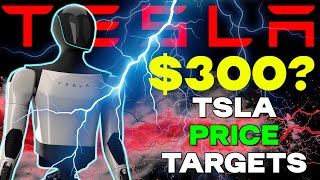
Number three is Tesla. I know a lot of you watching probably own Tesla. This is a great company. It's really a clean energy, green energy conglomerate. You know, not just electric vehicles, but solar, battery storage, even moonshots like Optimus, their robot, robo-taxis. You know, Ron Baron says it's going to be a $1,500 stock in 2030.
Kathy Wood says it's going to be $2,000 by what, 2027? We're up nicely on Tesla. We were buying this heavily as well, you know, in that $150 or less tier. And again, if you want to see all 38 holdings, the weights, the cost basis, gains, the entire portfolio, and additional commentary, join any tier and you can get access to that video.
Go to patreon.com/fightopwealth. So, Eric's Aliens does include this video as well. All right, what's number four? It's going to be Marvell Technology, another semiconductor name. This is one I was pounding the table on when it was under $40, and it's up significantly since then. A lot of this is gains again.
So, this is trading right now at 63.77. of the buys were $40 or less in Discord. It's done well. Number five, Alphabet Google. I thought when it was less than $100, it was just too inexpensive for me to ignore. And so, this is not a hyper growth stock. This is going to be more mature growth, but I think it's a high-quality company.
I thought the valuation was attractive when we were buying it. So, this has grown into our fifth position with a nice pop it's had this year. Number six is going to be SoFi. This is another one that's performed nicely this year. So, a lot of this is gains. This is another one we were pounding the table at $5 or less.
When it got to a price to book, said it was a buy and it was going to go higher with time. It has pulled back from recent highs, but it's still trading over $9 a share. Most of us were buying it around five bucks. So, next I'm going to share the seventh stock pick. And I want to remind you guys, video has been this year.
You can help me out by subscribing today. I appreciate it. This next one is probably going to surprise some people. Now, a lot of this is profits. The stock has ripped this year. In fact, this next stock is down about 10% today, and it's still up 300% year to date. So, OpenDoor is one when it got around $2, started buying it.
It kept going a little bit lower. I added some more, added some more, and eventually I just kind of quit. And then all of a sudden it just ripped from there. Now, this is highly speculative, so you have to be careful with this name. This is one that could be a 10x or zero. It literally could go bankrupt.
At this point, we're up very nice on the stock, and I'll continue to monitor it. I think it's one of those that could go much higher, but it is a very high-risk stock, so be careful. The reason this is number seven, most of this is from gains, unrealized profits. Go watch the full video, see all 38 holdings, the weight, the cost basis, the entire portfolio. Visit a great rest of your day. Take care.


Comments 0