
저자: Kevin · 외국인
요약 보기
디플레이션 체제 진입과 레버리지 붕괴(doom loop)를 주장. 금·은·비트코인·나스닥·개별주 동반 급락을 레버리지 ETF 강제매도와 연준 의장 후보 Kevin Walsh의 긴축 성향으로 설명. 연준이 양적완화를 재개하기 전까지 위험자산 매수는 이르다고 보며, 현금 비중 확대와 장기채(TLT) 관심을 언급. 아마존 capex 증가와 사모신용 부실 우려도 하락 요인으로 제시.
다듬은 글
Definitely. I think a new world order. I think the president has sought to shut up. I'M TIRED OF WAITING. I'M TIRED OF LOSING ALL MY MONEY. YOU PROMISED US YOU MAKE CRYPTO GREAT AGAIN. YOU PROMISED US WE'D BE RICH. WHAT'S GOING ON with Bitcoin is liquidity is really tight. THE ONLY PEOPLE THAT ARE RICH IS YOU AND YOUR FAMILY.
YOU ABSOLUTE SLIME BALL. AND THEN CORRESPONDING with that, you'll have a collapse IN PRICES. YOU LAUNCH THE MEMECOIN. YOU LAUNCH A VAPORWARE CRYPTO THAT NO ONE WANTS. YOU GET BRIBED BY ALL THE CRYPTO OFFICIALS. YOU PARDON CRIMINALS TO DESTROY THE MARKET. Our economy is transitioning into a new world order.
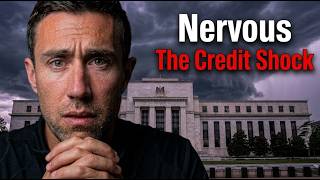
And in this video, I'm going to show you how the great economic reset is beginning. I'm going to first show you why this is happening and what's going on. Why in just the last six days, six calendar days have silver, Bitcoin, gold, Microsoft, and the NASDAQ 100 all sold off together? These percentage drops, mind you, are just within the last 6 days.
Silver almost half, Bitcoin down a quarter, gold down 12, Microsoft 9, the NASDAQ 100 Technologies Index 5. What if I told you that they were all related? Well, they are. And in this video, I'm going to explain why they're all related. But more importantly, we're also going to go through a no BS playbook for the new world order.
Now, things can change and evolve over time. So, it's really important to understand why this is going on so that way you know how to prepare in the future. So, that's why I'm going to start by explaining what the f is going on. After we go through what the f is going on, then we'll actually talk about what are we doing to prepare in that.
I will also be showing you a new investment that we are making and I'm going to give you the exact thesis on it so that way you can see why we're hedging in a way that we are. But first, we need to understand what the f is going on. Let me put it this way. We are going into a regime where risk assets likely continue to go down.
Leverage or debt becomes toxic and ironically bonds end up start end up starting to actually perform better which is exactly what started to happen in the last 6 days. And so to me this is less about an opinion of hey here's what's going to happen. Instead, this is all a comparison to what I made an opinion on last Friday.
Last Friday, I made a video and I mentioned as I was at Disney World while I was in the hotel room. If you watched my full video, you would have seen me explain that the gold and silver top were likely in and that debt was about to become very toxic as we enter into a deflationary new world order. I gave this warning to my course members in the alpha report.
You can get that at meetke.com. Get lifetime access there. But I also talked about it on the channel few hours later. Now, people got mad at me and said, "No, Kevin, why? Why would we have a deflationary regime coming? I mean, after all, the new Fed appointee, Kevin W, is going to reduce interest rates, right?
That's should be really good, right?" Wrong. Folks, I study and talk about the Federal Reserve on nearly a daily basis. Dropping interest rates does not save you. What saves you when you are exposed to stocks or Bitcoin or leveraged ETFs is money printing. If you don't like money printing, then you're not going to like stocks and you're not going to like debt and you're not going to like Bitcoin and you're not going to like gold because all of those are designed to protect you from the devaluing of the dollar.
But what if you get a new clown in town called Kevin W? Kevin Walsh, who is open to reducing rates, but is a deflation hawk. Somebody who after all might not run the money printer to protect those very assets that are falling. Graphically, I'll show this to you. That chart I showed you at the beginning of the video comes right under Kevin Walsh ushering in the new world order.
He has a reputation for not wanting to print money in a recessionary cycle. And the warning that I gave on Friday is that markets are going to start trying to protect themselves. They're going to move from gold, silver, and risk assets like Bitcoin and stocks. And they are going to dleverage because leverage dies in a deflationary regime.
Now, you might initially think, hey Kevin, you know, deflation sounds good, man. Prices are really high. I'd like to see prices uh you know come down. And I agree with you. Technology is actually a great way we could see prices go down over time, right? Like I mean I remember the first TV that I saw for sale that was one of those big LED flat screens like 25 years ago.
Those were like $2,000. Today they almost give away for like $299 or $199. It's incredible. That's good deflation. It's structural and technological deflation. It's a good thing. You win as a consumer. But who loses in deflation? Well, the people who lose in deflation are the very people who are getting smoked in the market right now.
See, we are facing a leverage doom loop. When all of a sudden people realize that leverage or debt is going to be really bad in a deflationary cycle, they run for the exits. Every dollar of deflation we have means you have to work harder to pay off that debt. Deflation rewards people with no debt and savings.
Inflation rewards people with debt because you just print away the value of your debt and it's easy to make more money to pay that debt off. So inflation is fantastic for debt. Deflation, like what Kevin Walsh is ushering in, bad for debt. And you don't have to believe what my opinion is about Kevin Walsh ushering in deflation.
You just have to look at what the market is doing. And I promise you, if you look at just the last six days, everywhere there were leveraged protections against money printing like stocks, gold, silver, Bitcoin, all of those U-turned the very day Trump appointed Kevin Walsh as Federal Reserve chairperson.
Now, he's still subject to Senate confirmation, so things can change. But understand this, the rush for the the the leverage exits has already begun. This isn't even to talk about liquidity. We know that liquidity is already really dry available capital. But people forget the doom loop of leveraged ETFs.
This is very important for you to understand. When the market drops and you have a fund like a triple leveraged fund called TQQQ, if the market falls 3 and a3%, TQQQ is down 10%. But the way they achieve that triple exposure, that 3x exposure to the market is with debt. And so that's where you get a market in reinforced doom loop.
When all of a sudden the market goes down and their debt level stays the same, they're not actually 3x leveraged anymore. They could be 4x leveraged. And so what do they have to do? They have to sell the underlying stocks. So now I want you to think as Kevin Walsh is just the trigger. And now people rushing for the exits on debt or any leveraged products as being the first order effect.
The problem is when people want to rush out of multiple leveraged ETFs. 2x leveraged silver for example is one. I mean look at 2x leveraged silver. It is a stock ticker called Alpha Golf Quebec. A GQ. It ran up like a shocking meme. It took you know really probably a year year and a half to run up and it took six days to come down.
In just the last six days you have seen an over 60% crash of market value at this company. In just six days it's shocking but the reason is because of the doom loop of debt. When these leverage funds go down they get forced to sell at the bottom. And that forcing to sell at the bottom so they could balance out their ratios triggers more uh well frankly lower prices, right?
Because if they're selling now there's more selling pressure and so prices go down even more which then the very next day if buyers don't offset all that leverage just triggers more selling pressure. So that's how you get a doom loop. the ETFs go down, get forced to sell at the bottom, which triggers prices to go down, which triggers fewer buyers and therefore lower prices again as more people sell out and then the loop just continues over and over and over again.
These leverage ETFs, by the way, have really only been a phenomenon for about the last 5 years. They got so out of hand for a period of time that, okay, there were companies like Volatility Shares that were thinking about introducing 5x ETFs. Well, a lot of 5x ETFs, had these actually been approved, would be at zero right now because that's the way leverage works.
You get a 20% drop, a 5x lever ETF goes to zero. The SEC finally woke up and said, "We're not allowing anything more than 2x leverage." So, that means the existing 3x leverage products kind of get a pass, but they're certainly not going 5x, which is probably a good thing. But these four sellers have just created the 10th largest forced selling event ever.
We saw 18 billion of forced selling in just a single day. So these leveraged ETF sellers just amplify the down for the entire market. But unfortunately, it's not just the triple Q's like TQQQ or SOS, the semieetf that's uh multi-leveraged or bidex like the leveraged Bitcoin ETFs, right? Those all also affect their underlyings.
It's also the fact that individual investors have substantial exposure to margin debt today. According to FINRA margin debt or margin data, margin debt has surged 36.3% over the last year. We are now at an all-time record high margin debt of $1.225 trillion as of December 2025. May have even been worse into January, but some of that I'm sure is starting to unwind given that Kevin Walsh was chosen on January 30th.
And that could accelerate more paying off debt, not just on leveraged ETFs as people leave those funds as they already are, but also on margin debt. In fact, graphically, just so you could see it, you could see a massive exodus out of leveraged ETFs. Soil, for example, has had uh which is the 3x Semiconductor ETF, has had outflows of $853 million.
TleQ $825 million of outflows. Then you've got over here people actually starting to leverage into short silver leveraged short silver and short natural gas funds. These are creative sort of momentum trying to catch both the up and the down. But the point here is deflation means you're going to see people rush for the exit when it comes to debt.
That very debt issue and that very deleveraging issue is why people are so nervous about all of the capital expenditures that are going on at big companies. Remember for a moment that Amazon just reported earnings. Amazon reported earnings. And if I go to Amazon right here, I could see that their stock right now in the after hours is down 10.3%.
Their stock has absolutely cratered. Now, why did it crater? Is it because they missed earnings? No, they actually beat on earnings. Amazon beat on their earnings, their net sales and their net sales forecast. So AWS sales were up 3% more than expected. Q1 net sales had a slight beat over expectations at the midpoint.
Operating income though missed. And then when you look at the details, what do you end up finding? Ah, instead of spending $200 billion or sorry, gave that one away. Instead of spending $146 billion on capital expenditures, they're actually going to be spending 37% more. We're actually going to be spending $200 billion on capex.
And the concern that a lot of people have now is that these companies are starting to run out of cash to do this with. Google is expected to be cash flow neutral soon. Meta's running out of available cash. Google's got about $10 billion left of available cash. Amazon's starting to run low on available cash.
And so even though some of the actual metrics of the business are doing well, people are wondering, wait, where's all the money going to come from to keep funding all of this? Especially if we go into a deleveraging regime. So see, Kevin Walsh makes people get out of debt to some extent. Leveraged ETFs get hit the worst.
But then they also want to get out of things like private credit, which is the very stuff that's supposed to fund the capex buildout for companies like OpenAI, Oracle, Amazon, and therefore the whole bubble related to artificial intelligence. It's no surprise that banks, and usually when banks are trying to sell you something, you probably don't want it, especially when they're companies like JP Morgan.
I hate their guts. Don't, you know, not personalized financial advice. But anyway, take a look at this. The Financial Times says banks are tapping investors such as insurance companies and private credit funds as they try to find buyers for tens of billions of dollars of loans tied to Oracle's vast data center projects.
We're basically tapped. We basically tapped every single project finance bank possible, but there are only so many banks we can go to. So instead, the Financial Times is now reporting that what's happened is these bankers have gone to rating agencies to say, "Hey, can you say that our data center debt is institutional grade?
That way they could try to sell it to some other schmuck in maybe a pension fund or some private insurer or whatever. But we're finding is private credit can't pay the bills anymore. Private credit like a company like Aries Capital Management, they dropped 11.19% today. We are essentially back at liberation day levels at this company.
And it's not just them. If you look at Owl, they were down 3.5% today, which just continued their downtrend where almost every single Owl, every single Blue Owl fund, which has backed a lot of debt for the Meta Data Center expansions, is down over 50%. Imagine being a company that's like, "Hey, our stock is down 50%.
By the way, would you mind lending us money in a deleveraging environment where Kevin Worsh is coming in likely ushering in the deflationary regime?" Hell no. Why would you do that? And so I think this is exactly the tip of the iceberg that unfortunately is accelerated by concerns that artificial intelligence adoption is flattening out.
See how all of these issues are stacking on each other? Leverage in ETFs, leverage in capital expenditures for the big companies. They say they're going to spend more and borrow more. The stocks go down. People don't want that deleveraging. At the same time, the underlying technologies are potentially petering out.
Artificial intelligence productivity growth is flattening and so our adoption rates at businesses. They're flattening out. We've talked about this ad nauseium on the channels, so I don't want to rehash everything. But understand that a lot of these private credit funds that usually provide debt have exposure to artificial intelligence, information, and technology, and software products like business products and services, businessto business.
Most business development corporations that usually finance this have exposure of up to 55% of their portfolios to this sort of leveraged up software and AI. And that's exactly what people are trying to run away from is leveraged technology bets. Barclays went as far as saying today that quote when software cracks credit feels it.
So we're starting to get into a chicken or egg problem here where it's you've got a deleveraging going on at the same time as software stocks go down and AI stocks related spending go down you all that whole bundle together goes down but it really creates this doom loop because if the stocks go down it makes it harder to lend but lending is already going down because people want to delever and so now they just reinforce each other.
Stocks down more, less borrowing. Less borrowing, stocks down even more. It's a doom loop. It's not great. I'm not exactly sure how it's going to end, but that's why we're going to be talking about a playbook for how to try to stay safe in this kind of madness. This is also exactly why you're getting what I think as relatively smart people, I think Jensen is a pretty smart guy over at Nvidia.
Uh, unfortunately, I did dump pretty much all of my Nvidia shares in October, probably at an average sell price of about 195 somewhere in there. 1901, 195. But anyway, I had multi-millions of dollars in Nvidia and I sold it because I saw this sort of deleveraging coming. I didn't see Kevin Worsh coming.
I will admit that. Uh, but that just added fuel to the fire. But Nvidia is being smart. You know, they're saying, "Hey, we're not going to invest hundred billion dollars anymore into OpenAI. Maybe we'll do 20 to 30. So, we're still going to try to invest in the very sort of cyclical spending that keeps our stock up, but we're not going to go stupid here because if we actually go into a deleveraging Kevin War cycle, we need to be prepared for things to get a lot more painful.
And I think this is a really good explanation and a catchup for why we're going in the direction that we are. Why are companies with good earnings but high capex expendit expenditures well that's redundant capex expenditures that high capex why are they selling off why are risk assets selling off look at this iron which is a combination of AI data center play and Bitcoin mining play down 17% in the after hours Amazon down 10.4 4 in the after hours.
Silver down another 12% in the after hours. A firm is down 8% in the after hours. Bitcoin at $64,000 as a risk asset. Robin Hood's basically hald in its value from its peak. Yeah, it's beyond half now. It's lost over half of its value. NASDAQ 100 down again. Why is all of this happening and how do you prepare yourself for it?
Well, we just broke down why. all has to do with debt deleveraging and a feeling that artificial intelligence has topped out. The question now is how do you prepare yourself and so I am going to break down our strategies and in those strategies you're also going to see how they can apply to you. So my goal is not just to tell you about what we are doing but also how they apply to you.
Now, to understand, you have to know that I have a startup and so some of the things are going to be applicable to you and some aren't. But you'll have to kind of just watch this whole segment to really see, okay, yeah, I could apply that, I could apply that, that's interesting. And remember, I'm not your personal financial adviser.
And just because we have a fund raise for my startup that ends tomorrow night. So, if you want to invest, you could still do that. You earn 5% on your money through conversion. We pay that out monthly. You can go to househack.com to learn more about it. Just make sure you read the offering circular.
If you click that invest button, you could see not only fundra closes tomorrow night. You could get that 5% plus upside. It's real estate backed invest with credit card a or wire. No fees of course. You know, in just the last 90 days, we've raised over $15 million for what we're building. And we think we're doing something really great.
No debt exposed. Well, no bank debt exposed real estate. And we're really excited for what we're building. But that's the context for what the game plan is. So, the first thing I'm going to show you is step one for how to prepare for a deflationary regime. And I want you to remember that the only signal that matters as we go through this, this is really important.
The only signal that matters is that rates hitting zero is an early sign, not the sign that says go all in. It's just sort of an early flag, like the time to really leverage up again is is coming. What you really want is to wait until the Federal Reserve actually turns the money printer on again. When they start saying they're going to do quantitative easing, when they start saying they're going to take on debt, that's when you know they're going to fight deflation.
So, I'm going to like that's really important. Okay? So, I want to write that down and and really stress that for a moment. People think that rates going down is going to help them. That's not the bottom. If we keep selling, okay, rates down, rates down to zero, which is called zer. It is the zero interest rate policy.
Okay? When we go down to zero, that's just step one. That does not mean the bottom of the market has hit. We hit zero in 2008. We didn't bottom out until like 6 months later in February of 2009 when we turned on the first rounds of Q. Uh this is the money printing. This is quantitative easing. This is what get gets you out of deflation.
This slows or delays a recession. But once you're growing into it, you're going into it. The cycle of a recession continues. Your big signal is when is the money printer going to get turned on? Okay. The money printer got turned on in the late8s to bail us out of that stock market crash. The money printer got turned on in March of 2003.
That's to bail us out of the dot crash. It got turned on in February of 2009. It got turned on uh at the end of 2018 briefly with the bond market crisis. Uh thanks Jerome. Uh and it got turned on during March of 2020. Those are usually your buy signals. So understand that not just a buy signal but potentially also the signal to take on debt again because if they start printing money it means they're going to create some inflation and it's now okay to start borrowing again.
We're not even there yet. We're we're not we're not even at the first step. We're not at rates zero yet. You know we just had jobs data this morning that was really bad. We had the worst layoffs that have come in uh since 2009 for a January. Now, in fairness, that's 4A January. And so, according to Challenger, they make the argument that this means these layoff plans were actually made late last year.
And so, it's kind of odd to have the largest layoffs since J, you know, since 2009. But not only that, hiring intentions, which was problematic. Hiring intentions were the lowest level since the tracking began in 2009 as well. So, also not good. And on top of that, we had uh these uh the the job openings and labor turnover survey, also known as the Jolt survey, that didn't give us great numbers this morning.
Everybody was expecting economists by everybody were they were all expecting a survey range of between 7 to 7.4 million jobs. Nope. We ended up getting 6.54 million, which was a 6.5% miss from the bottom forecast and like a 10% miss from the other forecasts. We also revised down jobs for our prior month.
Oh, the Fed's probably already too late at cutting rates. So, Kevin Walsh, who's now jokingly getting threatened to get sued by Donald Trump if he doesn't lower rates, we're probably going to get lower rates. But Kevin Walsh in his DNA is a deflationism. That deflationism means we're going to delay quantitative easing until he gets pressured into doing it.
Kevin Worsh will get pressured into doing it. And when he gets pressured into running the money printer, that's the time to think about debt. Until then, you don't want to think about debt. Okay? So, this gives you a broad framework already of how to prepare. Uh, you should already be thinking of, okay, I need to increase my income.
What can I do to take an extra shift, to take on more jobs, to get another skill, to pay off debt? What can I do to just be really fearful about debt right now? because Kevin Walsh is going to screw it all. Great. But that's not part of the playbook. That's the baseline. Like, you should already know that.
You've already heard me say this on the channel. If you're subscribed to the channel, thank you. You follow me on uh Instagram, meet Kevin, or on xreal meet Kevin. You already know. I've personally been debtree since last summer because I've been afraid of this moment. And my company has no bank debt because I've been afraid of this moment.
So, with that, what is the actual plan? What are we doing with our money? Well, the very first thing with all of this understood, the very first thing is we are developing land in two ways. One of them is going to shock you. First, we are developing in areas where rich people are going to go. We bought a plot of land for $4.7 million that we are developing in what will likely end up being a 20 to $25 million neighborhood, if not even knocking on the door of $30 million.
And guess what? It's not in California. And the reason we bought it, not in California, is because we actually think wealthy people are likely to continue to leave California under the threat of wealth taxes. This means in California, you want your exposure to be different than you do in other states.
Now, we're exceptionally excited about this plot of land because in the time frame that we bought it about a year and a half ago when this entire development was just a concept of a plan, we now have big industry coming in like even the Four Seasons and the Tiger Woods Golf Course, which is going to be fantastic and probably helps explain why that $4.7 million plot of land is probably worth somewhere between 6 to $6.7 million today.
one heck of an ROI already for us doing literally nothing. This plot of land that's in Utah in a skiin, ski out neighborhood, which makes it extremely rare because there are very few plots of land that have ski and ski out access or plenty of plots of land for other access. We attract a potential high-end either resale individual if we just flip the property to them or tenant.
Now, that's one strategy. Another strategy though, not just high-end exclusive real estate out of California, but also mediier bluecollar real estate in Southern California. That's what we're really a big fan of. We don't really like the high-end hoy toy stuff in California because we think those folks are leaving.
Instead, you want that Gen X and Boomer level blue collar fixer upper house. They don't want to deal with the tenants or the toilets and dealing with the real estate themselves. Instead, they'd rather rent or buy that remodeled property from you. Also, you could go for accessory dwelling units. That's also a compression towards that lower that middle to lower end in a very nice climate.
We just finished two accessory dwelling units in a downtown SoCal city where it's nearly impossible to build. And now we have two new units. They cost us about $400,000. They're probably worth about a million bucks. So, we've clearly generated ROI on those properties. But how do you reconcile this? Why would you want smaller, cheaper stuff in California and richer stuff outside of California?
Well, this is our strategy. See, we believe, and we could be wrong, right? But we believe that people, especially Gen X and above, are willing to pay for a lifestyle of weather in Southern California. But really wealthy people won't have a choice, and they'll have to leave California. And this makes wealthy real estate in other states potentially more desirable as a deflation play.
And that is a deleveraging play because we think it's just a matter of time for that money printer to turn on again. While there's deleveraging going on, people take less debt out on their homes and so they compete for contractors way less than usual. This suggests that using contractors in a deflationary regime is a good thing because they're short on work.
And if you're building into what you expect in the future will be a money printing time without debt, you're protected. Also, maybe I'm biased, but I believe that real estate won't see the type of de, you know, or the type of compressing in prices that you're seeing in risk assets, mostly because most people who own homes today, frankly, they're not Gen Z or, you know, millennials.
They're older Gen X and Boomer generations who have a lot of equity in their homes. They're not forced sellers. They're not forced into short sale situations. We don't have panic selling. We don't have no income, no job, no asset loans. So, we actually think real estate is much less likely to go down in value.
We actually think it's more likely to go up in value as interest rates get cut to zero. And that brings up the next strategy. I think there is going to be a massive refinancing boom. Now, one way you could take advantage of that is obviously paying down debt on your current assets, your cars, your real estate, whatever.
The less debt you have right now, and the higher income you have, the more you'll be able to take on debt in a safe way once the Federal Reserve starts printing money and we start printing our way out of the deflationary mess that we're going into. This creates, in my opinion, a refinancing boom. Now, there are a few ways you can get take advantage of the refinancing boom.
First, everything crashes at first if we go into a deflationary crash. Everything goes down, including lenders. But after that, probably the first stocks that will come out will be stocks like Rocket Mortgage or if it doesn't go bankrupt, a Lone Depot or like a figure. So, if you're looking for individual stocks, these become really interesting because if rates get cut to zero in a deflationary style crash, mortgage companies and all that equity that people still have in homes become really desirable.
We go into what I call a refinancing boom. I actually think this refinancing boom will probably be the largest wave of refinancing that we see over the next 25 years. Now, maybe you don't have a house that's paid off or, you know, cars that are paid off or whatever that you could sort of break the piggy bank on.
It was like in March of 2020, I had a bunch of real estate. March of 2020 comes around, they cut rates to zero. I'm like, first thing I did is I called up my lender. I go, they're turning the money printer on, rates are at zero, and we're doing QE, refinance everything, and I threw it all in the stock market.
I made millions of dollars. Knock on wood. It was a great trade. But all I did was follow the very simple recipe. I didn't it didn't matter like trailing stops or trading or trend lines. Nothing mattered. The only thing that mattered was this. The signal fired zero interest rates QE. That was my signal to leverage up.
Obviously debt carries risk. We know that. But you can also take advantage of it without actually taking on the debt. See, you should prepare for what I call the lending boom. Now, this I think is really cool because you can participate in making money in the lending boom. Now, when I say participate in this, you might be thinking yourself, Kevin, what are you talking about?
If I'm not going to take on the debt, how am I supposed to make money from people taking on debt if I'm not part of the debt? But that is where you do become part of the debt. And so what we have done is just in the last uh 3 weeks I decided to reactivate I had to take the test again my MLO which is the mortgage loan originator license.
Uh and so I'm going to license my company as a lender because what we want to do and you could do this as well. You could become a lender right you could get your lender license especially if you're a real estate agent. It's pretty easy to add it on. You take a 20our course uh doesn't matter which one you use and then you go pass the test.
You register with the NMLS. Boom. you're a lender now. You could work as a mortgage broker. You could do consumer loans like uh seconds or home equity lines of credit on homes. And so what we plan to do with our startup is license the startup as a lender. So that way when people find deals in our artificial intelligence software, which is just in really early beta, people will be able to click on a deal and say, "You know what?
I want to buy this property, but I also want to fix it up. Uh so I want to borrow money. Can I swipe up and take out an extra $75,000?" And because we're using our technology to say this is already a good deal, then we feel more comfortable underwriting debt against that property. Now, obviously, there's more involved and that's all down the road.
My point is, I'm not going to lend right now because if you're in a deleveraging cycle, you don't want to lend yet. But look, it takes time to get all that stuff set up. It takes time to build out a lending app or to get a job at a lender or to even get your lending license. And so that's why my advice is not only real estate with as little debt as possible in anticipation of a refinancing boom, keeping your eye on mortgage stocks, but also three, considering joining the mortgage industry yourself.
Think about this, by the way. What if you're a salaried employee and you work three or four days a week or whatever? Maybe you're a nurse, you work 36 hours. Why don't you become a lender? And now nights and weekends, you process loans for people. You do loans. And you might be surprised in the next lending boom, you might go from making $120,000 a year as a nurse to making $400,000 a year as a lender if this boom actually comes the way we think it will.
Something to pay attention to. Now, the next thing to pay attention to, and this is downstream effect when the money printer is getting close. So, as things start kind of dumping in the stock market especially and we get to zero rates, when we get to zero rates and then the money printer starts turning on, you got to be ready to start buying real estate.
Not just real estate. You can buy stocks as well, but that's when you go into asset acquiring mode. That becomes really important. Every single day, we analyze fundamentals on stocks in the Mev membership. You can join that at me.com or you could use you could use ou deal analyzing tool for real estate.
It's an early beta. You could learn about that over at houseack.com. It's the same website for investing in the company. Read the offering circular. But be prepared for that. That is actually step four is you raise raise cash for that boom in fixer real estate or it could also be fixer upper stocks.
Basically stocks that are selling for way less because of some undue panic that they've gone through. There are plenty of great stocks. I've got a list of about 11 stocks that I'm really gung-ho about for this transition, but they're going to go through volatility. Every stock is probably going to go down with the exception of short stocks uh as we go into the recession.
This is why my exposure to cash is so much higher than it's ever been before and rightfully so. Now, the next investment that you could make, and this one's risky because of Donald Trump's tariff policies and national debt policies, but another investment you could potentially make is long-term bonds via an ETF like TLT.
The risk with these is even though they're really attractive in a deflationary environment, you're still up against a government that sucks at saving money. So Donald Trump's policies have really taken that trade and thrown it to the toilet and it's probably going to keep going into the toilet unless of course there's a recession based on the continuation of the carry trade unwind and of course this collapse in uh yield spreads.
Well, I mean the collapse in yield spreads is a little bit different than the spread between the two and the 10. The collapse in yield spreads between high-grade uh and and junk bond debt is actually a lagging indicator of problems in the economy. in English. People are like, "Oh, I'll buy anything right now." Oh, junk company like Oracle data center debt.
Yeah, sure. I'll buy that. People are buying it because they have to because fund managers need their fees. Okay, so yield spreads, in my opinion, are a way lagging indicator. What's more of a leading indicator is actually the spread between the 2-year and the 10-year. And when this number gets up to 1.25, you're usually in recession.
Just look at the chart historically and you'll see every time we go from negative so from negative to 1.25 we're usually in a recession. It was true in the '90s. It was true in the dotcom bubble. It was true in 2008. It was true with co and it looks like it might end up being true this time except this time we won't have Ben Berneni or Kevin Walsh running the mini money printer.
We'll have uh sorry Jerome Powell. Right. So we won't have Ben Berneni. We won't have Jerome Powell or Janet Yellen. All of them ran the money printer. We'll have Kevin Worsh. All that means is we'll probably face a delay. We'll probably face a delay between when rates go to zero and when that money printer starts.
So, you'll really have to be patient. And I know patience is a frustrating word, but it does get aggressive in that sense. Now, the last thing that you could really do to protect yourself is get really good agency. You have to master your resume. Now, I know this sounds like weird and like motivational or whatever, but think about this way, okay?
I want you, and you don't have to do all the crazy stuff that I've done, but I want you to think of yourself as not just one thing. You're not just a real estate agent. You're not just a nurse. You're not just a doctor. Whatever. You should be a multiaceted person and whatever you can do today to become multiaceted will probably pay massive dividends for you in the next 5 years.
Think about this for a moment. I not only became a real estate agent after working at Jamba Juice and then working my way up in the real estate world became a real estate broker. Previously became a licensed lender, licensed contractor, licensed drone pilot. Then I became a real licensed pilot, instrument rated, multi-engine rated, jet engine, single pilot rated.
Okay. Uh on top of that, I've gone through licensed financial advisory exams, series 65, broker dealer exams, the 7, the 24, the 27, the 14. These are extremely hard compliance tests. I personally think every CEO should have to go through that sort of level of compliance because it makes you think like a different person.
So does flying a plane. You think about checklists and compliance and and preventing holes in your business and company. Safety is important. My point is if I combine all of those skill sets plus being like a video gamer or learning to type really fast. If I combine all of these skill sets or even being on a speech and debate team, right?
Or like enjoying reading and trying to learn every single day. When I combine all of that, I think it actually makes me really powerful for being able to shift into different directions and make the best at either the company that I'm running or the company that I'm working for or the content that I'm generating.
You should try to do some level of that as well. So, if you have a career, ask yourself, what's your side hustle? Not only does it unlock tax writeoffs, but it also unlocks your ability because now you have a side hustle. You could write off more things than you could before, but it also unlocks your ability to pivot should you start making more money somewhere else or to supplement your income.
Because now when you have more supplemental income, you could buy more of that dip when the Fed starts printing money. When the Fed starts printing money, you want to go refinance, take money out, throw it into real estate stocks, and get ready for that next boom cycle. The next boom cycle will come.
It's just a matter of how much pain are we going to have to go through between now and then. So, if you found this helpful, consider subscribing to the channel. Remember, our fundra for House Hack ends tomorrow at 11:59 p.m. If you have any questions, email us at ir@ househack.com. Otherwise, read the offering circular over at househack.com.
It's also known as reinvest.co. I just added $1 million to my already $5 million that I invested into this round. This round is probably knocking on the door of about $35 million. maybe not quite yet there, but about $35 million of money raised in this round, which is really phenomenal. People have really really uh uh resonated with with what we're offering here.
Uh and so we're excited to close that round out tomorrow. And again, if you have questions, hit us up. But otherwise, go to . &.



Comments 0