원문 보기
So, global politics is uncertain. There is nothing new in this. But what about the global economy? You can check its condition by paying attention to a number of factors. For example, the stock markets. Or on GDP forecasts or consumer spending. For now, let's look at the markets. In the US, the Standard & Poor's index has grown by 8% over the last 6 months.
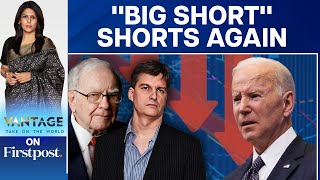
The NASDAQ rose by 14 %, and the Dow Jones by about 3%. These are pretty solid numbers. But are we missing something important? Perhaps an inevitable market crash. Some investors believe so. Meet: Michael Berry. You may know him as that guy from the movie "The Downside Game." In 2008, he predicted the stock market crash.
He made about $100 million in personal profit, plus $700 million for his investors. So he knows the market. And now he has made another bet. It is valued at approximately $1.6 billion. And again, this goes against the general trend. Michael Berry is betting on a stock market crash. He placed this order last quarter.
It accounts for about 93% of his entire portfolio. So, obviously, he's confident about this, and he's not alone. Warren Buffett does the same thing . He is one of the largest investors in the world. His company sold $8 billion worth of stock last quarter. Is this too much for him? Well, not really. But, again, time matters.
It is believed that American stocks should recover. Inflation is slowing, so the economy should be growing. But these leading investors don't think so. They predict collapse. Did they notice something we don't? The US is not really out of the woods yet. Several factors could still drag them to the bottom.
The first, of course , is China. Every single indicator from Beijing looks bad. Consumer spending, production volumes, exports, fixed capital investments— all of this is in the red. China's performance looks very bad. And this could have negative consequences for the US. Treasury Secretary Janet Yellen acknowledged this, but she says Asian economies will be hit harder.
Factor number two is banks. American banks. A number of regional US banks have already failed. Like First Republic in Silicon Valley. But the crisis is not over yet. Rating agency Moody's has already downgraded the ratings of 10 American banks . Another agency, Fitch, warns about the same thing . They say the ratings of dozens of US banks could be downgraded.
We are talking about big players like JP Morgan Chase, Bank of America, Citibank . If their ratings are lowered, the consequences will be huge. In fact, we are already seeing some decline. JP Morgan shares have fallen 2.7% in the last 5 days. Citibank fell 4% and Bank of America fell about 5.6%—a testament to the importance of credit ratings.
Investors pay attention to these ratings before investing their money. The higher the rating, the safer the investment. That's why a downgrade is bad news. But does this mean that the markets will collapse? I'm afraid it's not that simple. The US economy is going through a rather strange phase. In other words, it's really hard to describe.
Since March of last year, the Federal Reserve has been raising interest rates. They've done this 10 times already. The lending rate is 5% higher than it was last year, and that's a lot, 5%. Ideally, this should slow the economy. Higher unemployment, lower GDP, lower consumer spending. But the opposite is happening.
Experts predict US GDP growth of 5.8% this quarter. This is twice as much as it was last month. Unemployment fell to 3.5%. The US economy created 180,000 jobs last quarter. Costs have also increased. Retail sales rose 0.7% last month. At the same time, inflation is decreasing. Last year it was 9% . Now it is 3%.
So what exactly is happening? How does inflation fall without an economic recession? Let me tell you what BlackRock says. This is the largest investment firm in the world. It manages assets worth about $8 trillion . BlackRock says this is all temporary. The US economy will remain stagnant until the end of this year.
Neither growth nor decline . But next year it may enter a period of complete employment stagnation. And what does that mean? Well, basically three things. Weak economic growth, rising inflation and labor shortages. These three things could characterize the US economy next year. That's better than a recession, but it also means no growth.
Now I have to say this. These are all different predictions. Every economist has something to say about the US economy. Some business leaders say that stagnation is great. Others say it 's a disaster. Do you know why? Because we are in uncharted territory . Remember what we talked about the Wuhan virus?
Its long-term consequences cannot be predicted, but can only be felt. The situation is the same with the economy . The pandemic has changed the structure of the global economy— for better or worse, only time will tell. M-hm.





Comments 0