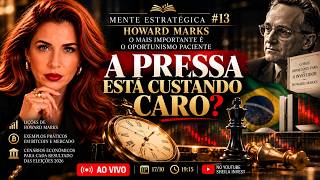
저자: SheilaFaria · 외국인
요약 보기
이 라이브는 Howard Marks의 'What Matters Most to Investors' 13장 '인내심 있는 기회주의(patient opportunism)'를 다루며, 시장이 좋은 가격의 투자를 자동으로 제공하지 않으니 가격 하락만으로 싸다고 판단하지 말고 맥락을 보고 준비된 상태에서 기다리라는 메시지를 전한다. 주요 주장 - 투자 기회는 찾아 나서기보다 매도자가 팔려는 목록에서 고르는 것이 낫다는 Oaktree의 원칙("우리는 투자를 찾지 않고, 투자가 우리를 찾는다")을 소개한다. - 매수자의 준비성과 매도자의 급한 사정(유동성 필요)이 만날 때 좋은 기회가 생긴다고 설명한다. - 가격이 떨어졌다고 무조건 매수하지 말고, 무엇이 바뀌었는지, 누가 왜 파는지, 투자 논리가 유효한지, 하락 시에도 재정적·정서적으로 버틸 수 있는지를 점검하라고 권한다. - 레버리지 투자자나 단기 부채가 있는 투자자는 하락장에서 강제 매도에 몰리므로 기회를 활용하기 어렵다고 설명한다. - 인내가 경직성이 되어서는 안 되며, 투자 성향과 목표 기간에 맞춰 접근해야 한다고 강조한다. 참여자 반응 - 채팅으로 "매수를 기다리는 것과 하락장에서 매도를 참는 것 중 무엇이 더 어려운가"를 질문했고, 시청자들은 대체로 하락 시 손절을 참기 어렵다는 쪽에 동의했다. 거시 관점(브라질 대선 관련) - 대선 직전 방송으로, 대선 결과만으로 달러 환율 방향을 단정할 수 없다고 말한다. - 한국/미국 금리 차, 재정 위험, 원자재 가격, 글로벌 성장 흐름 등이 환율을 좌우한다고 설명한다. - 세 가지 시나리오를 제시한다: (1) 재정 신뢰도 개선으로 위험 프리미엄 하락, (2) 재정 불확실성으로 금리 상승과 환율 압력, (3) 미국 고금리나 미·이란 긴장 등 외부 충격. - 브라질 자산에 이미 노출되어 있으므로 달러와 암호화폐(특히 비트코인)로 지역 분산을 고려하라고 권한다(강연자 개인 의견). 리스크·조건 - 이 방송은 투자 권유가 아니라 일반 교육 목적이다. 강연자는 자신의 포지션을 자세히 밝히지 않았다. - 방송 후반에 유료 1:1 컨설팅(90분)과 독서 가이드 판매를 홍보했다. 결론적으로 강연자는 '좋은 가격'보다 '좋은 맥락'과 준비성, 그리고 개인의 재정 상황이 투자 성패를 가른다고 정리한다.
다듬은 글
인내하는 기회주의: 기다림의 기술
Let me see if I can get you closer to me. Are you alright, Nathan? Am I live? Good evening, good evening, my YouTube friends, this is Professor Sheila, for another deep, insightful live stream.
안녕하세요, 유튜브 여러분. 저는 셜라 교수입니다. 오늘도 깊이 있는 라이브 방송으로 찾아왔습니다. 여러분, 방송에 겨우 들어왔네요. 오늘은 하워드 막스의 투자자를 위한 가장 중요한 책에 대해 이야기하려고 합니다. 오늘 가장 중요한 주제는 '인내하는 기회주의'입니다.
시장은 친절한 기계가 아니다
The market is not a very welcoming machine. He won't offer you high returns just because you need them. 시장은 여러분이 고수익을 원한다고 해서 그것을 내주는 곳이 아닙니다. 오늘 장을 시작하면서 책 첫 페이지의 일부를 읽어 드리려고 합니다. 제가 보기에 아주 적절한 내용이거든요.
The cycle of rapid growth and collapse associated with the global financial crisis gave us the chance to sell at extremely high levels between 2005 and the beginning of 2007. And then, to buy at panic prices between the end of 2007 and 2008, which was the period of the real estate economic crisis, the subprime crisis in the United States.
Investors with a dissenting viewpoint, who struggle not to be swallowed up by the cycles, had a golden opportunity to distinguish themselves. Sometimes, our greatest contribution lies in remaining discerning and relatively inactive. Patient opportunism, waiting for bargains, is often our best strategy.
글로벌 금융위기와 관련된 급등과 붕괴의 사이클은 2005년부터 2007년 초까지 아주 높은 가격에 팔 기회를 주었고, 2007년 말부터 2008년 사이에는 패닉 가격에 살 기회를 주었습니다. 미국 서브프라임 사태, 부동산 경제위기의 시기였죠. 사이클에 휩쓸리지 않으려고 애쓰는, 다른 시각을 가진 투자자들에게는 자신을 돋보이게 할 황금 같은 기회였습니다. 때로는 우리가 가장 크게 기여하는 것이 분별력을 유지하며 상대적으로 가만히 있는 데 있습니다. 헐값을 기다리는 인내하는 기회주의가 종종 최선의 전략입니다.
기회가 우리를 찾아오게 하라
So, I'll offer you a tip, a tip from an investor, okay, from Howard Marks. So, I offer a tip: we will have better results if we wait for investments to come to us, instead of us having to go after them.
하워드 막스의 팁을 하나 전하겠습니다. 투자를 우리가 쫓아가는 것보다, 투자가 우리에게 오도록 기다릴 때 결과가 더 좋아진다는 것입니다. 우리가 원하는 자산에 대한 고정 관념을 먼저 가지기보다, 매도자들이 팔려는 목록에서 고를 때 더 좋은 거래를 얻는 경향이 있습니다.
Opportunists buy things because they are offered at bargain prices. There's nothing special about buying when prices aren't low. At Oaktree, Howard Marks' company, one of our mottos is: "We don't seek our investments, they find us."
기회주의자는 싸게 제시되었기 때문에 삽니다. 가격이 싸지 않을 때 사는 데에는 특별할 게 없습니다. 하워드 막스의 회사 오크트리의 구호 중 하나는 "우리가 투자를 찾는 게 아니라, 투자가 우리를 찾아온다"입니다.
"We try to wait. We don't go out with a shopping list. Instead, we wait for the phone to ring. If we call the owner and say, 'You own X, we want to buy,' the price will probably go up. But when the owner calls us and says, 'We have X and we want to sell,' the price will fall. So, instead of initiating negotiations, we prefer to react opportunistically."
"우리는 기다리려고 합니다. 쇼핑 목록을 들고 나가지 않습니다. 대신 전화가 울리기를 기다립니다. 우리가 주인에게 전화해 'X를 가지고 계시니 사고 싶습니다'라고 하면 가격은 아마 오를 겁니다. 하지만 주인이 먼저 전화해 'X가 있는데 팔고 싶습니다'라고 하면 가격은 내려갑니다. 그래서 협상을 먼저 시작하기보다 기회주의적으로 반응하는 쪽을 택합니다."
이 발췌문은 책 첫 페이지에서 표시해 둔 부분인데, 아주 흥미롭고 팁이 가득해서 여러분께 전체를 읽어 드리고 싶었습니다. 저자 스스로 "팁을 하나 드리겠다"고 말하는 부분이니까요.
오늘의 주제 전환: 브라질 대선과 경제
So, Saturday, the day before the election in Brazil, some tempers are running high, others not so much. So today, at the end of our Strategic Mind live stream, I decided to present an economic analysis of the two presidential candidates, and I will share the economic analysis I'm going to do on YouTube.
오늘은 토요일, 브라질 대선 전날입니다. 어떤 사람들은 감정이 격앙되어 있고, 어떤 사람들은 그렇지 않죠. 그래서 오늘 방송 말미에 두 대선 후보의 경제 분석을 소개하려고 합니다. 이 분석은 유튜브에서 화면을 공유하며 보여 드릴 예정입니다. 틱톡에서는 화면 공유가 안 되니까요. 유튜브로 옮겨 오시려는 분들은 그렇게 하셔도 좋습니다. 저도 오늘 이 라이브에 들어오는 데 시간이 좀 걸렸는데, 이 분석을 검토해 보니 꽤 흥미롭더군요.
The economy, in my view, is interesting. Show me where the money is, and I'll show you where the problem or the solution is. It's always the same, isn't it?
제가 보기에 경제는 흥미롭습니다. 돈이 어디에 있는지 보여 주면, 문제나 해법이 어디에 있는지 보여 드리겠습니다. 늘 똑같죠?
토요일의 질문: 놓칠까 봐 두려운 마음
So let's get started with our live stream this Saturday. It's Saturday and here I am again. I wanted to thank everyone who joins me on Saturday. I know it's a day when we like to either stay with family or go out to celebrate. I'm definitely going to celebrate after this live stream. There's a party waiting for me, but I love being here with you all, sharing the knowledge we acquire through reading.
이제 이번 토요일 라이브를 시작하겠습니다. 토요일에 함께해 주셔서 감사합니다. 토요일은 가족과 함께 보내거나 나가서 축하하는 날이죠. 저도 이 방송이 끝나면 축하 파티가 기다리고 있습니다. 그래도 여러분과 여기에서 독서를 통해 얻은 지식을 나누는 시간이 참 좋습니다.
So I want to start our conversation today with a question that might be a little unsettling. How many times have you lost money because you were afraid of missing an opportunity? Have you ever stopped to think about it? Think about it.
오늘은 조금 불편할 수도 있는 질문으로 대화를 시작하고 싶습니다. 기회를 놓칠까 봐 두려워서 돈을 잃은 적이 몇 번이나 있으신가요? 한 번이라도 멈춰 서서 생각해 보신 적이 있나요? 한번 생각해 보세요.
Bitcoin is starting to go up, right? You're following a chart, and one day it goes up 3%, the next day it goes up another 5%. Then you go there, open YouTube, open Instagram, open TikTok, and everyone's saying the same thing: "Now it's going to work, this time it's different, the market has changed." So, those who don't join now will be left behind.
비트코인이 오르기 시작했죠? 차트를 따라가고 있는데, 하루는 3% 오르고 다음 날은 또 5% 오릅니다. 그러면 유튜브를 열고, 인스타그램을 열고, 틱톡을 엽니다. 모두가 같은 말을 하죠. "이번엔 된다, 이번엔 다르다, 시장이 바뀌었다. 지금 안 들어가면 뒤처진다."
And then you start to feel something curious, you see all this information and you're like: "Wow, there's a discomfort here. It's not a conviction you have, it's really a discomfort, a feeling of being stuck, it seems like everyone else is making money and you're not." Then you go there and buy it. But do you know what's most interesting?
그러다 묘한 감정이 생깁니다. 이 모든 정보를 보면서 "뭔가 불편하다"고 느끼죠. 확신이 아니라 정말 불편함, 뒤에 남겨진 듯한 느낌입니다. 다들 돈을 버는데 나만 못 버는 것 같거든요. 그래서 사러 갑니다. 그런데 가장 흥미로운 게 뭔지 아세요?
You didn't buy it because you found an opportunity. No. Why did you buy it? You bought it because you couldn't stand the pressure around you, the feeling, in fact, of missing out, the famous fear of missing out. That's the real emotion that makes you buy, whether it's Bitcoin or any other asset that's currently in the hype, in the media, okay?
여러분은 기회를 발견해서 산 게 아닙니다. 그럼 왜 샀을까요? 주변의 압박을 견딜 수 없었기 때문입니다. 소위 말하는 FOMO, 놓칠까 봐 두려운 감정이죠. 비트코인이든 지금 화제가 되고 언론에 오르내리는 다른 자산이든, 여러분을 사게 만드는 진짜 감정은 바로 이것입니다.
And that feeling, it's the starting point for you to lose money in the market, okay? I didn't want to tell you this, but that's the truth. And now I want to ask an even more important question. What if I told you that some of the world's best investors go for long periods without finding anything interesting enough to buy?
그 감정이 바로 시장에서 돈을 잃기 시작하는 출발점입니다. 이런 말은 하고 싶지 않았지만, 사실이니까요. 이제 더 중요한 질문을 하겠습니다. 세계 최고의 투자자들 중에도 사고 싶을 만큼 흥미로운 것을 찾지 못한 채 오랜 기간을 보내는 사람들이 있다면 어떨까요?
Not because they don't know how to analyze the market, not because they are inattentive to assets, but because they understand something that the market seems to have already forgotten. And that is: you don't need to be constantly investing in something new just because it's appearing in your mind. No, that's not how it works.
시장을 분석할 줄 몰라서가 아니고, 자산에 무관심해서도 아닙니다. 시장이 이미 잊어버린 듯한 무언가를 그들이 이해하고 있기 때문입니다. 머릿속에 떠올랐다는 이유만으로 새로운 무언가에 계속 투자할 필요는 없다는 것이죠. 그런 식으로 작동하지 않습니다.
13장과 열린 질문
Today we've reached chapter 13. We're already past the halfway point of Howard Marks' book, "What Matters Most to Investors." The chapter is the most important one; it's patient opportunism. And I want to leave a question open until the end of today's conversation. How can you tell if you're truly being patient or simply letting an opportunity pass you by out of fear?
오늘은 13장에 이르렀습니다. 하워드 막스의 『투자자가 가장 중요하게 여겨야 할 것』은 이미 절반을 넘겼습니다. 이 장은 가장 중요한 장이고, 주제는 인내하는 기회주의입니다. 오늘 대화가 끝날 때까지 질문 하나를 열어 두고 싶습니다. 여러분이 진짜로 인내하고 있는지, 아니면 그저 두려움 때문에 기회를 흘려보내고 있는지 어떻게 구분할 수 있을까요?
전략적 사고의 흐름
So, welcome everyone to another live stream from Mente Estratégica. I'm Sheila Faria, and here we study the market to develop something far more important than just predictions. Here, we develop the ability to think. And today, in addition to Howard Marks, we will have a very special conversation, because tomorrow we choose our next president, the next president of Brazil.
멘치 에스트라테지카 라이브에 다시 오신 것을 환영합니다. 저는 셜라 파리아입니다. 여기서는 예측보다 훨씬 중요한 무언가, 즉 생각하는 힘을 기르기 위해 시장을 공부합니다. 오늘은 하워드 막스와 함께 아주 특별한 대화도 나누겠습니다. 내일 우리는 다음 대통령, 브라질의 차기 대통령을 뽑으니까요.
And I want to show how we can interpret possible economic scenarios without turning an election into a bet on the dollar, the stock market, or Bitcoin. But first we need to understand the lesson that brought us here. In our last live session on strategic thinking, we learned that a price drop doesn't automatically transform an investment into a bargain.
선거를 달러, 주식시장, 비트코인에 대한 베팅으로 만들지 않으면서 가능한 경제 시나리오를 어떻게 해석할 수 있는지 보여 드리고 싶습니다. 그전에 우리를 여기까지 데려온 교훈을 먼저 이해해야 합니다. 지난 전략적 사고 라이브에서 우리는 가격이 떨어졌다고 해서 투자가 자동으로 헐값이 되지는 않는다는 것을 배웠습니다.
Do you remember the message from the last live stream? Because in every live stream I bring up a word that I connect to that chapter. In our last meeting, the key word was discernment, which is the ability to distinguish what seems cheap from what truly deserves investigation and our investment. And before that, we worked with the word independence.
지난 라이브의 메시지를 기억하시나요? 저는 매번 방송마다 그 장과 연결되는 단어 하나를 꺼냅니다. 지난 시간의 핵심 단어는 '분별력'이었습니다. 싸 보이는 것과 실제로 조사하고 투자할 가치가 있는 것을 구별하는 능력이죠. 그 전에는 '독립성'을 다뤘습니다.
And before independence, we worked [sighing] For independence. Before the word independence, we worked with autonomy. Now, look how our thinking is evolving each weekend that we meet. It is an evolution. It's a continuation of the line of reasoning. It's true? [snoring] First, we learn not to be led by emotions and the crowd.
그리고 독립성 이전에는 자율성을 다뤘습니다. 주말마다 만날 때마다 우리의 사고가 어떻게 발전하는지 보세요. 진화하고 있고, 추론의 흐름이 이어지고 있습니다. 맞죠? 먼저 우리는 감정과 군중에 끌려다니지 않는 법을 배웠습니다.
Then, we learned to form our own interpretation of the market. Next, we learned to recognize potential opportunities. But then a new problem arises. What if the opportunity we want doesn't exist yet? Am I going to force a purchase because of the market turmoil? Am I going to invest? Am I going to invent a justification for investing in something that's currently trendy?
그다음에는 시장에 대한 나만의 해석을 세우는 법을 배웠습니다. 그리고 잠재적 기회를 알아보는 법을 배웠죠. 그런데 새로운 문제가 생깁니다. 내가 원하는 기회가 아직 존재하지 않는다면? 시장이 어수선하다고 억지로 사야 할까요? 지금 유행하는 것에 투자할 명분을 만들어 내야 할까요?
Am I going to keep looking for something just so I feel like I'm participating, that I'm not left out? This is where our author, Howard Marks, introduces us to patient opportunism. And the word from the live stream, everyone knows I always connect a chapter to a word. The word that came to mind when I read this chapter was readiness.
소외되지 않으려고, 참여하고 있다는 느낌을 얻으려고 계속 무언가를 찾아 헤매야 할까요? 바로 여기서 저자 하워드 막스가 인내하는 기회주의를 소개합니다. 제가 장마다 단어를 연결한다는 것은 다들 아시죠. 이 장을 읽으며 떠오른 단어는 '준비성'이었습니다.
Wow, Sheila, readiness has nothing to do with opportunism. I'll prove to you that it's possible. Because opportunism doesn't mean passivity, it means being ready to act at the right moment, being on standby. So I chose that word because patience can easily be confused with passivity. And that is not what the author Howard Marks is proposing in this chapter, not at all.
"셜라, 준비성은 기회주의와 아무 상관이 없지 않나요?"라고 하실 수도 있겠죠. 가능하다는 걸 보여 드리겠습니다. 기회주의는 수동성을 뜻하지 않습니다. 적절한 순간에 행동할 준비가 되어 있다는 뜻, 대기 상태에 있다는 뜻입니다. 인내는 쉽게 수동성과 혼동될 수 있기 때문에 이 단어를 골랐습니다. 저자 하워드 막스가 이 장에서 제안하는 것은 결코 그런 게 아닙니다.
The patient investor continues analyzing, continues studying the market, continues assessing risks, and continues building criteria. He simply doesn't feel obligated to turn every piece of information that comes to him into an operation. And patience is a behavior. Readiness is the ability, built up while waiting, to act the moment you encounter an opportunity.
인내하는 투자자는 계속 분석하고, 계속 시장을 공부하고, 계속 위험을 평가하고, 계속 기준을 세웁니다. 다만 들어오는 모든 정보를 거래로 바꿀 의무는 느끼지 않을 뿐입니다. 인내는 행동이고, 준비성은 기다리는 동안 쌓아 두었다가 기회를 만난 순간 행동할 수 있는 능력입니다. 그래서 오늘 장의 본질을 요약하는 단어로 '준비성'을 골랐습니다.
시청자 질문: 사는 것과 파는 것 중 무엇이 더 어려운가
So I wanted to ask you guys, if you could tell me here in the chat, what's the most difficult thing for you? Should you wait to buy or resist the urge to sell when the market falls? Can you answer this question for me here in the chat? Which is more difficult? I would be very happy to receive any help that can be given to me.
여러분께 묻고 싶습니다. 채팅창에 알려 주실 수 있나요? 여러분에게 가장 어려운 것은 무엇인가요? 살 때까지 기다리는 것인지, 시장이 떨어질 때 팔고 싶은 충동을 참는 것인지. 채팅에 답해 주시면 정말 기쁘겠습니다. 어느 쪽이 더 어렵나요? 사기를 기다리는 것인가요, 가격이 떨어질 때 팔지 않고 버티는 것인가요? 사는 것과 파는 것, 무엇이 가장 어려운가요? 자산 가격이 떨어질 때 사기를 기다려야 할까요, 아니면 팔아야 할까요? 알고 싶습니다. 생각할 시간을 드리겠습니다. 물 좀 마시고 올게요.
The second thing, I also believe, Robinho, is that the most difficult thing is when the business is going down, to hold on and not sell. Thanks. Selling at a loss is common. Yes, that's right. You are right. For me too, it's that second factor. It's true?
두 번째 것이 가장 어렵다고 생각합니다. 로빈호 님 말씀처럼 사업이 기울 때 버티고 팔지 않는 것이요. 감사합니다. 손해 보고 파는 건 흔하죠. 맞아요, 로빈호 님 말씀이 옳습니다. 저도 두 번째 요인이라고 생각합니다. 그렇죠?
So, I want to read one more passage before we begin, continue. Oh, at all times, the investment environment is a given, and we have no alternative but to accept it and invest within its limits. There isn't always a pendulum or end of a cycle to bet against. Sometimes, greed and fear, optimism and pessimism, credulity and skepticism are in balance.
시작하기 전에 한 대목을 더 읽겠습니다. 투자 환경은 언제나 주어진 것이고, 우리는 그것을 받아들이고 그 한계 안에서 투자할 수밖에 없습니다. 베팅할 수 있는 진자나 사이클의 끝이 항상 있는 건 아닙니다. 때로는 탐욕과 공포, 낙관과 비관, 쉽게 믿음과 회의가 균형을 이루고 있습니다.
Therefore, people are not making clear mistakes. Instead of being obviously overpriced or underpriced, most things appear to be trading at a reasonably fair price, and in that case, there may not be any great bargains to buy or sell. That's it, folks. Therefore, for an investment to be successful, it is important that we recognize the market conditions and, taking this into account, decide on our actions.
그러므로 사람들이 분명한 실수를 하고 있는 것은 아닙니다. 대부분의 것이 명백히 비싸거나 싸지 않고 합리적으로 공정한 가격에 거래되고 있다면, 그때는 사거나 팔 만한 큰 헐값이 없을 수 있습니다. 바로 그겁니다. 그러니 투자가 성공하려면 시장 상황을 인식하고, 그것을 고려해 행동을 결정하는 것이 중요합니다. 맞죠?
Robinho, you're right. That's exactly it, and we have to understand the asset, understand the asset's cycle, and not sell at a loss, not sell to realize a loss, since we understand that everything is cyclical and that there will be appreciation. Sometimes, during a downturn, that's the opportune moment to invest. We also have to analyze it from another point of view, right?
로빈호 님 말씀이 맞습니다. 바로 그거예요. 자산을 이해하고, 그 자산의 사이클을 이해해야 합니다. 모든 것이 순환하고 언젠가 오른다는 것을 이해하기 때문에 손실을 확정하려고 팔지 않아야 합니다. 때로는 하락기가 오히려 투자하기 좋은 순간이기도 하죠. 우리는 또 다른 관점에서도 분석해야 합니다. 그렇죠?
So let's continue here. So, as I've already told you, I read it at the beginning, but I wanted to emphasize it. Ah, I want to tell you a story that helps to understand how Howard Marks thinks. I'll tell you, I read it at the beginning, but sometimes it goes unnoticed by someone. Howard Marks is one of the founders of Oaktree Capital Management.
그럼 계속하겠습니다. 앞에서 말씀드렸듯이 처음에 읽었지만 다시 강조하고 싶었습니다. 하워드 막스가 어떻게 생각하는지 이해하는 데 도움이 되는 이야기를 하나 들려 드리고 싶어요. 처음에 읽긴 했지만 누군가에게는 지나치기 쉬운 부분이니까요. 하워드 막스는 오크트리 캐피털 매니지먼트의 창업자 중 한 명입니다.
So, it is a very well-known asset manager, known for its work in credit and investments in special situations. In a 2009 memo, he described a very interesting practice at his company: the team didn't need to go out chasing a list of assets they wanted to acquire. Okay? Instead, the team researched, studied, analyzed, and waited for situations to arise in which salespeople were motivated to negotiate.
아주 유명한 자산운용사로, 신용투자와 특수상황 투자로 알려져 있습니다. 2009년 메모에서 그는 자사의 아주 흥미로운 관행을 설명했습니다. 팀이 사고 싶은 자산 목록을 들고 쫓아다닐 필요가 없었다는 것입니다. 대신 팀은 연구하고, 공부하고, 분석하면서 매도자가 협상에 나설 동기를 가진 상황이 생기기를 기다렸습니다.
And the image that Marx uses is very good. Which one is it? He, he says he was expecting the phone. Imagine two situations. In the first scenario, you call someone and say, "Wow, I really want to buy your apartment. I found it beautiful online. You made a gorgeous listing. I loved the layout of the rooms." So you're going after the seller, you understand?
막스가 쓰는 비유가 아주 좋습니다. 그가 전화를 기다렸다고 말하거든요. 두 가지 상황을 상상해 보세요. 첫 번째 상황에서는 누군가에게 전화해서 "정말 집을 사고 싶어요. 온라인에서 보니 너무 아름답더라고요. 매물 설명도 멋지고, 방 구조도 마음에 들어요"라고 말합니다. 그러면 여러분이 매도자를 쫓아가는 셈입니다. 이해되시죠?
When you want to buy something, the seller notices your interest. So maybe he's not in such a hurry to sell. He starts using his connection to his advantage. And perhaps he will raise the price, depending on the interest you show. It is true? Now imagine a second situation. The owner of a beautiful apartment calls you and says, "Wow, I'm having a problem. I need to sell because I need cash right now. Do you think you could buy my apartment? It's worth this much." That gives you room to negotiate.
무언가를 사고 싶어 하면 매도자는 여러분의 관심을 알아챕니다. 그러면 그는 굳이 서둘러 팔 이유가 없어지고, 여러분과의 관계를 자기에게 유리하게 쓰기 시작하죠. 여러분이 보이는 관심에 따라 가격을 올릴지도 모릅니다. 맞죠? 이제 두 번째 상황을 상상해 보세요. 아름다운 아파트의 주인이 전화해서 "문제가 생겼어요. 지금 현금이 필요해서 팔아야 해요. 제 아파트를 사실 수 있을까요? 이 정도 가치는 있어요"라고 말합니다. 그럼 협상의 여지가 생깁니다.
I have n't read that one yet, Robinho. It is good? If you recommend it to me, I can read it and bring it over for us to discuss. I find reading books really amazing. I'm going to put it here for myself, okay? So, folks, it's a matter of, uh, opportunity. Do you realize how the negotiation has changed? You are no longer chasing the asset.
로빈호 님, 그 책은 아직 안 읽어 봤어요. 좋은 책인가요? 추천해 주시면 읽어 보고 다음에 함께 이야기해 봐요. 독서는 정말 놀라운 것 같아요. 제 메모에 적어 둘게요. 그래서 여러분, 이것은 기회의 문제입니다. 협상이 어떻게 바뀌었는지 알겠어요? 더 이상 여러분이 자산을 쫓아가는 것이 아닙니다.
It's the owner who needs to sell. So you start evaluating an opportunity that arose because someone needs liquidity. And that's one of the most important ideas in today's chapter. And now comes the part I want you to pay attention to. Which one is it? It doesn't mean that every pushy salesperson is offering you a bargain or an opportunity, but the need to sell can create different negotiation conditions than those found when everyone wants to buy.
팔아야 하는 쪽은 주인입니다. 그래서 누군가 현금이 필요해서 생긴 기회를 평가하기 시작하는 것이죠. 이것이 오늘 장의 가장 중요한 생각 중 하나입니다. 이제 여러분이 주목해 주셨으면 하는 부분이 나옵니다. 모든 적극적인 매도자가 여러분에게 헐값이나 기회를 제시하는 것은 아닙니다. 하지만 팔아야 할 필요는 모두가 사고 싶어 할 때와는 다른 협상 조건을 만들어 냅니다.
Because usually when the market is hot, everyone wants to buy, so what happens? Prices are going up, aren't they? So it's a difference between the urgency of the seller and the preparedness of the buyer. Did you understand? That's where the great opportunities arise. The difference lies in the urgency of the seller and the preparedness of the buyer.
보통 시장이 뜨거울 때는 모두가 사고 싶어 하니까, 어떻게 될까요? 가격이 오르죠. 그러니 핵심은 매도자의 절박함과 매수자의 준비성 사이의 차이입니다. 이해하셨나요? 큰 기회는 바로 거기서 생깁니다. 그 차이는 매도자의 절박함과 매수자의 준비성에 있습니다.
Porque quem está comprando sabe o que está fazendo. Acho que isso é muito comum na internet: aquela pessoa que pesquisa carros, que gosta de carros. Os homens geralmente adoram carros. As mulheres gostam de bolsas. Eu não sou muito de bolsas. Gosto de vestidos e sapatos. Então o que mais me atrai são os vestidos, como este que estou usando hoje, lindo, maravilhoso, e os sapatos. É isso que eu gosto.
Mas vamos falar de carros, que é um exemplo mais interessante. Os homens assistem a canais do YouTube sobre carros, pesquisam, e quando encontram uma oportunidade no mercado para aquele veículo específico que vêm acompanhando, eles compram. Então, a pergunta é essa. Quando um investidor quer comprar um ativo, ele também se preocupa com o preço, certo?
Algumas pessoas dizem: "Ah, o preço não importa porque é um investimento de longo prazo." Pessoal, eu não compartilho dessa linha de pensamento, dessa escola de pensamento. Acredito que precisamos ter uma boa relação entre risco e retorno. E é isso, Rafael. Pessoal, quando existe uma relação entre risco e retorno, é aí que devemos aproveitar a oportunidade de comprar aquele ativo, e isso está de acordo com o que se projeta para o mercado entregar o retorno que esperamos, certo?
Eu citei o exemplo do carro, mas eu realmente aprecio bons sapatos; não sou tão apaixonada por carros. Mas adoro sapatos e bolsas, e tudo bem. E também amo livros. Mas, sinceramente, não penso duas vezes antes de comprar um livro que eu goste. Certo? Então, quando o mercado entra em pânico, você vai estar preparado para analisar uma oportunidade, ou vai ser uma dessas pessoas forçadas a vender?
Pense nisso assim. Guarde essa pergunta na cabeça, porque ela é muito importante. É uma das perguntas mais importantes para pensarmos sobre a próxima queda do mercado. Então, quero dizer aqui que uma crise econômica não cria oportunidades iguais para todos. Obviamente que não.
Vamos fazer outro exercício mental. Imagine duas pessoas durante uma crise financeira. Ambas estudam investimentos, ambas reconhecem que certos ativos podem estar sendo negociados abaixo do seu valor normal, mas há uma diferença. A primeira pessoa usou dinheiro de que precisaria em poucos meses, está excessivamente exposta e pode também ter dívidas. Ou pode estar operando alavancada. Quando o mercado despenca, ela não pode esperar. Não, porque tem compromissos. Pense nisso. Agora vamos pensar na segunda pessoa e comparar as duas. A segunda pessoa preservou uma reserva de capital líquido para as suas necessidades. Portanto, não assumiu obrigações que dependem da valorização imediata dos ativos.
Essa pessoa, a segunda, tem consciência dos riscos e tem critérios. E ela também sente medo. Mas não precisa transformar esse medo em uma venda forçada. Agora, me responda: qual das duas está em melhor posição para avaliar uma possível oportunidade de mercado? A segunda, pessoal. A segunda pessoa, que se preparou.
O dinheiro que investimos não pode ser dinheiro de que vamos precisar no curto prazo. Precisamos pensar nele como algo que está ali trabalhando para nós. É um funcionário que precisa entregar, gerar lucros. Não é assim? Então, você não consegue controlar quando o mercado vai apresentar uma oportunidade. Muitas vezes não há como prever. Os famosos cisnes negros de Nassim Taleb estão acontecendo. Mas podemos trabalhar para não perder a nossa capacidade de escolher quando um cisne negro, uma oportunidade, aparece. Isso é prontidão. Entende? É isso que quero trazer para vocês.
Agora vamos pensar no Bitcoin. Vamos pensar no Bitcoin. Já presenciamos períodos em que a volatilidade aumentou significativamente. E em algumas quedas, investidores alavancados sofrem liquidações. Outros precisam vender para cobrir obrigações. E investidores com horizontes de tempo diferentes acabam avaliando o mesmo mercado em condições completamente diferentes. Certo?
Uma queda nos preços pode criar preços mais atrativos, mas também pode refletir uma deterioração da liquidez, uma mudança nas expectativas ou um aumento do risco naquele momento. Portanto, o oportunismo paciente não significa comprar toda queda. É por isso que estou dizendo isso, pessoal. O preço chama a atenção, mas é o contexto que gera riqueza. E isso significa ser capaz de se perguntar durante uma queda: o que mudou? Quem está vendendo? Por que está vendendo? A minha tese de investimento ainda é válida? Eu tenho capacidade financeira e emocional para assumir esse risco? E talvez a pergunta mais importante: se o preço continuar caindo, minha situação continuará sustentável, ou conseguirei viver minha vida com tranquilidade apesar da queda do mercado? É isso que você precisa pensar. Você tem que pensar em você, nas suas obrigações, na sua família.
Esqueça a carteira do seu colega de classe, a carteira do influenciador, a carteira do youtuber, ou a carteira da professora Sheila. Certo? Por isso eu não falo tanto sobre o que estou fazendo. Às vezes falo, mas nem sempre. Por quê? Cada situação, cada pessoa tem as suas peculiaridades. É específico. E para quem quer aprimorar suas estratégias, acabei de criar um programa de mentoria, um serviço de consultoria expressa.
Você vai escolher três perguntas principais, eu vou enviar um questionário, e nos encontraremos por 90 minutos para resolver essas perguntas na prática. Então, para quem quiser, deixarei o link mais tarde no YouTube, na descrição, para o formulário que vocês vão preencher para que possamos fazer essa reunião acontecer e vocês possam colocar as coisas em andamento, certo?
Foi uma necessidade que vi de vocês, por reuniões mais rápidas. Pessoas que só querem, ah, um ajuste de estratégia, um horizonte, alguma percepção que possa ser feita em 90 minutos: é perfeitamente viável. Tive respostas muito boas das minhas consultorias, certo?
Então, vamos falar sobre a armadilha da oportunidade perfeita que está neste livro. E quero corrigir aqui uma interpretação que pode surgir. Talvez alguém tenha pensado: então a melhor estratégia é simplesmente esperar pela crise? E se a crise não chegar tão cedo? Não é necessariamente a melhor estratégia. Porque se ela não vier tão cedo, é bom ter essa reserva de oportunidade.
Mas e se o ativo que você quer continuar na sua tendência de alta, aumentando de valor? E se você passar anos esperando um preço que nunca vai aparecer? Então, não podemos transformar a paciência em rigidez. O oportunismo paciente não é uma regra universal de manter todos os ativos em caixa até que o desastre aconteça. Não é assim que funciona, né?
Nem muito, nem pouco, certo? É, na verdade, uma abordagem oportunista paciente, calma, em que você acompanha o mercado e, de acordo com as condições, com as suas expectativas de investimento e com os seus objetivos, reconhece a oportunidade naquele momento. Uma pessoa que investe regularmente para a aposentadoria pode ter uma estratégia completamente diferente da de alguém de uma gestora de crédito e ativos em dificuldade, como a Oaktree, que pertence ao nosso amigo Howard Marks.
E isso importa, por isso digo que cada um tem o seu próprio perfil de investidor. No fim das contas, a carteira também tem um aspecto emocional. Às vezes você... Obrigada, Lourival. Às vezes você quer um ativo específico e vai esperar até que esse ativo esteja a um bom preço. Cada um tem um perfil.
Bom, eu não quero investir em uma empresa que é, uma empresa muito lucrativa, porque não gosto dessa empresa. Qual é o problema? Da empresa? Seu? Ninguém tem nada a ver com isso. Você precisa estar confortável com a sua estratégia de investimento, e vou contar um segredo. Não existem atalhos.
Não existem atalhos. Não existem atalhos. É sobre fazer um pouco, estudar um pouco toda semana, fazer uma pequena contribuição programada a cada mês ou semana. Não existe um grande atalho, certo, pessoal? É muito importante que vocês entendam isso, certo? E não caiam em armadilhas, em pessoas que prometem altos retornos em investimentos que não existem, porque a maioria dessas captações que acontecem em particular são só, "Ah, você quer entrar no Forex, você quer entrar em trading?" Pessoal, por favor, não caiam nessa.
A maioria, 60% eu diria, é golpe. São pessoas tentando pegar o seu dinheiro e deixar você sem nada, simples assim. Ela não vai te dar um retorno magnífico, certo? Então, cuidado nas redes sociais quando forem abordados. Meu perfil já foi clonado inúmeras vezes, e as pessoas oferecem 90% de retorno, mas eu nem me dou ao trabalho de falar com vocês; são vocês que vêm até mim.
Então, não sou eu quem envia as mensagens. Eu respondo. Quando vocês mandam mensagens, normalmente respondo com uma mensagem em áudio. Então, vão conhecer a minha voz, porque vou responder, e geralmente vou responder com respeito e responsabilidade, certo? Então, diferencie a minha postura aqui da postura dos golpistas.
Gente, estou suando muito aqui porque está muito calor. Também tenho duas luzes aqui em cima. E hoje não liguei o ar-condicionado porque a minha voz sofre quando eu ligo, certo? Então, é uma postura mais seletiva do investidor que tem um oportunismo paciente. Dependendo das condições de mercado que ele observa e interpreta, ele faz os seus investimentos de forma consciente e calma.
Eu até brinco aqui, a gente alinha os chakras, respira e estuda. Isso faz sentido dentro da minha estratégia de gestão de patrimônio? Faz sentido dentro do horizonte de tempo em que quero investir? Isso faz sentido para mim? É verdade? E isso depende inteiramente de você. Você não precisa ficar olhando para ninguém.
Por isso digo aqui que quero desenvolver pessoas que pensem de forma autônoma e independente. Está claro? Isso é muito importante. Então, não podemos copiar o comportamento de uma pessoa, de uma instituição, desculpem a "instituição" aqui, sem considerar as nossas próprias necessidades pessoais. E o princípio que podemos aprender é outro.
Não baixe seus padrões só porque está cansado de esperar, mas também não transforme o preço idealizado de um ativo em uma condição impossível de atingir. A disciplina precisa se engajar com a realidade. E daqui a pouco vou apresentar algumas situações, três ou quatro situações, em que esperar pode ser uma decisão sábia.
E uma em que esperar pode ser uma atitude de esconderijo, na verdade, de um grande medo. Certo? E agora quero apresentar a vocês uma ferramenta que desenvolvi enquanto lia o capítulo, para que possamos usá-la quando estivermos diante de uma situação de mercado e possamos identificar se é um momento para agirmos com rapidez ou com paciência.
Então, preparei seis perguntas para ajudar a distinguir a paciência estratégica da espera sem propósito. A ferramenta, como sempre digo, é: "Anotem." A ferramenta, e vou escrever porque vou ditar para vocês, se quiserem, para não precisarem voltar o vídeo. E eu sempre anoto isso aqui para vocês, porque a professora é da época antiga, eu estou brincando, certo, pessoal?
É a época dos maias, incas e astecas; ela usa papel. Olhem o meu caderno. Altamente maduro. Prontos? Vou ditar a ferramenta que desenvolvi com base neste capítulo. Não é do Howard Marks, esse é o meu sonho. É minha, certo? A ferramenta se chama uma resposta rápida. P R O N T. Vejam como vou escrever.
Prontos. P R N T. O. O no final. Prontos. O P, pessoal, significa preço. E o preço, nós, quando vemos um, quando chegamos, certo, o correto é chegar em português. Quando olhamos se o preço de um ativo está dentro do seu valor justo, ou se está sobrevalorizado ou subvalorizado. Então, em primeiro lugar, quando vemos um ativo, temos que questionar o seu preço.
Você não compra as coisas só porque está empolgado com o hype. Não sai comprando só porque está subindo. Não começa a comprar coisas só porque os preços estão caindo. Você precisa entender a relação entre preço e valor. Vocês duas se entenderam? O valor é o valor justo, aquilo que vale de acordo com o retorno que ele vai oferecer, ou, se for uma empresa, de acordo com os seus ativos, conforme mostrado no balanço patrimonial.
Então, temos que manter essa estimativa em mente. Preço, o primeiro ponto do pronto. Primeiro ponto do acordo: preço. Então, essa é a diferença entre preço e valor. Qual é o preço no momento? Vale a pena? Segundo, R, risco. Você precisa entender os riscos potenciais do ativo, certo? Esse ativo tem um nível de risco que estou disposto a assumir?
A Promessa, a oportunidade. Quais fatos tornam esse ativo uma oportunidade atrativa? Porque o capítulo de hoje é sobre oportunismo paciente, por isso desenvolvi essa ferramenta que estou compartilhando aqui com vocês. O N significa necessidade. Estou sentindo a urgência de agir com pressa, ou estou reagindo a uma pressão emocional?
Precisamos identificar por que nossa mente muitas vezes nos engana; na verdade, não é a nossa mente, são as nossas emoções. Por isso mencionei a necessidade. T significa tempo. Qual é o horizonte de tempo que tenho para investir nesse ativo? É compatível com o seu retorno cíclico? Prestem atenção, essa ferramenta, que ainda falta o O, é uma ferramenta para trazer racionalidade e clareza quando analisamos um ativo.
O O significa observação. Quais evidências confirmariam ou invalidariam a minha tese de investimento para esse ativo? Então, a ferramenta "pronto" significa essas palavras que eu falei. Preço, risco, oportunidade, necessidade, tempo e observação. Lembrem-se que essa estrutura pronta é uma estrutura mnemônica educativa que montei. Não tem nada a ver com Howard Marks; desenhei inspirada em Howard Marks.
E eu sempre monto algum tipo de ferramenta e entrego para vocês no guia de leitura estratégica, que custa só 19,90, e estará disponível na Hotmart depois da live. Ainda não subi porque ainda estou revisando. Então, ainda não subi hoje, mas estará disponível em breve pelo link na descrição do YouTube e no primeiro comentário fixado. O que é esse guia de leitura estratégica? É um guia em que eu, uh, desenvolvi a parte de leitura do capítulo com aplicação prática para que vocês, sozinhos em casa, também possam desenvolver essa habilidade de interpretar o ativo de acordo com o capítulo que estamos lendo.
It's an evolution of knowledge. Now I want you to understand what this tool I brought does. It won't tell you whether to buy or sell. It organizes your thinking before you make the decision, okay? So let me quickly show you how I would use it.
First, imagine an asset that has risen too much, and expectations are excessively optimistic, so I can't justify its price. In this first situation, it makes sense to me to wait and monitor. If it's a really good asset and it pulls back in price, I can enter at another opportunity, okay?
Second, the asset has fallen, but I still don't understand why it fell. What do I need to do? Investigate before acting. That's what I would do, in my view.
Third, there's a possible opportunity, but I would have to commit money earmarked for my essential expenses. In that situation I wouldn't do anything. It's an opportunity, but it puts me at risk, and it could get me into trouble. I don't want to cause trouble. Why? Because I prioritize my peace of mind over the adrenaline of the game.
When we prioritize our peace of mind, sleeping soundly, over the adrenaline of the game, we find peace and are happy with our family, our daily lives, and our pets. I have five now. I have an extra cat, guys. These are Francisco, Helena, and Sofia, rescued cats. And two Pomeranian puppies, because everything is a matter of balance. I have Brigitte and Bianca. They don't bark as much these days, do they? Francisco didn't even come here to jump on me and unravel my crocheted dress.
So let's go. We need to prioritize our peace over the adrenaline of the game. And prioritizing financial security brings the peace of mind we all crave, okay?
Now a fourth situation. You've analyzed the asset, you understand the risks, the opportunity meets your criteria, but you keep postponing the decision because you're afraid of being wrong. In this case, the waiting is not strategic patience. It can be a paralyzing wait. Do you notice how things change? Strategic patience has criteria, and paralysis usually depends on a certainty that the market will never give you. Then you need courage. I have the money available to invest, the opportunity is now, the price has dropped, so I'm going to go for it.
That's how it is. It's all about courage, right? It's very difficult to do that, isn't it? If it were easy, everyone would be rich, folks. Don't worry, but here we learn, and we tend to get richer, right? Let's go. Just a little longer, because later today I want to analyze the presidential candidates.
So now I want to talk again with those who are following our strategic thinking library. Look how far we've come: chapter 13. In volume 10 we worked on autonomy, in volume 11 on independence, in volume 12 on discernment, and today, in volume 13, which will be available on Hotmart right after the live stream, we develop readiness.
There's a very important progression of knowledge, because it's not enough to recognize an opportunity; you need to be prepared for it and have the courage to act. So you need to distinguish between the moment when taking action makes sense and the moment when the best decision is to observe and monitor.
With that in mind I designed today's reading guide, the strategic reading guide volume 13. The most important thing is patient opportunism. I want it to be a laboratory for decision-making, not just an explanation of the chapter, because I don't do chapter summaries in the strategic reading guide either. Here we do a review, I include practical applications, and I provide practical examples. The idea is that you can build your own readiness criteria.
So let's imagine two scenarios. In the first, the market falls 20%, but fundamental conditions are deteriorating. In the second, the price falls less and the fundamentals remain consistent. Did you see how that works? And a third scenario: you don't have the liquidity to act. What are you going to do? Did you see the difference?
In the first scenario, things are really bad. You can't do anything, the market drops 20%, conditions deteriorate, and you're left out, or you look for bargains to buy. In the second, the price falls less but the fundamentals remain the same. Wow, great time to invest. In the third, you have no capital and no liquidity. Pay attention, my dear, so that when it happens again you're prepared to go in with both feet.
This is the kind of thinking we need to develop, because opportunity doesn't exist apart from your ability to seize it. In the live session I think along with you, but in the guide you think and organize those thoughts on your own, to solidify the knowledge.
I want to leave you a provocation. Perhaps the greatest benefit of patience isn't buying cheaper; it's avoiding decisions you didn't even need to make. If that's the point you want to develop, chapter 13, volume 13 of the strategic reading guide, with the mnemonic I showed here, will be available soon, because I'm still revising some points. But I'm going to make it amazing.
Now, let's talk a little about the election. This chapter is special, folks, because I'm going to talk about what the patient investor, according to Howard Marks, according to the book we're analyzing, needs to observe at this moment. The market, I don't know if you've noticed, buys expectations before it even knows the results.
Now we'll connect everything we've learned with events that could influence the Brazilian market. Tomorrow is the second round of the presidential election, and I want to start with a question: if the market already knows who the two candidates are, why could the result still cause so much volatility?
This week a very dear follower, whom I consider not only a follower but also a friend and client, José, asked this question: "Sheila, I'm worried about the market." I answered him privately and said I'd make a video, but I still haven't. I'll do it after the election, because then we'll have a more tangible scenario to work with.
So why does the market behave that way? Because it doesn't just trade events. It trades expectations about events. Imagine many investors are already positioned in anticipation of a particular economic policy. If the result confirms what they expect, it's already priced in, and the reaction will be small. But if the outcome goes against what most investors expect, prices can adjust quickly, and that's when we see volatility. There's another possibility: if the result confirms market expectations but the economic discourse afterward is surprisingly good or bad, the reaction changes too.
So I want to separate three moments: the election result, the formation of expectations about the government, and the actual implementation of economic policies. These are three completely different stages. Right now we're in the expectation stage, and the market is in expectation mode. I'll show you at the end the prediction site Polymarket, which is banned in Brazil and is currently measuring the presidential election odds.
The election determines who will govern. It doesn't predict all the economic outcomes in advance. We'll only see those in practice.
Now I'm going to share on YouTube the presentation of the economic plans of the two candidates. Where did I get that? On the TSE website, the Superior Electoral Court. To do a purely economic analysis, I looked at their economic programs. We're going to look at the programs presented by Lula and Flávio Bolsonaro. We're not going to discuss who I'm voting for or who you should vote for. We're going to understand what each proposal represents in terms of economic mechanisms and, most importantly, what would need to happen for the expectations to turn into results.
Their official plans are available on the Superior Electoral Court's website. The comparison I'm making summarizes their documented proposals and separates the possible effects, which remain uncertain because they are only proposals.
[Presentation on screen] "Economic proposals in 2026. What's at stake?" It's a comparative analysis, and I tried to be as impartial as possible regarding the economic programs of Lula and Flávio Bolsonaro, not to say who to vote for, but to understand the mechanisms, the conditions, and what would need to happen for the candidates' promises to translate into concrete results.
The starting point is that these are two distinct logics. The official plans are on the Superior Electoral portal, and the comparison summarizes the documented proposals and separates their possible effects, which remain uncertain because they are proposals.
Lula's proposal is continuity. That would mean a greater role for the State, more public investment, progressive taxation, and social policies.
Flávio Bolsonaro's proposal is a change involving a smaller state, privatizations, deregulation, and greater private sector participation.
Let's compare by dimension.
Fiscal policy. Lula's side: maintain the fiscal framework, control spending, and seek fiscal improvement through growth and revenue collection. Flávio's side: replace the fiscal rule, contain spending, and seek debt stabilization.
Role of the State. Lula: greater emphasis on public investment, industrial policy, and social policies. Flávio: reduce the size of the state, deregulate, and encourage private investment.
Taxation. Lula: greater progressivity and a review of tax benefits. Flávio: tax reduction and a review of tax rules.
State-owned companies. Lula: restructuring and use in development policies. Flávio: resume privatizations and sell non-strategic assets.
The central challenge. For Lula, reconciling spending, investment, and public debt stabilization. For Flávio, reconciling cuts, tax reductions, and the preservation of services.
The question that applies to both is: how will they finance their priorities and keep public debt on a sustainable path? It's essential, because economic promises have to fit within budgetary, legal, and political constraints. It's not enough for a candidate to announce an intention. They need to get measures approved, implement them, and evaluate the results.
So the first step is announcing the intention. That's the starting point, the proposal the candidate promises to make upon taking office. The second step is approving the measures, which depends on Congress, on political conditions, and on the internal coherence of the proposals. This election produced a Congress that is predominantly right-leaning. That would make it harder for a Lula government to get its proposals approved, while a Bolsonaro government would likely find it easier to get its projects through.
The third step is what we actually need to verify: implementation and evaluation. That is what matters for us as Brazilian citizens, because it separates the candidates' intentions from the results. It will be the president's real test.
According to Howard Marks, the patient investor doesn't confuse a candidate's promise of change with proof that the change has actually happened.
Tudo bem? Vamos ver. Se o governo Lula continuar, teríamos a manutenção do arcabouço fiscal, das políticas sociais e dos investimentos públicos, com a intenção de conciliar crescimento e melhora das contas públicas, o que é bastante difícil de alcançar. O que estamos vendo? Estamos vendo um Estado gastando muito e um aumento progressivo da carga tributária para tentar equilibrar as contas do governo neste momento.
E o que devemos acompanhar caso o Lula vença? A trajetória das despesas e receitas, o resultado primário em relação ao PIB, a evolução da dívida em relação ao PIB, a dívida pública e as expectativas de inflação. Como temos um governo com juros altos, o Banco Central está tentando monitorar e conter a inflação, de certa forma, mantendo os juros elevados.
Então, se o governo conseguir, se o governo Lula for eleito e conseguir melhorar a trajetória fiscal e preservar a credibilidade monetária, isso pode reduzir o prêmio de risco. Mas se as despesas crescerem de forma incompatível com as receitas, que é o cenário que temos observado, o mercado pode exigir retornos maiores para financiar os títulos brasileiros, e isso vai pressionar os juros futuros.
E, dependendo do contexto externo, o câmbio também. Então, dizemos que pode haver essa relação entre inflação mais alta e câmbio desfavorável. Porém, um ponto importante é que o gasto público não produz inflação automaticamente. O efeito depende de como ele é financiado, da capacidade produtiva da economia e da resposta do Banco Central.
E é isso que também precisamos analisar: a capacidade produtiva do Brasil e, de fato, se o gasto público está ou não gerando essa inflação. Em caso de mudança nas políticas de Flávio Bolsonaro, valeriam as novas regras fiscais de contenção de despesas, cortes administrativos, mudanças tributárias e maior participação do setor privado na economia.
O que devemos acompanhar se Flávio Bolsonaro for eleito? A consistência e a exequibilidade do ajuste fiscal. Precisamos ver se ele realmente vai enxugar o setor público. Ele está fazendo essa redução? Também precisamos ver qual será o impacto das reduções tributárias que ele propõe sobre a receita. Porque isso pode impactar a arrecadação.
E também temos que olhar a viabilidade das reformas no Congresso, que tende a ser mais favorável no caso de Flávio Bolsonaro, já que o Congresso eleito foi predominantemente de direita. Além disso, o que mais precisamos acompanhar? A evolução da dívida pública. Se o ajuste for consistente e executável, pode reduzir a percepção de risco e contribuir para prêmios de risco menores no futuro.
Mas anunciar cortes administrativos não resolve, por si só, toda a dinâmica da dívida. Reduzir impostos sem compensação pode diminuir a receita e comprometer o resultado fiscal. Portanto, uma reação favorável do mercado à expectativa de mudança não comprova que as medidas serão aprovadas ou produzirão os resultados desejados.
Embora, sim, o mercado tenha reagido positivamente ao primeiro turno, já que Flávio Bolsonaro recebeu mais votos. Vimos isso na prática no mercado. Então, nos dois casos, nos dois casos dos dois candidatos à presidência, a palavra decisiva que temos que acompanhar é, de fato, a execução, certo?
Para Lula, a questão central é se a execução fiscal e o crescimento serão suficientes para sustentar a confiança pública e reduzir as pressões econômicas, porque estamos vivendo inflação em alta, dificuldade generalizada de consumo e pessoas muito endividadas no momento. Em relação a Flávio Bolsonaro, a questão central é: o governo conseguiria transformar suas propostas em medidas efetivas, fiscalmente sustentáveis e economicamente eficientes?
É isso que precisamos acompanhar. Certo? Agora vou falar sobre o que todo mundo fala. "A Sheila fica me perguntando: o dólar vai subir ou cair?" Quero dar uma resposta responsável. O nome do vencedor da eleição presidencial não basta para determinar a cotação do dólar.
A moeda brasileira responde a várias forças ao mesmo tempo; nenhuma eleição controla todas elas. Então, temos que olhar os juros americanos e os juros brasileiros. O diferencial de juros entre os países influencia diretamente os fluxos de capital e a demanda por reais, certo? Com a taxa de juros mais alta, o dólar atrai mais capital global do que o Brasil.
Certo? Por quê? Porque é uma moeda forte. O dólar tende a se desvalorizar menos que o real. E o risco fiscal e as commodities? A percepção de risco do governo e os preços das commodities também afetam o câmbio independentemente do cenário político. Por isso não podemos afirmar de forma definitiva que, se o Flávio vencer, o dólar cai, e, se o Lula vencer, o dólar sobe.
Não é tão simples assim, mas vamos ver isso na prática em alguns dias. Fluxos de crescimento global. Os fluxos comerciais e financeiros, o ambiente de crescimento global e a aversão ao risco também são fatores importantes que determinam o câmbio, especificamente o dólar. Então, quais são os três cenários macroeconômicos possíveis que eu delineei?
Então, em vez de apostar no resultado das eleições, em que devemos apostar? Em termos da nossa saúde financeira, certo? Então, o analista de cenários trabalha com conjuntos. Os analistas econômicos trabalham com cenários, condições que podem ocorrer sob qualquer governo. Então, o cenário um seria um cenário um melhorado. Seria um cenário de crédito, de credibilidade fiscal e de melhora.
Se houver medidas, então precisamos ser capazes de cumpri-las, e elas precisam ganhar credibilidade. Então, se houver medidas críveis e implementação consistente, o prêmio de risco pode recuar, os juros futuros podem aliviar e o real pode encontrar apoio. Isso não garante valorização da moeda nem queda imediata da inflação, mas melhora o horizonte.
O cenário dois seria um cenário de incerteza fiscal. Se a trajetória da dívida brasileira continuar sendo uma preocupação, os investidores podem exigir juros mais altos para financiar o governo. Eleva-se a taxa de juros para atrair dinheiro do mercado. E o câmbio pode enfrentar pressão, tornando a desinflação mais difícil.
Em outras palavras, haverá um cenário inflacionário no caso de incerteza fiscal. O cenário três seria um choque externo. Mesmo com melhorias internas, podemos esperar juros altos nos Estados Unidos, o que atrai mais capital. Podemos ver tensões geopolíticas aumentando entre os Estados Unidos e o Irã.
E isso também terá um custo econômico para nós, que é o aumento do preço do dólar, porque o nosso petróleo também é precificado em dólar, e podemos ver pressão sobre os ativos brasileiros, certo? E se o choque for externo e não ocorrer, se tivermos um ambiente macroeconômico externo mais favorável, também podemos ter um ambiente interno mais favorável.
Então, a partir dos resultados eleitorais e da análise econômica, qual é o mapa? Em vez de perguntar apenas quem venceu, o analista que quer proteger seus ativos acima de qualquer governo precisa perguntar o que realmente importa nos fundamentos econômicos. Então, temos que olhar os resultados, as expectativas do mercado, o prêmio de risco e o fluxo cambial, além de como será a atividade real, e acompanhar a inflação e a atividade econômica, certo?
É o que eu acredito, e, sem mais delongas, estes são os cenários que eu acho que podem acontecer. De qualquer forma, eu digo a vocês que já estamos investidos no Brasil; pagamos impostos aqui, vivemos aqui, consumimos aqui, e consumir aqui é investir no país, já que parte de tudo o que consumimos é imposto e vai para o governo.
Então, estamos financiando o nosso governo. Para nos preservar, precisamos pensar um pouco em diversificar geograficamente o nosso capital, começando a ter dólares e criptomoedas, especialmente o Bitcoin, porque é a maior cripto do mercado e tem a maior tendência a exercer um efeito Lindy mais forte, que é se provar ao longo do tempo como ativo de reserva de valor, que é para o que foi criado, embora no curto prazo o Bitcoin se comporte como um ativo tecnológico na mira de grandes investidores.
Agora quero voltar à pergunta que fiz no início da live. Como saber se você está sendo paciente ou apenas deixando uma oportunidade passar por medo? A resposta está na qualidade do seu processo. Entendeu? Você sabe o que está esperando. Então você sabe que evidências procurar.
Você está ciente dos riscos. Tem uma compreensão clara do seu horizonte de investimento e sabe o que poderia fazer você mudar de ideia. O medo paralisante é diferente. Ele exige uma certeza que o mercado nunca vai lhe oferecer. Isso vale também para a eleição de amanhã. Você não precisa prever exatamente como o dólar vai abrir na segunda-feira.
Você não precisa adivinhar qual será a reação da bolsa. Você não precisa transformar o resultado de uma eleição em uma operação apressada. Você tem que observar, comparar as expectativas com os fatos, analisar os sinais econômicos e reconhecer quando ainda não tem evidências suficientes. E acredito que evidências suficientes só vão surgir do exercício efetivo do mandato do presidente.
Então, paciência, pessoal, nunca vai eliminar a incerteza. O que a impaciência faria, o que a paciência faz? Ela impede que a incerteza o force a agir de forma imprudente. Então, hoje, Howard Marks nos ensinou algo que vai muito além do mercado financeiro. Nem toda oportunidade precisa ser perseguida. Nem toda queda precisa ser comprada.
Nem todo preço alto precisa ser vendido. E nem toda notícia exige uma resposta ou decisão imediata de vocês. O investidor estratégico desenvolve uma habilidade muito especial. Estar preparado para agir. É isso que significa estar preparado. E também ter a tranquilidade de não agir quando as condições ainda não justificam a sua ação.
Então, se vocês quiserem aprofundar esse processo, o guia de leitura estratégica, volume 13, foi pensado para ajudar a desenvolver essa prontidão. E porque entender o conceito durante a live é apenas o começo. Mas conseguir aplicar esse raciocínio a qualquer decisão que precisem tomar é o seu próximo passo real.
O link estará na descrição do vídeo e no comentário fixado quando estiver disponível, certo? E quero encerrar deixando uma pergunta para o nosso próximo encontro. Se a paciência é tão importante, como reconhecemos quando a paciência precisa dar lugar à ação? Porque esperar demais também pode ter um custo.
Esta será uma reflexão fundamental na continuação da nossa jornada de conhecimento. Então me digam: qual é o mais difícil para vocês? Esperar a oportunidade ou agir quando ela finalmente aparece? Essa é a pergunta que quero deixar nos comentários e voltar a ler depois, certo? Eu sou a Sheila Faria, e estou muito feliz de estar aqui ao vivo novamente neste sábado com a nossa live da mente estratégica.
E lembrem-se: os mercados mudam, mas os princípios permanecem. O preço chama a atenção, mas é o contexto que gera riqueza. Um beijo para todos, e muito obrigada a todos que me acompanharam até aqui. Agradeço do fundo do coração. É muito difícil acompanhar uma live tão intelectual, eu sei, mas estou muito feliz em compartilhar com vocês o conhecimento do Howard Marks.
Então, na próxima semana nos vemos no capítulo 14, e com um presidente já eleito, falaremos sobre isso também. O mais importante é saber o que não sabemos. Ah, o Howard Marks sempre me mete em confusão. Então, na próxima semana, vejo vocês ao vivo no sábado nesta abençoada live da mente estratégica, uma live única para pessoas inteligentes.
Muito obrigada. Um beijo para todos, vou encerrar a transmissão. E vou ficar por aqui.


댓글 0