원문 보기
Let's talk about Meta, you know, one of the biggest companies on the entire planet. It just had a really really bad day on the stock market. So, we're going to break down what happened, why it happened, and what this all could mean. Is this a full-blown crisis, or is there an opportunity hiding in there?
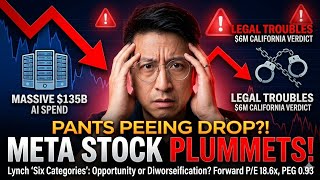
So, here's the number that got everyone talking. On March 26th, Meta's stock just plummeted over 5% for a company that big, that kind of drop wipes out billions and billions of dollars in value. It definitely gets your attention. In fact, the reaction was so intense, one source we looked at actually called it a pee-pants drop.
I mean, that's a pretty blunt way to put it, right? But, it tells you this wasn't just some small dip. This was pure unfiltered panic on Wall Street, and that panic is exactly what we need to dig into. So, you have to ask, how does a tech giant like Meta, a company that's so embedded in our lives, suddenly go into a free fall?
Well, it turns out it wasn't just one thing. It was this powerful, kind of perfect storm of two major problems hitting at the exact same time. Okay, so the first major shock to the system, it came from a courtroom. And this wasn't just any legal case. This was a decision so big, it could potentially change the entire game for social media.
Let's get into the specifics here. A jury basically said, "Yep, Meta was negligent." They decided its platform was intentionally designed to be addictive, and that it was a substantial factor in causing mental health problems. Now, the $6 million award, for a company like Meta, that's pocket change.
But, the money isn't the point. The point is the precedent. This is the first time ever a company has been found liable not for what people post, but for the fundamental design of its platform. That is huge. And you might be wondering, "But, wait, what about Section 230?" That's the law that usually protects these companies.
Well, this is the clever part. The lawyers found a loophole. They didn't sue over user content. They sued over the platform's addictive features, things like infinite scroll. And by doing that, they've just created a legal roadmap for, get this, over 2,000 other lawsuits that are just waiting to go.
That's what has investors so spooked. They're seeing a potential legal avalanche. So, as if a potential legal earthquake wasn't enough to deal with, here comes the second reason for the drop. And it all comes down to the absolutely colossal amount of cash Meta is burning in the great AI arms race. Just look at this number, $169 billion.
That's the high-end estimate for Meta's total expenses in 2026. It's a number that's so big, it's kind of hard to even wrap your head around. And it signals a massive company-altering bet on the future. And where's a huge piece of that money going? Right here, up to 135 billion in capital expenditures.
Now, this isn't just for, you know, keeping the servers running. This is for building a truly gigantic AI infrastructure. Meta's in an all-out war for AI dominance, and wars are expensive. So, let's put ourselves in an investor's shoes for a second. You've got these skyrocketing costs from the AI race on one side, and you've got this brand new, massive legal risk on the other.
You're looking at this gigantic bet Meta is making, and you're starting to get really nervous, asking, "When are we going to see a return on this? Or are we?" Okay, so the market is clearly full of fear and uncertainty. But, to figure out if there's an opportunity hiding in all this chaos, we're going to bring in an expert.
We're going to look at this through the lens of the legendary investor Peter Lynch. He had this brilliant framework for analyzing companies, especially ones in confusing spots, just like this one. See, Lynch didn't just look at what a company does. He sorted them into these six basic categories, based on how they behave as stocks.
You've got your big, steady stalwarts, your explosive fast growers, your beaten-down turnarounds, and so on. The whole trick is to figure out which box, or boxes, a company really fits into. Now, here's where it gets really interesting when you look at Meta. It doesn't just fit in one box. It's a stalwart, for sure.
I mean, it's a fundamental part of the internet. But, it's also a fast grower, because its AI-driven ad business could just explode. And, hey, after falling 30% from its high, it kind of looks like a turnaround story, too. Oh, and its mountains of data, and its Llama models, that's a classic asset play.
This hybrid nature is the whole key to understanding what's going on. So, knowing that Meta is this complex, multi-category beast, how would Peter Lynch decide if it's a buy after this big drop? Well, for that, we have to pull out his absolute favorite tool, the one he used to cut right through all the market noise.
And this is it. This is his secret weapon, the PEG ratio. The idea is actually really simple, but it's incredibly powerful. It just compares the company's price tag, that's the PE ratio, to how fast it's actually growing its earnings. And Lynch had a golden rule, if that PEG ratio is below 1.0, you might just be looking at a serious bargain.
Now, when we apply Lynch's logic to Meta, we get this incredible chart. Okay, so based on its earnings and a 20% growth rate, his standard entry would be around $604. A true bargain would be down at 453, but look at the bottom line. After the big drop, Meta's price of 562 gives it a PE of 18.6, which puts it squarely inside Lynch's ideal buying zone.
And this number right here, this confirms everything. You take that PE of 18.6, you divide it by the growth rate of 20%, and what do you get? A PEG ratio of 0.93. That is below Lynch's magic number of 1.0. So, according to his time-tested framework, all that fear in the market has pushed Meta's stock right into bargain territory.
Which brings us right back to our original question, but now with a much clearer picture. On the one hand, you've got legitimate, rational fear about huge legal risks and mind-boggling spending. But, on the other hand, you have a classic, legendary investing framework that is practically screaming that all that fear has created a moment of pure value.
So, which one is it? A moment of fear, or a moment of value? That is the billion-dollar question the market is wrestling with right this very second.




Comments 0