저자: JimCramer · 외국인
요약 보기
AI 데이터센터 전력·토지 수요가 지속되나 뉴욕주 데이터센터 건설 1년 금지 등 규제 변수 존재. 소프트웨어 섹터는 IGV ETF 매도 압력으로 하락, 메모리(DRAM) 강세 지속 전망. 미 국채 금리 상승 압력은 전쟁·재정적자·인플레이션 때문에 단기 해소가 어렵다는 평가. 엔비디아는 메모리(HBM) 공급이 병목이며 Rubin 양산이 2027년 이후 성장 동력이 될 것이라는 분석.
다듬은 글
5 gigawatts for building facilities, yes. But I'm just saying, you know, what they call an energy-supplied shell. A gigawatt in Salem, Pennsylvania? Why did I buy land in Upper Bucks when I could have bought in Salem? Another 100 miles and I would be a rich man. There would be. Listen, yes, now there are stories every day about farmers selling their land for data centers and making a big profit.
By the way, it is worth mentioning the state of New York. Yes. A one-year ban from the governor on the construction of new or mega data centers . We are only allowed to take sand from Corning. The best sand in the world. The best sand in the world. in the world. Yes, that's useful to know. Thank you.
Please. Um, okay, but I want to go back to those software companies because we're seeing a massive sell-off despite the good Nasdaq movement. Is this justified given these words from IBS? because of a stupid ETF that drags everything down. CrowdStrike and Palo Alto, who were big beneficiaries, their stocks will fall because all the money is in this...
Well, most of the money that's traded is in this index, which can drag everything down. What are you talking about? about IGV. And you know, I tried to watch IGV. I told management, " Listen, I'll review this IGV in a nanosecond ." That's right...Actually, I did it. I gave them So, I'll tell you what's going to happen today— it's the DRAM ETF.
Oh my God, yes. some of those profits ...You mentioned SK Hynix, Jim, but Glow Worms was up six, uh, Western Digital was up almost seven. Yeah, I mean, Glow Worms dropped a lot yesterday . Of course, they fell 100 points from the high. Uh, I know networking and security are too...Listen, I'll give you one.
Cisco. Cisco, yes. Why Cisco? I'm not one of those who are for SYY, by the way. No, I understand. Do you understand? Yes. You see, Micron went up 50. It's like...It's like the old days. increased by 55% per year. Well, this is the best Dow stock...Dow and Caterpillar are competing with each other. This is not the end.
This is an inexpensive promotion compared to others. She spent a lot of money on cybersecurity. When, as you know, they bought Splunk, which is great cybersecurity. So, Ben, if you watched my last broadcast with Johnny Day from FTSE Russell, you know she was alluding to this tug-of-war that we're seeing in the bond market because of current events.
I know that yesterday the data from Bessen and Co. came out. This obviously had an impact, but this " put option on the buyback," as you called it, is largely fading today as oil prices rise. What does this tell you? Well, this may be a consequence of the actions of the Ministry of Finance, but they are really fighting the symptom, not the cause.
So, despite yesterday's announcements, neither the Treasury nor even the Fed can, frankly, do anything about the war in Iran, the huge budget deficits, and the attendant problems ; At least in the short term, they can't do anything about inflation, especially if they remain on hold and don't raise rates.
That's why, I think, you're seeing such a short-term reaction . There is currently a strong momentum in the Treasury bond market to lower prices and increase yields. And there is little the Treasury or the Fed can do to stop it in the near term. What about short-term bonds? I mean, many people have been pointing out in the comments this morning that if they're trying to stabilize at least the yield curve control over the long term , is it now your turn, Mr.
Varsh, next week? Yes, and the most interesting thing about all this is the veritable cacophony of opinions on what the Fed's response should be, and on the merits of a pause regime compared to raising rates. If they remain in pause mode, won't this lead to the need for more drastic action in the future?
But one voice we don't hear very often is that of Kevin Warsh himself. So I think the pressure will start to build a little bit, whether it's around Jackson Hole and his speech there, or before the September meeting. If the press conference is not canceled, which I do not expect, there will be much more pressure to hear from Varsh himself.
In the meantime, of course, we rely on other Fed speakers to understand what their reaction will be. What about the correlation with stocks, Liz Ann? I mean, you talked about the correlation being in negative territory, but you say that this supports the thesis of the end of the era of " great moderation" and a return to what you call the " temperamental age." What does this mean?
Yes, this is a topic we have been writing and talking about for several years. So, the term “Era of Great Moderation” was proposed by Ben Bernanke, and it refers to the period from the late 1990s to the COVID-related inflation spike in 2022. It was an era of massive globalization , very low inflation volatility, little economic instability, and a generally disinflationary backdrop , which meant favorable interest rates and profitability that depended more on growth than inflation.
So, higher returns through higher growth without the associated risk or inflation concerns—this is a great backdrop for stock markets. So you had a positive correlation between returns and stocks. If we go back 30- odd years before that, which we called the " temperamental era," it was the period from the mid- 60s to the late 90s.
And for almost this entire period, bond yields and stock prices moved in opposite directions, as bond yields were more dependent on inflation. So, higher returns due to higher inflation without necessarily stronger growth are negative for stocks. This obviously changes the relationship between stock prices and bond prices, making it easier to use diversification within a simple spectrum of stocks and bonds in that temperamental era.
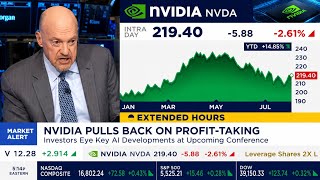
In the era of great moderation, this was a typical environment, uh. Nvidia is approaching another major earnings report, but investors are no longer asking the simple question of whether demand for AI is strong. They already know that it i can continue to expand at such an extraordinary pace. And one of the most obvious places to look for this answer is the memory market.
Memory has traditionally been one of the most cyclical parts of the semiconductor industry. When demand increases, prices rise. Manufacturers are responding to this by increasall. The margin shrinks and the cycle restarts. But this AI cycle creates a slightly different situation. Today, AI becomes especially important as advanced AI accelerators require huge amounts of data to move quickly between compute and memory.
And the supply cannot be increased overnight . New production facilities take years to build. Modern equipment takes time to install, and production must undergo certification. So, even when memory companies are making excess profits, additional supplies may remain limited for an extended period. This is why memory shortages have become one of the biggest potential bottleneck.
When the profits become extremely attractive, eventually an offer appears. It's just how the market works. A margin of 80% or 90% does not remain unnoticed for long. Other manufacturers see opportunities and are starting to invest. So the important question is not whether supplies will eventually increase.
They will increase. additional supply. And now there are several reasons to believe that demand may remain high. Hyperscalers continue to spend heavily, and AI models are becoming increasingly complex. Businesses are starting to implement AI into real-world applications. And in the future, we are talking about autonomous vehicles, robotice are not small applications.
This is something that can require huge amounts of computing power. Huge amounts becomes especially important. It doesn't just sell the next generation of graphics processors . The company is building an increasingly comprehensive platform for AI computing. And its next large-scale architecture, Rubin, is entering production.
And this is an important milestone. For months, investors have been watching to see if Nvidia's next-generation roadmap would translate into actual hardware deployments. We are now seeing evidence that this transition is happening. If Rubin successfully launches production, it could be a major driver of Nvidia's revenue growth through 2027 and beyond.
But Nvidia faces a very unusual problem. It is not demand that is the main constraint, but supply. And memory is one of the key elements of this supply equation. If Nvidia can't provide enough high- bandwidth memory, it doesn't matter how many customers want its systems. Systems still need to be built.





Comments 0