
저자: JimCramer · 외국인
요약 보기
Cramer는 고금리 속에서도 경기가 생각보다 나쁘지 않다고 주장하며 서비스업·주택 회복 가능성을 언급하고 나스닥 숏은 과도하다고 봄. Broadcom·Arista 등은 하락 시 매수 기회라고 언급. 채권 측면에서는 Fed 추가 인상 가능성과 10년물 약 5% 수준을 언급하며 장기채 비중 확대에 신중하고 단기·중기 상품 선호. AI 산업은 소버린 AI·데이터 통제 이슈가 부각되며 엔비디아가 컴퓨팅 수요의 중심에 있다고 설명.
다듬은 글
Will keep Home Depot or Target low . What if Walmart does better at the end of the week? I see the chaos in data centers today. This can be a little confusing. If Robert released such figures, it should be considered a slowdown compared to the previous high growth rates. Higher rates may force tech giants to be more careful with spending, but I'm not going to turn my back on this group.
Consider me a buyer there. All I can say is that ultimately we are a service economy. If the service sector is doing well, don't be too pessimistic. Two- thirds of our economy could feel better. Yes , we want to see a recovery in the housing market. When you buy a house, there is a high chance that it will need repairs or renovations.
Can you imagine if the housing situation actually improved? So, Toll Brothers reported on the results of the quarter and issued quite good numbers. Higher income, higher home sales, higher margins despite rising interest rates. Do you see the pattern I'm talking about? I argue that things are not so bad.
That everything is not so bad at all. And that the situation can improve. Not everyone goes bankrupt, not everyone is "erased" from the market . And that short position on Nasdaq looks like madness, considering that many things in the current environment are not so bad. Here is the summary . I understand that " not bad" is not a call to action, but you are definitely getting better prices than you would have in a good situation, so maybe it's worth thinking that way .
It's an opportunity, and the costs seem reasonable , even if it's likely not quite the bottom of the market. I praise the market quite sparingly, but it is praise nonetheless. Moving on to Chris from California, Chris. Hey Kramer, this is Chris from Lake Arrowhead, California. Nice to see you on the show, Blue Packager.
Okay, agreed. What's new ? I've already made back my initial investment from this promotion, so I'm playing with casino money, but tell me, Jim, what should I do? Should you hold, sell, or buy more Snowflake? You shouldn't sell that Snowflake, man. This is a very hot stock that will obviously bring a pleasant surprise, so I even doubt whether it will be a surprise when they show growth, but I think you should definitely hold it.
Congratulations. You see, this guy, Chris, he made real money. We can sit here and play around with S&P, S&P, S&P, just talk about S& P, S&P, S&P, but you know what? If you do that, then why be on TV? John from Florida, John. Boo-ya, Jim. Boo-ya, John. What is happening? So, I'm a little disappointed.
My stock has lower lows, lower highs, no immediate catalyst. I don't know whether to buy more or get out of it. What are we going to do with our Broadcom? Oh, come on, come on. Now, now come on, let me, let's calm down a little. This is Hock Tan. This is one of the best indicators of all time. We can't be so shortsighted as to sell good things.
I come back to this with Jeff Marks every day. I have a program, I have a program, he says, " Jim, she's not moving today." But it is growing. It grows in the long term. The graph, if I did this and we could see the graph, which we definitely can't, it would show you a graph going up. And this graph—AVGO, the old Avago, which is now Broadcom.
I want to after that call. I want to go to Alaska right away. Let's move on to John in Alaska. John. Hi, Jim, how are you? Not bad, John. Thank you for asking. How are you? I'm fine. I'm fine. I just wanted to talk to you about the stock. They are called Arista Networks. Ticker ANET. I hear they're big in the AI sector for cloud networking services.
But I know they trade at a pretty high valuation, but their financials have been looking good lately. I just wanted to know your opinion on these stocks. Okay, this is Jayshree Ullal, who is one of my idols. I had her last week. I can't believe how well they are doing. I saw the stock drop five percent.
I said to myself, "If they were to go down to 20, you know what I would do? I would call the club and say, This is shark protection. Yeah, because Jayshree Ullal, Ullal, Jayshree, I have to just tell you, Jayshree is one of the best CEOs in America, and if these stocks go down, just buy them. At these prices, even a little optimism seems like an opportunity that I'm not going to miss.
On "Mad Money" today: Why is Cadence Design Systems losing favor on Wall Street? I'm going to talk to the CEO to see what he thinks about the AI opportunities for the company, because they're very promising. mental perspective, and also the level of restriction or stimulus. So this comment of his makes it clear that monetary policy has not really been restriction.
It's actually been stimulus. They're gradually winding down that stimulus, and that suggests that there's room for more, which is what we saw on dot plot. You know, we treat all dot plots with a certain amount of skepticism. We know that Fed Chairman Warsh is not a fan of them , but it seems like most officials agree that at least one more rate hike, maybe this year, and there are a number of officials who think that another hike next year may be necessary.
So it all depends on the inflation outlook, if it doesn't accelerate significantly. The Fed may only have to raise rates once or twice, which is a little less than what the markets are expecting right now. Okay, so a quick question, Colin: As a practical move for investors who might want to strengthen their positions in fixed income, you've seen some bearish flattening of the curve, right ?
Or at least a flattening of the curve that's primarily driven by short-term rates catching up with long-term rates. Is that an additional reason to cut duration, not increasing it? Yes, we are not yet in favor of a strategy in favor of long duration. That has been our view for some time , and we recommend keeping duration below the benchmark average.
I don't think now is the time to go long. Yes, the yield is attractive: 5% on the 10- year, or about 5%, which is the highest level in the last 19 or 20 years. It's hard to ignore those numbers, but there are many factors that can still push yields up a little bit from that level . And historically, we look at when the 10-year yield peaks ?
Is it at the beginning of the cycle? And we don't know if it's actually a cycle, and how many more hikes they're going to need. But do you want to go long when the Fed is just starting to raise rates, or near the end or the last hike? And it seems more like the latter. So with that outlook, we we continue to favor short- and medium-term instruments.
You hit the nail on the head: the 2-year Treasury yield is around 4.6%, you know. Before we get started, sign up for more AI and stock market insights. The AI industry is entering a very different phase of development. The focus is no longer limited to building bigger and more powerful models. The big question now is: where will the value of AI actually go?
And one of the most important developments is the growing discussion around sovereign AI. For enterprises, it’s a fundamental question of control. Companies have vast amounts of confidential information, customer data, internal documents, business processes, and their own intellectual property. And when they implement AI into these systems, they need to know exactly where that information is being processed and who controls the underlying technology.
This is where the Palantir discussion comes into play. Many companies initially approached AI with a simple goal of getting it up and running as quickly as possible. technology, but after the first wave of adoption, they have become more cautious. They are asking: Who owns the data? Or who has access to it and where it is stored?
And how much control does the company retain over the AI system that uses it? And this shift is important because it challenges the idea that AI will automatically replace existing software. AI still needs an environment to operate in, enterprise applications, data infrastructure , security, and software that connects AI capabilities to real business processes.
And this is one reason why companies like Salesforce and Oracle remain important in the AI story. The economic impact of AI is not necessarily limited to the companies that develop the basic models. There are several layers involved. The models , the cloud, the data, the software, the security infrastructure, and the applications through which the business actually uses AI.
Another important factor is distribution. Consider Meta. The company already has a huge global user base, which gives it a significant platform to deploy AI products. So even if one group of AI companies slows down, other tech companies can keep investing. The race doesn’t necessarily stop because one participant changes their pace.
That’s why open-source models and open weights are important. It’s not just about achieving the highest scores in tests anymore. Businesses are also concerned with affordability. They’re concerned with cost. They’re concerned with deployment. They’re concerned with control over the data, and the ability to integrate the model into their existing infrastructure.
That creates a much broader competitive landscape. Companies building advanced models are competing with each other, but they’re also competing with open models, enterprise software developers, cloud providers, and tech giants with huge user bases. There’s also the issue of regulation. Some AI leaders argue that advanced systems need stronger protections.
Others argue that slowing AI could create economic and strategic disadvantages. The debate is likely to continue, but despite regulatory discussions, the investment cycle around AI infrastructure remains constant. And then you become one of the central companies in that cycle. The reason is because of the huge amounts of computing required for modern AI.
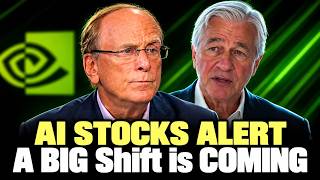
Training models requires significant computing resources, and running them at scale requires even more infrastructure as the number of users grows. So Nvidia's position in the accelerated computing space has put it right at the center of this demand.




Comments 0