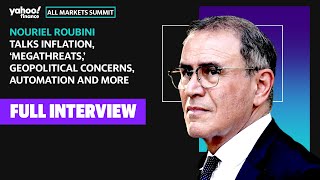
저자: NourielRoubini · 외국인
요약 보기
결론: 루비니는 향후 10년 내 스태그플레이션과 지정학적 분열로 인한 위기 가능성을 강조하지만, 특정 자산의 1~3개월 가격 방향은 언급하지 않았다. [거시 경고 · 지정학] 러시아-우크라이나 전쟁, 미중 신냉전, 이란 핵 협상 교착, 대만 문제 등으로 지정학적 충돌이 확대될 수 있다고 봤다. 미중 간 기술·데이터·공급망 디커플링이 진행 중이며 향후 5~10년 대만 문제가 핵심 촉발점이 될 수 있다고 전망했다. [스태그플레이션 · 공급 충격] 코로나, 러시아의 우크라이나 침공, 중국 제로코로나 정책이라는 3대 음(-)의 공급 충격이 현재 인플레이션과 성장 둔화를 동시에 유발한다고 설명했다. 1970년대보다 상황이 더 나쁘며 과거 고성장·저인플레 시대(Great Moderation)는 끝났다고 평가했다. [공급 측 중기 요인] 탈세계화, 제조업 리쇼어링, 고령화, 이민 제한, 기후변화, 사이버전, 팬데믹 등 11개 중장기 요인이 잠재성장률을 낮추고 생산비용을 올린다고 봤다. [부채 · 통화정책] 공공·민간 부채가 역사상 최고 수준이라 중앙은행이 재정적자를 화폐화할 수밖에 없고, 이는 인플레이션과 부채 위기를 동시에 낳을 수 있다고 경고했다. [AI · 자동화] AI와 자동화가 생산성을 높이지만 서비스·창의 직종까지 일자리와 소득을 잠식할 것이라고 봤다. 자율주행은 운전직(우버·리프트 기사 등)을 대체할 것으로 예상했다. [포퓰리즘 · 민주주의] 소득·부의 불평등 확대가 극우·극좌 포퓰리즘과 권위주의 부상을 낳고, 이것이 탈세계화를 촉진한다고 분석했다. [기후] 현재 경로상 2100년 3도 상승이 우려되며 ESG 상당수가 그린워싱이라고 비판했다. 글래스고 COP는 실패였다고 평가했다. [결론 및 전망] 책 말미에서 디스토피아 시나리오가 유토피아보다 더 가능성이 높다고 본다. 위기가 '내일'이 아닌 '오늘' 현실화되고 있다는 것이 그의 결론이다. [출연자 전망 요약] 특정 종목·지수에 대한 단기 방향 예측은 없고, 장기적으로 스태그플레이션·부채위기 경계 입장.
다듬은 글
nuriel rabini is a best-selling author and economics professor at New York University's Stern School of Business he doesn't consider himself a pessimist that his warnings about global economies have earned him the nickname Dr Doom and rabini's predictions have been spot on among other events he foresaw the global financial crisis of 07 and 08.
because he's been so right everyone from pundits to policymakers wants to hear what he has to say as the New York Times put it he's the Seer who sees it coming rubini's new book Mega threats is sounding the alarm about the next great crisis which he says could be bigger than anything we've seen before noriel great to see you congratulations on the new book I guess Mega threats a little bit gloomy and doomy but realistic as you like to say you have 10 mega threats that we're facing I want to get into all of them but I was struck by the very last two sentences of the book which says fasten your seat belts it's going to be a bumpy ride through a very dark night so just collectively is the picture right now really that bad well I just spent the last few days in Washington for the annual meetings of the international monetary fund and the World Bank and there are people literally started to talk about the risk of World War III literally because we are in a geopolitical depression one of the many mega threats in the book is one that we have now a confrontation between us and the West on one side and a number of revisionist powers is not just Russia it's China it's Iran North Korea and even Pakistan and effect is an ally they're essentially challenging economic social and political order that the US and Europe and the West created after World War II we have a cold war and there's a chapter of the book about the new Cold War but there is right now that this cold war eventually ended up into a hardware there's already Hardware in Russia and Ukraine this conflict can escalate and get NATO U.S and allies involved it's a risk Russia is seriously threatening using tactical nuclear weapons the negotiation between U.S and Iran on the new nuclear deal are not going anywhere and Israel is saying if they're going to become nuclear and they're one step away from it we can attack them we'll have another major shock and look outside within us and China on the south and east China Sea and Taiwan and so on we are also unfortunately the Collision Course with China so right now it's a cold war it's getting colder and economic consequence are severe the globalization decoupling fragmentation of the global economy the globalization balkanization of Global Supply chains trading Goods in services in movement of Labor Capital technology that information is going to be in Split very divided world and they're going to be a world in which will be more inflation less economic growth because instead of producing the most efficient parts of the world we're now talking about French ordering about secure trade rather than free trade that is a fairly gloomy picture and there are 10 mega threats in your book let's talk about economics at first stagflation which of course is inflation and a stagnant economy at the same time which we saw in the 1970s but you said that what we're going to be going into right now makes that look like a walk in the park why is that well we are having like in the 70s a number of negative Supply shocks uh three of them currently one was the kovid shock that led to a shutdown of economic activity bottlenecks in Global Supply chains reduction in the labor Supply and so on second one was the Russian invasion of Ukraine that led to a spike in Energy prices food fertilizers Industrial Metals and third one this year is the continuation of the zero tolerance covet policy of China those have led to a reduction in growth and increase of cost of production and we lose monitoring the fiscal policy have caused inflation and now a sharp slowdown of growth were added towards the recession however in the book what I point out is that the era of great moderation where growth was okay inflation low 2 percent is over and now we're going towards an era of what I call great stagflationary and that instability and crisis on the supply side there's not just the three negative Supply shocks in the book I identify 11 other ones that are more medium long term they're going to reduce potential growth and increase cost of production just to be brief first of all deglobalization and protection is secondly re-shorting of manufacturing from low-cost China to high cost Europe and U.S French shorting three agingal population not only in advance economies but also in major Emerging Markets like China like Russia like South Korea and so on young people produce and save and consume less older people don't produce in this safe that's inflationary four we are having restriction to migration in the past migration from south to North from Port to reach was keeping a lead on wage growth fifth we have a decoupling between us and China six a broader geopolitical depression seven we have now climate change that in many ways creates a reduction in growth and increases the cost of food of water of energy and fuels and so on addition with other shocks we have cyber warfare we have pandemics going to be coming more frequent and more virulent because of climate change climate change causes more zoonotic diseases and finally we have a backlash against liberal democracy and populism of extreme right on the left because there is a rise in income and wealth inequality authoritarian aggressive autocrats purpose of the right the left are coming to power they blame the rest of the world and they go to war like that in Russia we're also weaponizing the US dollar as a tool of National Security and foreign policy that oiling system of the global international monetary system is breaking down and that's going to lead to more friction more cost production less economic growth so on the supply side these are 11 factors that are medium long term and on the demand side were under a mountain of that not just public debt but also private that there's a death trap so central banks have no option but monetizing these fiscal deficits and like in the 70s we have negative Supply shock we monetize fiscal deficit when done with inflation recession stagflation but we end up also with that crisis why so in the 70s we had negative Supply shocks but that ratios in advanced economies were low so we didn't have a debt crisis after the global financial crisis where the debt crisis mortgage-led housing Banks but we had a negative demand shock and a credit crime so we had deflation so we could have massive monitoring physical easing today we have the worst of the 70s with negative Supply shocks and the worst of the post GFC period where we have right now that ratio that are higher than ever in history let me ask you a question we're going to have a establationary debt crisis right often recessions or downturns are caused by a lack of demand but you're saying that this could be caused by Supply constraints is that correct how unusual is that well in the 1970s where two negative Supply shocks one was the Yom Kippur war between Israel and the Arab states that led to a spike in all prices in 73 the second one was the Iranian Revolution that led again a spike in all prices this time around this pack is not just in all prices it's in all prices is in natural gas is in food is in fertilizer is in Industrial Metals semiconductors Global Supply chains have bottlenecks they have not been resolved the zero tolerance policy of China is leading further to these Supply bottlenecks and as I pointed out these are just in the short run Russia Ukraine covet China there are 11 other forces that are medium long term that are all of them also negative Supply shock reducing growth increasing the cost of production with loose monitoring fiscal policy they lead to inflation recession data for stagflation now another problem you see out there also an opportunity is artificial intelligence a lot of people are pinning a lot of Hope on AI but you see potential downside there yeah the downsides are that while AI machine learning robotic automation increases the economic potentially it also leads to losses of jobs of Labor income and initially people thought would be only routine jobs that are mechanical like some kind of low value added Blue Collar jobs but increasing right now even cognitive jobs that can be divided in a number of tasks are also being automated and even creative jobs that are now AIS we can create actually a script of a movie or make a poem or write art or paint or even a piece of music that soon enough is going to be top 10 in the billboard magazine chart where getting to a point in which AI is going to disrupt massively all sorts of jobs just give me one example it's only a matter of time until we're going to have autonomous vehicles it's great 8 because there are about 300 000 people die every year of car accidents two million web serious injuries if we can even reduce that by 99 social is a great thing but you have what five million Uber and Lyft drivers five million trackers and Teamster their jobs are going to be gone for good which kind of jobs they're going to get initially people are in agriculture then they move into industry then they move into Services now most of the automation is occurring in services including transportation let me ask you about deglobalization because it seems to be a big theme and it's obvious there's a lot of authoritarian regimes in the world which are cutting off um you know the WTO all those agreements why is that what is it in in the human beings mindset that goes from democracy to authoritarian and back and forth it seems over time why does that happen principles there is a backlash against globalization because globalization led to benefits the economic pie grew but like technology it led to wieners and losers and we did not compensate or give new jobs to the losers lots of people in low value added industry but now even services are losing their jobs and income that's why there's a backlash there are also environmental issues so now there is geopolitics like French Shoring and secure trade and so on and so on I think that the rise of these authoritarian regimes about extreme right and left and by the way it's a Putin in Russia is erdogan in Turkey is in Poland is urban in Hungary is Melania now in Italy is the Swedish Democrats right now that just one in Sweden is the brexit decision it was on the right of course the election of trump and there are also populists of the left in Argentina there used to be published on the left in Venezuela but in the last year in Peru in Chile and Colombia and most likely in elections in Brazil populists of the extreme left are going to come to power I think that is driven mostly by economic malaise when there is a rise in income and wealth inequality and we've seen it across the world in advanced economics Emerging Markets those who are left behind it doesn't matter whether they vote for the right or the left does the world to the right are usually social and religiously conservative to the world for the left tend to be liberal but on economic issues they're nativists they're nationalists they're against migration the greens free markets the agreed the forces of economic reform why because they're left behind and they blame the elites economic Financial political for for leaving them behind that's why there is a severe economic reason behind this backlash against liberal democracy and extreme population of the right on the left but as we know purple is what the right and left doesn't lead to Economic Opportunity eventually it's to inflation stagnation and financial disaster in default how worried should we be about the U.S China relationship it's a very serious issue I believe that we are already for sure in a cold war and will have a decoupling between us and China trade in Goods in services in the movement of Labor of capital Investments but more importantly right now everything is important is to do with technology data and information that is from a national security point of view severe and important so the decoupling is occurring the cold war between us and China in terms of overall political and geopolitical relations is becoming worse and the reason why she's in pain right now is Seeking a third time and possibly a fourth is not because he wants to pass to history as the man will reformed China is because he wants to pass to history has demanded United Mainland with Taiwan so I believe the next five to ten years is going to be the time where there's going to be a confrontation between us and China on the issue of Taiwan and that could be a trigger of this cold war becoming a hot War we don't know whether it's going to happen how's it going to be resolved but that's where we get to world war three among other things but in some sense World War III has already started it started in Ukraine because this conflict has broader implications that going well beyond Russia Ukraine is the beginning of something else you didn't mention climate change so I'm assuming you're not worried about that well there's a full chapter about an uninhabitable Planet about climate change and it's a long discussion but the reality there's a lot of talk about doing something about climate change there's a lot of talk about ESG investment environmental social and governance and so on but the reality there's a lot of it is greenwashing a lot of it is green wishing a lot of these green fig leaves or people who say we're going to do something government firms individuals they're doing nothing Glasgow and cop was a total failure at the current level we're headed towards an increase of temperature by the end of this Century of three degrees even two will be a disaster three means that half of the world will be in places that are either underwater or too hot to live and if you worry about a few hundred thousand migrants from Central America moving here wait until they be not a few hundred thousand but millions or billions of people who have to move from places that you cannot live to other parts of the world that's going to be an economic and financial disaster all these Mega threats scenario yes what can we do about them well in the book after The 10 chapters where I discussed them one by one in each one of them there are solution there are two parts for the future one is dystopian and the other one what I call utopian or less dystopian in the dystopian one of course all these things feed on each other and there's an interaction between each one of them and then we end up into essentially disaster we can destroy each other with a nuclear war with geopolitical collapse with climate change with financial meltdowns with collapse of liberal democracy with pandemics and you name it there's another part in which we have policies at the national level and international level slowly slowly resolve this problem and therefore the future maybe it's not utopian but we avoid the disaster it's still a challenged future is one that there's lots of trouble but we manage it however in the epilogue of the book after this 12 11 12 chapter I say from my point of view I believe that the dystopian one as of now is more likely than the utopian so the utopian of course is the desirable one the question is whether the political will domestically internationally to cooperate and collaborate to avoid them coming well done in disaster I fear not quick two-part last question what do you think of the nickname Dr Doom which is what people call you number one and number two are you ever optimistic first of all uh I usually say the doctor really is not Doctor Doom but is more catchy to be called Dr Doom okay and I think that warning about the risk is very important because until now we've been kicking the car down the road we've been sticking our head under the sun like ostrich and right now we're facing major Mega threat economic monetary Financial social political geopolitical environmental health trade and technological and unless we address them we're headed towards disaster so it's worth to have people like myself who warn you about the risk and for every problem there is a solution but at this point we cannot keep on kicking behind down the road we're reaching the point in which these things are going to materialize in a way in which not only in the next 10 years each one of these Mega threats that I discuss about the next decade is materializing today if you look at them one by one that inflation stagflation environment geopolitics pandemics engineering as things are happening today so we have to worry about it today not about the future noriel rabini thank you so much for joining us





Comments 0