
저자: Money Talks · 외국인
요약 보기
펀드 매니저 로렌스 레파드는 40조 달러 규모의 미국 부채와 달러 신뢰의 약화를 경고하며, 화폐 체제가 임계 상태에서 급격히 무너질 수 있다고 주장한다. 그는 공식 인플레이션 수치가 실제 생활물가를 제대로 반영하지 못한다고 보고, 연료와 보험료 등의 가격 상승을 근거로 든다. 또한 AI 인프라 투자가 빚으로 조달되면서 코어위브 채권의 부도 위험이 커졌고, 이것이 연준에 새 돈을 찍으라는 압력을 키울 것이라고 분석한다. 그는 자산 방어를 위해 금과 비트코인을 함께 보유하는 것이 유효하다고 말하며, 그레셤의 법칙과 짐바브웨 사례를 들어 달러 체제의 장기 위험을 설명한다. 다만 이는 발표자 개인의 견해와 시나리오이며, 영상의 전망과 수치는 원문 주장에 따른 것이다.
다듬은 글
What happens when a country is $40 trillion in debt and its own citizens stop believing in its money? One fund manager believes America can already smell the smoke, and says most people will flee when it's too late. In this video: smoke in the cinema, lies about inflation, the AI debt bubble, gold vs.
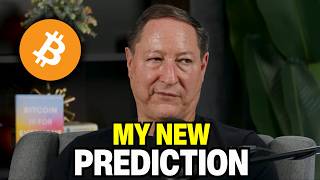
bitcoin, and the Zimbabwe scenario. Stay until the end , because he will also name an institution that he would close tomorrow. His name is Lawrence Lepard. He runs Equity Management Associates—a fund focused on gold, silver, and Bitcoin. He has an MBA from Harvard and wrote the book " Big Print: What Happened to America and How Safe Money Will Fix It." Back in 2008, he spent $200,000 of his own money on a full-page newspaper ad for Ron Paul.
Since then, he has constantly warned about the dangers to the dollar. He is not a headline-chasing trader. He is a long-term investor who has staked his career on one idea: the dollar is printed until it is destroyed, and safe money ultimately wins. Chapter 1: Smoke in the cinema. So, how does a currency actually die?
Not slowly. Lepard says this happens instantly when the system enters a state that physicists call critical. He explains this using the example of a crowded movie theater . Listen to this. When the slope of the curve gets steep enough, I mean, try to think of it as a change in critical state. Well, it's fine if you're told that you're safe in a movie theater, that there'll never be a fire there, and that it's completely fireproof and all that.
Yes. You continue to sit in the hall, a little smoke appears, and you say to yourself : "Ah, this can't be smoke." You know, yes , it smells like smoke, but it just can't really be smoke. But eventually, you start coughing and realize: "I don't care what they've been telling me for years that there's no smoke and it's impossible." " This damn movie theater really is smoky, and I'm going to die if I don't get out of here right away ." Truth?
Or let's take the avalanche metaphor. Like, "Damn, it's roaring and coming straight at me." Oh my God, it's better to run, or, you know, like during a tsunami. It's the same. I mean, at a certain point in time, what causes hyperinflation, the loss of value of a currency, the acceleration of Gresham's Law as people move from one currency to another, is the realization, the firm belief that the situation cannot be fixed, that they cannot turn it back, that we have passed the point of no return.
And then you go into " every man for himself" survival mode, right? So the reason it hasn't happened yet is because at every turn the authorities assure us, "Oh, don't worry, we have everything under control." They have their "blue teams," "red teams," they have war games, and very serious people tell you that it will never happen here.
Do you understand what I mean? In addition, they control the futures markets. They have many tools to prevent this. But believe me, they calculated these scenarios . I talked to people in the U.S. Department of Defense who read my book and said, "Look, we've been working on the threat of hyperinflation because it's a threat to the country." Their goal is to do it in a more controlled manner if we are going to move in that direction, and I hope they succeed, because , frankly, no one wants to go through hyperinflation.
This is terrible, painful and unfair. Hmm . 100%. Yes. But before we get to that, there could be persistent high inflation that doesn't seem to end. I hope this encourages everyone to say, "Look, this is going on all the time. " If we don't get this under control, it could get even worse. We must be determined and solve this problem now.
We need to hold a monetary conference, return to stable money and a balanced budget. Pay attention to what he actually says. This kind of crisis is not about numbers changing overnight. It's about changing beliefs overnight. The debt was there all this time. The smoke was there the whole time . The moment changes when people stop convincing themselves that everything is fine.
And he says that even the defense department calculated this. Their hope is for a controlled fall, not a panicked escape. This idea has a name— Gresham's Law. When people lose trust in a certain currency, they spend it as quickly as possible and hoard a better one. Think about what this means in practice.
If you believe your dollars will buy less next year, you spend them now. You buy gold, land, bitcoin, anything real. And the faster everyone does it, the faster the dollar loses value. This is the breakdown that Leppard is talking about. One day people put up with inflation, the next they run away from it.
For decades, no one needed to think about it. The authorities have constantly assured that everything is under control, but here is a figure they cannot hide. As of October 29, 2026, the US national debt was $40.59 trillion. 40 trillion, and interest is accrued on every one of those dollars . And the bigger this pile, the more new money is needed just to stay afloat.
This is the theater Leppard is talking about, and he believes the smoke is already in the room. His hope is a planned exit, a monetary conference. Stable money, a balanced budget, before the mob decides everything itself, which brings us to the second chapter—the inflation lie. Official data shows that inflation is under control.
Leppard says that number isn't even close to being true. It indicates the prices you actually pay: groceries, fuel, insurance, diesel. And he has a warning for those holding Bitcoin, gold, or silver during the volatility. See what he says next. By the way, as you know, as I know, and as most of your listeners know, none of these inflation numbers are truly accurate .
So they're lying to us about all this, right? And the idea that inflation here is 3%. This is like, what? I can't remember many things where it's this low. Products are more expensive than that, fuel is much more expensive than that. Because of the war, you know, insurance, whatever. This affects, you know, diesel prices increased by 75% last year.
And these are not 3 percent figures at all. So, um, you know, and by the way, that's why I think the economy can withstand these interest rates. I guess if you really wanted to curb inflation, rates would have to be much, much higher. But still, I think Vors and the others know that if they raise them much higher, something will break.
They really feel trapped, you know? And we're just...Unfortunately, we're just spectators in this show. Yes. But you know, if you have capital with a multi-year planning horizon and you can withstand volatility, and that's probably the hardest thing—withstanding volatility. Well, let's say Bitcoin, Yes.
you know, it's not very fun to buy it at 126 and watch it drop to 58. And gold, I mean, if you came into gold late and bought it at 5,000 and then saw it drop to 4,000, that's not very fun either. Or silver was even worse, from 120 to 60. But, Yes. um, you know, if you look at it in a multi-year perspective, and I think the person that I look up to a lot, and I strongly recommend that others Google him and watch his videos, is Jeff Curry.
He is a commodities analyst who was previously an analyst at Goldman Sachs . He is probably one of the best commodity market analysts in the world. And his view is that we have overinvested in financial assets over the last 20 to 40 years of deflation. We underinvested in real things. And what we're seeing now is a kind of molecular revenge.
Do you understand what I mean? Because you can print paper, you can print financial instruments. Okay, let it be. But you can't print oil, diesel, copper, or rare metals. I mean , Mhm. All of this requires capital, investment, and a long time to bring it to market. And we have a shortage of all these resources.
Robert Friedland—probably the best copper miner in the world, MGM. says, "Look, if we want to continue the AI trend and build what we're talking about, we're going to need three times the copper mining capacity." " And don't worry, we'll get it." After all, for a certain price, anything can be done, right?
The money will go to the right places to build those mines and extract copper. But you know what? To build these mines, the price of copper has to increase, which is an inflationary factor. Yes. The same goes for silver. After all, silver is also used in AI. Silver is used in batteries, it is used in solar energy.
I mean, the price of silver, in my opinion, will be much, much higher than it is now. I'm actually buying it right now. This is it. So , is he right about the numbers? The latest official report covers September 2026 . Overall inflation was 3.7% over 12 months. But if you look at the same report, gasoline prices rose by 34.2%.
Fuel oil prices rose by 74.2%. This is almost exactly the 75% that Leopard mentioned for diesel fuel. So the official average is not wrong within its own limits. He simply mixes what has barely changed with what has grown rapidly. And if you drive a truck, heat a house, or farm, your inflation is not 3.7%.
This gap is why Leopard says the Fed is trapped. You raise rates high enough to really suppress inflation—and something breaks. Leave them at the current level—and prices will continue to rise. And his idea about molecules is simple. You can print dollars. You can't print copper, oil, or silver. When the money supply increases but real resources do not, prices only go in one direction.
It's the same story with copper . Building mines takes years and costs billions of dollars. Leopard says the only way to move this money is a significantly higher price for copper. And the higher price of copper is inflation. Silver, in his opinion , is the most striking example. It goes to solar panels, batteries, and chips for artificial intelligence.
That's why he says he's buying it now, which raises a more important question. What if AI did n't just drive demand for metals? What if he provoked a debt bubble? Chapter three. AI debt bubble. Every tech giant competes in building data centers, chips, power plants, and cooling systems. Much of this is paid for by debt.
Leopard believes that this is where something will break first. And he names a company that has already cracked. Listen to this. Perhaps the most likely candidate for collapse would be the entire AI infrastructure bubble. And, you know, we started to see some signs of collapse, where we saw, you know, CDS on all these debt obligations, or I mean, first of all , this whole bubble had absorbed a huge amount of capital.
Mhm. And that just makes money more expensive. And the only thing the Fed can't afford is expensive money when we have $40 trillion in debt. So, um, you're starting to see some cracks in that dam as the credit default swaps on all these debt issues have gone skyrocketing. And then you saw CoreWeave, their bonds and stocks took a serious hit because people crunched the numbers and realized that these neo-cloud businesses were trading on a future that was still unknown or not.
I mean Yes. This reminds me a lot of dot-coms, artificial intelligence is a wonderful tool. We use it constantly. You and I just used it to determine the amount of debt they bought out, but in our opinion, in my opinion, it won't create enough productivity fast enough to save us from the debt load that we have.
You know, it's going to take a decade for this to seep into the system; so that all the productivity associated with it becomes part of the economy. So Yes . And I think AI... I was listening to a seminar yesterday, and they were talking about AI, probably from an optimistic perspective, well, definitely from an optimistic perspective, given their assets .
It was a fund manager, and they were giving examples of railroads and the internet. The railroad, the internet—both were true revolutions, both changed the world, and both left investors who borrowed money too early in a difficult position. Look what happened to the railroads. Investors poured money into tracks and trains.
Many of them went bankrupt, but the country still got railways. The same thing happened with fiber optic cable during the dot-com boom. The technology survived. But many creditors don't. Lepard believes that with AI, the story is the same. A great tool, but a terrible thing to finance with borrowed money at any cost.
And the market is already pricing this risk. In mid- October 2026, CoreWeave bonds entered the default zone. The yield on their 2031 bonds rose above 16% on October 15. The cost of insuring their debt against default reached a record high of 1,195 basis points. Credit default swaps indicated an approximately 60% probability of default within 5 years.
This is what Lepard means when he says the dam is starting to crack. And here is the connection with the dollar. Every dollar that creditors demand for AI debts makes money more expensive for everyone else. But the Fed can't afford expensive money with $40 trillion in debt. So if the AI bubble bursts, the pressure to print new money will become even stronger.
So where is the investor who values reliable money hiding? Gold or Bitcoin? Chapter 4. Gold vs. Bitcoin. On the Internet, supporters of gold and Bitcoin argue for days. Le Pard considers this quarrel to be complete nonsense, and his own portfolio may surprise you. See what he says next. Yes, the gold bugs who are throwing dirt at Bitcoin are driving me crazy.
And by the way, Bitcoiners who throw dirt on gold also piss me off, because we're actually on the same team. I mean, the enemy is the Keynesians and the people who steal from all of us. And you know, look, Bitcoin will replace gold. It is better than gold in many, many ways. I've said it many, many times.
And yet, if you look at my assets today, I'm mostly invested in this category, not counting the houses I own. Um, you know, I have about equal amounts, one is analog safe money, and the other is digital safe money. And Bitcoin has much greater growth potential, but, you know, the price of that is volatility, right?
I always tell people when they buy it: you have to be prepared for it to drop 50% and you won't even blink an eye. You'll think , "Oh, I want to buy more," not "I made a mistake." Because gold, gold never drops 50%. A big drop for gold is about 20%. So... Yes, yes. So, last night I read the book because I knew we were going to have this conversation , and it's been a year since I read it.
So I took it. I was actually amazed at myself , because I...it... Do you remember most of it? Well, no, I didn't know. I'm a bit like a goldfish because I can watch movies over and over again. So reading this, I was like, "Oh, yeah, right." But you...you talked about your father , who was a pilot, and you are a pilot too.
I don't know if you fly much now, but... I don't have a valid permit right now, but I'm thinking about renewing it. Well done. Yes. I stopped flying when I had my first child, so I was really able to understand that, and in one part of the book you talked about how after a series of bad decisions, your options narrow down quickly.
And I thought that was a very apt statement. As incentive structures force politicians, central bankers, er, Scott Bessant and his ilk at the Treasury to make decisions within a narrower range of options, the likelihood that you can climb up before the abyss approaches begins to diminish , and you can't turn left or right.
And that seems to be where we're headed, does n't it? Unfortunately, this is true. I mean, that's why , you know, I think we're trapped. Look, to me this is just an observation based on history, analysis, etc., but unfortunately when I say this, people sometimes respond, "Oh, you're a pessimist." "Yes.
And I say, 'No.' I think one of the things that a lot of people unfortunately don't do is they don't know history, they have n't read it. They don't take into account the centuries-old cycles. And we're in a sovereign debt crisis right now. We have n't really had one. There's no one today who's survived a sovereign debt crisis.
No one. On a global level. The last one was during World War I, when everyone had to go off the gold standard because everyone printed too much money to pay for that war. And here we are. Half in gold, half in bitcoin . Analog safe money and digital safe money. His logic is based on pain, not loyalty.
Bitcoin has more upside potential, but by its own rule, you have to be willing to watch it fall 50% without blinking an eye. Gold rarely falls more than 20%. Think back to the moves he described earlier. Bitcoin from 126,000 to 58,000, gold from 5,000 to 4,000, silver from 120 to 60. It's painful if you bought at the peak, but for a long-term investor, these are fluctuations you accept.
So the gold portion allows him to hold on when bitcoin falls, and bitcoin gives him the growth that gold can't provide. But the main warning was at the end: the sovereign debt crisis. The last major event of this kind, he says, was during World War I, when country after country abandoned the gold standard to pay for the war .
Today, no one remembers what that was like , and he quotes the pilot's warning : "Make enough bad decisions and your options will become smaller and smaller until you can't turn left or right, and there's a sheer cliff in front of you ." So could this really happen in America? Chapter 5, The Zimbabwean scenario.
Countries like Zimbabwe and Venezuela printed money until their currencies depreciated. Leppard says America is following the same scenario. The only thing that protects us is that we are the world's reserve currency. You know what I mean? I mean, if we were Thailand, Ecuador, Brazil, Zimbabwe or Venezuela, and we did that, we know what would happen.
You get incredibly high inflation, and eventually the currency collapses. Okay, but we're not them. We're a big country with huge built-in systems, and the dollar has been around for a very, very long time. So it's going to take a lot longer for it to collapse, but we're doing the same policies that other countries are doing that ultimately led to their collapse, right?
I mean, we're doing the same things that they are doing. We have budget deficits that we can't handle. Our debt is growing. to an incredible extent. We print money to service this debt, and we're going to have to print more, which will lead to even higher inflation. And as you know, and as most people in our field know, there's something called Gresham's Law, which says that eventually, when people realize that you can't stop printing money, money becomes worthless, everyone wants to get rid of it and move on to alternatives.
That's where I think the power law of Bitcoin could really take off, when everyone starts looking for a way out because they know that the US dollar is dead. And we're moving towards that. We're not there yet, but the trend, you know, is not very good. Yes. And whether it's going to happen in two years or maybe 20, I don't know.
I kind of feel, based on the theory of the " fourth turn" and looking at the numbers, that the climax will probably come in a year and a half or two years, and definitely within 5 to 10 years. I mean, the first big money printing was during the global financial crisis. So this is 2008 and it was 3 trillion, let's say.
The second one was in 2020 and it was, you know, 5 trillion. You see, the gap between the amount of money supply, the amount of debt outstanding and the base level of money is getting bigger. We have a graph of that in our quarterly report. You know, it looks like they're going to have to print again, and pretty soon people are going to get the joke, like, damn it.
They just can't stop doing it. Yeah. And then they're going to say, "I need to own real money." I mean, one of the mistakes that I think people make, Darcy, is they see financial assets going up a lot and they think, "Well , they're not going to go any higher." And what they don't understand is that when it comes to a crisis, the answer is, yes, they can.
go higher. In other words, the dollar could depreciate to zero. And so everything goes up in price. See, “ bubble of everything” again, right? Look at the pattern he describes. The first big print happened during the 2008 financial crisis. He estimates it was about $3 trillion . The second big print happened in 2020.
About $5 trillion ; each crisis required more bailouts than the last, and each time the debt grew faster than the money backing it. That’s why he thinks a third print is coming, and why he thinks the power law for bitcoin could one day break out. His time frame isn’t decades. He says it’ll happen in a year and a half to two years and almost certainly within 5–10 years.
Maybe he’s in a hurry. Bears often rush, but the debt clock doesn’t keep track of time. And note his last point. People look at gold or Bitcoin after a big rally and think it's not going to go any higher. In a currency crisis, the asset isn't actually getting more expensive. It's the dollar getting cheaper.
So who's going to stop that? Which brings us to the institution he wants to dismantle. Leopard says the world has never had better tools, but the money that holds everything together is broken. So will our leaders fix it in time? Here's his answer. Yeah, I just, I don't, yeah, we, we just don't know.
I mean, I hope and pray that we have leaders who are thoughtful and insightful enough to realize that, you know, in many ways this is a really great world, and yet, as Lensburg called it, you know, money is broken. I mean, money is broken. Yeah. And it's incredibly difficult to manage, you know, today's complex economy.
Yeah. with a unit of account that's under pressure and getting, you know , worse every day. I mean, another The thing is, it's not only unfair to the K- type economy, it's just counterproductive. I mean, yeah. if you think about it, I mean, we, you know , a lot of what we were promised and a lot of the benefits that we were supposed to get, look at technology.
Look at what it's allowed us to do. We should be living, you know , if we invested our capital properly, our standard of living would be 10 times better than we are now. Yeah. And yet we haven't, and the reason is that we're dealing with a leaky bucket, with this broken system. You know what I mean?
Yeah. So, it's, you know, the prospect of all this is so bright, and it's so sad that most people don't see it. But, you know, that's just how, you know, change is happening. It's like one funeral after another, right? I mean, yeah. you know, we have, I think the next generation will fully understand that this money was broken and that these big institutions were corrupt.
Mhm. And you know, the book talks about that too. I mean, decentralization is what really saved us. I mean, the microprocessor saved us, right? I mean, the fact that you and I can talk halfway around the world , and the fact that the New York Times doesn't control the news anymore. Mhm. You know, the fact that anyone can start a podcast.
I mean, it's a much better world in many ways. And all we need to do now is use all these tools to dismantle the big institutions that are still stuck in the old system and trying to enslave us. And I put the Federal Reserve at the top of that list . I mean, we just need to, you know, abolish the Federal Reserve.
Right. I mean, the price of money should be set in the market according to supply and demand, period. That's right. If we did that, we would all be much better off. I mean I mean, poverty levels...it would be such a better world. I have no doubt about that . Mm. And yet, you know, most people don't see that and they argue, you know, about the deck chairs on the Titanic.
Deck chairs on the Titanic. That's how LePard sees the system now. Everyone's rearranging furniture while the ship takes on water. And his frustration is not just about fairness, but about everything we've lost. With modern technology, he says, our lives should be 10 times better. Instead, he says, a broken monetary system squanders the gains before they reach us .
Even his view of generational change, he says, happens with every funeral. The next generation, raised online, will see that money has been corrupted and that big institutions have protected it . His solution is radical. Let the market set the price of money. No endless printing. You don't have to agree.
with all that. But the numbers he points to are real. $40-59 trillion in national debt. Inflation is 3.7% on paper, and gas is up 74.2% at the pump. And AI debt is already being traded as if it's in trouble. LePard's message is simple. When the smoke gets thick enough, everyone runs at the same time.
The only question is whether you're standing at the exit. If this has helped you see the monetary system a little more clearly, subscribe. Every week, we'll take a quick look at one big financial story .


Comments 0