
저자: RayDalio—채널출연자미상여부는설명란비어있음,발언주체는영상내인용·해설및채널진행자혼재 · 외국인
요약 보기
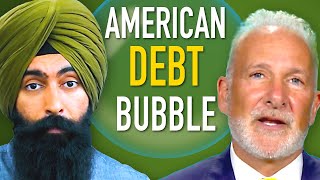
미국 국가부채 39조달러와 이자비용의 군사비 초과, 재정적자 지속을 근거로 달러 신뢰 약화 우려를 제기한다. 1940년대 부채/GDP 120%→1970년대 30%→2026년 약 130%의 역사적 흐름을 제시하며 성장률이 부채를 앞서는지가 관건이라 본다. 달러 기축통화 교체는 수십 년 단위의 느린 과정이라 강조하며, 공포 기반의 금·비트코인 이동을 경계한다. 결론은 정책 선택에 따라 달라지는 열린 시나리오이며 영상 말미에 뉴스레터 구독을 권한다.
다듬은 글
Let's talk about the dollar, because that's the reality. There are concerns about the dollar. We have $39 trillion in national debt. The United States government spends more money paying interest on our national debt than on our entire military. And here's the sudden news: we spend a lot of money on our military.
Not only that, we have a growing concern that we are spending a lot of money we do n't have, year after year, even when we are not in a recession. I mean, our economy in 2026 is supposedly one of the strongest in history. And if it is so strong, why do we need to continue to stimulate our economy with such large government spending that people are worried about?
Because what happens if we start a recession? How are we going to get out of the recession? Because usually what we observe can be looked at in 2020, 2008, or even 2000. When these recessions hit, whether it was a pandemic, the Great Financial Crisis, or the dot-com bubble, the way to get us out of recession was for the government to stimulate the economy by printing money through our central bank.
Well, here we are today , and we are already stimulating the economy. The government spends $2 trillion a year that it does n't have. That's $2 trillion in stimulus. And to finance that $2 trillion in stimulus each year, the government has to borrow that money. Well, who does the government borrow this money from?
He borrows them from people like you and me, private institutions, and foreign countries. But the United States government is not being given enough money to borrow. So the government must work with our central bank, the Federal Reserve Bank, to print this money. And every time you print more money, it erodes the value of the dollar, leading to more inflation.
So, you may start to see concerns about inflation. And this is where people say, “Oh my God, the dollar is going to fall. You just need to own gold, own bitcoins and transfer all your money there.” Well, here's what you also need to understand. History has shown us how this happened in the past. In the 1970s, we saw our debt-to-GDP ratio in the United States hover around 30%.
This means that our national debt was about 30% of our economy. Quite healthy condition. But it wasn't always like that. That was in the mid-1970s. But if we go back to the mid-1940s, after World War II, our debt-to-GDP ratio was about 120 percent. Since we had just come out of World War II, the government spent a lot of money that we didn't have.
There was a lot of spending and stimulus, which led to a debt- to-GDP ratio of over 120%. So we were underwater in the 1940s. Then, over the next few decades, our economy grew faster than the debt. In the 1970s, the debt- to-GDP ratio was around 30%. Today, in 2026, the debt- to-GDP ratio is around 130.
Again , another problem. So the question is , what happens next? Will we see a repeat of what happened after the 1940s, when the economy grew faster than the debt? Will we see anything different? To follow the economy–it is not an easy matter. And when all these crazy things are happening, it's much harder not to get caught up in the political mess.
And that's why I created Market Briefs. This is a free newsletter for investors that reveals what's happening in the economy without all the politics and unnecessary fluff. This is a quick five-minute newsletter. We break down what's happening in things like the economy, housing market, stock market, cryptocurrency market, and global economy in a fun, witty, and easy-to-read newsletter.
Hundreds of thousands of investors read it every morning. And as an added bonus, when you sign up for free market briefs, you'll also get my investing masterclass where I'll walk you through the entire journey as an investor and finding hidden investment opportunities before they make the headlines.
I will show you the exact framework that my firm uses to research investment opportunities. So, if you want to get the investing masterclass and market briefs for free, all you have to do is sign up and I have a link for you in the description below. And this is where most people only study the last 10, 20, 30, 40, 50 years, but you can start studying larger macroeconomics over centuries.
And someone who has published a lot of research on this is a guy named Ray Dallio. If you don't know who Ray Dalio is, he's the founder of the largest hedge fund on earth called Bridgewater. And one of the things he talks about is his principles. This is the title of his books. And he talks about how if we look at every great empire in history, they go through this cycle.
And usually the cycle is 50 to 100 or 125 years, so most people don't even know it's happening. And every great empire begins with what becomes the world's reserve currency. And then you are very strong. And because you are the world's reserve currency, you can use debt for productive growth. So you start to grow, you become a stronger empire, you become more productive, you become even more powerful.
And then you reach this point where things start to change for the better. And when things start to change, well, now it feels weird because your economy is slowing down and you're losing status. So what are you doing? You print more to try to create more wealth. But you can't print more wealth. You can just print more currency, which ultimately creates more inflation and creates more problems.
And now what you're starting to see is that during this recession you're starting to see a lot more money printing. You start to see a lot more debt as a way to try to keep the economy moving, to try to keep people enthusiastic, because all this money is coming into the economy to keep this appearance of people being wealthy.
And then you start to see more conflicts. You see more internal conflict as people start to feel, "Hey, I'm making more money, but I'm not getting richer. Wages aren't keeping up with inflation." And then you start to see more external conflicts because now the country is trying to divert attention from concerns about the currency problem.
And when the United States or a country tries to spend money on something else, because the military and war is big business, that's when you start to see the end of currency fluctuations. We saw this happen to the United States with the British pound. The US dollar has not always been the world's reserve currency.
Before the dollar, it was the British pound, and their economy went through the same thing . Before them, it was the Dutch pound. So, we see these cycles happening, and they have played out in the past. And here many people say that either A, the dollar will never lose its status as the world's reserve currency, because there is no replacement for the dollar, or B, that the dollar will collapse.
I need to get out of the dollar right now. And what you have to remember and understand is that this shift doesn't happen overnight, but it has happened in the past, and it will happen again in the future. Will it happen tomorrow? No. Will it happen next year? No. Will this happen in two years? No. But that could happen many, many years in the future.
How many? Nobody knows. But these are slow changes that are happening. And a lot of people get really worried, panic, and then start making all these hasty decisions. But what you want to remember is that our economy has developed in a similar way in the past. And we can see a situation where the United States takes its forces.
They will take the debt under control. The economy will grow faster than the debt, and now the dollar will be healthier. It depends on what the Federal Reserve does. It depends on how the government spends money. There is a world where we can essentially continue our lives. Radelia says it's a kind of taking care of your health.
You may have health problems. Everyone knows you're going to die, but if you exercise, eat healthy, and do the right things, you can extend your life. If not, will you shorten your life? So, there are things that a country can do to continue its life. The question is, will we like it? If you enjoyed this clip and want to continue your financial education journey, I have another video that I think you'll enjoy.
All you have to do is click that button right there. And for those of you who want to stay up to date on top finance and business news, you can subscribe to Market Briefs, my free financial newsletter, by clicking this button below. Thanks for watching, and see you in the next episode.




Comments 0