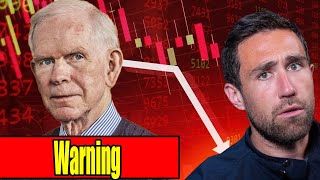
저자: Kevin—본문주발언자는사회자,인용인물은JeremyGrantham · 외국인
요약 보기
Grantham의 '사람들은 좋은 소식만 원하고 미래를 무시한다'는 버블 경고를 인용하며, 인플루언서·업계가 낙관론으로 수익을 얻는 구조를 지적. 알고리즘상 강세 발언이 더 많이 노출되어 약세론자는 불리하다고 설명. 나스닥100의 M2·기업이익 대비 고평가 차트와 관세율 비교도 언급. 미국 과열을 근거로 해외 분산과 현금 보유를 권한 Grantham 발언을 소개.
다듬은 글
Homo sapiens is is I have only two lessons. One of them is that Homo sapiens is is hugely tilted to wanting good news. A desperate preference for good news over bad news. Why not? Uh I I I get that. And the other is they have no interest at all in the future. They extrapolate today's conditions forever.
So if you're sitting there in 1929 and the data looks good and you're growing at 7% annualized GDP, what the hell have you got to worry about? We never anticipate anything. Just step back and um look at the data. Does it look good? Does the future look good? And um don't be conned into being super optimistic by the professionals, by the industry that makes money from overconfidence.
Lots and lots of money. Whoa. This is a huge like bearish kind of warning. And and we were just scrolling around to see where Sarah Eisen had gone. uh because we haven't seen her on CNBC. She's not posting on Instagram. She doesn't have any Instagram stories. We're not blocked yet. So, we're like, "Where is Sarah Eisen?" So, you know, we do the usual welfare check.
And so, what do we do? You know, we we go on Twitter. Ah, well, there she is. 4 hours ago. This was good. Tips for spotting bubbles and cautionary tales of optimism. Jeremy Grantham with Wilfford Frost. Well, let's make sure to add our heart uh to to that one. Show up. And uh then what we need to do is think about what he's saying here.
He's basically referring to in 1929 when the stock market is at excessive levels of enthusiasm and greed or whatever. You know, nobody wanted to hear anything negative. People just wanted to hear positive because as he says, humans are wired to only want to hear good news. uh and he's basically saying the entire financial industry uh so in other words you know the stock market the suits uh people you know with whatever they've got going on like I don't know the tokenization securizations or whatever they benefit off of you believing that up is the only way uh you know to some extent and this isn't really a you know this is not designed to be a slight or whatever at Michael Sailor, but to some extent when Michael Sailor, what feels like on every single Green Day posts these AI images of himself basically, you know, doing stuff like this.
Just get in orange tie AI image. Or here's a good one. Uh where was it? Uh just get in. Oh, there was another one where Oh, yeah. The halls of eternity echo with the circles of those who sold the their Bitcoin. In other words, like if you sell, you're going to be a crier. And I mean, here he is, I guess, AI symphony and Bitcoin major by the future.
Like, Michael Sailor's lifestyle is funded by people believing in in Bitcoin, frankly. So, again, I'm not trying to slight Sailor. I'm just saying it is true. A lot of people make money off of things, markets going up because it's not just that the underlying prices are going up, it's that there's more volume.
When there's more volume, market makers make more money, broker dealers make more money, researchers make more money, analysts make more money, AI data tools around financial analysis make more money, financial adviserss make more money because the AUM fees go up. Literally, everyone gets paid more to be bullish.
Mind you, also if you say something and and I want you to know this about the psychology of markets, it's it's probably so important that it's worth writing down on something. Oh, you know what we're going to do is is we're going to write it down. No, I was going to write it down on this, but there's no there's not enough white on this.
Have you ever had one of these? By the way, hashtagnotsponsored, but I have these in my drawer and I refuse to open them. Man, they look good. Can't smell any of it right now, but um yeah, kinder chocolada. They're good. Uh but anyway, I'm trying to train for a marathon. So um and then I also have some Haribo Mindafro Happy Hoppers in here.
Yeah, I don't know why I have this up, but anyway, it's so important to say what I'm about to say that may as well get a nice little yellow legal pad here. Okay. All right. So uh if you are a bear on X okay so like you know this could be any stock right any stock any security or whatever you have to understand how the algorithms work if you are a bearer on you know whatever it is Palunteer Tesla whatever uh algos feed you to that audience, right?
The algo pushes you to that audience. Nobody who is invested in Palante or Tesla wants to hear you being a bear, but the algos will feed you to those people. So you will always get sort of the hate and there's no benefit to being a bear because the people who aren't going to buy Palanteer or Tesla probably aren't being fed the algo for your bearish take on Palunteer or Tesla, right?
It's like the people who are pro Palanteer or Tesla are going to be fed your Palanteer comments. And if you're a bear, you just get hate. And if you're a blind bull, like you raise your price targets every day or you're just sort of like a clown that only shills the upside because there could never be a downside and there can never be a recession again and the Fed's just going to print us out out of everything, which is a total lie.
Uh but whatever. You kind of always uh win because if the market goes down, it's not your fault because you shield how great the product is. Oh, it's the product that's good. The market is just being fussy. If the stock goes up, you're a brilliant analyst. And remember, the algo is pitching you to that demographic anyway.
So, in other words, social media motivates the constant perpetuation of optimism and hype and opium. And I think that's what Jeremy here is saying, Grantham is saying in a way that can actually be amplified when you consider how algorithms work today that bulls make money. Bears don't, but listen to the rest of this.
I haven't listened to that either. um look around for signs of crazy bubbly behavior to the moon to the moon sort of thing which we have seen as splendidly in this last several years as we have ever seen in history which is a high hurdle. Mhm. Just use your own brains and uh if you don't want to follow my advice and buy international stocks and and some and and keep plenty of cash.
Wow. allocating outside of the US. I'm a big fan of Train America, mind you, but he's basically saying, "Hey, allocate to international markets and cash because the US is in a bubble." Which is really interesting because then when you look at this, take a look at this individual's chart. This is I don't know whoever this is from I3 Invest.
Uh oh, that's their I3 Invest. Okay, whatever. NASDAQ 100 adjusted for M2 money supply. We are past the.com bubble. NASDAQ 100 adjusted for corporate profit. Also past the dot levels. Kind of interesting. Another thing to think about is let's look at the August 1 tariff rates and compare them to the April 2nd Liberation Day tariff rates.
Higher. A lot higher. Little lower. Little lower. The same. A smidge lower. Higher. Little lower. The same. Little lower. The same. Little lower. Little lower. Little lower. The same. Little lower. Higher. Little lower. Little lower. Higher. Higher. The same. uh and and then here a little lower both of these.
So you could see that these tariff rates on the right, they're not so substantially different on these countries here than what we had on liberation day. In fairness, what you don't see here are some of the big trading partners like Mexico and China. Although China 55%, you know, it's still pretty up there.
So yeah, I mean I think Jeremy has Granthm here has has a a very interesting point. Uh but you know, then again, maybe markets are just designed to keep going up. After all, uh Eric Trump wants you to know that it feels like a great time to enter Bitcoin. And then he tweeted today, you're welcome. And then somebody posted this chart.
Good time to buy. Told you. pretty priceless. But anyway, so uh in our hunt for trying to figure out why Sarah Eisen doesn't seem to be on CNBC anymore, at least we haven't seen her in a while, it seems like. Uh I'm sure she is, but we we just haven't seen her in a bit. We find this Granthm post and it's kind of interesting that makes you scratch your head a little bit of bubble warning. &.


Comments 0