저자: Yahoo Finance · 외국인
다듬은 글
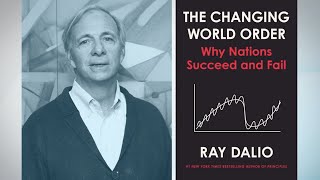
hello everyone and welcome to influencers i'm andy sewer and welcome to our guest ray dalio founder of bridgewater associates and author of a new book principles for dealing with the changing world order why nations succeed and fail ray nice to see you i see you so you've identified three trends in your book that lead to the decline of powerful countries maybe like the united states financial markets that lead to a lot of debt internal conflict like political polarization and pressures from the outside like rival countries let's start with the first one financial markets you've expressed concern about low interest rates that often lead to higher debt burdens and inflation would you say that characterizes what's happening in the united states right now well let me let me clarify um the three things that you mentioned are financial conditions um the production of debt and money to monetize those the internal conflict over wealth and other things politics the greater extremism and then the rise of a great power to challenge an existing great power in the form of china those three things never happened in my lifetime before um but they happened throughout history and one i learned that to be surprised i knew that i needed to study prior periods the reason we anticipated the 2008 financial crisis was because we studied the great depression and so to answer your first question about the first of those i view it just very much mechanically buying power which comes in the form of money and credit when that's produced in a quantity which is much greater than the incremental production of goods services and financial assets drives those financial asset prices to go up and the printing of money the monetization of debt is a last phase in a long-term debt cycle because it indicates that when there's a lot of debt and there's um a zero interest rate and you print that money that debt monetization has its effects so what we're seeing now in the market is very very very classic it's happened repeatedly in that that enormous amount of buying power created by the creation of money which doesn't raise living standards that is passing through the system and so you're seeing it happen in the inflation of goods services and financial assets right so many credit a similar strategy with softening the cobin 19 downturn in helping speed up the recovery has the federal reserve been too dovish and should they raise rates more quickly than they're indicating they will uh there's a trade-off that i think everybody has to understand and that brings that's related to the second with the large wealth gaps and and large not enough money in lots of places the federal reserve and the treasury were put into a position of needing to get checks out and there's also this left right conflict issue having to do with the wealth gap and that means that you have fiscal policies that are now requiring lots of spending and so the question is really um are the consequences of not doing that better or worse than the consequences of doing that now when we look from an investor's point of view or an individual's point of view we have to remember that you can't raise living standards by just creating money and credit particularly if you don't raise productivity more than that and that means that those asset prices are going up so we're in the phase of the cycle very classic that the financial asset prices have gone up because you've given them more money that demand is going up and now we're having inflation inflation of those assets so if a lot of that buying power is going to be pulled back particularly as we go into the next year but there's still going to be a lot and there's still going to be a high level of inflation of those types of assets so the trade-off is always the question right okay so quickly where do you come out on that trade-off is it a binary yes or no um it's a it's a reflection of the state of where we are in the cycle that we have borrowed it's all the problems that we've gotten ourselves into by acquiring too much debt and um spending more than we're earning rather than being more productive and also not distributing the opportunities and the incomes in a way that it's a broad-based bus prosperity so on the one hand you have um a prosperity that the bottom 60 percent of the population isn't participating in very much and at the same time you have um so it's creating that polarity and at the same time you have the financial markets so those are trade-offs that um you know different people the only care thing i care about is whether we're productive whether we increase the size of the pie through productivity and then divide it well so that you create the something closer to equal opportunity that produces greater political stability and also draws on the population going live and the reason i say that is because i've studied these empires these dynasties going back um since the last 500 years and you see the same thing happening over and over again when there's a financial problem when the granaries are empty and the coffers are empty they print money and when they print money and the coffers are empty it devalues money and with that when you have a large gap of people at each other's throats then you create a a risk of an internal conflict at risk of some kind of civil war and that is what i think is um is we're at risk of yeah i want to get to that um polarization one sec but just quickly on inflation rate how concerned are you about it um i'm significantly concerned about it because the amount of money and credit that has to be produced and is budgeted is a large increase and yet if it's not spent it produces its own problems the markets have a sensitivity to that so what what it means and then there's a supply-demand picture for bonds and the way it looks is if you should get the selling of bonds it worsens that supply demand picture because the way it works is the treasury borrows and runs a deficit but it can't produce money so it has to sell bonds and when it sells bonds um if there are not enough buyers of those bonds then the federal reserve got to come in and print money and buy those bonds and the world right now is over um uh uh invested in us dollar denominated bonds uh pension funds on the 60 40 mix or and they have negative real returns and cash has a lot of negative real returns so if there was a selling of that and a moving to other assets stocks um other assets um commodities other assets or other places other currencies other um real estate and the like that selling worsens the supply-demand picture and then if there's not enough demand that means that the central bank has got to come in and print more money so yes it's not only the potential the inflation that's in the pipeline or projected in that supply-demand balance but it's also what it could be if there's a selling of debt instruments so we're printing too much money it's going to produce inflation if that's what you're saying right okay let's go to the second trend you identify in declining empires internal unrest you write that wealth inequality often leads to the rise of populism and division how bad have the divisions got in the u.s and what's most to blame for that well i think people around us we all see it january 6th was just a simple um but history is shown when the causes that people are behind are more important to them than the system the system is in jeopardy and what we're seeing is um not a classic uh wealth gap caused by accompanied by political gaps so you're seeing that the left is more left and the right is more right and you're seeing the conflicts within the parties in the primary elections you're going to see in each party a competition between the moderates and the more extremes and so you're seeing that dynamic uh play out you're seeing questioning of election results and questioning of of rules that so you're getting to the point something like 15 of um i forgot whether it was democrats or republicans i wish the other member of the party would die and ten percent of the other party wish they would die they don't want their children to marry other members of the party so there's a question of even how rules will be followed and so there's going to be a conflict and i think it's not an exaggeration to say that you could see in the 2024 elections that no side will lose that and accept loss and you're seeing the movement to different states related to different values these types of things have never happened before but in my book in my study that i did to understand them over time they happen repeatedly through history so i'm not just looking at what's happening today but i'm finding that that pattern follows a very classic pattern that's repeated throughout history which is the tendency of the middle to disappear and that you have to pick a side and you have to fight for that side and that's the dynamic that is what i think is going on and following the classic dynamic that's shown in the book to have happened repeatedly in the book you cite the emergence of figures like elizabeth warren on the left and donald trump on the right but ray do you think there's a risk here of drawing a false equivalency by framing it that way because trump made concerted efforts to overturn the 2020 elections whereas elizabeth warren wants higher taxes and more regulation i don't i i don't understand why that's a question if i'm very much a mechanic i'm not a uh ideologue not ideologically i just take measurements um and um what i'm saying is that if you look at the voting records of republicans uh that they it's the most conservative that had it it has been if you look at the voting records and policies of democrats it's the most left that it has been and that if you look at this is since 1900 if you look at the voting across party lines it is the lowest that it has ever been so that you have those those are just simply uh facts you have a party in which basically 30 something like 30 of the population um is um in support of um the let's call it the uh the more right let's say the donald trump more right and something like 30 percent of the population is concerned with the more uh at the more left and that within each party that there is then a conflict between those two things and that the because of that constitutes perhaps the majority of those party members then those that are in the middle um although they would constitute a higher higher percentage of the population still let's say that swing 40 or 50 of the population they within their parties are not um dominant and as a result we're seeing that move to the more extremes of the two and the greater conflict fair enough i guess i was just you know making the point that there's left wing right wing extreme left extreme right and then there's just not believing in in facts but but i i get it you write that the us has a third that also is through the history it's very interesting you read these things the combination in history of politics and the media um operating with the emotions has been a classic dynamic that's repeated over time the dynamic that we're seeing now so that the media tends to become more polarized and more appealing to those who want to fight with each other and then distortions in the media because fighting and winning is more important than seeing both sides and that's why the distortions that take place yeah and that greater polarization polarization in the media is very very classic um you you see and then you lose that media medium right i don't want to go down this rabbit hole but explaining that the big lie is just that maybe isn't polarization maybe it's just trying to get people to see facts but well all i i i think that by any measures um the a sense of we're getting facts through the political system and the media the public's readings on that are the lowest on record so i don't think it's the getting of facts i think there's a great concern about the inability to get the facts and that i'm saying you see that in all the histories of um it's recounted in the book many times uh that you see that dynamic working because everybody becomes polarized but yeah no i don't think that we would cheer on the efforts to get the real facts





Comments 0