저자: 미상 · 외국인
요약 보기
드러켄밀러의 수익률 기록(연 30% 장기 평균, 2010년 헤지펀드 청산 후 패밀리오피스 운용), 1992년 영국 파운드 공매도(검은 수요일), 2000년 닷컴 버블 손실과 2008년 위기 대응 등 경력을 소개하는 전기형 영상. 투자 철학으로 집중 베팅, 손절, 자본 보존을 강조하며, 2024년 SK하이닉스 관련 종목(Envy는 자막 오인식으로 추정)·한국 전자상거래 기업 투자 언급이 있으나 향후 방향에 대한 명시적 예측은 없음.
다듬은 글
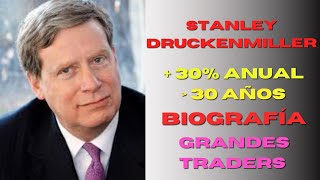
To speak of Stanley Draken Miller is to discuss one of the greatest investors in history, capable of achieving a record return of 30% annually for over 30 years. Furthermore, along with George Soros, he helped bring the Bank of England to its knees and defeat the pound sterling. His extraordinary record is a 44% return for the last year and 335% for the last 10 years, with constant growth in the portfolio of his family fund, The Draken Family Office.
His history includes only five declining quarters in 25 years as a fund manager, making him one of the super- investors with the lowest volatility, with a return comparable only to that of Warren Buffett. Stanley Draken Miller was born in 1953 in Pennsylvania. He came from a middle-class family in Pennsylvania.
As a child, while a student in elementary school, his parents separated. This situation led his two sisters to go live with their mother. Stanley was forced to leave his mother to live with his father, Stanley Thomas Draken Miller. A chemical engineer residing in New Jersey, despite family problems, was always valued by his parents for his education, perseverance, and the importance of discipline and responsibility.
He earned his high school diploma at the Collegiate School of Richmond, Virginia. He was a good student, but within the average range. Later, he entered Bowdo College. Curiously, at that time, his verbal aptitude scores weren't the best for admission to more prestigious schools. He managed to obtain his degree with a bachelor's degree in economics in 1975, already demonstrating abilities superior to those of his peers and undoubtedly finding the area where he felt most comfortable.
Among his first ventures was the anecdote of creating a hot dog stand with Lawrence B. Lindsey, who would later become the economic advisor to President George W. Bush. Initially, as a professional, he enrolled in a doctoral program in economics at the prestigious University of Michigan. However, in only the second semester, he received an offer as an oil analyst at the Pittsburgh National Bank.
Although he thought about it a lot, he decided to accept the offer and abandoned his doctoral studies. In his conversations, he recounts how he had enrolled in graduate school to study economics, but the program It was quite quantitative and very theoretical with very little real-life application. Partly disappointed, he abandoned his doctoral studies for this reason as well.
Drucken Miller then began his professional career in 1977 as an apprentice on the commodities and oil management team at Pittsburgh National Bank. His bosses observed that Stanley had a good eye for identifying market trends, which allowed him to make excellent decisions in selecting the best assets to invest in.
Thanks to his extraordinary results, he quickly rose to the position of head of equity research. One of his first successful operations was analyzing the situation in Iran in 1979 to forecast the rise in the price of oil. The strategy proposed by Stanley was to place 70% of the fund's money in oil stocks and 30% in defensive stocks, in addition to selling bonds.
For some analysts at the time, the operation was too risky, but he managed to obtain a 100% return. While the S&P 500 was flat, this operation allowed him to reach the position of director of operations at Pittsburgh National Bank. At the beginning of his career, Drucken Miller placed great importance on the quality of analysis when making capital investments, both fundamental and technical.
However, despite his good performance and the possibility of further advancement at Pittsburgh National Bank, he decided to start his own capital management firm called DuQueens Capital Management. In 1981, Drucken Miller made another extraordinary trade by analyzing how Federal Reserve Chairman Paul Walker was completely focused on controlling inflation.
The Fed's interest rates rose to 18%, a situation that Stanley capitalized on, achieving a 40% profit. At the same time, from 1985, he was a consultant for the Drius fund, and in 1986 he was appointed director of the Drius fund while continuing to manage the DuQueens fund. In 1988, Drucken married Fiona Big, who was the niece of Barton Bigs, a prominent investor, analyst, and market strategist at Morgan Stanley, one of the few analysts capable of predicting the bursting of the dot-com bubble in 2001.
In 1988, an event occurred that would forever change his destiny. The great George Soros, one of the greatest speculators and investors in history, decided to hire him for his Quantum Fund. His position was none other than principal manager. For many, Drucken Miller is the true architect of the Quantum Fund's growth from $1 million to $20 billion between 1989 and 2000.
Drucken Miller states that working with Soros allowed him to learn how to bet big when the conditions are right to be certain that the odds are in his favor. In 1992, Drucken Miller structured the operation that made him world-renowned by defeating and bankrupting the Bank of England. With Soros's approval, they shorted large positions in the pound sterling in 1992, earning over $1 billion in a short period.
Drucken Miller's hypothesis was that the pound sterling was overvalued and that its exchange rate with the German mark was The key to this operation was a strategic calculation, forecasting the inefficiencies of the Bank of England's foreign exchange reserves to defend the pound. This event is known as Black Wednesday and is still remembered as one of the most important economic events in the history of the economy and financial markets.
This single operation cemented Stanley Miller's status as a legend in the world of investment. Another of his great successes was investing in technology company stocks in the late 1990s. This allowed him to take advantage of a good part of the bull market in the technology sector at the end of the decade, with tremendous profits.
Despite the excellent results, the year 2000 arrived, and the dot-com bubble burst. Stanley Miller, along with Soros, suffered significant losses on his positions in technology companies. This period was one of the few in which Stanley experienced adverse results, but it led to valuable lessons regarding risk management and the ability to adapt quickly to changing market environments.
In 2000, Drucken Miller held over $200 million in shares of internet technology companies. He shorted them and lost over $600 million. Despite these losses, that same year he gained a better understanding of the sector and, by investing in shares of Veritas and Verisign, achieved excellent profits, obtaining a 35% return.
It was then that Soros and Drucken Miller decided to part ways. In previous years, Drucken Miller had a track record of average annual returns of 30%, with positive returns every year. The 2008 crisis put Drucken Miller to the test again. He was able to read macroeconomic trends and anticipate the tremendous crisis, positioning his portfolio defensively to protect the Dues Capital fund from one of the worst recessions in the United States.
He even managed to achieve profits when virtually all other market participants and traders suffered double- digit losses. Stanley was able to predict the 2008 crisis, partly thanks to an analyst from Lehman Brothers. He had analyzed a 50-year trend line in the housing market, where prices increased by an average of 3% annually, but suddenly that trend changed, and he observed tremendous growth in home purchases with mortgages representing a high percentage of the property price.
He happened to be talking to the analyst in May 2005, who explained that he didn't believe this could be sustainable after the third quarter of 2007. For Drucken Miller, the analyst was a mathematical genius. The year 2006 was complicated for Drucken Miller, as he began to manage a more conservative portfolio and short sell, anticipating a possible crisis.
Despite everything, he achieved marginal gains for that year of only 5%, while his competitors had achieved returns exceeding 15%. But in 2007, the subprime mortgage crisis broke, stocks and the stock market plummeted, and traders panicked, selling positions massively. Drucken Miller and his fund were very well positioned.
Anticipating this crisis in 2008, the fund achieved a return of over 11%, while almost all other operators suffered substantial losses. The results between 1981 and 2010 were extraordinary. It started with just $1 million and, thanks to its average annual return of 30%, reached the tremendous capital accumulation of $12 billion in 2010, managing to overcome the tremendous crises of 2000 and 2008.
2010 marked the first year of losses for the fund, which had managed to accumulate $12 billion in assets. Drucken Miller recognized that sustaining such tremendous returns while managing large sums of money was very complex and under immense pressure. He decided to close the hedge fund and open only a family office to manage his own resources.
In 2010, Stanley was exhausted by the stress of managing other people's money and somewhat frustrated at not achieving the 30% returns he had attained in the previous three years. Since 1900, the fund experienced a drop of only 5% that year, enough to lead Drucken Miller to make the drastic decision.
One of the main reasons for closing the fund is one of the causes of why trading stocks and the stock market is so complex: the enormous emotional pressure of not achieving the performance expectations of clients. In 2015, he took a fairly large long position in gold due to concerns about Federal Reserve policies, predicting a possible devaluation of the dollar.
By 2019, his main positions included shares of companies like Microsoft, Abot Laboratories, Salesforce.com, Delta Airlines, and American Airlines. In 2020, Drucken Miller again made the right stock purchases, investing in Microsoft and Amazon at the height of the health crisis, which subsequently allowed him to achieve extraordinary profits thanks to the tremendous appreciation of these companies' shares.
Between 2020 and 2022, Drucken Miller achieved an average return of 20%, but in the last year, he again demonstrated that Stanley is... One of the legendary super-investors, Stanley Drucken Miller, is projected to achieve a return of 41% by 2024. According to Bloomberg, the Du Kesen Family Office fund managed no less than $9.3 billion.
Let's examine Stanley Drucken Miller's investment philosophy and strategy. It is based on investment decisions that combine elements such as macroeconomic factor analysis, including a review of the effects of policy, social, and economic phenomena, combined with high-risk bets while simultaneously implementing risk management practices.
A defining characteristic is that he follows his investment instincts, which are the result of years of accumulated experience. In his opinion, when various indicators and analyses show the potential of a stock to be a good investment option, one must be able to make the decision and take the risk of buying strong compositions.
For some, his strategy is a mix of technical and fundamental approaches and analyses, enabling him to adapt to the dynamic market's changing perspectives and trends. However, a significant portion of his high returns is due to highly concentrated bets. When he sees something with great potential, he goes for it, betting big.
By following trends, he managed to invest in waves of significant growth. For example, in 2022, Drucken Miller was able to predict the rise of artificial intelligence, investing in companies in the sector like Envy. To find these trends, Drucken Miller focuses on projecting the future. In his words, one shouldn't invest thinking about the present; one should try to visualize what might happen in 18 months and thus project target prices and investment opportunities.
However, in the third quarter of 2024, his family office sold a significant portion of his stake in Envy, losing some of the company's continued upward valuation. During the following months of 2024, Drucken Miller combined his long and short positions, sometimes using leverage in futures and currencies.
Another trend he identified was e-commerce, which led him to invest in Kupang, the leading online trading company in South Korea. To manage risk, he typically uses stop-loss orders in his buy orders to prevent heavy losses. Failed trades: One of the questions Drucken Miller asks himself when making a trade is how much money he could lose if things don't go as planned.
His adaptability has led him to great flexibility, even changing his position when the environment dictates it, and even selling quickly after buying a stock to try to preserve capital. The psychological factor is key to his investment philosophy. He states that the key to making money in the stock market is not always being right, but not losing too much when you're wrong.
For Drucken Miller, capital preservation is one of the cornerstones of building wealth and equity, trying to reduce losses in trades. Another key element in his strategy is knowing about different types of assets. Throughout his history, Drucken Miller has traded assets such as stocks, commodities, and currencies.
Drucken Miller states that investing by individuals requires a high degree of passion, as it requires working long hours to achieve results, since you are competing with people and entities that work 24/7. Remember that you can find the [information/description] in the video description. Link to the best course for learning technical and fundamental analysis for investing in stocks.
Also included is a link to the best platform for buying stocks on the regulated stock exchange in the United States. If you liked the content, please give us a like, subscribe to the channel, and share it.


Comments 0