저자: 미상 · 외국인
요약 보기
하워드 막스의 최신 메모를 인용해 가치투자 원리를 설명. 자산의 내재가치는 미래 현금흐름 등 펀더멘털로 결정되며 주가는 단기적으로 투자자 심리에 좌우된다. 가격이 내재가치보다 싸게 사면 장기 성과가 좋고 비싸게 사면 하락 가능성이 크다. 단기 시장은 투표기계, 장기 시장은 저울에 비유. 특정 종목이나 자산에 대한 가격 방향 예측은 없음.
다듬은 글
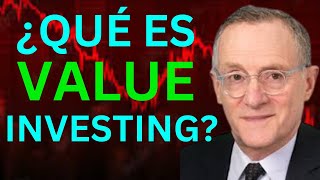
At the beginning of the year, in a video we reviewed the letter from Howard Marx, one of the best investors in the world and the director of Capital Management, one of the most important fund managers in the world. At the end of the previous year, the firm was managing $205 billion for its clients thanks to the reputation that the company and the legendary Howard Marx had built up over several years.
But Marx is also a leading figure in the market, having successfully predicted the stock market bubbles and crashes of 2000 and 2008. Last month, Marx wrote a new letter to the firm's clients, providing an excellent summary of value investing, which we will attempt to summarize below. In this letter, Mars begins by recalling that at the beginning of the year he wrote a memo entitled Bubble Wash, in which he explained that, although the price of assets such as stocks at the beginning of the year was high, they were not necessarily at absurd levels and it was not clear if there really was a bubble in the stock market.
Subsequently, Marx tries to explain where the value of an investment lies and how it should be evaluated. Assets, such as stocks, bonds, companies, and real estate investments, have a value known as intrinsic value, which is subjective and determined at a specific time. According to Marx, the value of an asset depends on its fundamentals, which will allow it to generate benefits or profits in the future, which is the source of its value.
The problem is that the intrinsic value of a stock or asset cannot be calculated with complete certainty, nor can it even be obtained exactly through artificial intelligence, because the fundamentals of a company or stock include too many elements such as the ability to generate future profits, current profits, the stability of future profits, the value of the company's assets, the company's management, the ability to develop new products or services and the competition in its market, the strength of its financial results, among other factors.
All these elements will affect the future of a company and a stock and are the source of its value. Among the fundamentals of a company are its facilities, its buildings, its equipment and vehicles, its deposits, among others, which are tangible assets and in case of liquidation can be sold at a certain price.
But on the other hand, a company has assets that are not tangible, such as patents, technical knowledge, development and research capabilities, trade secrets, the company's human talent, management capacity, and corporate culture. While some of these assets can be traded and transferred, others cannot.
These assets combined are what allow a company to generate value and revenue. And the task of management is to harmoniously combine individual assets to maximize their capabilities. But there are assets that do not have the ability to generate income in a company when combined with others, such as a gold ring or a painting, unless they are rented out or a fee is charged for their display.
But these assets can be sold, and those who buy them possibly acquire them with the expectation of selling them later at a higher price than the purchase price, even considering that before the sale, no profit will be made from holding the asset. These are assets that do not generate operating cash flows and do not have the potential to do so in the future, making them almost impossible to value objectively or intrinsically.
Companies reflect in their financial statements the income currently generated by the assets they possess , but companies will also have future income by exploring existing resources or by creating and developing new products by the company's employees. The outcome for companies will depend on factors such as management decisions, the industry environment, competition, the governments of the countries where they operate, customers, and investors.
However, even considering all the factors already described, a company's future profits may be higher or lower than they are now. Therefore, according to Marx, the foundations of a major enterprise are current profits, plus the ability to generate future profits. When investing, some investors prioritize analyzing a company's price and shares based on current earnings, while others try to estimate a stock's value based on earnings growth.
Mark suggests that when making an investment, it is best to try to consider and analyze the present and future profitability of an asset. So when an investor manages to estimate the intrinsic value of an asset, they have a basis for estimating the correct value of an asset, in order to obtain good profits and returns in the future.
Therefore, the price is the amount of money paid to obtain something, and a good investment is made when the value of an asset is properly estimated and it is purchased at a fair price. Finally, the fundamentals that determine the price of an asset are related to its profitability and ability to generate profits.
And the fair price of an asset is its present value discounted by future cash flows or earnings. In that sense, the key job of a securities analyst is to properly make a profit projection that allows calculating the fair price of an asset. But Marx recalls how Beha Graham, the father of value investing and Warren Buffett's teacher, proposed that market prices are determined every day by investors buying and selling an asset.
While some investors will consider the products solid and the management good, others will consider them obsolete and outdated, so that for some investors a company may be attractive in the future and for others may see it as a risky and highly uncertain alternative. These different views are reflected in the price of the shares.
In a market, sometimes optimists dominate and sometimes pessimists, moving stock prices in both directions, up or down. These negotiations are also influenced by the moods of investors, where sometimes there is a negative feeling with fear of losing, adding pessimism and skepticism, avoiding risks. At other times in the market, investors may be optimistic, with a high tolerance for risk and a buying feeling, as they do not want to miss out on something, a phenomenon known as FOMO.
If most investors are optimistic, the price will rise. And when most people are pessimistic, the price is most likely to go down . When an asset is purchased at a fair or lower price, investors can very likely achieve a good return on the asset and an increase in the selling price. Therefore, an investor's ability to achieve a good return on an asset purchase will largely depend on whether they correctly assessed the asset's fundamentals and paid a fair price for it when they bought it.
And in the long term, an investment will be successful if the investor was right about the profitability of the asset, that is, if they were able to properly assess the fundamentals of the investment and if they paid a fair price for them. If the investor bought at a price above its intrinsic value, it is quite likely that in the future the price will tend to decrease.
But on the contrary, if the purchase price was below the fundamental value, in the future the price is quite likely to tend to rise. However, in the short term, the price of an asset can move in any direction, either up or down, because the price of an asset at any given time is defined more by the psychology of investors, which is often irrational and unpredictable.
An asset below its fundamental value can remain cheap or even decline for an extended period. Similarly, an overvalued asset can become even more overvalued, even excessively so. The ability of an asset's price to reach extreme values is what causes stock market bubbles and crashes. In some extreme market moments, people can be deceived or lack sufficient resilience.
Well, the market can remain irrational for a long time , longer than people can remain solvent. Marx recalls, as Benjamin Graham explained to him, that short- term markets function more like voting machines that reflect the popularity of an asset rather than its true fundamental value, but long-term markets are more like a scale that seeks to truly assess the fundamental value of an asset.
In this way, Marx explains some principles when it comes to investing. The first principle is that value is what you get when you make an investment and price is what you pay for that investment. The second principle is that a good investment is achieved when you manage to buy at a price that corresponds to the fair value.
The third principle is that investors have a changeable or volatile psychology that causes asset prices to fluctuate more than their true fundamental value. The fourth principle is that changes in asset prices are more a reflection of investor psychology than variations in their fundamental values. As a consequence of the previous postulate, the fifth principle is that the psychology of investors plays a fundamental role in setting the price of an asset.
This implies that when an investor assesses whether the price of an asset is correct, they must undoubtedly try to consider the prevailing psychology of the market at that moment in their analysis. Not only considering quantitative assessment parameters. In a future video, if you give us a like, we will review the second part of the letter by the great Howard Marx, in which he tries to establish whether we are currently facing a bubble in the stock and cryptocurrency markets or if it is simply a somewhat expensive market.
Remember that in the video description you can find the link to the best course to learn technical and fundamental analysis for investing in stocks. You will also find a link to the best platform for buying shares on the regulated stock exchange in the United States . If you liked the video, give us a like, subscribe to the channel and share the content.


Comments 0