저자: RenanZanella,CFA,CFP · 외국인
요약 보기
영상 결론: 피터 린치의 견해를 바탕으로 개인 투자자가 전문 펀드매니저보다 나은 수익을 낼 수 있다는 주장이다. 린치의 성과와 주장: 13년간 펀드매니저로 연 약 30% 수익을 냈다고 소개하며, 그가 '텐배거'라 부른 10배 상승 종목을 수백 개 찾았다고 언급한다. 전문가가 불리한 이유 1 - 규모: 운용자금이 크면 원하는 종목을 사고파는 것만으로 주가가 움직여 좋은 종목을 찾기 어렵고, 개인은 이 문제가 없다. 전문가가 불리한 이유 2 - 평범함: 펀드매니저는 회사 눈치를 보며 시장과 다른 결정을 잘 하지 않아 시장 수익률 이상을 내기 어렵다. 자기 돈은 누구에게도 답할 필요가 없다. 팁 1 - 능력 범위: 자신이 아는 분야(가족 배경, 학력, 직업 등)에서 종목을 고르면 사업 구조, 고객, 수익 구조, 마진 확대 가능성을 이해하기 쉽다. 팁 1 보충 - 유행 회피: 화제의 주식이나 남들이 말하는 '차세대' 종목을 좇기보다, 분석가와 대중이 주목하지 않는 지루하고 어려운 업종에서 저평가 종목을 찾으라고 권한다. 팁 2 - 내부자 신호: 자사주 매입 기업, 특히 임원이 직접 매수하는 기업을 선호하라고 한다. 임원 매수는 외부인이 보지 못하는 잠재력의 신호일 수 있다. 팁 3 - 이익 중심: 장기 이익을 중시하고 주가 변동은 지켜보되, PER로 투자금 회수 기간을 가늠하라고 한다. 성장 기업은 PER이 높게 나올 수 있다. 팁 4 - PEG 활용: PER을 이익성장률로 나눈 지표로 판단한다. 린치 기준으로 이익 성장률이 PER보다 높으면 자본을 불릴 종목일 가능성이 크다. 예시로 PER 8인 기업이 연 12% 성장한다면 좋은 기회일 수 있다고 설명한다. 마무리: 시청자에게 이미 알던 팁이 있는지 댓글을 달고 친구 2명에게 공유하라고 요청한다. 참고: 영상은 2021년 1월 기준이며 특정 종목 매수·매도 추천이나 가격 전망은 포함되지 않았다.
다듬은 글
Okay, so what if you bought a stock that appreciated 1000%? That's right, the sky rose 10 times during your 13 years as a fund manager? What a clean record! One of the world's greatest investors found hundreds of stocks that appreciated more than 10 times, which he nicknamed " Tembergers," and he promises in his book, "The Peter Lynch Way," that you, the beginner investor, can have higher returns than Wall Street View analysts.
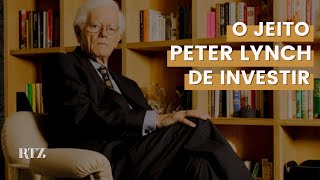
Hey everyone, welcome to another video on our channel, and today we're going to learn from another great investor, Peter Lynch. During his years as a fund manager, he has an annualized return of almost thirty percent. That's why we have to sit down and listen to what the master has to say. And although it may seem strange, the statement he makes is that he defends tooth and nail why the average beginner investor can have a better return than stock market analysts.
He points out the two main disadvantages that large fund managers have when managing resources. The first is size. Have you ever thought about it? If you were a fund manager with millions of dollars under management, any movement you want could alter the price of a stock. So, this makes it increasingly difficult to find good stocks, because if you find 56 good investments, but you have a portfolio in the form of money, you need to find many opportunities that are not always available, and you, as a beginner investor, as a small investor, don't have this problem, so first...
The second disadvantage is mediocrity. Or, if you stop to think about it, analysts and fund managers behave like employees of the investors in the funds, and like any other fund, they often lack the boldness and courage to make decisions that go against the market, that are different from what most are doing.
So, it's common for managers to follow the market, and if you do what everyone else is doing, you'll hardly get a return above the market. But if you're managing your own money, you don't have to answer to anyone. This allows you to choose better companies, or even companies that analysts don't look at, that they don't study, because you don't have to answer to anyone.
I've separated four tips for you that you can put into practice to achieve a return superior to market analysts. The first is to focus on your competency credentials, focus on what you know. This is very much in line with the BNDES (Brazilian Development Bank). You have a family history, maybe you went to college, graduated, your father taught you something, regardless of whether it's in the health sector, engineering, or gardening, you know something more than most, you know something.
More than analysts, when choosing a company to study, focus on the field you master. This will make it much easier for you to understand the company's business, understand who its clients and suppliers are, how it generates revenue, its potential to increase margins, the return it's generating for shareholders, and whether it's in line with markets and has the potential for growth.
So, stick to what you know and what you're familiar with. There's the stock market, the trendy stocks, the ones your friends are talking about, even your uncle who's never invested is asking you for advice. Forget about the next idea, the next era, the next one (in our case, Magazine Luiza, the next one).
You'll hardly ever get it right by going for the stocks that are trending. Instead, look for the companies and stocks that nobody pays attention to, the ones analysts aren't looking at, the ones your uncle will never hear about because only you were deep enough to study the most forgotten stocks. It's in these often difficult and boring businesses that you can find the best bargains and often the best investments to multiply your capital.
The third tip is simple and powerful: Whoever knows more than one business, you as an investor, Monalisa, who is in São Paulo, should focus on the field you master. Paulo, where is the information showing this? The company, or the executives? That company? Directors, Youssef? Or certainly those people who are inside that company?
So look at what the company is doing. Therefore, prefer companies that buy their shares, which is a great signal for the market. And prefer companies where executives are buying shares. If an executive is buying shares of that company in a day's work, they are probably seeing potential that we outsiders often don't see.
So, preferably look for that type of company. And the fourth and final tip is to focus on profits within all the lines you can find in a company's accounting statements, and they all have their importance. Focus on long-term profits. The share price should always be monitored, even if there are setbacks along the way.
And the tip he gives you is to look at a Perry indicator, the price-to-earnings ratio. It will tell you in how many years, from the center of the company's earnings, you will get your money back. But since we have companies that are in the initial stages and experiencing rapid growth, it's common to find a distorted price-to-earnings ratio.
A good company, but with a high Perry ratio, can still be a good investment. If the growth in Christ, in that variation, that multiple makes sense, and my advice is to use the PEL indicator, take Rachel's indicator, it goes beyond the PEL, it adds the company's growth so you can know the variation of that company at the moment, considering the growth over time in recent years, and Peter Lynch says that if you find a company with profits growing above its PEL, you've probably found a stock that will multiply your capital.
If you find a stock with a PEL of 8 while the company has been growing its profit at 12 percent in recent years, according to him, this could be a great opportunity. Okay, and if you liked this video, if you already knew these tips, comment here if you had already used any of them even if you didn't know they were from this great investor, and share it with two friends.


Comments 0