
원문 보기
Cryptocurrency could be approaching one of the biggest waves of FOMO of 2026 as billions of dollars stand on the sidelines and big investors are likely preparing to drive the market higher. Raul Pal says the cryptocurrency cycle may not be complete at all . In fact, he argues that what we experienced wasn't even a traditional liquidity cycle, and warns that investors with a short planning horizon could miss what he calls the biggest opportunity of their lifetime.
His long-term strategy remains brutally simple. Own the Nasdaq, own the crypto, and let the trend roll. But Tom Lee sees another potential catalyst on the horizon. He says huge amounts of capital are still sitting on the sidelines , especially in Asia, while institutions could start aggressively chasing crypto if it continues to outperform traditional assets.
Ethereum, which Lee said has already significantly outperformed stocks and gold since June, could become a prime target for institutional FOMO. And when the crypto winter is over, investors who have been on the sidelines return, and institutions simultaneously start chasing profitability, the amount of capital returning to crypto could be enormous.
In this video, we break down the latest bullish predictions from Raul Pal and Tom Lee, why both believe crypto has even greater growth potential, and why the next big wave of FOMO could be much more powerful than many investors expec hit he dollar will fall, rates will fall. And that's why the fall of the dollar, the fall of interest rates, the change in financial conditions, force the central bank...
The central bank is forced to continue to finance interest payments through the issuance of money by the banking system or its own issuance—this is the "code for everything" to compensate for the aging population. I do n't think there is a complete cycle. I don't think what we went through in the crypt is a cycle.
This is impossible because it was not a liquidity cycle. It was a liquidity squeeze against the backdrop of a massive bull market in something else . I just think it will continue over time, and I'm not concerned with short planning horizons. If you do, you are missing the greatest opportunity you will ever have .
All you had to do—and I said this when I started this whole idea with the exponential era—was have two bets. Actually, "the code for everything." The "Code of Everything" consisted of two things. Own Nasdaq, own crypto, and go to the beach. And yet Bitcoin has outperformed the Nasdaq since its low. And this will happen over time.
But because your time horizons are too short, you'll screw everything up. Raul Pal makes a much stronger argument than simply stating that Bitcoin can go up. He questions the idea that the crypto market has already completed its traditional cycle. He argues that what happened was not a normal liquidity cycle, as liquidity was actually held back while the crypto market was in a major “bull” market.
His conclusion is that this larger trend could last much longer than investors expect. This is important because the biggest mistake in a strong long-term trend is to sell just because the calendar says the cycle is about to end. Raul says that investors with too short a time horizon risk missing out on what he considers the biggest opportunity of their lifetime.
His strategy is extremely simple. Own the Nasdaq, own cryptocurrency, and go to the beach. New evidence has emerged that liquidity and monetary policy remain key to this story. Fed Governor Christopher Waller said on September 3 that the latest inflation data showed encouraging signs of disinflation, although he also warned that higher readings in August could justify tightening policy.
The next Federal Reserve meeting is scheduled for September 15-16. Bitcoin has also just returned above $80,000 after a significant recent rebound, suggesting that the market remains extremely sensitive to changes in liquidity expectations. And this brings us to Raoul's next main argument. The dollar itself may be entering a phase of movement that could completely change the capabilities of cryptocurrencies.
This brings us to the “ big boss”—the DXY index. Over time, DXY is in an uptrend. This is a world living in dollar debt. The dollar is rising. Anyone who tells you that the dollar is about to collapse due to the end of the world order is either smoking dope or just plain stupid. But if we just look at the daily schedule.
This... sorry, I always get confused with graphs. I apologize. But I don't know what I'm doing. But let's get started. ABC correction, five waves down, ABC breaks lower. And as we break lower, the decline should start to accelerate to where I think it's going, which is somewhere over here. And this will still be part of the dollar's upward trend.
But you see the nines and thirteens piling up here, which tells us: this won't last long. So it drops here, and then we have the next phase of growth, because the dollar moves up over time. And it is moving up because of a very simple fact: 50% of the world's debt is denominated in dollars. The US is going to introduce stablecoins to every damn corner of the planet.
Um, and there will be more buyers of dollars. And then they tokenize every share, and everyone will buy SpaceX. Um, why invest in a local market, say a Nigerian brewing company, which have been great bets in the past, compared to SpaceX? Um, because it's tokenized and you have some crypto because you have stablecoins.
So, that's where the world is heading. Um, I'm trying to think about bonds, let's take a quick look at them. Um, come on. So, let's take a look at...by the way , actually, I did n't even know that. So, two-year bonds show two "13s" on the monthly chart, and they also have two months left until the "nine." Overall, I expect a downward movement of about 2%.
This is my long-term view, based on the deflationary aspects of AI, robotics, and everything else. Raul Pal's next argument concerns one of the largest macro forces behind cryptocurrency—the US dollar. Raul explains that he does not believe that the dollar is headed for a sudden collapse. His view is actually more subtle.
He expects the dollar to remain structurally important because the world relies heavily on dollar-denominated debt, but he sees a significant decline first. He points out that the dollar index is falling and expects this movement to accelerate. This is important for crypto investors because a weaker dollar can create more favorable conditions for risk assets when financial conditions ease.
This is one of the reasons why dollar liquidity remains such an important part of the Bitcoin thesis. But Raul also sees something much bigger than just the next move in the dollar. He argues that the United States is interested in the spread of stablecoins in the global financial system because they can increase demand for dollars and US government debt.
This creates an exciting connection between cryptocurrency adoption and the traditional financial system, and tokenization could push this even further. Raul sees a future where global assets become accessible through blockchain markets, allowing investors to gain access to companies that were previously out of reach.
Importantly, his thesis does not depend on the disappearance of the dollar. It depends on the dollar becoming even more deeply integrated with cryptocurrency, and this leads directly to his even greater prediction about stablecoins, tokenization, and the future of global financ those rare buying opportunities, I break it all fast, is "wedge" pattern, they are all the same.
And Tesla is very dependent on liquidity, of course, because it's not just a car company, but everything else . Even Circle looks incredible. I mean, there are so many good charts, and this pause that we've been in for a while is really going to be a look at this. Really? What else do you need? I mean, Scott Bessant, the US Treasury Secretary, tells you that one of their main ambitions is to massively expand the stablecoin market because it buys up government debt and dollarizes the world.
And you don't have Circle. Damn it , I don't understand this. Um, oh, because it's been down a bit lately, and I've lost some money, and I think you're a scammer and all—shit. So, yeah, look, he fell. Actually, let's do this. Oh, Circle— [ __ ], because he fell. 85%. Fell 85%—line chart. Come back to me in 3 years when he's somewhere around here and we'll talk again.
Ahem. SpaceX—a killer schedule. Ahem. Yeah, but what about all those people who were playing for a raise and are going to dump their stocks on me? Everyone blames me. This is the greatest company the world has ever created . This company has the best chance of repeating the success of the British and Dutch East India Companies.
This thing will actually become a sovereign state. And you're worried about what she did because some venture capitalist is going to dump the stock on me. It's like... the narrative in this area is so stupid it's embarrassing. Raul Pal makes his bullish forecast even more emphatic by looking at the company's position to benefit from the growth of crypto infrastructure .
He points to Circle as one of the charts that stands out to him. His argument goes beyond the stocks themselves. Raul links Circle to the rapid expansion of stablecoins and the US government’s growing interest in building a larger stablecoin economy. This connection is important because stablecoins are no longer just a tool for crypto trading.
They become part of a broader financial infrastructure. Circle’s USDC is already used on exchanges, in payments, decentralized finance, and blockchain applications, giving the company access to a market that Raul believes could grow significantly. Raul acknowledges that Circle has experienced a significant downturn and ridicules the idea that investors should write it off just because the stock has fallen.
His argument is based on looking several years ahead rather than judging an asset based on one painful move. He draws an even more extreme comparison when discussing SpaceX, arguing that its long-term potential could be huge, while investors are too focused on short-term selling pressure. The general message is clear.
Raul looks beyond today's price, to companies that could become critical infrastructure as blockchain spreads. And if stablecoins truly become a global financial standard, the opportunities Raul sees could extend far beyond Bitcoin itself. Before we continuonsidering you’ll receive a range of VIP bonuses, such as a back to Tom Lee, who believes that investors standing on the sidelines and institutional FOMO could significantly boost crypto.
A lot of people are standing by, and you started this podcast by pointing that out, because they're waiting for cryptowinter to end because they're using a four-year cycle and waiting for October. Well , you know what? This is in about 5 weeks. So you will have a lot of people who are shorts or sitting on cash, or those who left crypto and traded AI who will come back.
And I think that applies to the Asian market as well. You know, Korea has gone crazy with Korean stocks, but I'm not pessimistic about AI stocks right now, but there's a lot more upside potential in crypto, which we actually see as a spin-off story from AI trading. So, not only do you have the end of cryptowinter, but you also have a lot of cash on hand, especially in Asia.
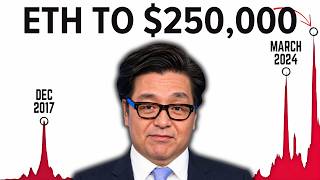
These are three really huge catalysts. And, of course, institutions will try to catch up with profitability, because since June 30, the best asset is cryptocurrency. Ethereum grew by 54%, gold by only 13%. Stocks rose, well, by single-digit percentages. Well, when we get to September 30th, which is in a month, and if Ethereum remains the most profitable asset, guess what institutions will be buying from September 30th to December 30th.
There will be many attempts to catch up due to fear of missing out on the benefit. So, this is the fourth catalyst— huge demand from institutions. I think Ethereum could easily surpass its highs from the beginning of the year in terms of ETH to BTC ratio. But, you know, will it reach 0.04? Well, if it does, and Bitcoin is worth 150,000, then Ethereum will be around 6,000, and I consider that a very conservative estimate, because, again , 0.08 is an old coefficient.
Tom Lee predicts significant changes as investors who have stayed away from cryptocurrencies begin to realize how much they could have lost. Lee believes that a huge number of investors are still on the sidelines, waiting for the traditional 4- year crypto cycle to end, but he is convinced that this hesitation will soon become fuel for a new jump upwards.
If these investors start to return, the amount of capital flowing into cryptocurrencies could grow rapidly. Lee also points to Asia separately. He says investors who have recently bought into AI stocks and Korean securities may start looking toward cryptocurrencies as he sees much greater growth potential there.
This creates another potential source of demand at a time when cryptocurrencies are already outperforming mainstream traditional assets. Next comes the institutional catalyst. Lee notes that Ethereum has risen 54% since June 30, while gold is up only 13% and stocks are up single digits. If cryptocurrency remains the strongest asset through the end of September, institutions will have a strong incentive to catch up with these figures in the final quarter.
Lee believes this could create a significant FOMO effect with Ethereum potentially surpassing its previous highs for the year. He even describes a scenario in which Bitcoin reaches $150,000 and Ethereum rises to $6,000. The most important thing is that investors who have been waiting and institutions can simultaneously become buyers.
And this could turn an already powerful crypto rally into something much bigger. If we combine the forecasts of Raul Pal and Tom Lee, the bullish scenario becomes much more ambitious than a simple Bitcoin price forecast . Raul argues that the cryptocurrency market may not yet have completed the cycle that investors are accustomed to.
His thesis is built around structural changes in liquidity, monetary policy, stablecoins, and the increasing integration of traditional finance and blockchain. Instead of seeing every correction as the end of a bull market, he believes investors should look at a much broader trend that is developing despite the volatility.
Tom Lee approaches this opportunity from a different angle. He sees capital waiting on the sidelines, investors who may return after trading in artificial intelligence, growing interest from Asia, and institutions that may start investing in cryptocurrency if it continues to outperform traditional assets.
It is this combination that makes the current situation so interesting. The market doesn't necessarily require every investor to become optimistic . All that is needed is for enough capital from reserves to start flowing back into an asset class that is already performing well . And there is another important development .
Stablecoins and tokenized assets are attracting increasing attention from governments and financial institutions, strengthening the connection between crypto infrastructure and the traditional financial system. But Raoul and Tom's overall thesis is decidedly optimistic. The next big move could be driven by investors realizing that the opportunity they've been waiting for is already happening without them. Anyway, friend.



Comments 0