
저자: MarcFaber · 외국인
요약 보기
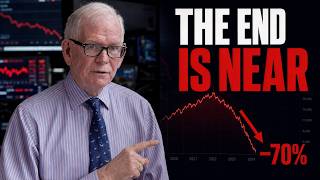
페이버는 주도주 집중과 얕은 시장폭을 근거로 시장 정점 임박을 경고하며, AI 설비투자 붐이 과거 철도·운하 버블처럼 대부분 손실로 끝날 수 있다고 봄. 미국 재정위기와 높은 인플레이션(그가 인용한 Shadowstats 추정 12.5%)으로 금리 인하 여지가 작다고 주장하며, 자산가격 대폭락과 주택·주식 가격 하락을 예상. 장기적으로 금 대비 주식 약세를 강조하고 트럼프 가문 관련 주식 공매도를 언급.
다듬은 글
Their biggest risk is that financial assets and other assets will be greatly overvalued. I think it would be a disaster, to be honest . I think it's a complete disaster. The US is heading towards a fiscal crisis. It's a big...It's a big disappointment that both home prices and stock prices... This interview was published on June 25, 2026 by Well Bilt.
In today's discussion, seasoned investor Mark Faber delivers one of his strongest warnings in years. He believes the biggest threat is not just an expensive stock market. This is a financial system that may be approaching a critical turning point. As this conversation progresses, he explains why he believes today's growth looks very different beneath the surface.
Why debt and inflation may leave policymakers with fewer options than many expect. And why his closing message may be the most important part of the entire interview. Stay with us until the end because its conclusion ties everything together. Well, we are even closer to the top of the market. I'm just writing about the main peaks.
But I want to emphasize one point, that over the last 12-18 months, the market growth has been very insignificant. In other words, some stocks have reached new highs, and we have statistics on new highs, new 12-month highs. They didn't expand very much in a growing market. And if you look at the number of stocks above the 50-day moving average and above the 200- day moving average, they haven't expanded much.
So on the 200-day moving average, about 60% of stocks are higher and 40% are lower. In a very strong market, 80% should be above the 200- day moving average. And we have statistics that show the dynamics of the stocks of the "big seven " and, in other words, the stocks of the "magnificent seven ". And they actually fell this year.
They didn't grow, but what was extremely strong was everything related to AI, artificial intelligence, and also space-related companies, etc. And this raised the indices to new highs. And the artificial intelligence boom is real. I mean, there's a huge capital expenditure going on. And the question, of course, is that in the past, when you had a sector that was growing dramatically as a percentage of the GDP of the economy, say, railroads, um.
or the automobile companies in the early 19th century or 20th century, or in more recent years, the oil industry in 1978-1980, etc., these were large capital investments that took place, and most of these periods ended in colossal losses for most participants. I'm not saying there weren't winners. Let's say there were winners from the dot-com bubble , um.
and, but very little. It's like in the mining industry, when you have exploration companies, about 95 % of exploration companies go bankrupt , and 5% are huge winners. And I expect there will be a few big winners in AI, and maybe they won't even make a lot of money, because if you look at the 19th century, none of the companies building canals ultimately made any money.
Even the Erie Canal went bankrupt, and it's the most successful canal in human history. But also the railways, by 1895 over 90% of the railways had to be restructured because they were not profitable, and the same could happen now with artificial intelligence. They can be very successful but unprofitable.
Profitability is another story. And the capital costs are impressive. I mean, there's really a boom in capital spending right now that's unprecedented in our lifetime. I mean, this is the biggest capital spending boom we've ever experienced as a percentage of the economy. So, in my opinion, we are approaching a major peak, or perhaps we have already seen it for typical stocks.
Because if I look at the major peak in 1973 , most of the indices actually peaked in 1965, some in 1968, and most of the stocks peaked in 1968, but the Nifty 50, the Kodaks, the Polaroids, the Xeroxes of this world – they all peaked in 1973. Most of them also disappeared, went bankrupt, or disappeared altogether, which is interesting that the most popular stocks did not succeed after that.
And also in the dot-com bubble, I mean, Cisco is at a new high now, but it took a long time for the new high to manifest. So the question is really for investors: Are we approaching a peak in some stocks that will pull the indices down because there is so much indexing happening? There is more money in index funds now than in actively managed funds.
And if these few stocks that are driving the market up, including Nvidia, Tesla, Apple, Microsoft, etc., if they fall, they can drag down the S&P and everything else. Marc Faber believes that what we see on the surface does not tell the whole story. Now he moves from market leadership to the broader financial system, explaining why he believes today's mix of debt, inflation and political constraints could make the next downturn much more difficult than many investors expect.
I think it will be a disaster, frankly . I think it will be a complete disaster. Because, let's say, in 1973, market capitalization in the US was about 25% of GDP. In other words, the market capitalization was much, much smaller than the real economy. Now the world market capitalization and the world bond market capitalization, in other words, the overall financial system as a percentage of the economy, is a multiple, a multiple.
So in the past, you could say, “Oh, the economy does this. Housing construction, etc. is increasing." And this had an impact on the market. But today, and Trump is well aware of this, the market influences the economy. That's why , in an ideal world, he would want to support the market, especially support his companies and his family's companies.
Of course, there is no hope for his companies . I mean, the recipe for investors to make money is to short any stock associated with the Trump family. This is a recipe, a guaranteed recipe for making money. Why do you say that? Because they all fall. They all fall. These stablecoins are a complete disaster.
They made the family about $700 million richer and made the investors who bought this garbage about $700 million poorer. Hmm , yeah, that does n't seem to bother anyone. But yes, yes, it must be said, this is a transfer of the wealth of ordinary people to the Trump family. Yes, that and that made a lot of people uncomfortable.
Are you, when you say this is a disaster, and that you know the market is so big right now, is it the financial market, is it the US economy, are they the same thing right now ? Excuse me, what is the question? The question is, has the US economy become so overfinanced that the markets have become too big to fail, essentially?
The economy was financed. There is no doubt about that. As for failure, of course, the markets will eventually assert themselves, and in my opinion, the US is heading for a fiscal crisis because deficits are very difficult to reduce in a democracy. A politician who goes to the people and tells them, “Look, we made mistakes in the past, and that’s why you need to tighten your belts now.
You have to work harder, pay higher taxes, and you will receive less benefits,” is unlikely to be elected in a million years. I guarantee you this. Politicians who go and say, "Oh, we're going to give you this benefit and that benefit, subsidize your children, give you free healthcare and God knows what." They will be elected, and this is not just a situation in the US, right?
We have seen a kind of populism growing all over the world, wherever elections are held. Right. This is not unique or endemic to the US. In Europe, in some European countries , the situation is even worse. But, I must say, in most developing countries, this is not the case, because we do not have social security programs.
Do you understand? The USA is in first place. First, the debt situation is very high, and interest rates on the US national debt are unlikely to decrease because deficits are large and increase the national debt every year. Interest rates are unlikely to fall because inflationary pressures, whether oil prices rise or remain high, are real, and I expect food prices to continue to rise.
So, the Fed can't really lower interest rates much right now. I have people like John Williams at Shadowstats who are calculating the inflation rate in May, the consumer price index at 12.5% per year. And all your viewers, I guarantee you, they are not living with 4% annual inflation. They live with inflation of about 6 to 12%.
Of course. Of course. It's funny because right now, as we speak, Kevin Warsh is going to hold his first meeting, and a lot of people are expecting him to come out and say that inflation is not a temporary process, it's temporary. We are already seeing oil prices falling and that they will find a way to consider a rate cut.
Do you think this is a fantasy? Well, listen, there are two Kevin Vorshas. One is an economist. I have great respect for him as an economist, and I think deep down he has the potential to be a great Fed chairman. But he also works for the Trump administration , and one of their goals is to get good results in the fall, in the midterm elections.
And that's why Trump is like ending the war, because the war in Iran is probably the most popular war in the United States. But people rightly think: why are we there? What are we actually doing there? So, Trump wants to end the war, but he also wants to do something about inflation, because people see it, tariffs increase the rate of inflation or significantly increase the level of prices that consumers pay in department stores, supermarkets, and pharmacies.
And that raised interest rates where people expected them to fall. This is why housing and cars are relatively unaffordable as interest rates have risen. The mortgage rate is currently still above 6%. So it's not exactly a bargain. And, in my opinion, Walsh, as an economist, would like to raise rates.
But as a politician and in the administration, it will be difficult for him to raise the stakes. It's hard, but he can do it. He must do this, because if he doesn't, I think the price level in America will go up rather than down. So far, Marc Faber has explained why he believes markets are becoming increasingly vulnerable, and why policymakers may have fewer options than many assume.
In the final section, he brings these ideas together, discussing what he sees as the biggest long-term risk for investors and the outlook he sees as most important as markets continue to evolve. Their biggest risk is that financial and other assets are grossly overvalued. I mean, you see, the concept of inflation is hard for ordinary people to understand because when the stock market goes up, they say it's a bull market, but essentially it's inflation of asset values, of financial asset values.
And , uh, profits, corporate profits, they certainly benefit from monetary, uh, monetary inflation from the increase in the money supply. This increases profits. This increases, this increases the net worth of households. And all this has a positive impact on the economy. But then the consequences of all this manifest themselves in the form of rising prices in supermarkets, rising prices for your children's education, rising prices for medical care in hospitals, and so on.
And this is what we call consumer price inflation. But it is also caused by monetary inflation . But this is a different sector of the inflationary environment. Hmm. And people don't like that. So they like anything that creates inflation, especially when they benefit from, you know, subsidies, again, child benefits and Social Security.
All of these are inflationary factors. The state budget deficit, the state budget deficit is inflationary, period. And this is the problem we face. And one that will be hard to get out of. Um, I can't wait, we can't wait to read your report, Mark, because you are a fire of enthusiasm. You have a lot to say and a lot of good advice for us.
So we're looking forward to it. I think you'll have to stay home tonight and finish writing, because that's all I have on my mind. I can't go play pool, you mean? Maybe not tonight, Mark. Although for some reason I have a feeling that you will be able to do both . But it's always great to chat with you, as always, and I really appreciate you sharing your thoughts.
We need the historical context you mentioned. Thank you very much for inviting me. If I have any good ideas, I'll let you know. Please do this. No, but you understand that the world has expanded dramatically since the introduction of the capitalist system. Yes. We could have a setback right now that will reduce the wealth of people who have a trillion dollars.
That would be my opinion, and many billionaires will be worth less than they are today when asset prices fall. And with every inflation, whether it's the price of coffee, cocoa, or oil, etc., prices go up; and in a free market they eventually fall too, not necessarily to the price level they were before, but prices fluctuate, just like the price of your house and the price of the stock market.
Sitting around and saying, "Oh, I don't need to have any savings because every year I'm richer because the value of the house is going up and the stock market is going up." No, it won't happen every year. And I can tell you that in the US there are statistics compiled by, say, companies like Vanguard and Fidelity and so on.
They can see how individuals are making money in the market as they can switch between different funds and so on. And individuals as a group, all of them, are significantly lagging behind the index because they buy stocks that are popular. And when they are popular, they command high prices. And they sell them when desperation sets in, like in 2009, they give up because they get margin calls and stuff, and they never want to invest in stocks again.
And so on. So don't believe that individuals have made that much money. Most people, their portfolio peaked in 2021 with stocks like GameStop and AMC and so on. These stocks fell sharply. And those that they didn't lose after 2021, they already lost a year earlier on cannabis stocks. Look at the dynamics of cannabis stocks.
And so, you know, I think there's going to be a big disappointment that both housing prices and stock prices are going to fall. Maybe not by much in nominal terms, but relative to gold, the market has fallen significantly since 2000. And that's what needs to be addressed, and that's why we're trying to work so hard to make sure people are prepared for what's happening and don't get caught up in chasing the shiny thing that seems to be growing right now.
Whether you agree with Mark Faber's prediction or not, understanding different perspectives can help you make more informed investment decisions . If you found this discussion valuable, subscribe to new interviews and analytical materials on gold, silver, macroeconomics and global markets. Thanks for watching, and see you in the next video.



Comments 0