저자: EdwardYardeni · 외국인
요약 보기
4월 9일 관세 유예 이후 증시가 V자 반등. 4월 8일 10년물 금리 급등(4%→4.5%)이 트럼프 정책 후퇴를 촉발한 '채권 자경단' 효과 언급. 경기침체는 회피 중이나 관세 영향으로 여름 스태그플레이션 가능성. 정보기술·통신·산업재·금융 회피 권고, 주식 비중 유지. 4.5% 금리는 미국 경제에 적정 수준이라 판단하나 단기 부채위기 위험 존재. 채권은 단기물 선호, 10년물 4.75~5% 재도달 시 재진입 기회. S&P500 목표치 연초 7,000→3월 6,000→현재 6,500(7,000 가능성 열어둠). 달러는 신흥국 대비 강세, 선진국 통화 대비 횡보.
다듬은 글
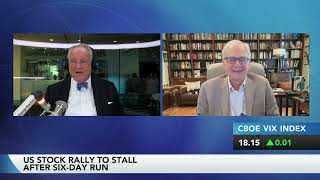
And now an extended conversation with Edward Yardeni. He's Yardi research uh definitive at CJ Lawrence a few years ago. Uh a long tour of duty, a must readad at Credential Bish uh securities and has been one of the true bulls of his roaring 20s. Edar Denny, how roaring are our roaring 20s? Well, I think things are looking better ever since uh April 9th, which was the uh postponement of the so-called liberation day.
And then, of course, on May 12th, there was an another postponement of the U tariffs on on China. And so, the stock markets had a V-shaped recovery since then. And the stock markets had a kind of a roaring 2020s correction followed by a by an amazing recovery. Let me translate the modesty you just heard there folks.
Edard Denni defined bond equity currency commodity vigilantes. Edard Denni the vigilantes spoke, didn't they? Absolutely. Um it was on April 8th, the day before the postponement of the tariffs that the bond yield uh basically went up from 4% to four and a half percent. that got the attention of the administration, freaked them out actually.
Uh and even the president acknowledged verbally said that u you know that the the the bond market's reaction uh to his uh policies led him to postpone the the tariffs. He subsequently denied that, but he said it. And uh it's pretty clear that he had sort of a Bill Clinton moment back in the early 1990s.
James Carville and Robert Rubin warned Clinton that he had to have fiscal discipline otherwise the bond market would come and get him and that's exactly what happened to uh Donald Trump on April 8th and then he reversed his policy or postponed his policy on April 9th. Ed, we still have even though some of these tariffs been rolled back, we still have tariffs that are well well in excess of kind of where we started the year here.
How does that impact economic growth, inflation? How do you kind of factor that in these days? Well, first and foremost, I've been uh observing and uh predicting a continuation of the economy's resilience. It's been over the past three years, we had the most widely anticipated recession of all times that never happened.
It was the good recession, the the no-show recession. Uh and now we um and that was in in expectations that the tightening of monetary policy would cause a recession. We argued that that might not be the case. Uh and now of course the the whole tariff turmoil has got people thinking that we're going to have a recession.
But uh those recession odds have been coming down at least in the part of the consensus. And that's because uh Donald Trump, President Donald Trump has blinked several times on the the tariff issue. But as you said, it's still there. It's it's it's just not not as ownorous as as it was when it was initially announced.
But it does mean that we're probably going to have a bout of stagflation for a few months where the economy looks somewhat weaker in the summer with more inflation. So Ed, given that background, how do you think about this whole allocation, stocks, bonds, alternatives kind of where do you see the best opportunity these days?
Well, um, you know, I've been, uh, bullish, uh, on this market since November of 2022. So, we we did call the the bottom uh in October. Um, and it's it's hard to tell people to jump on on board of this speeding train right now. I would just stay stay invested in the stock market and I continue to recommend avoiding u information, technology, communications, industrials, and financials.
Uh so I would stay with the stock market for sure. Right. I the ambiguity here I think is absolutely profound and the basic idea here is we have a global lift in yields. Whether I look at UK guilts I look at the real uncertainties in Japan in that and what's so hard in the modern media is to understand the zeitgeist is higher yields are bad.
Push against that. Well, higher yields should be bad, but they haven't been bad. Uh we have seen a global bull market in in stocks even though uh we we've seen bond yields increased. Now my view is that uh to a large extent bond yields have normalized. They're back to where they should be. 4 and a half% is the right bond yield for the US economy.
Uh that was the case before the great financial crisis and I think it's the case against now. you know, maybe we're getting some excesses in the UK and some excesses in Japan, but uh you know, if you want to be US- ccentric, which to be um I think these bond yields are kind of normal, but I do see a risk that there could be a mini debt crisis the way there was in 2023.
Um, and in some ways, Tom, I hope there is because, uh, I think now's a good time for a debt crisis to get the attention of, uh, the politicians in Washington that they got to get their act together. Ed Denny with us, K Denny Research. We welcome all of you in your commute across the nation. Good morning, Bloomberg 1130 in our global Wall Street.
Good morning, I should say, good afternoon in England and the city and in Paris as well. Well, thank you so much for tuning in on all of our audio products and of course on YouTube. Subscribe to Bloomberg uh podcast. Edard Denny's dog on the couch, the research assistant. Subscribe to Bloomberg. Yeah, Max.
Max, you got I got a note from Max. Okay. The the dog the dog looks stressed, Ed. I mean I mean if I if I look at the dog, I mean the the tension in the markets really affecting Max, right? Max Max really keeps me calm. He keeps me grounded. Uh, sometimes he puts me to sleep, but uh, he's in charge.
Paul says that about me, too. Exactly. Hey, Ed, you mentioned a debt crisis. I mean, I've been in this market since the mid 80s. We've been talking about deficits and the national debt and ever. It just doesn't matter is Can you give us some context there? Yeah, absolutely. the uh back in July of 1983 is when I concocted the uh term bond vigilantes and I went back and read what I wrote and I said the bond vigilantes are particularly upset about uh record $200 billion deficits and here we're looking at$ two trillion dollar deficits and talking about the bond vigilantes once again.
Uh behind me I have a bookshelf and the top on the top shelf I've got a bunch of books uh from the 1980s u uh you know debt bomb uh uh you know drowning in debt all kinds of end of the world kind of scenarios with debt and here we are and uh stock market basically at an all-time high so um the end of the world hasn't occurred yet uh and you have some very smart people like Ray IO basically arguing that it's imminent, that we're going to have a debt crisis, that uh we might have a a buyer strike.
Um this is important. Paul, I'm taking Paul's territory here, but it's just too important. When people give you the doom and gloom, isn't that the time where you acquire shares? That's what John Templeton would say. Absolutely. It's it's when your your gut hurts and you you just want to get out. Um, I Tom, I have to brag.
I I have a really good track record at calling bottoms more so than tops. And that's because I have a a relative that I don't speak to too often that always calls me at bottoms and said, "Eddie, should I get out?" All of a sudden, we're best friends, you know. Uh, so uh yeah, it's u it's it's when your your uncle Max calls you up and says, "Uh, you know, I know you follow the stock market.
Should you get out?" that usually makes the bottom. Ed, what do you make in the in in where investors should be positioned in a fixed income market here because you consider a two-year Treasury and make darn near 4% or do or do you go out there and take some credit risk? Uh well, you know, it's it's kind of weird, right?
Uh credit risk used to be uh high yield bonds, corporate bonds. Um uh now uh suddenly we're all worrying about the 30-year Treasury um in Japan. Uh the 30-year Treasury in the United States. Uh so I I would um I would stay uh I would stay short for now, but I think there could be a really great opportunity to jump back into the bond market.
uh you know the the 10-year could revisit four 3/4 5% here pretty pretty shortly if the bond vigilantes are not pleased with what they see coming out of Washington and the you know if their view is the big beautiful bill is actually the the big ugly bill we'll know that pretty quickly and and one of the new areas that's been just seen amazing growth on global Wall Street in the last I don't know 15 years or so has been private credit how do you think about that when you talk to your clients?
Well, I I don't know. I I I like securities. I like to buy buy securities where there's a liquid market and I can get in and out and and I know what these things are worth. Um I I really don't have a problem with private credit, but I wouldn't overdo it there. I get a little suspicious when I see that the private credit industry is starting to become very democratic and create ETFs that allow them basically to unload the bad stuff into into ETFs.
Uh so I'm u uh I think they've had a good good record but I'd be careful. Edard Denning just one final question here and I think it's really really important for there's standard reports 500. How does Edyard Denny find a select group of stocks within the standard and pores 500 to believe in? Is your method like free cash flow?
Is it more economic based almost a Schiller analysis? How do you go about choosing the security for the long run? Well, uh uh first and foremost uh we don't pick individual stocks. That's not our forte. So we we basically tend to uh provide an opinion whether we think the stock market's going to continue to go up and which sectors within that are likely to perform.
So I think the short answer is yeah it's based on the economic outlook. I I started out on Wall Street as the chief economist of of EF Hutton and then a few years later I became also the strategist at CJ Lawrence. Uh so it's sort of combining the the two disciplines uh that uh guide my work on on sectors and industries.
You know we've like in tech in information technology we've we've liked um semiconductors and they've been one heck of a roller coaster ride but uh basically it's uh been a profit. What's your SPX call here end or even out 12 months? Well, you know, I I've been doing a lot of work on that and uh I I I just want everybody to know that the DXY dollar index is a very misleading index.
It's uh it's a fixed weight index. It's not a trade weighted dollar and 57% of it is the euro. So, you might as well just look at the Euro dollar exchange rate when you're looking at DXY. Uh I I like um the um MSCI uh organization actually puts out a daily trade dollar which is identical almost identical to what the the Fed does and to me the dollar remains on an upward trend.
Uh to me the dollar is going sideways relative to developed uh developed economic currencies but in terms of emerging markets the dollar is very strong. So I I'm not in this you know uh you know end of the world scenario for the dollar. Well, give me the standard report for 500. Are you out to 7,000 still?
Have you reaffirmed that off of all the tariff news? Um, well, I started out the year at 7,000 and I think strategists were generally kind of near that kind of level. Um, maybe I was at the high end. Uh, and Trump got me. Uh uh so I I I did lower it to uh 60 400 in early March and then in late March I lowered it to 6,000.
I got to make some news today. Come on. Can you give me 7,000 here on a sleepy May morning? Well, I'll I'll give you 6,500 which is what I've raised it to with a possibility of getting back up to uh okay to to 7,000. And I've told people I reserve the right to change my mind as often as the president does.
Max just rolled over when he heard that. We say good morning to Max on the couch. For those of you on Bloomer Radio, the dog is come casual here on a a May morning. Edard Denny, thank you so much with your Denny Research. Again, we protect the copyright of all of our guests research. Go to Yard Denny Research. It's a terrific value. Can't say enough about the use of it off your uh cell


Comments 0