원문 보기
In 1964, the boss of a dying textile mill tried to cheat Warren Buffett. Not by much, just 1/8 of a dollar per share. Buffett got so angry that he bought the whole company and fired him. He later called it the dumbest stock he ever bought, a $200 billion mistake. That mistake was called Berkshire Hathaway.
Today, it is worth more than a trillion dollars, and it turned a boy from Omaha into one of the richest people who ever lived. This is how Warren Buffett actually got rich. Warren Buffett was born in Omaha, Nebraska in 1930 in the middle of the Great Depression. He was obsessed with money almost from the start.
At six, he bought six packs of Coca-Cola from his grandfather's grocery store for 25 cents and sold the bottles one by one for a nickel each, a 20% profit. At 11, he bought his first stock, three shares of a company called City Service at $38 each. Almost at once, the price fell to 27. Warren was terrified.
When it climbed back to 40, he sold and made $2 a share. Then he watched it rise to around $200. He never forgot it. Don't panic and don't be in a hurry to sell. His father was elected to Congress and the family moved to Washington. Warren delivered newspapers every morning before school. At 14, he filed his first tax return and claimed his bicycle as a business expense.
At 15, he used his savings to buy a small farm and rented it out. With a friend, he bought a used pinball machine for $25 and put it in a barber shop. Soon, they had several. By the time he finished college, he had saved almost $10,000. Then he applied to Harvard Business School. Harvard turned him down.
It was the luckiest rejection of his life. At 19, Buffett had read a book called The Intelligent Investor by Benjamin Graham. and Graham taught at Columbia University in New York. So Buffett went there instead. Graham's idea was simple. A share is not a lottery ticket. It is a piece of a real business.
Work out what that business is worth and only buy when the price is far below it. That gap is your margin of safety. And the market, it's like a moody business partner who shouts a new price at you every day. Some days he panics and sells you things far too cheap. Buffett was Graham's star student. He even offered to work for him for free.
Graham said no. Buffett joked that Graham had overvalued him. He kept asking. And in 1954, Graham finally hired him. Two years later, Graham retired. Buffett, just 25, went home to Omaha and started an investment partnership with seven family members and friends. They put in $105,000. Buffett put in a hundred.
He ran it from a small room at home. In 1958, he bought a house for $31,500. He still lives in it today. For 13 years, the partnership never had a losing year. It grew about 29% a year before fees, while the Dow grew about seven. And Buffett hunted for bargains the way Graham taught him. Cheap, unloved companies with one last puff left in them, like a cigar butt picked up off the street.
One of those cigar butts was a textile mill in Massachusetts called Berkshire Hathaway. It was dying. Cheaper mills were undercutting it. And every few years, it closed another factory and bought back some of its shares. Buffett started buying in 1962 at about $75 a share, planning to sell them back to the company at a profit.
In 1964, the boss, Sibri Stanton, asked Buffett at what price he would sell. Buffett said $11.50. Stanton agreed. Then a letter arrived offering $11.37, an eighth of a dollar less. Buffett was furious. Instead of selling, he bought more until he controlled the company. In May 1965, he fired Stanton.
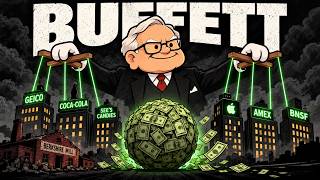
Now Buffett owned a business he knew was dying. A quarter of his partner's money was stuck in it. He later called it a monumentally stupid decision. In 2010, he guessed that buying the mill had cost Berkshire around $200 billion. So, how did a dying mill become a trillion dollar giant? Buffett used it as a shell.
He took the cash it made and put it into better businesses. And in 1967, he made the most important purchase of his life, an insurance company in Omaha called National Indemnity for $8.6 million. Here's the trick. With insurance, customers pay you today and you only pay their claims later, sometimes years later.
In between you get to hold their money. It's called float. As long as the insurance itself breaks even, that money is free to invest. Bergkshire kept buying insurers like Geeko. Its float grew from about $19 million to more than 160 billion. Then Charlie Munger changed the way he invested. Munger was a sharp-witted lawyer who had also grown up in Omaha.
He told Buffett to stop picking up cigar butts, buy wonderful businesses at a fair price. In 1972, they paid $25 million for Seas Candies, a chocolate maker in California. That was three times what it was worth on paper, but people love Seas chocolates and happily paid a little more every year. Uh, by 2014, Seas had earned about $1.9 billion before tax, and most of that cash went to buy other businesses.
In October 1987, the stock market crashed. It fell 22% in a single day. A few months later, Buffett started buying a company he had loved since he was six, Coca-Cola. Over the next few years, Bergkshire bought about 7% of it for $1.3 billion. It never sold. Today, Coca-Cola pays Bergkshire more than $800 million in dividends every year.
And Buffett has said that he drinks about five Cokes a day. His most famous rule is simple. Be fearful when others are greedy and greedy when others are fearful. In September 2008, Wall Street was collapsing. Lehman Brothers had just gone bust and investors were selling everything. Buffett put $5 billion into Goldman Sachs.
In return, he got special shares that paid 10% a year, $500 million every year. A few weeks later, as markets kept falling, he wrote a newspaper article with a four-word title by American. I am. For decades, Buffett avoided technology companies. He said he didn't understand them. Then in 2016, Bergkshire started buying Apple.
Buffett didn't see a gadget maker. He saw a product that people would never give up. Over 3 years, Bergkshire spent about $35 billion. By the end of 2023, its stake was worth about $173 billion. In 20 to 24, Bergkshire sold about 2/3 of it. Later, Buffett admitted that he had sold it too soon. By early 2026, Bergkshire's cash pile had hit a record of almost $400 billion, waiting for the next panic.
So, what is Buffett's real secret? He says life is like a snowball. The important thing is finding wet snow in a really long hill. The wet snow is compounding profits that earn more profits. The long hill is time. Buffett started at 11 and he never stopped. Around 90% of his fortune came after his 65th birthday and he barely spent any of it.
For years he stopped at McDonald's on his way to work for a breakfast that cost about $3. Since 2006 he has given away more than $60 billion and he has promised to give away more than 99% of everything he owns. In May 2025, at 94, Buffett told an arena full of shareholders that he would step down as the boss at the end of the year.
Greg Ael took over in January 2026. Charlie Munger had died two years earlier, just weeks before his 100th birthday. Then in September 2026, Buffett gave up his last title, chairman, and handed it to his son, Howard. Father time always wins when he wrote, "He has, however, been generous with me. The boy who sold Coko for a nickel built a company worth more than a trillion dollars out of a dying mill that he bought in anger.
His $200 billion mistake became his masterpiece. Because Buffett's real edge was never a secret formula. It was patience. Buy good businesses, hold on to them, and let the snowball roll.


Comments 0