원문 보기
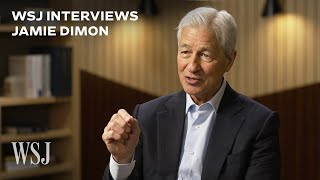
- Jamie Dimon, thank you very much for sitting down with us today. I spent a lot of time this weekend reading your letter and my biggest takeaway from it was that you have a very clear sense of what's good for America, what's good for the economy, and what's good for JPMorgan. What is the biggest threat in your mind to that confident vision?
- So every year, when I write that letter, I try to think of what are the most important things, and I would add to that the free Western world 'cause that's what worries me the most is that, you know, the Ukraine war, the terrorist activities in Israel, you know, the thread that that's drawing between Russia, Iran, North Korea, China, the difficulties of our age with China, that whole thing is challenging, We would call the free democratic Western world.
And that to me is the most important thing that we get all of that right. - I wanna come back to the geopolitical backdrop in a minute, but right now, I want to focus specifically on the economy. As the chief exec of America's biggest bank, you have an unrivaled insight into the financial health of the US consumer.
What are people doing with their money right now? - You have to look at it in a little bit of context. The consumer's in pretty good shape right now. Unemployment's under 4%, has been there for two years. Housing prices are up, stock prices are up, jobs are plentiful, wages are fine, going up at the low end.
The consumer's in pretty good shape. The one thing you gotta be cautious about, a lot of it's driven by just fiscal spending. So even today, the deficit of 6% of GDP, you know, almost $2 trillion, that's driving a lot of this growth. And that will have other consequences possibly down the road, you know, called inflation, which may not go away like people expect.
So when I look at the range of possible outcomes, you know, you can have that soft landing. I'm a little more worried that it may not be so soft and inflation may not go quite go away people expect. I'm not talking about just this year, I'm talking about '25 and '26. The rates may have to go up a little higher.
I'm talking about the 10-year rate, the five-year rate, and you know, that can have consequences. So we'll see. - But right now, you describe a pretty rosy picture and yet we know consumers aren't feeling it. Why this disconnect? - Yeah, well, you have to look at different consumers here. So the bottom 20% of America have not done particularly well over the last 20 years.
Incomes barely went up. Remember, suicide, fentanyl, crime, inflation, there are a lot of negative effects. Some people can't get mortgages, can't buy their home. So yeah, there's a part of society who's kind of struggling, there's a part of society who's not. And I think that's a different issue about how we deal with the policy.
But you can see why that has people upset. - So just to go back to the soft landing. In the letter, you concede you were on the hawkish side, but then things played out in a more benign fashion. But still is a slightly begrudging concession. You yourself sound quite glum in the letter. Can you tell us a bit more about why that is?
- So I'm not looking at a year, I'm not making a forecast. I'm trying to say what are the range of possible outcomes? And last year and this year, I would put out the same issues. Huge amount of fiscal deficit, huge amount of QE, a lot things in the future inflationary, the green economy, the remilitarization of the world.
Obviously, the deficits, which basically aren't gonna go away as far as the eye can see, and geopolitics. All that puts me on the side of caution that things may not go as well as people expect, but the odds of a soft landing, the market kind of prices in 70%, I think it's half of that. As a business person, I try to be prepared for all of that.
Just a little cautious. It looks a little bit more like the '70s to me. And I point out to a lot of people, things looked pretty rosy in 1972. They were not rosy in 1973. So don't get lulled into a false sense of security because the today looks okay, that tomorrow's gonna be okay. So just trying to separate the two.
- Sticking with today then, is Bidenomics working? - Partially. You know, when you spend that kind of money, you're gonna have growth and we needed some of it, like some of the industrial policy. I think the infrastructure thing is terrific. That was bipartisan. Other things will remain to be seen. And I think some of the American public looks at it, like what are they getting?
So if you go to rural America or inner cities, I'm not sure they feel like they're being lifted up by this economy. - Do you think Jerome Powell is doing a good job as chairman of the Fed? - I have tremendous respect for Jay. I think the Fed was probably late in raising rates. They caught up. They're probably right in watching right now.
We don't know what's gonna happen. You might as well wait. We also don't know the full effect of QE. Again, I'm a little more on the cautious side of that. Most people have a general feeling that you can reduce the balance sheet by several trillion dollars and its effect will not be felt. I'm not so sure.
We've never had it before. - Switching tack now to geopolitics. We've got wars going on in the Middle East and in Europe that create an enormous amount of economic uncertainty. If we focus first on the Middle East, do you think that the US position towards the Israel-Hamas war is the right one? - I think Israel has the right to defend itself.
I think war is a terrible thing. I think people have to be honest about what war is, you know, and when they look at these civilian deaths and all the things like that. So I don't know the specifics of the military. I think the notion that they aren't gonna defend themselves is wrong. So I'll leave the military experts decide, you know, what's the right way to go do that.
Every general I've seen on TV, and I've spoken to several, you know, city conflict is really bad and you know, it's door by door, higher amount of civilian casualties. Hamas must have known there was gonna be quite a reaction to what they did. By the way, it's unjustifiable for any reason ever. So I wanna be clear about that.
- And then we've got a war in Ukraine as well where Ukraine clearly struggling against Russia. What would it mean for the global economy if Russia was to win? - It could be a potential disaster because this is the first war in Europe. Free democratic nation invaded by two or 300,000 Russian soldiers under the threat of nuclear blackmail.
So, you know, we've never had nuclear blackmail before, which is also teaching the whole world, you know, maybe having nuclear weapons pretty good thing because people will be afraid of you and you can, you know, abuse a neighbor if you feel like it. But the other thing is affecting all alliances. If Russia wins, I personally think you might see a lot of people deciding that, you know, will America stand up for Europe?
Can you rely on them? And if you can't rely on them, what are you gonna do? And that includes economically. So that's why I kind of talk about the economic battlefield and the battlefield. So economically, every nation can say what makes me secure? What makes me secure in energy, food, and all the things I need?
So I'm a little worried that if Russia wins that war, you're gonna see kind of the world kind of enter a little bit of chaos as people realign alliances and economic relationships, et cetera. - So China's complicated obviously, because on the one hand, we have so much trade with China, the supply chains are integrated.
But at the same time, we reported recently that China is aiding the Russian war effort and there's now a proposal by the US to sanction Chinese banks. How should the US approach China? - You know, I would tell America, take a deep breath. We have all the food, war and energy we need. The Atlantic and the Pacific, no wars in North America, South America.
China imports 11 million barrels of oil a day. They're a very complicated neighbor. Their own actions are causing all their neighbors to re-arm. Their GDP per person is $15,000 versus our 80. So we're in a very good position. We have to restructure trade around national security. They need oil and gas.
So the LNG I think is very important strategically. So I would negotiate them around all of that and I'm glad they're doing it. As long as Ukraine is there and they're doing anything to aid and abet, I think it makes it very hard to have a great relationship with them. I'm glad the government has the authority to do certain things.
If, in fact, some of these things are true, yeah, they should do some sanctions, but they should expect some back, by the way. - I want to turn out to domestic matters and the forthcoming election. We're in the very unusual position of knowing what a Trump presidency looks like. We know what a Biden presidency looks like.
Who's the best candidate for the economy for 2024? - Okay, I'm not gonna go into that kind of thing right now. And whoever is president, you know, we will try to help. I would like them to put a lot of experts around them. Not just academic, but practitioners in the real world because I think it matters.
- How about you as one of the experts? I know your name has come up in the context of a new Fed chairman. - I would not do Fed chairman, Treasury Secretary. I don't think I'd ever be picked for that. - Okay, you're not a politician, but you are a chief executive and obviously, there are a lot of pressures with the job.
You had a near death-experience about four years ago with your aortic tear and before that, you'd had a big cancer scare. How did those experiences change you? - The cancer scare was cancer. - Yeah. - I don't know. I probably have a little PTSD from all of them. And I think you try to live life a little more deliberately.
So I love what I do, I love my job, I love my family, I love all those things. So nothing really changed that way, but it was a little more deliberate. When I was being wheeled in the operating room for the dissection, I knew it was like 50-50 and I didn't have any regrets because people always said, "Do you have regrets?" I say no, and the only thing I would say, I do wanna help this country and the world and the free Western world.
That is on my mind and maybe that changed a little bit. - Yeah. Now, you've been chief exec for 18 years and you're obviously in a very powerful position. But even the most powerful people, powerful leaders need checks and balances. Who keeps you in check? - Well, my wife would probably say, "I do" and she does.
But look, I think my management team, we're all very open, we share everything. I emote to them in ways that you wouldn't hear me do it elsewhere. They emote back, you know, "You're wrong. You didn't read it properly or you missed this major point." So it's a very open conversation. I don't think any of those folks are intimidated by me.
And there's very little after the fact conversation, like, okay, "I didn't wanna mention this in front of everybody." They're brave enough to mention in front of anybody. And I've had people, three of 'em come in and say, "Jamie, you're making a mistake. Sit down, we wanna explain it to you. Don't say anything." I say, "Okay, lay it on me." So you try to create a very open environment.
And we have regulators, auditors, press. So believe me, we get a lot of feedback from a lot of people. - Just to bring it back to the current news cycle with these very polarizing issues in America. Do you think that's the sort of thing that chief execs like you should comment on publicly or make statements as a company on?
- The answer is yes if it's appropriate and you know how to do it. So, you know, in my letter it's quite clear, I'm like a full-throated, red-blooded, patriotic, free enterprise capitalist. And I'm unabashed and unashamed. I also acknowledge that we've left part of society behind. There's nothing wrong with acknowledging it and trying to do something about it.
So, you know, we do a little bit of both. So we'll support the LGBT community. We'll support free, fair, safe voting, when it comes to lifting up other parts of society, absolutely. - So I've got some final questions here. They're short questions that require short answers. - Okay. - How many days should people be in the office?
- Five is ideal. - Are America's downtowns dead? - No, I think some are gonna have difficulty with their own policies, but no. - If you're a young person and you want to work at JPMorgan, what should you study at college? - It almost doesn't matter to tell you the truth 'cause you're looking for smart, ethical, decent people.
I do think in business you should learn the language of your business, which is accounting and learn a little basic business. So I think it would help to do accounting, finance, markets, something like that. - On the rare occasion that you take a day off, what do you do? - So my daughters have said, "Dad, you need some more hobbies." I love my family.
So we have a lot of family dinners when I'm around. We hike together, we take vacations together. I love wine, I love music. And I just started playing squash again, which I'm still worried about, but I'm gonna do it. - What's your morning routine? - Okay, I wake up usually at 4:30 or 5. I read five papers, you'll be happy to hear, in a very specific form.
So I flick through The Post, I read the front page of The Washington Post, then I read The New York Times' front section, beginning to end, all of it. I read their business section, which isn't great. Then I read The Wall Street Journal front section, Exchange next and then the FT. And the reason I do FT last is because all the other ones are very much skewed to the US.
So I like reading, I'll do it for hours in the morning, but then I like to get a little exercise and go into the office. - And do you ever switch off your phone? - I am not a fanatic on the phone. I don't even have it here, I have it outside, but I think people should spend a little less time in that, a little more time thinking.
But I'm not on any social media. Every year I test it. I go on for literally just a week to see what everyone else is doing. You know, Reels and Instagram and Facebook and TikTok and then I click out of it. - Never tempted. - No. - Good, well, Jamie Dimon, thank you very much indeed. - Emma, it was a pleasure. Thank you.




Comments 0